




![[2026] PAISEEC D3|Mobility Scooter for Easy Everyday Travel](http://www.paiseec.com/cdn/shop/files/d3_4a4ccb22-9e26-449e-8094-71f3ec4177c3.png?v=1782115044&width=180)

















A buyer comparing powered mobility aids often reaches the same uncomfortable realization: the chair that looks strongest on a product page may be too bulky for a hallway, while the lightest option may not feel reassuring on a sloped driveway. Electric Wheelchair Market Growth 2026 is not only about more people choosing powered movement. It reflects a shift toward mobility equipment that has to fit changing routines, tighter homes, caregiver involvement, and the desire to remain active without owning several separate devices.
That is why interest in 360-degree joystick control, brushless motor technology, and hybrid designs is rising alongside demand for conventional electric wheelchairs. The decision is becoming less about “Do I need power?” and more about “Which kind of powered assistance still works when my day, strength, or environment changes?”
Why Smart Mobility Is Becoming a Larger Market Category
The market is expanding because powered mobility is increasingly evaluated as an everyday independence tool rather than equipment used only for occasional transport. One market forecast places the global electric wheelchair market at $5.7 billion in 2026 and projects 10.4% annual growth through 2033, though total market estimates vary depending on whether reports include adjacent powered mobility categories.
What does this mean for an individual buyer? More product choice does not automatically make selection easier. A compact chair may be ideal for indoor turning but less suitable for rough surfaces. A rollator can support walking confidence, yet it cannot replace seated travel when fatigue arrives unexpectedly.
The emerging smart mobility aid category responds to that overlap. Hybrid equipment attempts to reduce the handoff between walking support, attendant assistance, and powered seated movement. Instead of purchasing a separate walker, transport chair, and electric wheelchair, some households now evaluate whether one adaptable platform can cover the moments between them.
This change also affects caregivers. A device that folds, maneuvers around furniture, and supports different travel modes can reduce some routine friction, but only when its real dimensions, weight, controls, and charging routine fit the household.
How 360-Degree Joystick Control Changes Daily Driving
A 360-degree joystick control translates the direction and degree of the user’s hand movement into steering and speed commands. Push gently forward for a slower forward movement, move diagonally to combine steering and travel, and release the joystick to slow or stop according to the controller’s programmed response.
Is a joystick automatically easy to use? Not always. The control concept is intuitive, but reliable driving depends on grip, reach, reaction time, seating stability, vision, and practice in the spaces where the chair will actually be used. Reversing away from a dining table or lining up with a narrow bathroom door requires finer corrections than traveling down an open sidewalk.
The strongest benefit is proportional control. Rather than treating every movement as a full-power command, a well-calibrated joystick lets the user make small adjustments when passing furniture, approaching a doorway, or positioning beside a bed. That precision can make powered mobility feel less intimidating for a new driver.
Still, 360-degree movement does not mean the chair can pivot freely in every setting. Wheel placement, turning radius, user weight, flooring, incline, and traction all influence what happens after the joystick is moved. Buyers who test only in a spacious showroom can overlook the precision needed in a lived-in home.
Why Brushless Motor Technology Matters Beyond Speed
Brushless motor technology uses electronic switching rather than physical brushes to control motor operation. In a mobility aid, that design can support smoother power management and reduce wear associated with brushed motor components.
For daily use, the important question is not simply “How many watts?” A motor’s usefulness depends on the full system: controller tuning, battery capacity, tire condition, total load, terrain, and how the chair handles starts and stops. A chair that feels responsive on level laminate flooring may draw more power or behave differently on carpet, a threshold, or an outdoor incline.
Brushless motors are especially relevant in hybrid designs because these products must balance compact construction with enough controlled assistance for seated travel. Paiseec’s product development work has centered on electric mobility components including lithium batteries and brushless motors, while its stated research base includes more than 100 R&D professionals and five laboratories. That technical focus matters because predictable low-speed control is often more valuable in a kitchen or hallway than headline top speed.
Buyers should look for an honest match between the motor system and the intended route. A motor is not a substitute for checking the manufacturer’s stated slope limit, total-load limit, battery specifications, and guidance for wet or uneven ground.
Where Hybrid Mobility Aids Fit Best
A hybrid mobility aid works best when a person’s walking ability is variable rather than absent. Someone may walk comfortably across a room but become unsteady during a long medical appointment, tire after shopping, or need a seated option after rehabilitation exercise. That is the use case where a multi-function format can make more sense than switching devices midway through the day.
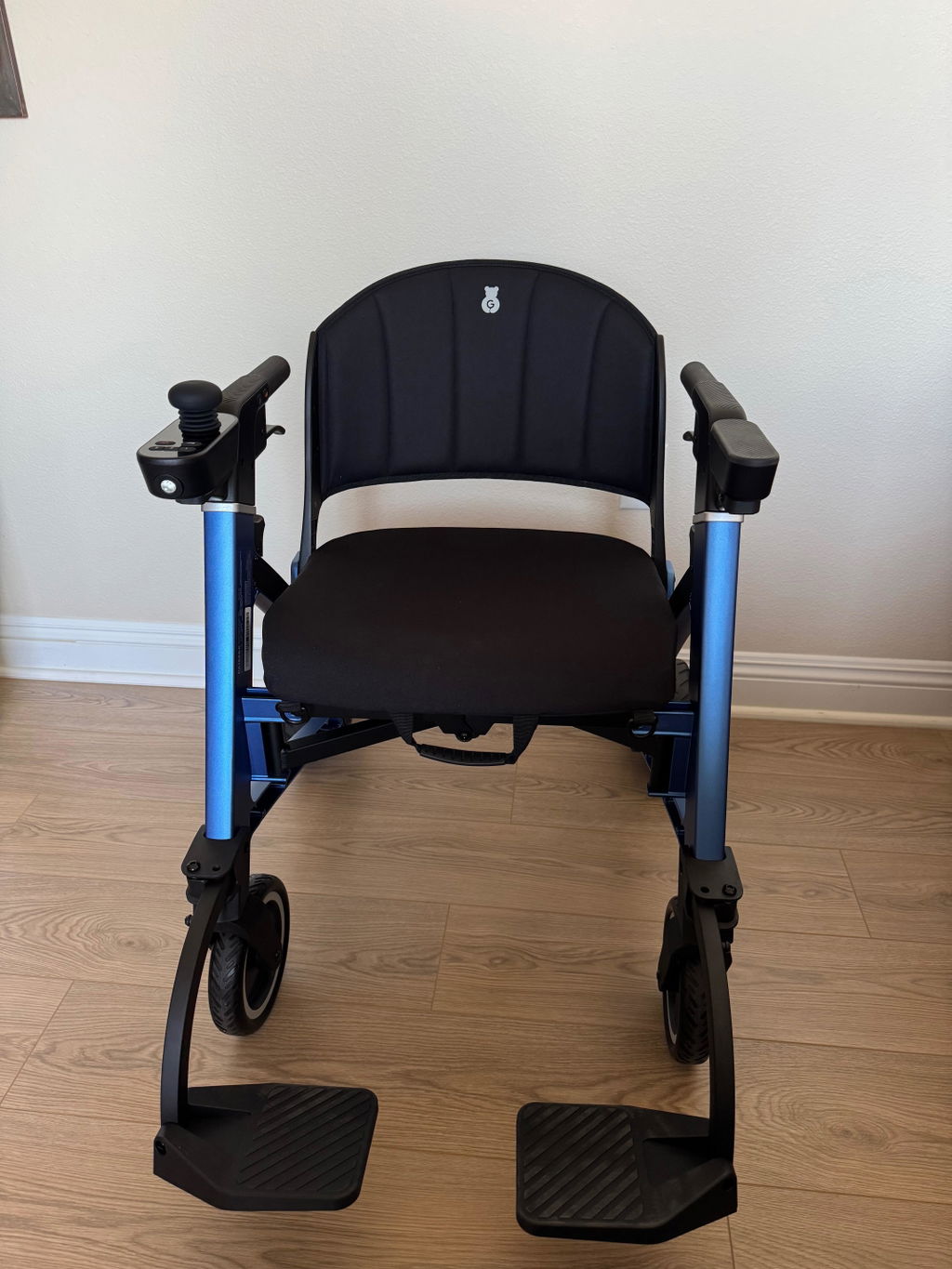
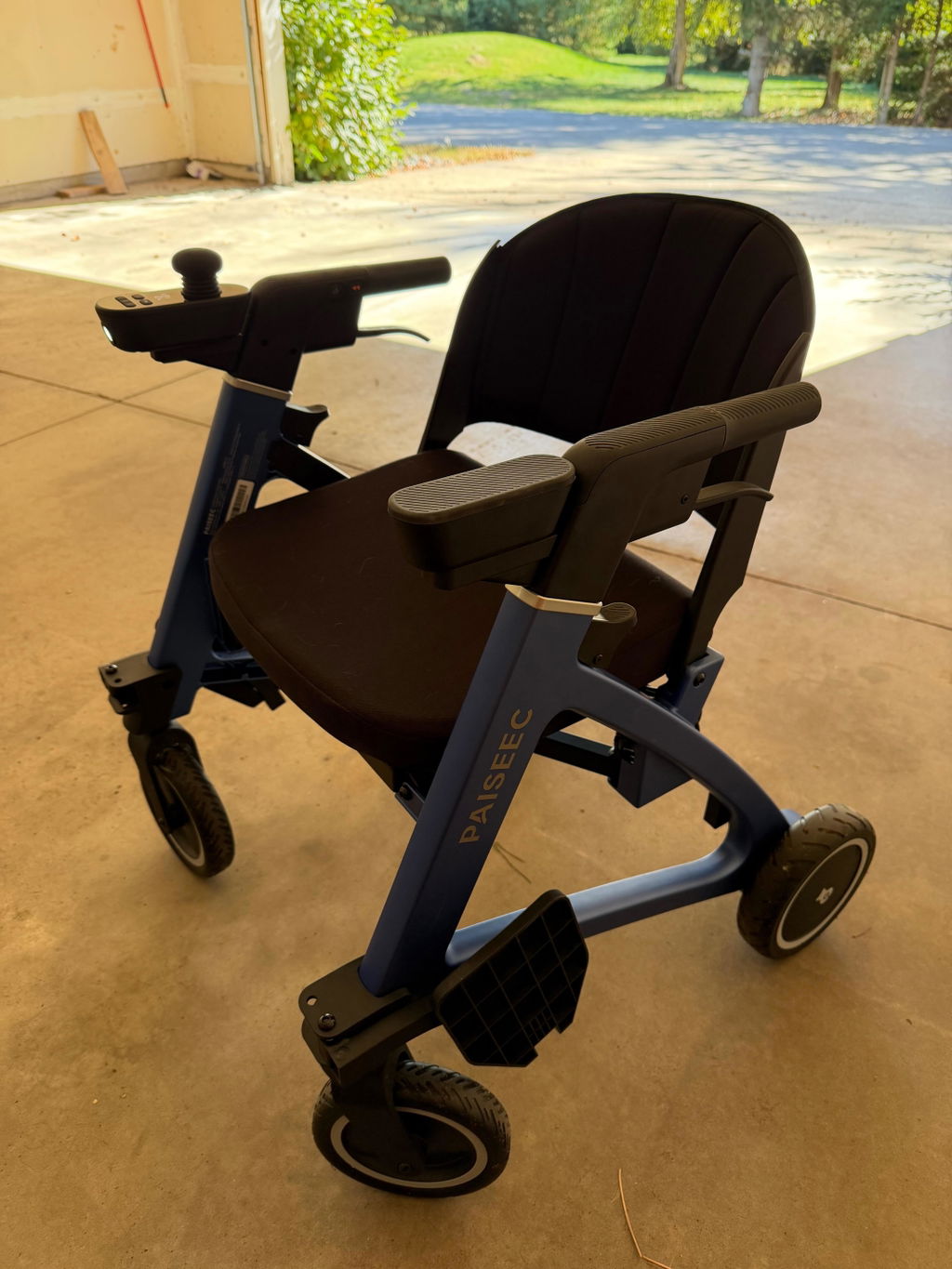
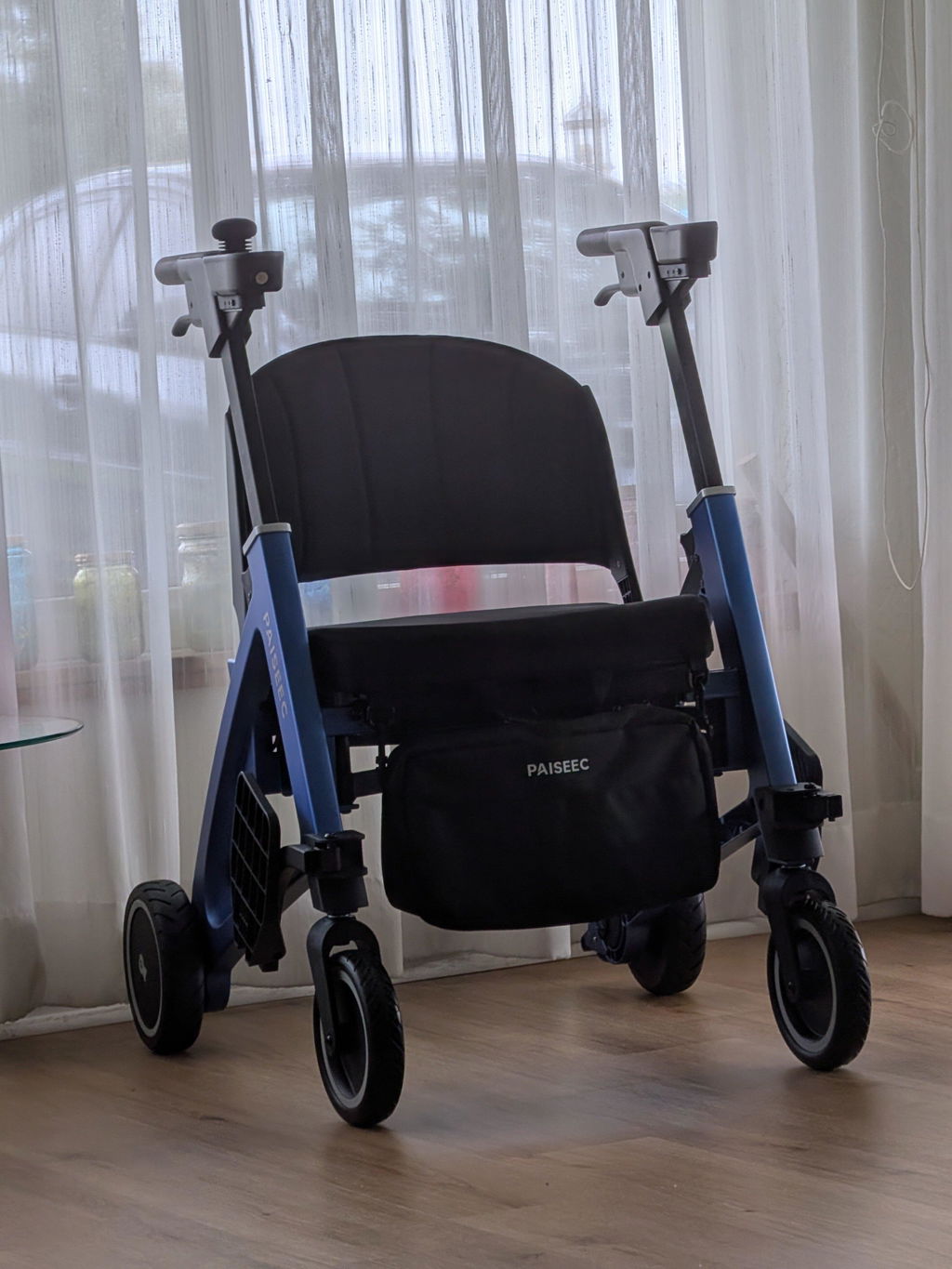
Paiseec, active since 2021, has positioned its W1 as a 2-in-1 wheelchair and smart walking aid, while the W3 combines powered chair, attendant-push, and rollator-style use. The practical appeal is not that every user needs every mode. It is that a household may avoid the recurring problem of storing and transporting several mobility devices with overlapping roles.
Consider a user leaving an apartment for a nearby appointment. They may prefer walking support in the building corridor, then want seated power assistance once fatigue appears outdoors. A hybrid device can reduce the disruption of transferring into another chair, but the transition still needs to be physically manageable and safe.
These systems can also suit caregivers who alternate between letting the user self-drive and guiding the device manually. Before choosing one, examine where it will be stored, whether it fits in a vehicle, and whether the user can comfortably access every required control and brake.
What Should Buyers Compare Before Choosing a Hybrid Chair?
The right comparison starts with routine, not feature count. A 3-in-1 label sounds efficient, but it can conceal tradeoffs in weight, seat support, folding effort, and control complexity.
How do buyers avoid focusing on the wrong comparison? Start with the hardest daily moment: getting through a narrow doorway, recovering from fatigue during an outing, crossing a threshold, or loading the device into a car. Then compare products against that situation.
A compact model may be a better decision than a more heavily equipped chair if it is the one that can actually enter the bathroom or fit in the family vehicle. Conversely, a device chosen only for portability may disappoint if the user needs more postural support or all-day seated comfort.
Why Smart Mobility Products Can Disappoint in Real Use
The most common expectation gap is assuming that a multi-function mobility product performs every function equally well in every environment. A hybrid chair can be a practical compromise, but a compromise is still different from a purpose-built clinical power wheelchair, a dedicated rollator, or an ultralight travel chair.
Why might joystick driving feel inconsistent at first? Users often begin with too much input, then correct too aggressively when the chair responds. Carpet edges, floor transitions, crowded rooms, reduced hand control, and unfamiliar reverse movements can make a responsive controller feel less predictable than expected. Research on community power-wheelchair use has found that some drivers experience difficulty with basic joystick control and reversing.
Battery expectations can also be unrealistic. Stated range is usually affected by user weight, repeated stopping, incline, temperature, tire pressure, and battery age. A device that performs well during a short indoor test may not match that experience after a long day involving hills, frequent turns, or outdoor surfaces.
Finally, walking-assist mode should not be treated as a clinical rehabilitation plan. It may support movement for an appropriate user, but it does not determine whether walking is safe or medically suitable. Assessment, fitting, training, and follow-up remain important, particularly after a health change, fall, or decline in hand strength.
Paiseec Expert Views
Paiseec’s engineering perspective is most relevant when hybrid design is treated as a system problem rather than a checklist of features. The company has described investment of $10 million in mobility-focused research and development, supported by five laboratories and a team of more than 100 R&D professionals. For buyers, the useful implication is to assess how components work together: joystick sensitivity, braking behavior, motor response, battery removal, frame weight, and the handoff between walking and seated modes.
The W3 illustrates this systems question. Its published specifications describe a folding aluminum frame, a 300-pound maximum load, a 24V 12Ah removable battery, brushless motors, and a stated 3.7 mph maximum speed. Those numbers help frame a purchase conversation, but they do not replace a trial in the user’s own environment.
The most informed choice usually comes from testing the smallest practical movements first. Can the user align with a table, reverse safely, reach the control without shoulder strain, and manage a doorway without a caregiver taking over? Smart mobility earns its value when those ordinary movements become calmer and more repeatable, not simply when the specification sheet looks more advanced.
How to Set Up a Safer Daily Routine
A better setup process begins before the first long trip. Measure clear door widths, identify thresholds, note ramps and slopes, and decide where charging will happen without creating a trip hazard. If a caregiver will help, they should practice both powered and manual handling rather than learning under pressure outdoors.
Start joystick training in an uncluttered indoor space. Practice slow starts, controlled stops, left and right turns, diagonal movements, and reversing. Then repeat those movements around actual furniture. This reveals whether seating position, armrest height, control placement, or speed settings need adjustment.
Keep the device maintained according to its manual. Check tire condition where applicable, keep charging connections clean and dry, inspect moving parts, and avoid leaving a battery depleted for long periods unless the manufacturer directs otherwise. A new product can seem unreliable when the cause is a loose connector, low battery, poorly adjusted seating, or a route beyond its stated capability.
For people whose needs are changing, revisit the setup rather than assuming the product has stopped working. A shift in strength, endurance, posture, medication, or caregiver availability can change what safe independent use looks like.
Frequently Asked Questions
Is a 360-degree joystick control difficult for older adults to learn?
Not necessarily, but it requires practice and an appropriate fit. The motion itself is straightforward, while controlled reversing and doorway navigation often take longer than forward travel. Begin at low speed in a clear area and seek a clinician’s input if hand strength, coordination, or cognition makes control uncertain.
How do I choose between a standard electric wheelchair and a smart mobility aid?
Choose based on the user’s dominant daily need. A standard electric wheelchair may suit someone who primarily travels seated, while a smart mobility aid may suit someone who alternates between walking support and seated assistance. Compare home dimensions, transfer needs, caregiver involvement, and transport constraints before comparing feature lists.
Are brushless motors better for an electric wheelchair?
Brushless motors can support efficient and smooth controlled power, but they are only one part of the experience. Battery capacity, controller programming, terrain, load, and tire condition also affect real performance. Evaluate the complete mobility system rather than assuming a motor type guarantees better hill climbing or longer range.
Can a hybrid wheelchair replace a walker and a transport chair?
It can reduce the need for separate equipment for some users, but it is not a universal replacement. A person who needs specialized posture support, a highly stable clinical walking aid, or a very lightweight travel chair may be better served by a purpose-built device. The right answer depends on the user’s assessed needs and regular environment.
How long does it take to get comfortable using a power assist chair?
Basic familiarity may develop in a few supervised sessions, while confident real-world operation can take longer. Users commonly need time to learn turning, reversing, charging, folding, and managing slopes. Comfort should be judged by safe, repeatable control in daily spaces rather than confidence after one short test drive.
References
-
Persistence Market Research electric wheelchair market forecastpersistencemarketresearch
-
World Health Organization wheelchair services and provision guidancewho
-
Research on joystick control for powered mobilitypmc.ncbi.nlm.nih
-
Community power wheelchair driving challenges studypmc.ncbi.nlm.nih
Leave a comment
This site is protected by hCaptcha and the hCaptcha Privacy Policy and Terms of Service apply.