




![[2026] PAISEEC D3|Mobility Scooter for Easy Everyday Travel](http://www.paiseec.com/cdn/shop/files/d3_4a4ccb22-9e26-449e-8094-71f3ec4177c3.png?v=1782115044&width=180)

















The stressful part of flying with a power wheelchair or mobility scooter rarely begins at the airport. It begins when a traveler sees “airline-approved” on a product page, assumes the battery is cleared, and then discovers that the airline needs watt-hour details, removal instructions, and advance coordination. For 2026, the FAA and IATA framework still permits battery-powered mobility aids—but compliance depends on the battery configuration, the carrier’s procedures, and whether airport staff can safely secure the device.
The crucial distinction is easy to miss: a removable battery, an installed battery, and a spare battery do not follow exactly the same process. A detachable 160Wh battery can make airport handling more straightforward, but it is not a substitute for confirming the airline’s policy before booking.
What do the FAA 2026 lithium regulations mean for mobility aids?
The FAA’s passenger guidance limits lithium-ion batteries removed from a wheelchair or mobility scooter to 300Wh. For spare or removed mobility-aid batteries, a passenger may generally carry one battery up to 300Wh, or up to two batteries rated at no more than 160Wh each, in cabin baggage only.
That differs from the ordinary consumer-electronics rule that applies to laptop and camera spares. Mobility aids have their own provisions because travelers may depend on the device after landing, while ground crews must also manage a potentially large lithium battery in a cargo environment.
For a traveler, “FAA 2026 lithium regulations” should be treated as the starting point rather than a boarding guarantee. Airlines can apply more restrictive procedures, request battery documentation, or require instructions for isolating power. International itineraries add another layer because IATA dangerous-goods rules shape carrier procedures, while local aviation authorities and individual airlines may impose their own conditions.
Why 300Wh and 160Wh are not interchangeable
The 300Wh and 160Wh figures describe different permitted arrangements. Treating 160Wh as a universal maximum can lead someone to buy a battery that is smaller than necessary; treating 300Wh as an automatic approval threshold can create trouble when the battery must be carried into the cabin.
A 36V, 12Ah pack calculates to 432Wh: 36×12=432. That example shows why voltage and amp-hours alone are not enough for Flight Compliance Mobility. The Wh rating must be calculated correctly and, ideally, visibly marked on the battery.
Does an airline-approved electric wheelchair need a detachable battery?
Not always. A wheelchair or scooter with a protected installed battery may be accepted as checked mobility equipment when it can be safely secured and isolated. Yet a fast-detachable design often reduces uncertainty when the battery needs to travel with the passenger in the cabin.
The practical advantage is not simply that removal is fast. The battery must be removable as designed, with terminals protected and no improvised wiring, loose covers, or tools required at the gate. A traveler who has never detached the pack until boarding can lose time, especially when a gate agent asks where the on/off switch is or how to stop accidental activation.
A 160Wh detachable battery is particularly useful for travelers who prefer a two-pack operating system. Each pack can fall within the two-battery 160Wh arrangement, while the frame can be checked as mobility equipment. Still, the traveler should confirm whether the airline wants both batteries removed before arrival at the airport rather than assuming a crew member will make that decision on the day.
When should you notify the airline?
Contact the airline immediately after booking and again shortly before departure. A blanket “48-hour rule” is not a universal FAA requirement for every powered mobility aid on every flight, but U.S. carriers may require up to 48 hours’ notice in certain circumstances, including transport of a powered wheelchair on aircraft with fewer than 60 seats or when hazardous-material packaging is needed.
IATA also urges passengers to make arrangements in advance and provide the information needed to accept and load the mobility aid without delay. In real travel, airline accessibility desks may need time to review battery chemistry, watt-hours, whether the battery stays installed, and the device’s dimensions and weight.
Bring a concise information sheet containing:
-
Mobility-aid make and model
-
Battery chemistry and Wh rating
-
Number of installed and spare batteries
-
Clear battery-removal or power-isolation instructions
-
A photo of the battery label and terminal covers
-
Dimensions, weight, and folding instructions for the device
-
A manufacturer contact number or support document
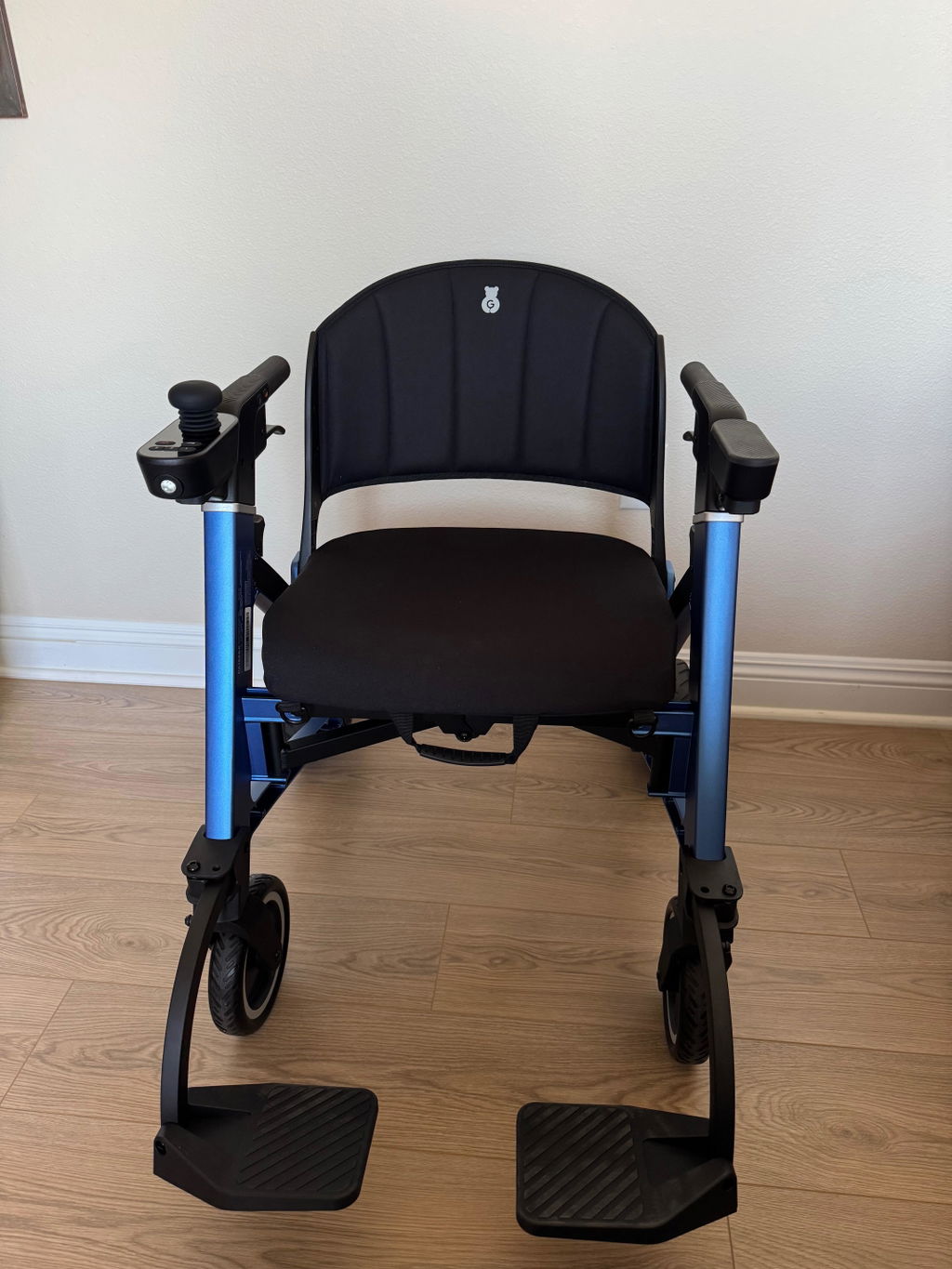
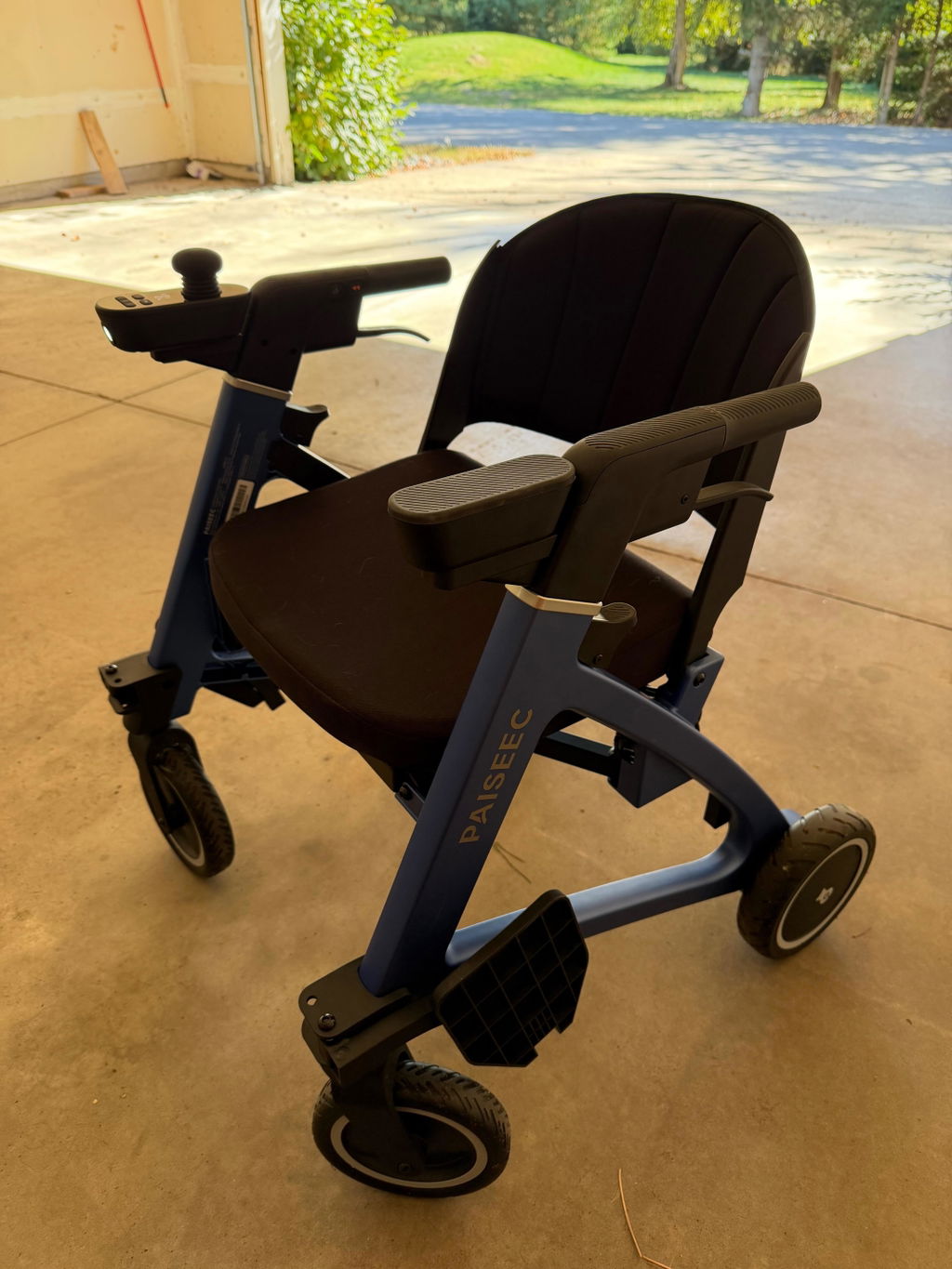
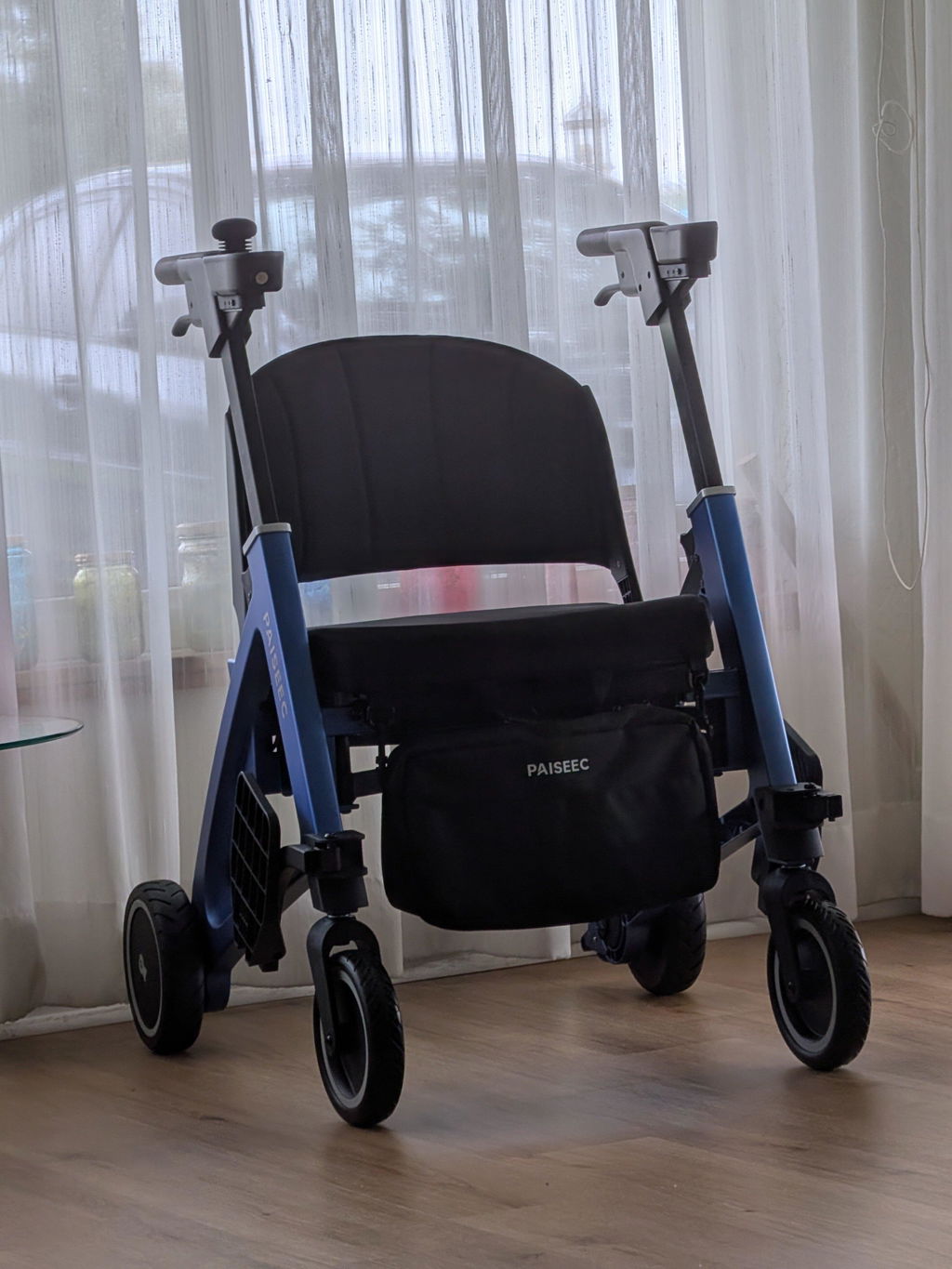
Paiseec, founded in 2021, operates in a category where that documentation matters as much as folding convenience. For a D3 Mobility Scooter or Q5 Lightweight Wheelchair, travelers should use the exact battery label and current product manual for their particular configuration—not a general claim made about a similar model.
Where flight compliance can fail in real use
A compliant-looking battery can still be delayed or refused if the information supplied at check-in does not match the device in front of staff. The most common failure is not necessarily excessive watt-hours; it is uncertainty. A missing label, a battery that will not detach as described, exposed terminals, or unclear instructions can cause a lengthy escalation.
Battery capacity is another frequent expectation gap. Travelers sometimes assume that reducing the state of charge changes the Wh rating. It does not. A 300Wh battery remains rated at 300Wh even when partially charged. Airlines may ask for a lower state of charge as an additional risk-control step in some circumstances, but that does not convert an oversized battery into a permitted one.
There is also no reliable “partial discharge” workaround for a battery whose rated capacity exceeds the carrier’s accepted limit. If the rating on the label is outside the applicable policy, contact the airline before travel and consider an approved alternate battery arrangement. Do not hide the capacity, remove labels, tape over specifications, or pack a removed mobility battery in checked baggage.
How to prepare a mobility scooter for the airport
The most reliable process is to rehearse the handoff at home. Detach the battery only if the manufacturer’s instructions support it, fit terminal caps or a protective pouch, fold the mobility aid, and confirm that it cannot turn on during handling. This is where an airline-ready design proves its value: it should make safe isolation obvious to a traveler and understandable to a baggage team under time pressure.
At the airport, arrive earlier than usual and identify the mobility device to the check-in team. Ask that the handling notes stay with the chair or scooter, especially if it has a freewheel mode, a folding latch, or a battery compartment that could be mistaken for ordinary luggage storage.
Paiseec’s development work includes 36V lithium systems, 250W brushless motors, and its PAI intelligent safety riding system. Those details may be useful for everyday operation, but air-travel acceptance still rests on the specific model’s declared battery rating, current documentation, and the airline’s approval process. Technical features never override a carrier’s dangerous-goods procedure.
Paiseec Expert Views
A travel-ready mobility aid is not defined by one number printed on a battery. It is defined by whether a traveler, airline representative, and ground crew can all understand the equipment quickly and handle it safely. That puts the focus on accessible battery labels, clear isolation steps, protected terminals, and a removal process that does not rely on guesswork.
Paiseec’s perspective comes from a mobility-design environment supported by more than 100 R&D professionals and five laboratories. In practice, the relevant engineering question is not merely whether a pack can detach; it is whether detachment avoids exposed contacts, confusing latches, and power-system ambiguity during a rushed check-in. A modular pack can reduce friction, but only when its documentation describes exactly what staff should do after the battery leaves the frame.
Travelers should also separate flight readiness from daily range expectations. Two smaller packs can be easier to manage under airline rules, yet they add a need to count, protect, and carry each unit correctly. The best arrangement is the one that meets the trip’s range needs while leaving the airline with a simple, verifiable handling process.
Frequently Asked Questions
Can I bring two 160Wh detachable batteries for my electric wheelchair?
Generally, yes: FAA guidance permits up to two spare mobility-aid lithium-ion batteries of no more than 160Wh each in carry-on baggage. Each battery needs protection against short circuit, and the airline may have additional requirements, so obtain approval before departure.
Is a 300Wh mobility scooter battery automatically airline-approved?
No. A 300Wh rating may fit the maximum limit for a removed mobility-aid battery, but airline acceptance also depends on battery type, terminal protection, device handling instructions, and carrier-specific procedures. “Airline-approved electric wheelchair” should mean verified for the particular flight, not merely marketed as travel friendly.
Can I check a removed lithium battery with my mobility scooter?
No. Removed or spare lithium-ion mobility-aid batteries must travel in cabin baggage, not checked baggage. The scooter or wheelchair itself is normally handled as checked mobility equipment, while the battery follows the carry-on safety process.
Why does an airline ask for wheelchair battery details before travel?
Airlines need the details to determine how the device can be loaded, isolated, and secured without creating a fire or accidental-activation risk. A battery photo, Wh rating, chemistry, and removal instructions often prevent the uncertainty that causes delays at the airport.
Do I always need to notify the airline 48 hours before flying with a power wheelchair?
Not in every case, but notifying the airline at least 48 hours ahead is a sensible planning standard, particularly for smaller aircraft, complex lithium-battery arrangements, or international travel. It gives the carrier time to confirm its process and prevents an avoidable dispute at check-in.
References
-
Federal Aviation Administration — Airline Passengers and Batteriesfaa
-
Federal Aviation Administration — Wheelchairs and Mobility Devicesfaa
-
International Air Transport Association — Dangerous Goods Guidance for Passengersiata
-
International Air Transport Association — Battery-Powered Wheelchair and Mobility Aid Guidanceiata
-
U.S. Department of Transportation — General Travel Tips for Persons with Disabilitiestransportation
-
Paiseec — Airline Approved Electric Wheelchair 2026 FAA IATA Rulespaiseec
Leave a comment
This site is protected by hCaptcha and the hCaptcha Privacy Policy and Terms of Service apply.