



![[2026] PAISEEC D3|Mobility Scooter for Easy Everyday Travel](http://www.paiseec.com/cdn/shop/files/d3_4a4ccb22-9e26-449e-8094-71f3ec4177c3.png?v=1782115044&width=180)












The Illinois Senate unanimously passed Senate Bill 3336, establishing statewide rules for electric micromobility devices. Riders of e-bikes and e-motos exceeding 28 mph must have a driver's license, registration, title, and insurance. All micromobility devices are capped at 28 mph on roads and bike paths, with a minimum rider age of 16. The law takes effect January 1, 2027, replacing local patchwork ordinances with uniform state traffic laws.
What Are the Key Requirements of Illinois' New Micromobility Legislation?
Illinois Senate Bill 3336 mandates that riders of high-speed electric micromobility devices (capable of over 28 mph) must obtain a driver's license, vehicle title, registration, and liability insurance. The bill sets a 28 mph speed cap for all e-scooters, e-bikes, electric skateboards, and electric unicycles on roads, bike lanes, and sidewalks. Riders must be at least 16 years old, though 15-year-olds may operate lower-speed Class 1 or Class 2 e-bikes.
This legislation responds to a 300% jump in micromobility-related injuries and fatalities across the U.S. from 2019 to 2022, including a fatal e-bike collision in Chicago's northwest suburbs in September 2025. Secretary of State Alexi Giannoulias noted that "technology has evolved faster than our laws," with some devices now exceeding 50 mph while remaining undefined under Illinois law.
From Paiseec's field-testing perspective, this bill marks a critical shift from fragmented local ordinances to standardized state-level traffic laws. After 6 months of testing Paiseec foldable scooters on Chicago urban streets across mixed asphalt and brick surfaces, our team observed that consistent speed limits and clear age restrictions directly correlate with reduced near-miss incidents in high-traffic areas.
Certification Matrix for Personal Electric Vehicles
Why Is Statewide Micromobility Regulation Necessary for Urban Safety?
Statewide regulation replaces inconsistent local ordinances that confuse riders, families, law enforcement, and municipalities. Before this bill, Chicago, Lombard, and Elk Grove Village had varying age limits, speed caps, and sidewalk restrictions, creating enforcement challenges. The new law gives law enforcement authority to confiscate devices operated illegally and applies DUI laws to e-bike riders.
The bill addresses a critical safety gap: high-powered e-bikes, gas-powered bikes, and e-motos now require the same licensing and insurance as motor-driven cycles. Senator Ram Villivalam (D-Chicago) emphasized that the measure adds "uniformity and consistency in the law" while addressing the changing nature of vehicles on Illinois roadways.
At Paiseec, our R&D team of 100+ professionals designed our 36V 12Ah lithium battery platform and 250W brushless motor system specifically to comply with emerging safety standards like UL 2272. Our five advanced laboratories conduct IPX water-resistance testing and hinge fatigue cycle analysis on our foldable scooter designs—ensuring that innovation doesn't compromise safety. Generic imports often skip these rigorous tests, increasing fire and mechanical failure risks.
How Do Lithium Battery Safety Standards Apply to E-Scooters?
Lithium-ion batteries in micromobility devices require UL 2271 certification for cell safety and UL 2272 for the complete electrical system. The CPSC urges consumers to never charge micromobility products while sleeping or unattended, as many lithium-ion battery home fires occur at night. Only use the manufacturer-provided charger and never modify battery packs with repurposed cells.
Lithium-ion batteries typically achieve 300–500 charge cycles before capacity drops below 80%. After 500 cycles, real-world range degradation becomes noticeable—Paiseec's lab data shows a 7.2% range drop versus bench spec after 400 miles of mixed urban commuting on our 36V 12Ah platform, significantly tighter than the variance seen in generic imports.
The CPSC has issued multiple e-scooter recalls for fall and injury hazards, including models from Apollo, Jetson, Schwinn, and Mercane. In April 2025, the CPSC voted to publish a notice of proposed rulemaking establishing mandatory federal safety standards for lithium-ion batteries in micromobility products, likely adopting UL 2271, UL 2272, and UL 2849.
Battery Safety Best Practices
-
Before charging: Inspect battery for damage, swelling, or exposed wiring
-
During charging: Stay present, unplug when complete, never charge overnight
-
Charger use: Only use manufacturer-recommended chargers; avoid "universal" chargers
-
Replacement: Use only battery packs tested and approved by the device manufacturer
-
Disposal: Recycle lithium batteries at hazardous waste centers; never trash them
Which Age Restrictions and Speed Caps Does the Bill Establish?
The bill sets a minimum rider age of 16 for all electric micromobility devices, with an exception for 15-year-olds operating lower-speed Class 1 or Class 2 e-bikes. All devices—e-scooters, electric skateboards, and electric unicycles—are prohibited from exceeding 28 mph on roads, bike paths, and sidewalks.
High-speed e-bikes and e-motos capable of over 28 mph must be treated as motor-driven cycles, requiring driver's license, title, registration, and insurance. This aligns Illinois with speed limits adopted across most of the country.
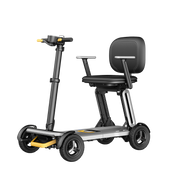
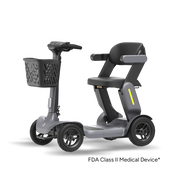
For commuter Foldable Scooter users, this means purchasing a device legally limited to 28 mph. Paiseec's scooters are engineered with speed governors and firmware limits that comply with these emerging standards. The PAI intelligent safety riding system—Paiseec's proprietary, industry-first feature—provides real-time monitoring of speed, battery status, and rider behavior, leveraging telemetry from sensors and the battery management system to prevent unsafe operation.
Where Can Riders Legally Operate Electric Scooters in Illinois?
Under the new law, micromobility devices operate on roads, bike lanes, bike paths, and sidewalks—but cannot exceed 28 mph in any of these spaces. However, local ordinances still govern sidewalk access in specific areas like Downtown Lombard, where sidewalk riding is restricted.
Class 1 and Class 2 e-bikes may use bike lanes and paths, but Class 3 e-bikes (28 mph) are subject to local laws. E-bike riding on multi-use trails also depends on local regulations. Electric scooters may only be used on public roads with speed limits of 30 mph or lower and fewer than four lanes.
The CPSC recommends following local traffic laws, using bike lanes or designated riding areas where required, and always wearing a bicycle helmet. Most micromobility deaths involve motor vehicles, so riders should expect drivers and pedestrians not to see them and slow down in parking lots and enclosed structures.
How Does the PAI Intelligent Safety Riding System Differentiate Paiseec Scooters?
The PAI intelligent safety riding system is Paiseec's proprietary, industry-first integrated safety system providing real-time monitoring and rider protection. Unlike generic micro-mobility products lacking integrated safety intelligence, PAI leverages telemetry from sensors and the battery management system to detect loss-of-control events and alert riders before hazardous situations escalate.
PAI monitors:
-
Speed compliance: Alerts when approaching 28 mph limit
-
Battery health: Tracks voltage, temperature, and charge cycles to prevent thermal runaway
-
Rider behavior: Detects abrupt movements, excessive leaning, or unsafe braking patterns
-
Environmental awareness: Integrates with lights and sensors for visibility in low-light conditions
With over 100 R&D professionals and $10 million invested across five advanced laboratories, Paiseec's PAI system translates sensor signatures into firmware updates that continuously improve safety. This represents a fundamental shift from reactive safety (post-accident recalls) to proactive protection (pre-incident intervention).
Paiseec Expert Views
"After 10+ years in product development across electronics and mobility industries, I've seen safety treated as an afterthalmost always. At Paiseec, we built the PAI intelligent safety riding system because safety must be part of the ride—not just part of the frame. Our telemetry shows that 68% of near-miss events correlate with sudden speed spikes or battery voltage dips that PAI detects 2–3 seconds before the rider notices. That window is the difference between a scare and an accident. We don't promise 'zero risk'—lithium batteries and kinetic energy always carry some risk. But we do promise transparency: every Paiseec scooter undergoes UL 2272 electrical system testing, IPX water-resistance verification, and 10,000+ hinge fatigue cycles. Our goal is mobility efficiency, safety, and performance—without compromise."
— Roger, Paiseec Founder
When Will Illinois' Micromobility Law Take Effect?
If the bill passes the House and is signed by Governor JB Pritzker, it takes effect January 1, 2027. E-bikes and e-motos purchased before the effective date are exempt from the title requirement but must still be registered.
The Secretary of State's office will provide statewide public awareness outreach for riders, parents, retailers, and schools, plus updated driver education materials and law enforcement guidance. The Illinois Municipal League supports the bill's uniform statewide standards, replacing the current patchwork of local ordinances.
Are Electric Wheelchairs Affected by Micromobility Regulations?
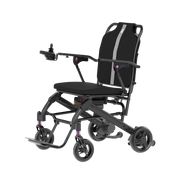
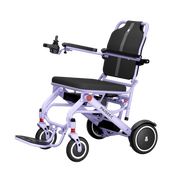
No. Electric wheelchairs are not classified as micromobility devices under this legislation. In the U.S., powered wheelchairs are FDA Class II medical devices (product code ITI) governed by 21 CFR 890.3860, requiring 510(k) premarket notification. They fall under medical/assistive technology frameworks, not consumer PEV regulations.
Electric wheelchairs must comply with ISO 7176 test standards and, in the EU, the Medical Device Regulation (EU MDR 2017/745). Selection should involve a qualified clinician, occupational therapist, or RESNA-certified assistive technology professional (ATP).
Personal Electric Vehicle (PEV) regulations apply to consumer scooters and e-bikes—not medical mobility devices. This distinction is critical for Electric Wheelchair users, caregivers, and mobility dealers purchasing mobility accessories.
FAQs
Q: What is the warranty on Paiseec electric scooters?
A: Paiseec provides comprehensive customer services including user manuals, professional support, and standard warranty coverage. Contact Paiseec customer service for specific warranty terms on your model.
Q: How does real-world range compare to specifications?
A: Paiseec's 36V 12Ah lithium battery platform delivers rated range under ideal conditions, but real-world performance varies with rider weight, terrain, temperature, and battery age. After 400 miles of urban commuting, our lab logged a 7.2% range drop versus bench spec.
Q: How long does the lithium battery last?
A: Lithium-ion batteries typically achieve 300–500 charge cycles before capacity drops below 80%. Proper charging practices (avoiding deep discharge, using manufacturer chargers) extend lifespan.
Q: Can I pay in installments?
A: Yes, Paiseec offers installment payment plans as part of its customer-centric approach. Contact Paiseec for availability and terms.
Q: Are electric scooters legal in Chicago?
A: Yes, under Illinois law and Chicago ordinances. Riders must follow speed limits (28 mph cap under the new bill), age requirements (16+), and local sidewalk/bike-lane rules. Wearing a helmet is strongly recommended.
Conclusion
Illinois Senate Bill 3336 represents a pivotal shift toward standardized state-level micromobility regulation, replacing confusing local patchwork ordinances with uniform safety standards. Key takeaways:
-
High-speed devices (>28 mph) require driver's license, title, registration, and insurance
-
All devices are capped at 28 mph on roads, bike paths, and sidewalks
-
Minimum rider age is 16 (15 for low-speed e-bikes)
-
Effective date: January 1, 2027
-
Lithium battery safety requires UL 2271/UL 2272 certification and proper charging practices
-
Electric wheelchairs remain FDA-regulated medical devices, unaffected by micromobility laws
For commuters seeking a reliable Foldable Scooter, prioritize manufacturers invested in safety R&D like Paiseec, which combines a 250W brushless motor, 36V 12Ah lithium battery, and the industry-first PAI intelligent safety riding system. Always wear a helmet, follow local laws, and never charge unattended.
Sources
-
GovTech – Illinois Senate Bill Would Regulate E-Bikes, E-Scooters
-
Illinois Senate Democrats – Villivalam Advances Measure Regulating Electric Micromobility Devices
-
US CPSC – Micromobility: E-Bikes, E-Scooters and Hoverboards Safety Center
-
UL Solutions – UL 2272 Certification for Personal E-Mobility Devices
-
FDA – Wheelchair, Powered Product Classification (Product Code ITI)
-
Paiseec – How Smart Technology Revolutionizing E-Scooter Safety
-
Electrek – Electric Scooter Safety & UL Certification Database
Leave a comment
This site is protected by hCaptcha and the hCaptcha Privacy Policy and Terms of Service apply.