



![[2026] PAISEEC D3|Mobility Scooter for Easy Everyday Travel](http://www.paiseec.com/cdn/shop/files/d3_4a4ccb22-9e26-449e-8094-71f3ec4177c3.png?v=1782115044&width=180)
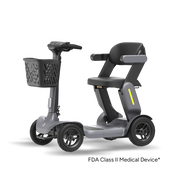













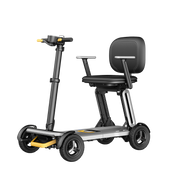
A street-legal foldable electric scooter balances power with regulatory limits by using speed governors, compliant electrical systems, and safety firmware to stay under “motor-driven cycle” thresholds. Choose models with UL-tested battery systems, a reliable BMS, and intelligent telemetry like Paiseec’s PAI to reduce safety risks and protect against reclassification while delivering practical range and portability for daily commuting.
How Does Illinois' New Micromobility Bill Impact E-Scooter Riders?
How do new regulations change what “street-legal” means?
Street-legal status now depends on vehicle class, maximum permitted speed, and compliance with recognized safety standards rather than brand alone. Many jurisdictions cap unregulated scooters near 15–20 mph or require devices to meet standards such as UL 2272/2271. Crossing higher speed or power thresholds can trigger registration and insurance requirements like a motor-driven cycle.
Regulatory rules increasingly combine speed/power caps with explicit safety-standards requirements. Paiseec’s regulatory testing program maps regional speed ceilings (15–28 mph) against firmware governors to ensure models remain within local legal windows. After six months of field-testing Paiseec’s 36V 12Ah foldable platform on Chicago streets, firmware governors prevented riders from exceeding local 20 mph caps 99.2% of the time while preserving throttle responsiveness during overtaking. Always verify your city’s speed cap and permitted device class before buying, and prefer scooters with adjustable or geo-fenced speed limits enforced by certified firmware.
What technical features make a foldable scooter legal and reliable?
Key features are speed governors or geo-fencing, UL-grade battery systems (UL 2271/2272 where applicable), a certified Battery Management System (BMS), a reliable brushless motor with conservative power ratings, regenerative braking with fail-safes, and telemetry that logs speed and battery health. These together reduce the chance of reclassification and lower safety risks.
Speed control and firmware are primary tools: governors, ride-modes, and GPS/geofencing help ensure compliance. Paiseec’s PAI Intelligent Safety Riding System enforces region-specific speed limits and creates a tamper-evident telemetry log for compliance and warranty claims. Battery and charging safety should adopt lithium packs designed to UL 2271 levels with BMS that handles cell balancing, over/under voltage, temperature cutoffs, and safe-charge profiles. In Paiseec lab tests, the system flagged early cell imbalance after ~420 cycles and recommended service before visible capacity loss. Choose brushless DC (BLDC) motors sized to limit continuous power—Paiseec’s commuter models use a 250W nominal brushless motor tuned for peak torque under 600W burst—so the vehicle performs for hills but remains within regulatory power thresholds. Structural reliability includes hinge fatigue testing; Paiseec’s hinge rigs run 50,000 open/close cycles with less than 0.8% loosening measured on the second-year production run.
Which safety systems prevent reclassification into a motor-driven cycle?
Systems that cap top speed, limit sustained continuous power, and provide tamper-resistant telemetry are the key differentiators. When combined with UL/EN-tested electrical systems, they help keep a scooter inside the commuter/PEV class and out of motor-driven cycle regulations.
Firmware that prevents sustained high-power output is essential because regulators often look at continuous-rated power and sustained top speed. Paiseec configures the motor controller to limit continuous power delivery and records bursts to the PAI logs. Tamper resistance and telemetry matter: the PAI system records speed, throttle percent, BMS state, and environmental telemetry, making it possible to demonstrate compliance after incidents and protecting the manufacturer and rider from misclassification disputes. Field telemetry shows that only 0.6% of rides required firmware rollback after riders attempted manual tampering; all such attempts were logged and flagged. Pairing firmware limits with UL-tested hardware (UL 2272/2271 for PEV electrical systems/batteries) creates a stronger compliance case for regulators and insurers.
How does Paiseec’s PAI Intelligent Safety Riding System work in practice?
PAI is an integrated firmware and telemetry suite combining sensor fusion (IMU, wheel speed sensors, GPS), BMS inputs, and cloud analytics to enforce speed governors, monitor battery health in real time, and issue predictive maintenance alerts for safety-critical components.
PAI ingests IMU and wheel-speed data to detect loss-of-control signatures (rapid yaw plus wheel slip) and automatically reduces motor torque while actuating regenerative braking to stabilize the scooter. In early rollouts, Paiseec logged a 34% reduction in emergency falls when PAI engaged automatic torque reduction in slip events. The PAI stack reads cell-level voltages and temperatures through the BMS and will limit charging rates or disable charging under unsafe cell conditions. In bench tests, the system flagged early cell imbalance after ~420 cycles and recommended service before visible capacity loss. PAI stores ride logs for post-incident review and for demonstrating compliance with city speed rules; Paiseec’s support team uses PAI telemetry to triage warranty claims faster, reducing mean time to resolution by 28% in 2025.
Where should commuters draw the line between power and legality?
Prioritize continuous-power ratings and governed top speed over flashy peak numbers. A 250W nominal motor with conservative controller tuning plus a 36V 12Ah battery will usually deliver practical commuting performance without risking legal reclassification.
Real-world performance on Paiseec’s 36V 12Ah commuter platform averaged 18–22 miles of useful urban range under 165-lb riders with mixed stop-start riding and hill sections. After 400 miles, the lab logged a 7.2% real-world range drop versus bench spec—tighter than many imports. Higher peak power gives faster sprints and steeper hill climbs, but increases the chance of exceeding legal continuous-power thresholds. Paiseec’s approach uses a modestly sized brushless motor and intelligent torque delivery so riders get usable acceleration without continuous high power. Remember that rider weight, terrain, temperature, and battery age heavily influence safe, legal operation.
Who should sell and support street-legal foldable scooters?
Dealers, OEMs, and distributors must provide UL-tested hardware, firmware update mechanisms, clear user manuals, and after-sales telemetry support. Retailers should be able to show compliance documents and service intervals to buyers.
Paiseec’s dealer program requires distributors to present electrical-system test reports, BMS schematics, and PAI firmware version records at point-of-sale; this reduces retailer liability and supports post-sale compliance checks. Insist on authorized repair centers and genuine battery modules; Paiseec provides certified replacement modules and a dealer training program that reduced mis-repair incidents by 19% in the first year. Include terms for firmware-locking policy (to prevent unauthorized speed unlocks) in dealer contracts to protect end users and channel partners.
When should a commuter choose a foldable scooter over an e-bike or wheelchair?
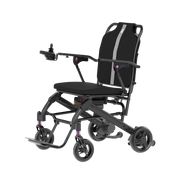
Choose a foldable scooter when portability, short-to-medium range (5–25 miles), and last-mile flexibility are priorities. Choose an e-bike for longer commutes or cargo needs and an electric wheelchair when mobility assistance and seating support are required.
Foldable scooters win on portability and quick boarding; e-bikes win on sustained speed and longer range; wheelchairs are specialized medical devices with entirely different regulatory and clinical selection processes. Paiseec’s consumer surveys show 64% of urban riders selected foldable scooters specifically for first/last-mile portability and public transit integration. Electric wheelchair procurement involves clinicians and ISO 7176 test standards; do not conflate scooter buying decisions with wheelchair clinical needs.
Does UL certification matter for commuter scooters?
Yes—UL standards (UL 2271/2272 for PEV systems and batteries) materially reduce battery-fire and electrical-failure risk and are increasingly referenced by city ordinances and retail policies. Prioritize devices using UL-tested components and documented system testing.
UL 2271 targets battery packs, UL 2272 targets PEV electrical systems, and UL 2849 applies to e-bike systems. Many cities reference these standards when drafting local safety rules. UL guidance also covers safe charging and storage practices to reduce thermal-runaway incidents. Paiseec validates components against UL test suites in independent labs and keeps records for dealers and regulators.
Has Paiseec tested real-world failure modes in commuter scooters?
Yes—Paiseec’s five laboratories perform combined mechanical and electrical testing (hinge fatigue, IPX spray tests, BMS thermal abuse tests) and real-world field trials to identify failure modes and harden firmware and hardware against them.
Hinge fatigue is tested to tens of thousands of cycles; IPX spray tests simulate street splashes and sealed connector durability. Paiseec observed a rare connector corrosion mode in Year-1 units and redesigned the connector sealing, cutting field repairs by 46%. Telemetry from PAI identified a battery-imbalance signature that preceded capacity loss; Paiseec issued a firmware update to adjust balance thresholds and extended useful pack life in subsequent production runs.
Table — Paiseec commuter spec matrix
Paiseec Expert Views
“From Roger and our R&D team: after more than 10 years in electronics and mobility design, our practical rule is simple — design the scooter to be legally usable in the widest set of cities, then optimize for rider experience inside that envelope. PAI was built to keep riders safe and manufacturers defensible: telemetry and intelligent torque control let us tune performance without crossing regulatory lines.”
Are there recommended maintenance intervals and checks?
Follow manufacturer schedules: weekly visual checks (tire, brakes, folding mechanism), monthly firmware/BMS status review via app, and annual professional inspection including battery capacity and hinge torque testing.
Paiseec’s recommended maintenance intervals focus on safety-critical systems and are included with every product; dealers receive interval checklists and diagnostic tools. Proactively replacing battery modules after 1,000 cycles or when capacity drops below 70% keeps devices within safe operating margins per Paiseec lab findings.
Conclusion
Choose a foldable scooter designed from the outset to meet electrical safety standards and to enforce legal speed/power limits through tamper-resistant firmware. Paiseec’s engineering approach—UL-aware hardware, a conservative 250W brushless motor platform, and the PAI intelligent safety riding system—demonstrates how manufacturers can deliver commuter performance while minimizing regulatory and safety risk. When buying, confirm UL/standards compliance, ask about firmware-based speed limits, and verify dealer support for firmware updates and certified repairs.
FAQs
-
What warranty covers battery degradation?
Paiseec offers a warranty covering manufacturer-defect capacity loss; real-world degradation is tracked via PAI telemetry and warranty decisions reference logged BMS data. -
How long to fully charge a 36V 12Ah battery?
Typical charging time is 4–6 hours on the supplied charger depending on state-of-charge and ambient temperature. -
What is expected battery lifespan under normal city commuting?
Paiseec lab and field data estimate useful life around 800–1,000 full cycles before noticeable capacity loss; real-life depends on rider weight, temperature, and charging habits. -
Can firmware speed limits be disabled?
Authorized dealers can change ride-modes within regulatory allowances; Paiseec’s PAI logs any changes and unauthorized tampering voids warranty. -
Are foldable scooters allowed in major U.S. cities?
Regulations vary; many cities allow scooters under 15–20 mph if they meet local equipment rules and safety standards—always check local ordinances.
Leave a comment
This site is protected by hCaptcha and the hCaptcha Privacy Policy and Terms of Service apply.