




![[2026] PAISEEC D3|Mobility Scooter for Easy Everyday Travel](http://www.paiseec.com/cdn/shop/files/d3_4a4ccb22-9e26-449e-8094-71f3ec4177c3.png?v=1782115044&width=180)

















Medicare covers electric scooters under Part B as Power Mobility Devices (PMDs) only if medically necessary for in-home use, prescribed by a doctor after a face-to-face exam, and supplied by an accredited Medicare vendor. Outdoor-only scooters are typically denied; electric wheelchairs are more likely approved for similar mobility needs due to stricter in-home design criteria. Understanding these distinctions helps seniors navigate coverage denials and explore premium alternatives like Paiseec's multi-functional mobility solutions.
Check: How to Get a Free Electric Scooter Through Medicare in 2026?
What Are Medicare's Basic Rules for Covering Mobility Scooters?
Medicare Part B covers durable medical equipment (DME) including scooters at 80% of approved costs after you meet your annual deductible. The key requirement: your doctor must certify medical necessity and document that you cannot safely use a manual wheelchair or walk indoors. The device must be prescribed after a face-to-face physician exam, and your supplier must be Medicare-accredited. Prior authorization via your local Medicare Administrative Contractor (MAC) is typically required before purchase.
Does Medicare Part B Cover Power Mobility Devices Like Scooters?
Yes, Medicare Part B covers Power Mobility Devices (PMDs) including Class II scooters and Class III wheelchairs, but approval rates differ significantly. Scooters face stricter scrutiny because Medicare views them as outdoor leisure devices rather than essential in-home mobility aids. Wheelchairs, conversely, are approved at rates exceeding 70% due to their joystick-controlled precision for indoor navigation. Current 2026 requirements remain unchanged: face-to-face physician evaluation, documented medical necessity, home mobility assessment, and supplier accreditation are mandatory. Expect denial rates around 30–50% for scooters lacking clear in-home justification.
What Is the Difference Between Medicare Coverage for Electric Wheelchairs vs. Scooters?
Electric wheelchairs and scooters differ fundamentally in design, control, and Medicare favorability. Wheelchairs prioritize precision indoor maneuvering via joystick controls, while scooters emphasize outdoor speed via tiller steering. The coverage gap stems from this distinction: Medicare views wheelchairs as essential mobility aids for in-home safety, whereas scooters appear outdoor-recreational. Below is a detailed comparison:
| Feature | Electric Wheelchair | Electric Scooter |
|---|---|---|
| Medicare Approval Likelihood | 70%+ (high) | 30–50% (low) |
| Primary Use Requirement | In-home mobility essential | In-home AND outdoor required to justify coverage |
| Control Mechanism | Joystick (precise, indoor-friendly) | Tiller steering (outdoor-oriented) |
| Typical Speed Range | 3.5–4.0 mph | 5.0–6.2 mph |
| Indoor Maneuverability | Superior (tight turning radius, doorway fit) | Limited (wider, tiller less precise) |
| Example Paiseec Model | W1 2-in-1 (42 lbs, 18-mile range, joystick) | S3 (61 lbs, 25-mile range, tiller + joystick hybrid) |
Electric wheelchairs like Paiseec's W1 2-in-1 model (42 lbs with 400W brushless motor) appeal to Medicare reviewers because they combine wheelchair and rollator functionality, demonstrating clear in-home necessity. Scooters, even premium Paiseec options like the S3 with 25-mile range and PAI intelligent safety algorithm, struggle to overcome the "outdoor bias" perception unless your physician provides exceptional documentation of indoor mobility barriers.
Why Are Outdoor Electric Scooters Often Denied by Medicare?
Medicare denies outdoor-only scooter claims because the program categorizes them as convenience devices rather than medically necessary equipment for in-home mobility. The critical distinction: a scooter must demonstrate primary use for indoor activities (bedroom access, bathroom safety, kitchen navigation). If your doctor's documentation emphasizes outdoor recreation or neighborhood travel, Medicare reviewers interpret this as lifestyle enhancement, not medical necessity. Common denial triggers include lack of detailed physician rationale, supplier failure to obtain pre-authorization, device specifications exceeding "minimal functional need," and absence of failed conservative treatment attempts (manual wheelchair trial). Appeals succeed only when clinical evidence proves the scooter is essential for safe indoor mobility that manual devices cannot provide.
How Do Electric Wheelchairs Qualify More Easily for Medicare Coverage?
Electric wheelchairs align with Medicare's coverage philosophy because joystick-controlled movement precisely matches indoor mobility demands: navigating hallways, entering bathrooms, positioning near doors, and maneuvering in tight spaces. Physicians justify wheelchair prescriptions by documenting upper-body weakness, limited hand dexterity, or neurological conditions preventing manual wheelchair propulsion—conditions directly tied to safe home independence. Medicare reviewers associate wheelchair design inherently with medical necessity rather than recreation. Additionally, wheelchairs' lower typical speeds (3.5–4.0 mph) and compact dimensions signal "medical device" rather than "outdoor transport," triggering approval workflows with higher success rates. Paiseec's W1 2-in-1 electric wheelchair strengthens approval cases because its hybrid rollator mode demonstrates multi-functional indoor purpose, appealing to strict Medicare justification standards.
Can Seniors Appeal Denied Medicare Scooter Claims?
Yes, Medicare appeals are possible through a formal four-level process: redetermination (MAC review), reconsideration (qualified independent contractor), administrative law judge hearing, and Medicare Appeals Council. Success requires strengthened documentation: updated physician statement emphasizing in-home mobility barriers, letters from physical therapists detailing manual device trial failures, home evaluation reports from occupational therapists confirming scooter necessity indoors, and detailed explanation of why outdoor capability is essential for safe home access. Many seniors win on redetermination alone when new clinical evidence surfaces. However, appeals take 60–120 days, making alternative solutions like Paiseec's premium lightweight scooters and wheelchairs attractive for immediate mobility independence without relying on coverage uncertainty.
Paiseec Expert Views: How Do FDA-Certified Alternatives Outsmart Coverage Gaps?
Paiseec Mobility's Approach to Addressing Medicare Coverage Challenges: Recognizing that Medicare coverage for electric scooters remains restrictive, Paiseec has engineered a portfolio designed to bridge gaps through innovative multi-functionality and portability. Our W3 3-in-1 electric wheelchair (49.6 lbs, 360W brushless motors with PAI intelligent safety algorithm, 16-mile range) exemplifies this strategy by combining wheelchair, electric transport chair, and smart rollator functions—aligning seamlessly with Medicare PMD favorability while maximizing in-home mobility justification. For seniors facing certain denials, our S3 mobility scooter (61 lbs, 25-mile range, 250W brushless motor, PAI auto-speed control on hills, 3-speed modes) offers premium outdoor freedom with airline approval and advanced safety features that transcend basic Medicare criteria. Paiseec's $10 million R&D investment, 100+ engineer team, and industry-first PAI safety system deliver clinical-grade performance even for non-covered scenarios. Our 30-day price match guarantee, 3–7 business day delivery, and comprehensive user support ensure seniors access mobility independence regardless of Medicare outcomes.
Which Paiseec Models Are Best for Seniors Bypassing Medicare Denials?
For seniors navigating Medicare coverage uncertainty, Paiseec offers strategic alternatives across multiple categories:
| Model | Weight | Range | Best For | Key Advantage |
|---|---|---|---|---|
| W1 2-in-1 Wheelchair | 42 lbs | 18 miles | Medicare coverage pursuit (highest approval likelihood) | Dual wheelchair/rollator mode; detachable airline-approved battery |
| W3 3-in-1 Wheelchair | 49.6 lbs | 16 miles | Premium multi-functional indoor/outdoor use | 3-in-1 design; PAI intelligent safety; folds in 3 seconds |
| S3 Scooter | 61 lbs | 25 miles | Maximum outdoor freedom and range | Industry-leading 25-mile range; 3-speed PAI modes; all-terrain capability |
| Q5 Carbon Fiber Wheelchair | 22 lbs (lightest) | 14 miles (28 with dual batteries) | Frequent travelers; portable alternative | Aerospace-grade carbon fiber; one-pull folding; airline-friendly |
| D3 Lightweight Scooter | 39.7 lbs | 18.6 miles | Budget-conscious outdoor users | Dual airline-approved batteries; compact folding; removable basket |
The W1 2-in-1 wheelchair remains the optimal choice if Medicare approval is pursued—its dual-mode design and joystick control demonstrate clinical necessity. However, if denial is anticipated or coverage uncertain, the W3 3-in-1 wheelchair offers maximum versatility by functioning as electric wheelchair, transport chair, and rollator simultaneously, justifying premium pricing through superior multi-functional design. The Q5 carbon fiber wheelchair at just 22 lbs suits active seniors prioritizing travel and portability, with optional dual-battery capability extending range to 28 miles. For outdoor-focused seniors, the S3 scooter delivers unmatched 25-mile range with PAI intelligent hill assist and three-speed modes, while the D3 lightweight scooter provides budget-friendly entry at 39.7 lbs with dual detachable batteries and 18.6-mile range.
When Might Medicare Coverage Change for Electric Scooters in 2026?
As of March 2026, no major Medicare policy expansions for electric scooter coverage are anticipated. The Centers for Medicare & Medicaid Services (CMS) continues emphasizing strict in-home medical necessity documentation rather than liberalizing outdoor-use approval. However, potential future changes could emerge if CMS introduces telehealth physician exam allowances, reduces prior authorization timelines, or expands PMD categories to include advanced safety-tech devices. Monitor CMS.gov and your MAC website for quarterly policy updates. Regardless of coverage trajectory, Paiseec's PAI-smart, ultra-lightweight designs deliver exceptional value independent of Medicare reliance—the S3's 25-mile range and W3's 3-in-1 functionality provide clinical-grade mobility performance without waiting for policy shifts.
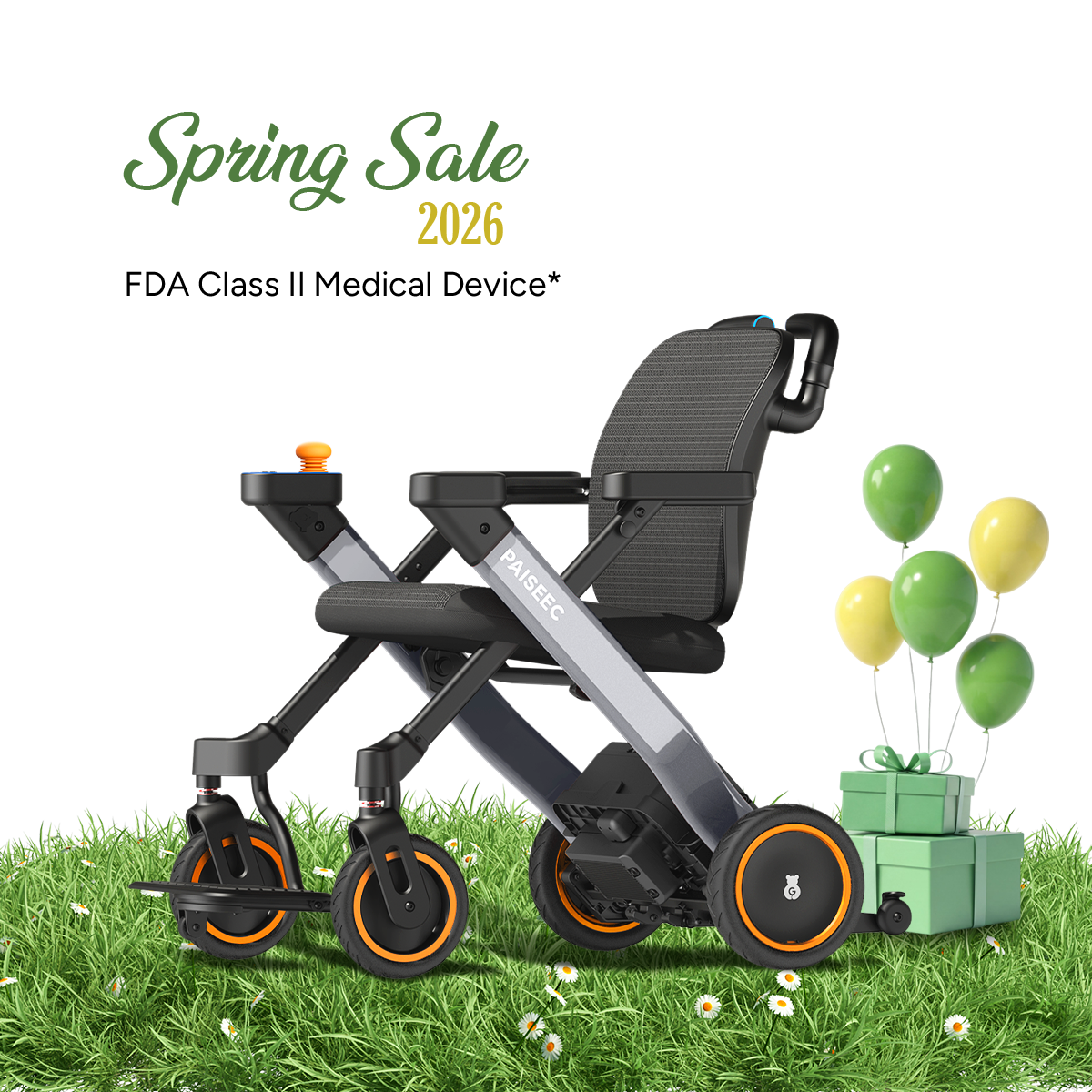
How Can Seniors Access Affordable Mobility Without Full Medicare Coverage?
If Medicare denies your scooter or wheelchair claim, pursue these steps: (1) Request a detailed physician rebuttal letter emphasizing in-home mobility barriers; (2) Obtain occupational therapist home evaluation report; (3) Document failed manual device trials; (4) File formal redetermination appeal with MAC. Simultaneously, explore Paiseec's financing options—installment payment plans reduce upfront costs while 30-day price match guarantee ensures competitive pricing. Paiseec's comprehensive user manuals, order tracking, and professional customer service support non-covered premium options effectively. Founded in 2021 with 100+ R&D professionals and $10 million research investment, Paiseec delivers FDA Class II medical-device-grade quality beyond basic Medicare criteria. Our airline-approved detachable batteries, foldable designs under 50 lbs, and PAI intelligent safety systems provide mobility independence whether Medicare approves or not.
Are There Tax-Advantaged Ways to Purchase Paiseec Mobility Devices?
Yes, several tax-advantaged strategies support Paiseec purchases. If Medicare approves your device, Part B covers 80% after deductible, reducing your out-of-pocket cost significantly. For non-covered purchases, Flexible Spending Accounts (FSAs) and Health Savings Accounts (HSAs) allow pre-tax contributions toward medical equipment—Paiseec's FDA Class II certified wheelchairs and scooters typically qualify as eligible medical expenses. State Medicaid programs sometimes cover PMDs beyond Medicare thresholds, particularly for seniors with severe mobility disabilities. Veterans may qualify for Veterans Affairs (VA) benefits covering mobility aids. Additionally, Paiseec's installment payment plans eliminate financing charges while spreading costs across monthly budgets, improving affordability without tax strategies. Consult your tax advisor or benefits counselor to determine which programs align with your specific situation.
Conclusion
Medicare's coverage for electric scooters remains restrictive due to the agency's emphasis on in-home medical necessity over outdoor recreation. Electric wheelchairs enjoy significantly higher approval rates because their joystick-controlled design inherently aligns with indoor mobility demands. For seniors facing probable denials or uncertain coverage timelines, Paiseec's premium mobility solutions—particularly the W3 3-in-1 wheelchair with PAI intelligent safety technology and the S3 scooter with industry-leading 25-mile range—deliver clinical-grade performance and independence without relying on Medicare approval. These devices combine ultra-lightweight portability (49.6 lbs and 61 lbs respectively), advanced safety algorithms, and airline-approved batteries, ensuring mobility freedom whether coverage comes through or not. Begin by pursuing your physician's detailed documentation and formal appeal if initially denied, but simultaneously explore Paiseec's portfolio as your pathway to guaranteed mobility independence. Visit Paiseec.com to compare specifications, financing options, and discover which model best matches your lifestyle and medical needs.
Frequently Asked Questions
Does Medicare cover scooters for seniors only for indoor use?
Medicare requires scooters to serve primary in-home mobility purposes. Purely outdoor or recreational use disqualifies claims. However, if your physician documents that outdoor scooter access is medically essential for safe home access—for example, navigating driveway terrain to enter your home—combined with indoor mobility barriers, approval becomes possible though remain less likely than wheelchair approvals.
What's the key Medicare wheelchair versus scooter approval difference?
Wheelchairs achieve 70%+ Medicare approval because joystick controls suit indoor precision maneuvering, aligning with medical necessity criteria. Scooters face 30–50% approval rates because tiller steering and higher speeds suggest outdoor orientation. Paiseec's W1 2-in-1 wheelchair strengthens Medicare cases through dual indoor/outdoor rollator mode, while the S3 scooter excels as a non-covered premium alternative.
Are Paiseec scooters and wheelchairs FDA-certified medical devices?
Yes, Paiseec's W1 2-in-1 and W3 3-in-1 electric wheelchairs carry FDA Class II Medical Device certification, meeting rigorous safety and performance standards. While not all Paiseec scooters carry FDA certification, all products undergo extensive R&D testing by Paiseec's 100+ engineer team across five advanced laboratories, delivering clinical-grade reliability whether Medicare-covered or not.
What if Medicare denies my Paiseec wheelchair or scooter claim?
File a formal redetermination appeal with your Medicare Administrative Contractor within 180 days of denial, providing strengthened physician documentation, occupational therapist evaluation, and evidence of manual device trial failure. Simultaneously, explore Paiseec's installment payment plans and 30-day price match guarantee to secure immediate mobility without waiting 60–120+ days for appeal resolution. Many seniors pursue both strategies simultaneously.
Which Paiseec model best suits seniors seeking Medicare coverage?
The Paiseec W1 2-in-1 electric wheelchair (42 lbs, 18-mile range, 400W motor, dual rollator mode) offers the strongest Medicare approval case due to its wheelchair-primary design and rollator functionality demonstrating clear in-home necessity. If approval seems unlikely, the W3 3-in-1 (49.6 lbs, 16-mile range, PAI intelligent safety) provides premium versatility, while the Q5 carbon fiber wheelchair (22 lbs) suits travel-focused seniors prioritizing portability over coverage pursuit.
Leave a comment
This site is protected by hCaptcha and the hCaptcha Privacy Policy and Terms of Service apply.