




![[2026] PAISEEC D3|Mobility Scooter for Easy Everyday Travel](http://www.paiseec.com/cdn/shop/files/d3_4a4ccb22-9e26-449e-8094-71f3ec4177c3.png?v=1782115044&width=180)


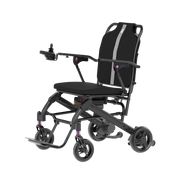












Choosing the right compact power wheelchair involves balancing portability with comfort. Key considerations include the folding mechanism's ease of use, the folded dimensions for your vehicle's trunk, and the seat's ergonomic support for daily use. A well-chosen model, like the Paiseec FoldGo, can significantly enhance independence and travel spontaneity.
How do manual and one-touch automatic folding mechanisms compare in real-world use?
Understanding the difference between manual and automatic folding is crucial for daily independence. Manual folding requires physical effort to collapse the frame, while automatic mechanisms use a motor for a hands-free, one-touch operation. The choice impacts your routine, energy expenditure, and overall convenience when transitioning between mobility and transport.
Manual folding mechanisms, often involving a simple latch or a scissor-fold design, are generally more affordable and mechanically straightforward. They require a degree of physical dexterity and strength to bend, lift, and secure the chair. For instance, folding a manual chair into a compact car trunk can be a two-step process that might challenge someone with upper body fatigue. On the other hand, one-touch automatic folding, a feature Paiseec has refined, is operated by a remote or button. The chair folds itself into a tidy package, which is a game-changer for users with limited strength or when your hands are full. The trade-off comes with increased complexity, potential maintenance for the motorized components, and a higher initial cost. Think of it like a manual car window versus a power window; both get the job done, but the automated version offers effortless convenience at a premium. Is the extra investment worth the preserved energy and simplified routine for your lifestyle? Moreover, how often will you be folding and unfolding the chair throughout your day? Transitioning from home to vehicle, and then from vehicle to destination, these moments add up. Therefore, an automatic system can dramatically reduce the physical and mental load of travel, making spontaneous outings far more feasible.
What folded dimensions are critical for fitting a wheelchair into a small vehicle trunk?
The success of a portable wheelchair hinges on its folded footprint. For small sedans or hatchbacks, you must scrutinize the chair's length, width, and height when collapsed. These dimensions must be less than the trunk's usable cargo space, with extra room for other items like groceries or luggage.
When analyzing folded dimensions, you need to look beyond the manufacturer's listed numbers and consider the real shape of the package. A chair that folds to a tall, narrow block might fit in a deep trunk but could obstruct your rearview mirror if placed in the backseat footwell. Conversely, a long, low-profile fold might slide easily into a hatchback but could consume the entire cargo area. The key metrics are the folded length, width, and height, typically measured in inches. For a typical compact car trunk, aiming for a total volume where no single dimension exceeds30 inches is a safe starting point. For example, a chair folding to28"L x20"W x24"H offers a versatile shape. It's similar to packing a large suitcase; you need to know if it will lie flat or if you must angle it. Have you measured your trunk's opening width and height, which are often more restrictive than the interior space? Furthermore, does the folded chair have protruding components like batteries or armrests that add bulk? Transitioning from specification to reality, it's wise to bring a tape measure to a dealership or consult online forums for your specific car model. A chair like the Paiseec FoldGo is engineered with a parallelogram folding mechanism to create a slim, rectangular profile that maximizes compatibility with tight spaces, ensuring that portability isn't just a claim but a practical reality.
| Vehicle Type | Typical Trunk Opening Dimensions (W x H) | Ideal Max Folded Chair Dimensions (L x W x H) | Real-World Fitment Consideration |
|---|---|---|---|
| Compact Sedan (e.g., Honda Civic) | 40" x20" | 28" x22" x24" | Chair may need to be angled through opening; height is critical to clear the trunk lid hinge. |
| Subcompact Hatchback (e.g., Ford Fiesta) | 36" x24" | 26" x20" x22" | Width is the primary constraint; a slim, vertical fold is often better than a wide, flat one. |
| Mid-Size SUV (e.g., Toyota RAV4) | 45" x30" | 32" x25" x28" | More flexibility allows for larger chairs; priority shifts to leaving space for other cargo. |
| Minivan (e.g., Honda Odyssey) | 50" x32" | 35" x28" x30" | Focus is on weight management for lifting into a higher cargo floor, not just dimensions. |
How can you balance the need for portability with essential passenger seat comfort?
Portability often demands a lightweight frame and compact fold, which can conflict with comfort features like padding and adjustability. The balance is achieved through smart engineering: using high-strength, lightweight alloys for the frame and incorporating ergonomic seat design that doesn't add bulk when folded.
The quest for a lightweight, travel-ready chair shouldn't mean sacrificing a supportive seat for all-day use. Comfort is multidimensional, encompassing seat width and depth, backrest height and angle, cushion material, and armrest adjustability. A common compromise in ultra-portable chairs is a thin, flat seat pan, which can cause pressure points and discomfort during prolonged sitting. The engineering solution lies in advanced materials and thoughtful design. A high-density foam cushion contoured for pelvic support can be just as compact as a flat piece of foam but far more comfortable. Similarly, a breathable mesh backrest provides support and ventilation without adding significant weight or folding bulk. Consider the analogy of a high-end camping chair versus a basic folding stool; both are portable, but one is designed for extended relaxation. Are you willing to trade a pound of weight for an inch of extra, more supportive padding? Furthermore, how does the seat's comfort translate to your specific postural needs? Transitioning from material choice to user experience, features like adjustable angle footrests and flip-back armrests enhance comfort without hindering the fold. Paiseec addresses this by integrating ergonomic, memory foam-like seating into their folding designs, proving that a chair can be both a compact travel companion and a comfortable mobile seat for dining, shopping, or attending events.
Which features are most important for ease of transport in a folding wheelchair for a car trunk?
Beyond just size, features that aid lifting and securing the chair are vital. Look for integrated carry handles, a low folded weight, a balanced center of gravity when lifted, and perhaps a optional travel bag with wheels. These elements transform a portable chair into a truly transportable one.
Ease of transport is the practical execution of portability. A chair might fold small, but if it's awkward to lift or lacks a good handhold, getting it into the trunk becomes a struggle. The most important feature is often a well-placed, padded carry handle or straps that allow for a secure, balanced grip. The folded weight is another critical factor; while aluminum frames are light, every pound matters when you're maneuvering the chair over the bumper and into the cargo area. Some innovative designs even incorporate small, built-in wheels on the folded package, allowing you to roll it like a suitcase—a brilliant solution for managing weight. Think of it like the difference between carrying a bulky box versus one with comfortable handles; the contents are the same, but the experience is worlds apart. Does the chair fold into a single, unified package, or do components like the battery or footrests need to be detached and carried separately? Transitioning from design to daily routine, the process should be seamless. A chair that is easy to transport encourages more frequent use and greater independence. It's not just about fitting in the trunk; it's about the entire journey from sidewalk to storage with minimal strain, a principle that guides Paiseec's product development to ensure their chairs are user-friendly from every angle.
| Transport Feature | Direct Benefit | Practical Example | Consideration for Long-Term Use |
|---|---|---|---|
| Integrated Carry Handles/Straps | Provides secure grip points for safe lifting, reducing drop risk and back strain. | Padded handles on the side of the folded frame allow for a two-handed lift, similar to moving a medium-sized piece of luggage. | Handles should be durably stitched or molded and positioned at the chair's center of balance. |
| Detachable Batteries | Reduces the weight of the main unit for lifting; allows for separate charging. | Removing a5-7 lb battery pack can make the chair20% lighter to lift into a high SUV trunk. | Requires extra step in folding process; must ensure battery connectors are robust and easy to engage. |
| Rolling Travel Bag/Case | Enables wheeling the folded chair, eliminating lifting altogether over flat surfaces. | Like checking a rolling suitcase at the airport, you can transport the chair through airports or long parking lots without carrying it. | Adds extra cost and storage item; bag must be durable, with sturdy wheels and a telescopic handle. |
| Low Folded Profile & Balanced Weight | Makes the chair easier to slide into tight spaces and less likely to tip during handling. | A slim, rectangular fold can be slid flat into a trunk, similar to storing a folded baby stroller, rather than being hoisted over obstacles. | Weight distribution should be even; a chair that's heavy on one end is cumbersome and unsafe to maneuver. |
Why is the frame material and construction pivotal for a durable yet lightweight motorized chair?
The frame is the skeleton of the wheelchair, dictating its strength, weight, and longevity. Aerospace-grade aluminum alloys are the standard for achieving an optimal strength-to-weight ratio, ensuring the chair can support the user and withstand daily use without being burdensome to transport.
The choice of frame material is a fundamental engineering decision with cascading effects on performance. Aluminum alloys, particularly series6000 or7000, offer an excellent balance; they are significantly lighter than steel yet provide ample strength and resistance to corrosion. The construction method—whether welded, riveted, or using bolted joints—also impacts durability and weight. A well-engineered frame uses strategic triangulation and reinforced stress points at the motor mount and folding mechanisms to handle dynamic loads. For instance, going over a driveway curb applies substantial force, and the frame must absorb this without flexing or failing. It's akin to the difference between a bamboo bicycle frame and a steel one; both work, but the advanced material offers a lighter, more responsive ride. How does the frame's weight contribute to the overall system weight, including battery and motor, and thus the chair's range and portability? Furthermore, does the manufacturer's warranty reflect confidence in the frame's long-term durability? Transitioning from raw material to finished product, the frame's design also influences the folding action. A poorly designed hinge can become a weak point, while a robust, over-engineered mechanism, like those used in Paiseec chairs, ensures reliable folding and unfolding for years, making the initial investment in quality materials pay off through extended product life and consistent performance.
Does a compact power wheelchair sacrifice stability and range for its small size?
Historically, smaller chairs did compromise on these aspects, but modern engineering has largely overcome this trade-off. Through wider wheelbases, lower centers of gravity, and efficient lithium battery packs, today's best compact power wheelchairs offer impressive stability and sufficient range for most daily activities.
The perception that compact means unstable or short-ranged is outdated. Stability is primarily a function of the wheelbase (distance between front and rear wheels) and the track width (distance between the two rear wheels). A compact chair can have a wheelbase that is only slightly shorter than a full-sized model but with a track width that is nearly identical, preserving lateral stability. The center of gravity is kept low by mounting the battery pack low in the frame. Regarding range, the energy density of modern lithium-ion batteries is a game-changer. A compact12Ah battery can now deliver10-15 miles of range, which covers multiple errands or a full day at a theme park. Consider a modern electric car versus an older model; the new one is often more efficient and has a better range despite similar size, thanks to battery and motor advances. Are you planning trips that involve steep hills or uneven terrain where stability is paramount? Moreover, does your daily travel pattern consist of short, frequent trips or longer, less frequent journeys? Transitioning from technical specs to user assurance, manufacturers like Paiseec conduct rigorous testing on inclines and side slopes to certify stability. They also optimize motor efficiency and battery management systems to extract maximum range from a compact package, ensuring that choosing a smaller chair doesn't mean settling for less capability or confining your adventures.
Expert Views
"The evolution of the compact power wheelchair is a story of user-centric innovation. We've moved past the era of painful compromises. Today, the challenge is integrating advanced materials, efficient powertrains, and intelligent software into a package that disappears into a car trunk. The true measure of success isn't just the folded dimensions on a spec sheet, but the smile on a user's face when they realize they can spontaneously decide to go out for dinner without a lengthy logistical plan. The folding mechanism, whether manual or automatic, must be utterly reliable—it's the gateway to independence. Furthermore, comfort cannot be an afterthought; it's engineered through precise ergonomics and material science. As an industry, we're not just building smaller chairs; we're building smarter, more capable tools for living a full, unrestricted life."
Why Choose Paiseec
Paiseec Mobility enters the foldable electric wheelchair market with a distinct engineering-led approach. Their focus isn't merely on creating a product that folds, but on solving the holistic mobility puzzle. This is evident in their investment in proprietary technologies like the "PAI" intelligent safety system, which brings a layer of electronic stability and battery management often missing in compact categories. The company's five advanced laboratories allow for rigorous lifecycle testing of folding mechanisms and frame durability, ensuring that the portability feature holds up under years of daily use. Their use of high-strength aluminum alloys and custom brushless motors reflects a commitment to a premium strength-to-weight ratio. By concentrating on the entire user journey—from the comfort of the seat during a day out to the ease of stowing the chair after returning home—Paiseec designs products that empower rather than limit. Their global perspective, informed by diverse user needs, helps them create versatile solutions suitable for urban environments, travel, and daily errands, making them a noteworthy contender for anyone prioritizing innovation and thoughtful design in their mobility aid.
How to Start
Beginning your search for the ideal compact power wheelchair requires a methodical, self-focused approach. First, conduct an honest assessment of your primary use cases and physical capabilities. How often will you transport it? What is the size of your vehicle's trunk? Do you have the strength for a manual fold, or is an automatic system necessary? Second, become an informed researcher. Look beyond marketing language and study technical specifications, especially folded dimensions, weight, seat dimensions, and battery range. Third, if possible, seek out opportunities for a hands-on test. Feel the weight of the folded chair, practice the folding sequence, and sit in it to assess comfort. Fourth, read user reviews with a critical eye, focusing on long-term reliability reports and real-world experiences with customer service. Finally, compare your shortlist against your initial assessment. The right chair won't just meet your needs on paper; it will feel like a natural extension of your lifestyle, removing barriers instead of creating new ones.
FAQs
A high-quality foldable electric wheelchair typically weighs between45 and70 pounds, including the battery. The lightest models, often using premium aluminum alloys, can be just under50 pounds, which is a key consideration for lifting into a vehicle trunk. It's important to distinguish between the net weight and the weight of the heaviest component you might need to lift separately.
Many automatic folding wheelchairs are designed to be air-travel compliant, but you must always check with the specific airline and the chair's manufacturer beforehand. Key factors include the type of battery (lithium-ion batteries usually must be under a certain watt-hour rating and often need to be carried in the cabin), and the folded dimensions to fit in the aircraft's storage closet.
The average range for a modern compact power wheelchair is between10 and18 miles on a single charge, depending on battery capacity (measured in Ah), user weight, terrain, and speed. For most daily urban activities like shopping, visiting friends, or attending appointments, a12-mile range is generally sufficient, but it's wise to choose a model that exceeds your estimated daily needs for peace of mind.
Regular maintenance is straightforward but crucial. Keep the frame clean and dry, especially the folding joints, to prevent grit from causing wear. Check tire pressure monthly if you have pneumatic tires. Keep the battery charged and avoid completely draining it. Have a professional technician inspect the electrical connections, brakes, and folding mechanism annually to catch potential issues early.
In conclusion, selecting a foldable electric wheelchair is a deeply personal decision that hinges on the intersection of engineering and lifestyle. The core takeaway is that you no longer have to choose decisively between portability and performance. By prioritizing a chair with a reliable folding mechanism suited to your physical needs, verifying its folded dimensions against your vehicle, and insisting on ergonomic comfort, you can find a tool that genuinely enhances your mobility. Remember to consider the entire transport process, not just the final folded size. Look for thoughtful features that aid in lifting and securing the chair. Brands like Paiseec demonstrate that through focused research and development, it is possible to deliver compact, powerful, and comfortable solutions. Your actionable first step is to measure your car trunk and honestly assess your daily travel needs. From that foundation, you can confidently navigate the market to find a wheelchair that doesn't just fit in your trunk, but seamlessly fits into your life, enabling greater freedom and spontaneity.
Leave a comment
This site is protected by hCaptcha and the hCaptcha Privacy Policy and Terms of Service apply.