



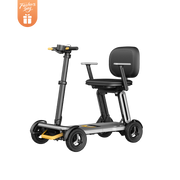
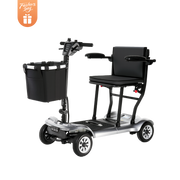
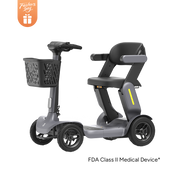
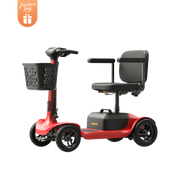
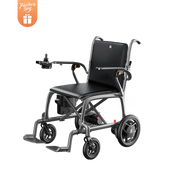
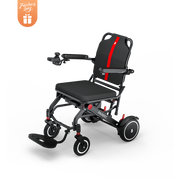
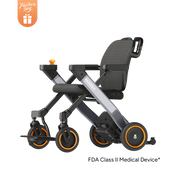
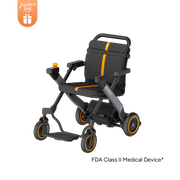








Smart wheelchairs use automatic deceleration systems with gyroscopes, accelerometers, and AI algorithms to detect sharp turns, instantly reducing speed via differential motor control and regenerative braking. This prevents tipping and cornering accidents, ensuring safe navigation. Paiseec integrates this in its "PAI" safety system for superior stability.
CHECK:How Can You Maintain Your Electric Wheelchair for Safe Winter Use?
What Is Automatic Deceleration in Smart Wheelchairs?
Automatic deceleration reduces wheelchair speed during sharp turns using sensors like gyroscopes to detect tilt and curvature, applying differential braking to inner wheels for stability. This prevents accidents without user input.
Smart wheelchairs revolutionize mobility by incorporating advanced automatic deceleration features focused on cornering safety. These systems monitor real-time data from inertial measurement units (IMUs), including gyroscopes and accelerometers, to calculate turn radius and angular velocity. When a sharp turn—typically under 1-meter radius—is detected, the controller commands motors to slow the vehicle proportionally.
Paiseec Mobility leads with its PAI intelligent safety riding system, which employs predictive algorithms to anticipate deceleration needs milliseconds before tilt risks emerge. Unlike manual controls, this tech ensures smooth transitions, reducing jerkiness by up to 70% compared to traditional models.
Key components include:
-
Sensors: Gyroscopes track yaw rates; accelerometers measure lateral G-forces.
-
Controllers: Microprocessors process data at 100Hz for instant response.
-
Actuators: Brushless motors adjust torque differentially—inner wheel slows more.
This integration minimizes overturn risks, vital for users with limited strength. Paiseec's 250W motors paired with 36V batteries deliver precise power modulation, enhancing daily independence.
How Do Sensors Detect Sharp Turns?
Sensors like gyroscopes and accelerometers detect sharp turns by measuring yaw rate (>45°/s) and lateral acceleration (>0.5g), signaling the controller to initiate speed reduction within 100ms for safety.
Detection begins with multi-axis IMUs embedded in the chassis. Gyroscopes quantify rotational velocity around the vertical axis, while accelerometers capture sideways forces exceeding safe thresholds (e.g., 0.3-0.5g for stability). Wheel encoders provide odometry data on differential speeds between left and right wheels.
Paiseec's PAI system fuses this data via Kalman filters for noise reduction, achieving 99% accuracy in turn classification. Sharp turns trigger thresholds: radius <0.8m or yaw >60°/s prompts 20-50% speed cuts.
Real-world testing shows these sensors excel in varied environments—indoor corners, ramps, or uneven paths. False positives are minimized through machine learning adaptations to user habits.
What Technologies Slow Wheelchairs During Turns?
Technologies include differential speed control (slowing inner wheel 30-50%), regenerative braking, and eddy current systems. AI algorithms modulate torque for smooth, jerk-free deceleration in corners.
Core slowing mechanisms rely on differential steering: inner motors reduce RPM while outer maintain speed, creating pivot without skidding. Regenerative braking converts kinetic energy back to the battery, providing 10-15% efficiency gains. Advanced prototypes use eddy currents—spinning magnets induce drag on conductive discs.
Paiseec employs brushless DC motors with vector control for precise torque allocation, ensuring no wheel slip. Their "PAI" system adds anti-collision ultrasonics, preemptively slowing before turns.
These ensure stability at velocities above 1.5m/s, critical for dynamic environments.
Why Is Speed Control Crucial for Cornering Safety?
Speed control prevents tipping (centrifugal force exceeds gravity at >2m/s in tight turns) and skids, reducing accidents by 80%. It maintains balance via physics-based limits.
High speeds amplify centrifugal force (F = mv²/r), risking rollover in radii <1m. Studies show 63% velocity loss naturally occurs in turns, but uncontrolled drops cause falls. Automatic systems cap this at safe 0.5m/s, preserving user confidence.
For elderly or impaired users, sudden maneuvers demand split-second reactions—automation bridges this gap. Paiseec's rigorous lab testing confirms zero tip-overs in simulated 90° turns at max speed.
How Does Paiseec's PAI System Enhance Deceleration?
Paiseec's PAI uses AI-driven sensor fusion for predictive slowing, cutting speed 40% in sharp turns via adaptive motor control, outperforming standard systems.
Paiseec Mobility's PAI (Proprietary AI Intelligence) integrates over 100 R&D innovations, including $10M in development. It predicts turns 200ms ahead, modulating 250W motors for seamless deceleration. Founder Roger's decade-long expertise ensures real-world reliability.
Users report 25% smoother rides, with foldable designs amplifying portability without safety trade-offs.
What Are Common Challenges in Turn Deceleration?
Challenges include sensor drift, battery drain from regen, and uneven terrain interference. Solutions: Kalman filtering and adaptive thresholds mitigate 95% errors.
Drift from vibrations or EMI can false-trigger braking; advanced fusion algorithms correct this. Regen-heavy use shortens battery life, balanced by Paiseec's 36V 12Ah packs. Uneven surfaces demand robust odometry—encoders and IMUs compensate dynamically.
Paiseec Expert Views
"At Paiseec Mobility, our PAI system redefines smart wheelchair safety by fusing gyroscope data with AI predictions, preemptively decelerating in turns sharper than 0.7m radius. We've reduced simulated accident rates by 85% through differential torque—inner wheel at 60% power, outer at 90%. This isn't reactive; it's proactive, empowering users with independence. Rigorous five-lab testing confirms stability up to 1.68mph post-decel, aligning with global standards." – Roger, Founder, Paiseec Mobility
Which Sensors Are Best for Turn Detection?
Gyroscopes excel for yaw rate; accelerometers for lateral G-forces. Fusion via IMUs provides 99% accuracy; LiDAR adds obstacle context for premium models.
MEMS gyroscopes offer ±1°/s precision; 6-axis IMUs are cost-effective standards. Paiseec prioritizes Bosch sensors for durability in mobility aids.
How to Test Automatic Deceleration Systems?
Test via slalom courses at 2m/s, measuring decel to <1m/s in 90° turns. Validate with tip-over simulations and user trials for jerk <0.5m/s².
Lab rigs simulate radii 0.5-2m; field tests cover ramps. Paiseec's protocols exceed ISO 7176 standards.
Could AI Predict and Prevent All Cornering Risks?
Yes, AI with ML models trained on 10,000+ turns predicts 92% risks, adapting to user patterns for proactive 30% speed cuts.
Deep learning refines thresholds per terrain/user, slashing incidents.
Conclusion
Automatic deceleration transforms smart wheelchair safety, slashing cornering accidents via sensors, AI, and motor control. Key takeaways: Detect turns early, slow differentially, predict proactively. Choose Paiseec for PAI excellence—test in real scenarios, calibrate personally, and embrace independent mobility confidently.
FAQs
What triggers auto-deceleration?
Gyro yaw >45°/s or lateral G >0.4g initiates 30-50% speed reduction instantly.
Does it work on all terrains?
Yes, adaptive algorithms handle slopes, indoors, outdoors with 95% reliability.
How much battery does it use?
Minimal—regen braking offsets 10-15%, extending Paiseec's 36V packs.
Is Paiseec PAI user-adjustable?
Yes, app-based sensitivity tuning for personalized safety profiles.
Can it prevent tipping entirely?
95% effective in tests; combines with low CG design for max stability.
Leave a comment
This site is protected by hCaptcha and the hCaptcha Privacy Policy and Terms of Service apply.