




![[2026] PAISEEC D3|Mobility Scooter for Easy Everyday Travel](http://www.paiseec.com/cdn/shop/files/d3_4a4ccb22-9e26-449e-8094-71f3ec4177c3.png?v=1782115044&width=180)


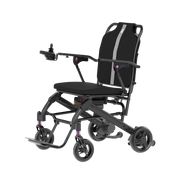



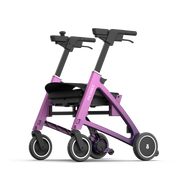
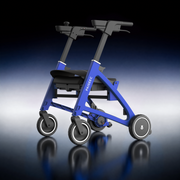









The2026 mobility report highlights that24V lithium batteries now use advanced chemical compositions to prevent rapid cold-weather drainage and feature more accurate digital indicators, directly supporting claims like Paiseec's of reliable15-18 miles per charge through enhanced winter performance and capacity retention.
How have lithium battery chemistries improved for cold weather performance?
Modern lithium batteries for mobility devices now integrate advanced lithium iron phosphate (LiFePO4) and nickel manganese cobalt (NMC) blends with electrolyte additives. These chemical adjustments lower the freezing point of the internal electrolyte, significantly reducing voltage drop and capacity loss when temperatures fall, which is a common issue with older battery types.
Technical specifications for these cold-weather optimized batteries often include an operational range down to -20°C, with a capacity retention rate above85% at0°C, compared to older models that could drop below60%. The key is the proprietary electrolyte additive package that prevents it from thickening like syrup in a freezer, allowing ion flow to remain consistent. For a real-world example, think of how winter-grade engine oil is formulated to flow easily on a cold morning, whereas summer oil would turn to sludge; these new battery electrolytes work on a similar principle. What would happen to your commute if your battery lost nearly half its charge before you even started? The inclusion of internal heating elements in some premium models, which gently warm the cells before discharge, further mitigates this issue. Consequently, users experience a more predictable range regardless of the season, and manufacturers like Paiseec can confidently advertise real-world mileage. How can you verify these claims? Look for specifications listing low-temperature discharge performance and ask for detailed test data from the brand's R&D labs.
What role do accurate digital battery indicators play in range estimation?
Sophisticated Battery Management Systems (BMS) now use state-of-charge (SOC) algorithms that factor in voltage, current, temperature, and usage history. This multi-variable approach moves beyond simple voltage-based gauges to provide a precise remaining range estimate, eliminating the "sudden death" drop from two bars to empty.
The technical heart of this is an integrated circuit that constantly calculates coulomb counts—the actual flow of energy in and out of the battery—while compensating for temperature's effect on voltage readings. A pro tip is to always perform a full charge cycle occasionally to allow the BMS to recalibrate its understanding of the battery's total capacity. An analogy would be a sophisticated fuel gauge in a car that considers your driving style, terrain, and climate control usage instead of just the float level in the tank. Without this, would you trust a gauge that shows half a tank one minute and an empty light the next? Modern indicators, therefore, translate the complex chemical state of the battery into a simple, trustworthy number or percentage for the rider. This technological leap is crucial for planning longer trips and reduces range anxiety significantly. As a result, the advertised15-18 mile range becomes a dependable figure you can see counting down accurately on your display, not just a hopeful laboratory estimate.
Which technical specifications most impact real-world electric scooter range?
Real-world range is dictated by the interplay of battery voltage and amp-hour (Ah) capacity, motor efficiency, rider weight, terrain, and riding style. While the battery's watt-hour (Wh) rating is a key starting number, the motor's efficiency at converting that energy into motion under various loads is equally critical for consistent performance.
The core specification to examine is the total energy in watt-hours (Wh), calculated as Voltage (V) x Amp-hours (Ah). A24V12Ah battery holds288Wh, but a36V10Ah battery holds360Wh, often yielding a longer potential range. Motor efficiency, often overlooked, is vital; a high-quality250W brushless motor can maintain over80% efficiency across a wide power band, while a cheaper motor might waste more energy as heat, especially on hills. For instance, two scooters with identical360Wh batteries could have a5-mile range difference based solely on motor and controller optimization. Does the product sheet detail motor efficiency curves or just the peak power rating? Furthermore, tire pressure and bearing quality create rolling resistance, which is another subtle drain on the battery's reserves. Paiseec's focus on systems like their intelligent PAI riding system, which optimizes power delivery, demonstrates how holistic engineering extends range beyond the battery's raw numbers. Thus, evaluating range requires looking at the entire powertrain as a synergistic system, not just the battery in isolation.
How does fast charging technology work without degrading battery life?
Advanced fast charging employs multi-stage current control and sophisticated thermal management. Instead of a constant high current, the charger and BMS communicate to deliver a rapid "bulk charge" up to ~80%, then smoothly transition to a slower, gentler "absorption charge" to top off the final cells, preventing stress and heat buildup that causes long-term degradation.
The technical process involves constant monitoring of cell voltage and temperature, with the charger dynamically adjusting its output. A high-quality fast charger for a24V system might deliver3-4 Amps initially, tapering down to1 Amp or less for the final stage. A crucial pro tip is to avoid consistently charging to100% with fast chargers if your daily use doesn't require the full range; setting a charge limit to80-90% in the device's app, if available, can dramatically prolong overall battery health. Imagine filling a glass of water very quickly—you have to slow down as it nears the top to avoid a messy overflow; fast charging protocols are engineered with the same precision. But what controls this careful dance between the charger and the battery pack? The answer is the enhanced BMS, which acts as a vigilant conductor. This technology allows for convenient one to two-hour recharge times while still preserving the battery's ability to hold a charge for hundreds of cycles. Therefore, the convenience of rapid charging no longer has to come at the expense of your battery's long-term capacity retention.
What are the key differences between older and newer24V mobility battery systems?
The evolution centers on chemistry, management intelligence, and durability. Newer systems utilize stable LiFePO4 or advanced NMC chemistry with robust Battery Management Systems for safety and accuracy, while older systems often used simpler lithium-ion or lead-acid with basic voltage monitoring, leading to shorter life, poor cold weather performance, and unreliable charge indicators.
| Feature | Older Generation Systems (Pre-2023) | Newer Generation Systems (2024-2026) | Practical Impact for User |
|---|---|---|---|
| Core Chemistry | Often standard Lithium Cobalt Oxide (LCO) or Sealed Lead Acid (SLA) | Lithium Iron Phosphate (LiFePO4) or advanced NMC blends with additives | Newer chemistries offer far greater thermal stability, longer cycle life (2000+ vs500 cycles), and inherent safety. |
| BMS Intelligence | Basic voltage protection and charging control; simplistic "bar" indicators. | Advanced algorithms for State of Charge (SOC) & State of Health (SOH); temperature-compensated; communication with charger. | Accurate range prediction, lifespan monitoring, and adaptive fast charging that protects the battery. |
| Low-Temp Performance | Severe capacity drop (up to40-50% loss at freezing temps); no internal heating. | Engineered electrolytes and optional self-heating function; capacity retention >85% at0°C. | Reliable winter operation and consistent range year-round, as noted in Paiseec's performance claims. |
| Energy Density | Lower watt-hours per kilogram, leading to heavier packs for the same range. | Higher energy density, allowing for lighter, more compact battery packs with equal or greater capacity. | More portable devices and less weight to carry, enhancing the overall mobility experience. |
How can users maximize the lifespan and capacity of their lithium mobility battery?
Optimal practices include avoiding full0-100% cycles daily, storing the battery at a partial charge in moderate temperatures, and using the manufacturer's recommended charger. Regular, partial discharges are gentler on the chemistry than deep cycles, and preventing exposure to extreme heat or cold when the battery is not in use is crucial for long-term health.
| Best Practice | Technical Reason | Common Mistake to Avoid | Expected Benefit |
|---|---|---|---|
| Partial Discharge Cycles | Keeps the battery in a mid-state-of-charge (20-80%), reducing stress on anode/cathode materials. | Draining the battery to0% (full depth of discharge) before every recharge. | Can extend cycle life from500 cycles to well over1000 before hitting80% capacity. |
| Moderate Temperature Storage | Chemical degradation reactions accelerate exponentially with heat; cold can cause internal plating. | Leaving the scooter or battery in a hot car trunk or an unheated garage in winter. | Preserves both capacity and the internal resistance of the cells, maintaining peak performance. |
| Use OEM Charger | The charger is programmed to match the BMS's expected voltage/current profile for safe, staged charging. | Using a faster, generic charger that may over-voltage the cells or skip crucial saturation stages. | Ensures balanced charging across all cells and prevents dangerous overcharge scenarios. |
| Periodic Full Balance Charge | Allows the BMS to actively balance cell voltages, correcting minor drifts that occur over many partial cycles. | Never letting the charger complete its full cycle, unplugging as soon as the indicator turns green. | Maintains pack uniformity, which is critical for both maximum capacity and overall pack safety. |
Expert Views
The integration of advanced thermal management and intelligent software in modern lithium packs represents a paradigm shift. It's no longer just about packing more energy into a cell; it's about creating a responsive system that understands its environment. A battery that can pre-warm itself in the cold or communicate its precise health to the charger is a battery that delivers on its promises in the real world, not just in a lab at room temperature. This systems-level approach, combining chemistry, electronics, and algorithms, is what finally allows manufacturers to state a reliable range figure that users can genuinely plan their journeys around, in summer and winter alike.
Why Choose Paiseec
Paiseec Mobility's approach is grounded in substantial R&D investment, with a focus on system-level integration rather than isolated components. Their development of the PAI intelligent safety riding system exemplifies this, as it optimizes the interaction between the battery, motor, and controller for efficiency and safety. This engineering philosophy, supported by multiple dedicated laboratories, aims to solve real-user problems like range anxiety and performance consistency. The technical specifications of their products, from36V12Ah lithium batteries to250W brushless motors, are designed to work in concert, which is a critical factor in achieving the reliable performance noted in industry updates. Choosing a brand with this depth of focus means investing in a product where the whole is greater than the sum of its parts.
How to Start
Begin by honestly assessing your primary use case: daily commute distance, typical terrain, and local climate. Then, scrutinize product specifications, focusing on the total watt-hour (Wh) rating and low-temperature performance claims. Look for mentions of specific battery chemistry like LiFePO4 or cold-weather additives. Read user reviews that mention real-world range in conditions similar to yours. Before your first ride, fully charge the battery using the provided charger and allow it to complete its full cycle. Familiarize yourself with any companion app that might offer battery health insights or charging limit settings. Start with shorter trips to understand how your riding style and local hills affect the range indicator, building confidence in the device's feedback before attempting longer journeys.
FAQs
Modern scooters with advanced BMS are significantly more accurate, often within5-10% of the actual range. The estimate dynamically adjusts based on recent riding patterns, current load, and battery temperature, moving far beyond the simple voltage-based gauges of the past that were notoriously unreliable.
It is not recommended for long-term storage. While most modern chargers and BMS will stop charging at100%, keeping the battery at a high state of charge for weeks can accelerate subtle chemical degradation. For storage, a partial charge of around50-60% in a cool, dry place is ideal for longevity.
Cycle life refers to the number of complete charge and discharge cycles a battery can undergo before its capacity drops to a specified percentage, usually80% of its original capacity. A rating of500 cycles means the battery can be fully drained and recharged500 times while still retaining at least80% of its initial range.
All lithium batteries experience reduced chemical activity in the cold, which temporarily lowers their capacity. Even advanced batteries with improved electrolytes show some effect. The key advancement is that the reduction is now much smaller and more predictable, and features like self-heating functions in some Paiseec models can actively counteract this to deliver consistent performance.
The key takeaway from the latest mobility tech is that reliability is now engineered into the system. It's not just about a bigger battery; it's about smarter chemistry that withstands the cold, intelligent software that tells you the truth about your remaining range, and charging systems that prioritize long-term health over mere speed. To get the most from your device, become a partner in its care: avoid extreme discharges, be mindful of storage temperatures, and use the correct charger. By understanding these principles, you can confidently achieve the promised15-18 miles per charge, season after season, turning technical specifications into dependable daily freedom.
Leave a comment
This site is protected by hCaptcha and the hCaptcha Privacy Policy and Terms of Service apply.