




![[2026] PAISEEC D3|Mobility Scooter for Easy Everyday Travel](http://www.paiseec.com/cdn/shop/files/d3_4a4ccb22-9e26-449e-8094-71f3ec4177c3.png?v=1782115044&width=180)

















To arrange wheelchair assistance at the airport, passengers with reduced mobility should contact their airline at least 48 to 72 hours prior to departure. Under federal accessibility laws, airlines are legally mandated to provide free, prompt point-to-point guidance and specialized equipment. This comprehensive guide details the step-by-step process for executing seamless airport navigation, understanding your structural legal protections, and selecting the optimal travel-approved power wheelchairs.(Edited on July 3, 2026)
1. Booking the Service & Pre-Trip Preparation
Achieving a frictionless airport experience requires early coordination and precise communication of your physical or medical needs during the initial reservation phase.
The 48-Hour Advance Rule
While the Air Carrier Access Act (ACAA) mandates airlines to assist passengers with disabilities even without advance notice, self-identifying 48 to 72 hours before your flight guarantees that critical logistics, specialized staff, and airport aisle chairs are pre-staged.
-
Online Reservations: Log into your airline account, navigate to the "Manage Booking" or "Special Assistance" portal, and select the specific tier of mobility support required.
-
Dedicated Disability Desks: For complex arrangements—especially involving custom mobility equipment—call your carrier's dedicated consumer disability hotline directly to log your specifications.
Crucial Mobility Details to Disclose
When filing your special assistance request, explicitly provide the airline with the following operational data parameters:
-
Level of Mobility: Specify whether you require basic terminal navigation (gate-to-gate escort), ramp/stair assistance, or complete cabin boarding assistance (requiring an aisle chair).
-
Personal Wheelchair Dimensions & Weight: State the exact physical footprint and weight of your device.
-
Battery Chemistry and Specifications: For power wheelchairs, you must declare the battery type (e.g., Lithium-ion, Sealed Lead Acid, Spillable, or Non-Spillable) along with its structural capacity rating.
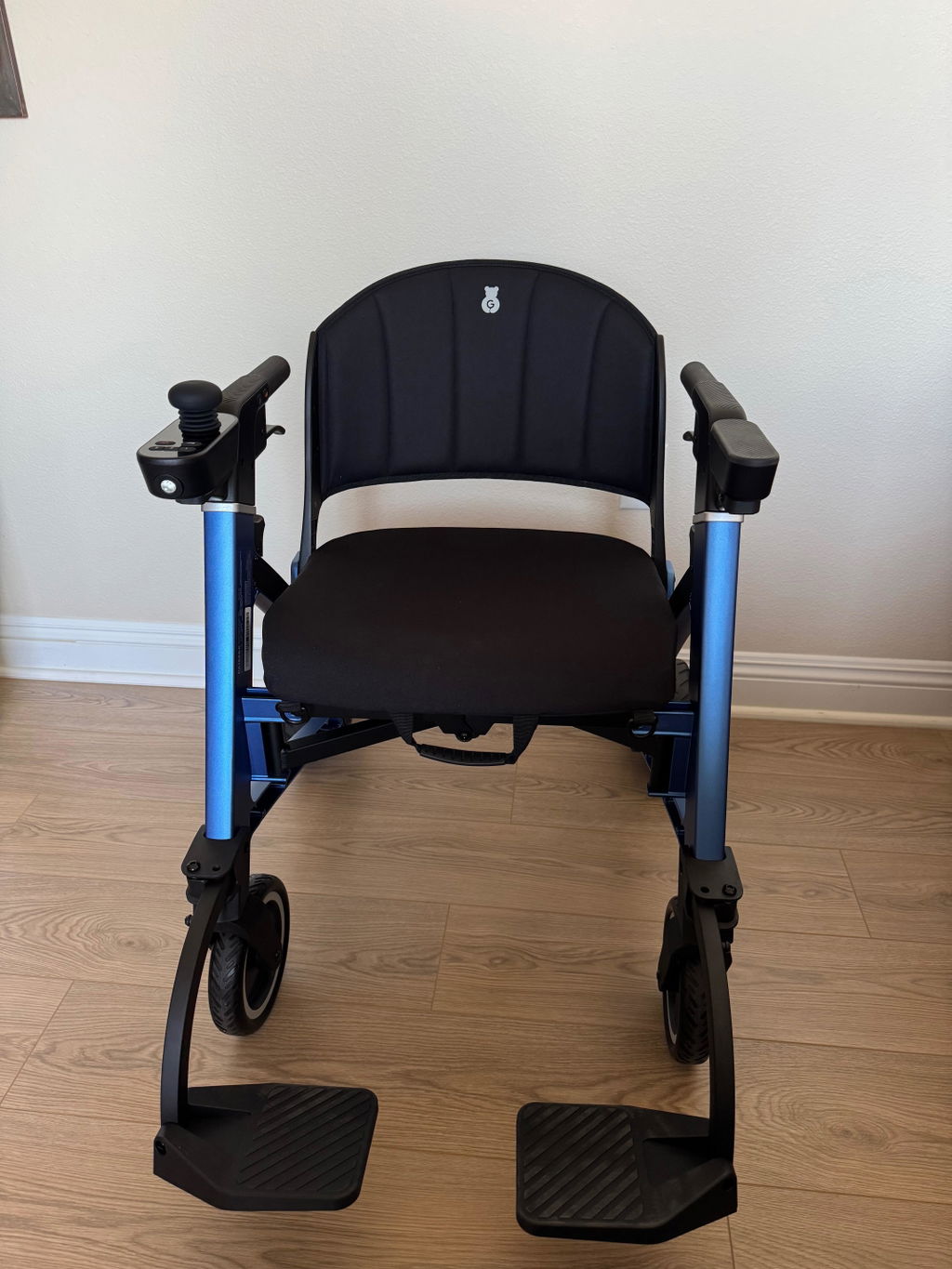
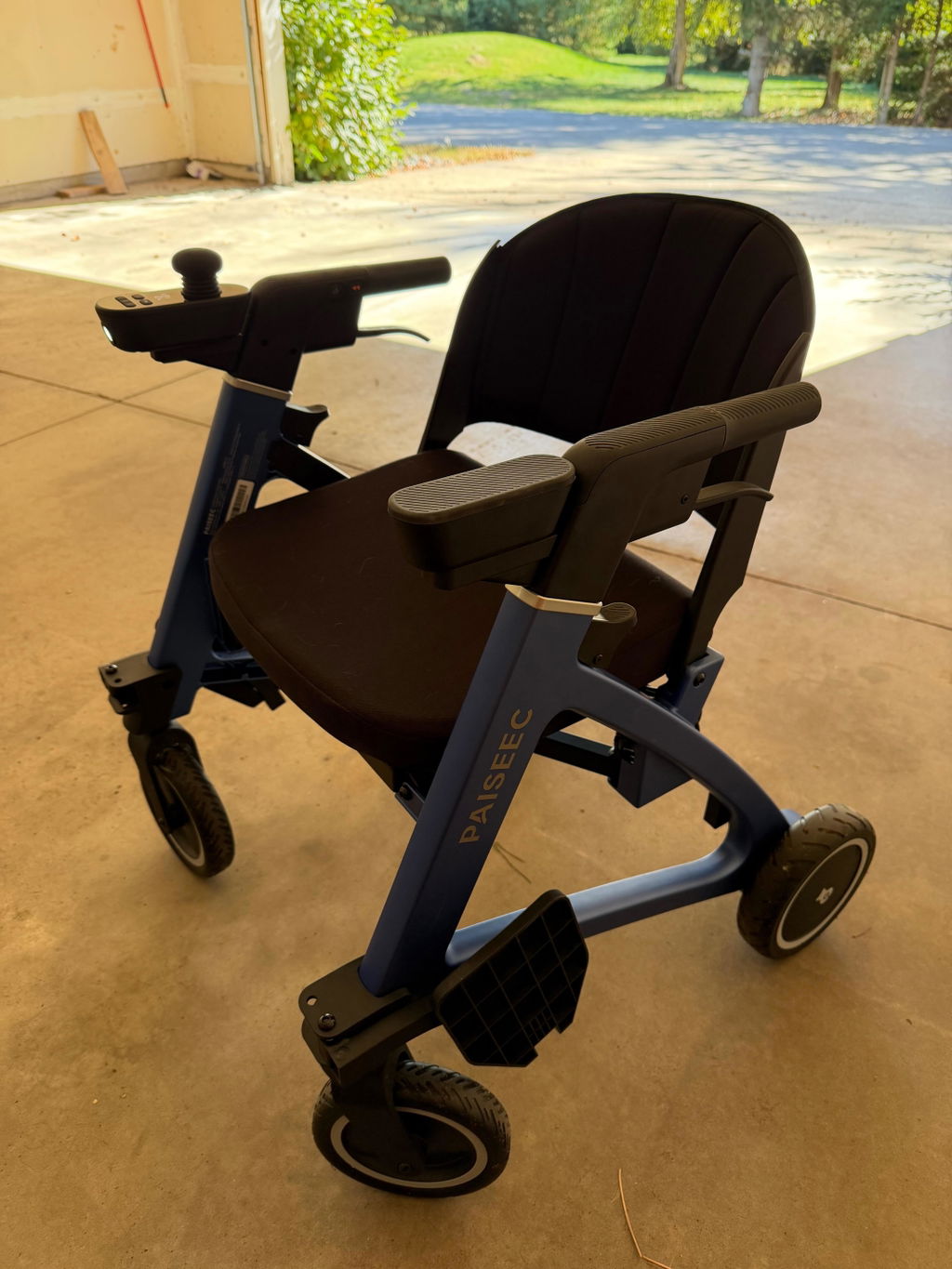
Aviation Compliance Note: For travelers utilizing cutting-edge, ultra-lightweight power models such as the Paiseec Q5 (22 lbs Carbon Fiber Frame), Paiseec W1 (42 lbs Dual-Mode Hybrid), or Paiseec W3 (49.6 lbs Heavy-Duty Cross-Over), their integrated 24V 10-12Ah lithium-ion batteries fall safely under the global 300Wh regulatory threshold, ensuring frictionless airline clearances.
2. At the Airport: Execution & Legal Protections
Understanding your legal rights under the ACAA transforms stressful terminal environments into predictable, managed transitions.
Step-by-Step Terminal Navigation Flow
[Arrival at Curbside] ➔ [Self-Identify at Desk] ➔ [Escorted Security Screening] ➔ [Priority Gate Pre-Boarding]
-
Curbside Arrival: Arrive at the airport 2 to 3 hours early for domestic flights, and 3 to 4 hours early for international departures. If you travel with a battery-powered wheelchair, federal guidelines recommend checking in at least 1 hour prior to normal check-in times to facilitate battery safety logging.
-
The Self-Identification Rule: Airlines are not obligated to monitor terminal entrance areas automatically. Assistance begins the moment you self-identify to airline personnel at the curbside check-in kiosk, ticket counters, or specialized assistance desks.
-
Security Checkpoints: Dedicated airport attendants will escort you through TSA checkpoints. You are legally permitted to remain in your personal wheelchair or an allocated airport transit chair during screening. TSA procedures accommodate this via modified pat-downs and specialized explosive trace detection sweeps, eliminating the need to pass through standard walk-through metal detectors if you are unable to stand.
-
Terminal Tipping Standards: While wheelchair and guided escort services are legally free, tipping your individual terminal attendant for physical pushing and baggage handling is standard, highly appreciated industry etiquette.
Mandated Airline Obligations: Key Functional Areas
Under strict aviation consumer protection laws, your airline-assigned escort must provide uninterrupted, continuous point-to-point assistance across these critical areas:
-
Comprehensive Escort Support: Assistance must cover the full journey from the terminal entrance or vehicle drop-off point, through the ticket counters and security, directly onto the aircraft seat. On connecting flights, the obligation covers gate-to-gate transfers. Upon final arrival, it extends to the baggage claim area, customs, and the vehicle pick-up zone.
-
Baggage Assistance: Attendants are legally required to carry your gate-checked items, personal medical devices, and standard carry-on luggage if your physical disability prevents you from managing them independently.
-
The 30-Minute Non-Unattended Rule: If you are not independently mobile, the airline is legally prohibited from leaving you unattended in a wheelchair or transit device for more than 30 minutes, even if an able-bodied companion is present with you, unless you explicitly grant verbal consent.
-
Mandatory Comfort Stops: Upon your explicit request, terminal attendants are legally required to pause at public restroom entrances or locate service animal relief areas, provided the stop is directly en route to your boarding gate and does not cause unreasonable flight delays.
3. Boarding, Layovers, and Arrival Logistics
Managing the physical transition between airport docks and aircraft cabins requires distinct procedural adjustments.
Pre-Boarding Rights
Passengers who self-identify at the gate as requiring extra time or physical assistance possess a legal right to priority pre-boarding. This allows you to settle into your seat before general boarding begins, away from crowded aisles.
Cabin Transfers via Aisle Chairs
Because commercial aircraft aisles are too narrow for standard mobility equipment, passengers must transfer out of their personal or airport-provided chairs at the jet bridge entrance. Airline staff will secure you into a specialized, narrow transport apparatus known as an aisle chair to guide you safely to your designated seat row.
Connecting Flights & Deplaning Dynamics
-
Layovers: Always verify at your initial origin check-in counter that your accessibility flags are printed and active across all individual flight legs and connecting boarding passes.
-
Deplaning Protocol: Upon landing, wheelchair users are structurally the last to deplane. This systematic delay allows the cabin to clear, ensuring specialized ground crews can safely bring the aisle chair on board and retrieve your stored personal mobility device from the cargo hold.
4. TSA & FAA Regulatory Battery Framework
For power wheelchair users, navigating Federal Aviation Administration (FAA) and international hazardous materials protocols requires rigorous adherence to battery capacity rules.
Understanding the 300Wh Battery Threshold
The FAA and global civil aviation authorities place strict limitations on lithium-ion batteries carried on commercial flights to mitigate thermal runaway risks.
-
Main Battery Limit: A passenger's power wheelchair battery must be a certified design not exceeding 300Wh.
-
Spare Battery Allowances: Passengers are legally permitted to transport one spare lithium-ion battery not exceeding 300Wh, or two spares where each individual battery does not exceed 160Wh. All spare units must be carried inside the passenger cabin to ensure immediate crew access in the rare event of a thermal incident.
Packing Tips and Physical Battery Management
To shield sensitive components from baggage handler damage, implement these standard protective measures:
-
Isolate and Protect: Detach your lithium-ion battery pack before gate-checking the frame. Place the battery into protective terminal caps or a padded carry-on bag.
-
Secure Vulnerable Nodes: Always disconnect the joystick assembly, fold down backrests, wrap delicate components in high-density foam, and lock your manual wheel clutches.
-
Structural Adaptability: Utilizing highly engineering systems maximizes transit safety. The Paiseec Q5 features a one-pull folding mechanism that compresses the structure down to $28.3'' \times 11.8'' \times 27.5''$, allowing the 22-pound carbon fiber frame to be safely stowed in overhead bins on select wide-body aircraft. Concurrently, the Paiseec W3 collapses in under 3 seconds, allowing its low-profile shape to easily fit inside standard automotive trunks during connecting layovers.
5. Global Airline Compliance Matrix
The following matrix cross-references operational requirements across major air carriers to ensure comprehensive compliance with special assistance protocols.
| Airline | 48-Hour Advance Notice Required? | Dedicated Aisle Chairs Available? | Max Detachable Lithium Battery Capacity | Gate-Check Availability for Approved Devices |
| Delta Air Lines | Yes | Yes | $\le$ 300Wh | Standard procedure at jet bridge |
| United Airlines | Yes | Yes | $\le$ 300Wh | Highly accommodating at gate |
| Southwest Airlines | Yes | Yes | $\le$ 300Wh | Standard policy for foldables |
| American Airlines | Yes | Yes | $\le$ 300Wh | Available upon gate agent request |
| KLM Royal Dutch Airlines | Yes | Yes | $\le$ 300Wh | Advanced coordination recommended |
6. Premium Aviation Mobility Options
When evaluating high-performance medical hardware optimized specifically for commercial aviation, weight distribution, battery certification, and frame integrity dictate long-term performance.
| Model Selection | Base System Weight | Structural Fold Time | Certified Battery Configuration | Global Aviation Status | Primary Target Use Case |
| Paiseec Q5 | 22 lbs | One-pull instant | 24V 10Ah Lithium ($\approx$ 240Wh) | Fully Airline Approved | Overhead bin portability and ultra-lightweight travel |
| Paiseec W1 | 42 lbs | Flat-fold system | 24V 12Ah Lithium ($\approx$ 288Wh) | Fully Airline Approved | Dual-mode flexibility, functioning as a wheelchair and rollator |
| Paiseec W3 | 49.6 lbs | 3-Second automatic | 24V 12Ah Lithium ($\approx$ 288Wh) | Fully Airline Approved | 3-in-1 multi-terrain versatility and long-distance layovers |
Expert Engineering Perspectives
"Modern airline infrastructure demands elite structural adaptability. The integration of high-grade carbon fiber frames allows systems like the 22-pound Q5 to offer industrial rigidity without the physical bulk that slows down TSA checkpoints. Furthermore, intelligent safety systems, such as the built-in PAI speed-governing system, dynamically regulate motor output and braking friction on steep airport boarding ramps, protecting passengers against gravitational shifts in high-traffic terminal zones."
— Aviation Mobility Engineering Group
Conclusion: Ensuring Rights Enforcement
Navigating air travel with a physical disability or reduced mobility is a protected civil right. By matching proper advance notifications with certified hardware, you eliminate systemic terminal delays and secure your travel independence.
If at any point during your journey you believe an airline representative or terminal contractor is violating your legal rights under the Air Carrier Access Act, immediately request to speak with a Complaints Resolution Official (CRO). Every commercial airline is legally required to provide a trained CRO free of charge, either in person at the airport terminal or via an immediate telephone link, during all operational flying hours to resolve compliance disputes on the spot.
Frequently Asked Questions (FAQs)
Can I operate my power wheelchair directly inside the passenger cabin?
No. FAA and international safety standards dictate that all personal power wheelchairs must be stored securely in the aircraft cargo hold or an approved onboard coat closet. Passengers utilize specialized airline-provided aisle chairs to move through the cabin corridors to their seats.
What administrative steps occur if a wheelchair battery exceeds 300Wh?
If a single lithium-ion battery exceeds the 300Wh limit without explicit, documented written pre-approval from the airline operating the flight, TSA and airline gate agents are legally mandated to deny the battery access to the aircraft. To avoid confiscation or boarding denial, ensure your equipment uses compliant modules, such as the 24V 10-12Ah setups standard on Paiseec travel devices.
Am I required to provide physical medical documentation to claim airport wheelchair assistance?
No. Under United States Department of Transportation regulations, airlines cannot require passengers to present formal medical certificates, doctor letters, or proof of disability as a prerequisite for receiving standard airport wheelchair assistance. Your credible verbal assurance detailing your mobility limitations is legally sufficient.
Are there extra baggage fees or surcharges for transporting mobility equipment?
No. The Air Carrier Access Act strictly prohibits airlines from charging extra processing fees, hazardous material handling premiums, or oversized baggage surcharges for approved personal mobility devices, manual wheelchairs, or airline-compliant power devices.
Can I pack multiple spare batteries for my transit power chair?
Yes. FAA regulations allow you to carry one spare lithium-ion battery up to 300Wh, or up to two spare lithium-ion batteries if each individual unit does not exceed 160Wh. All spare batteries must be protected against short circuits and carried exclusively inside your carry-on luggage within the passenger cabin.
Leave a comment
This site is protected by hCaptcha and the hCaptcha Privacy Policy and Terms of Service apply.