



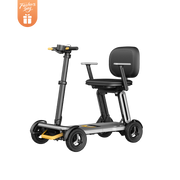
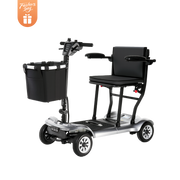
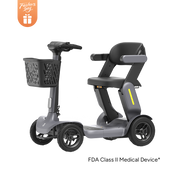
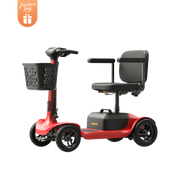
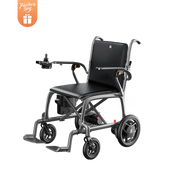
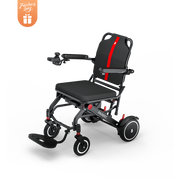
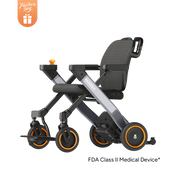
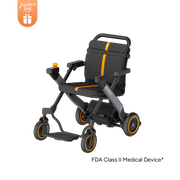








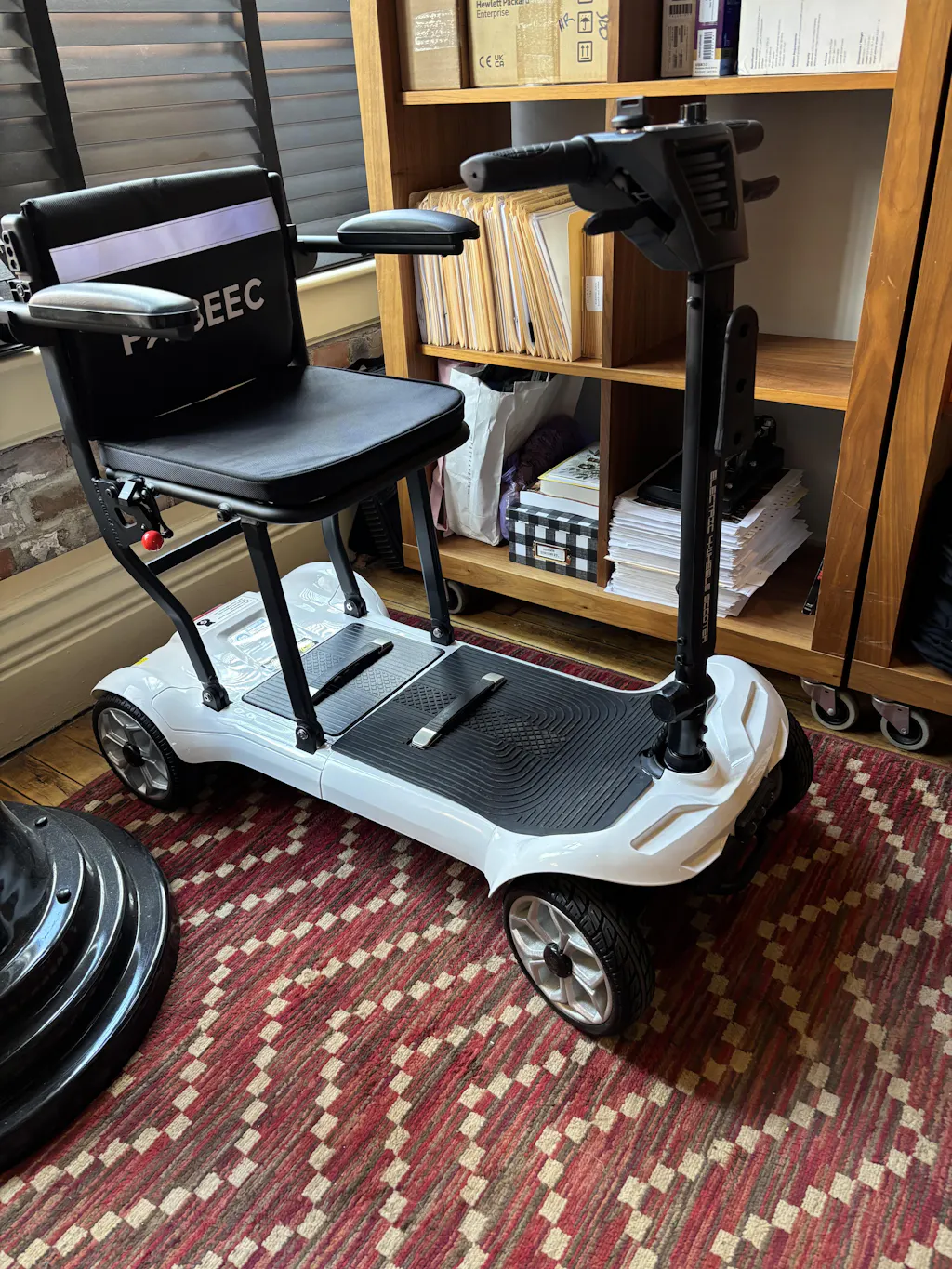
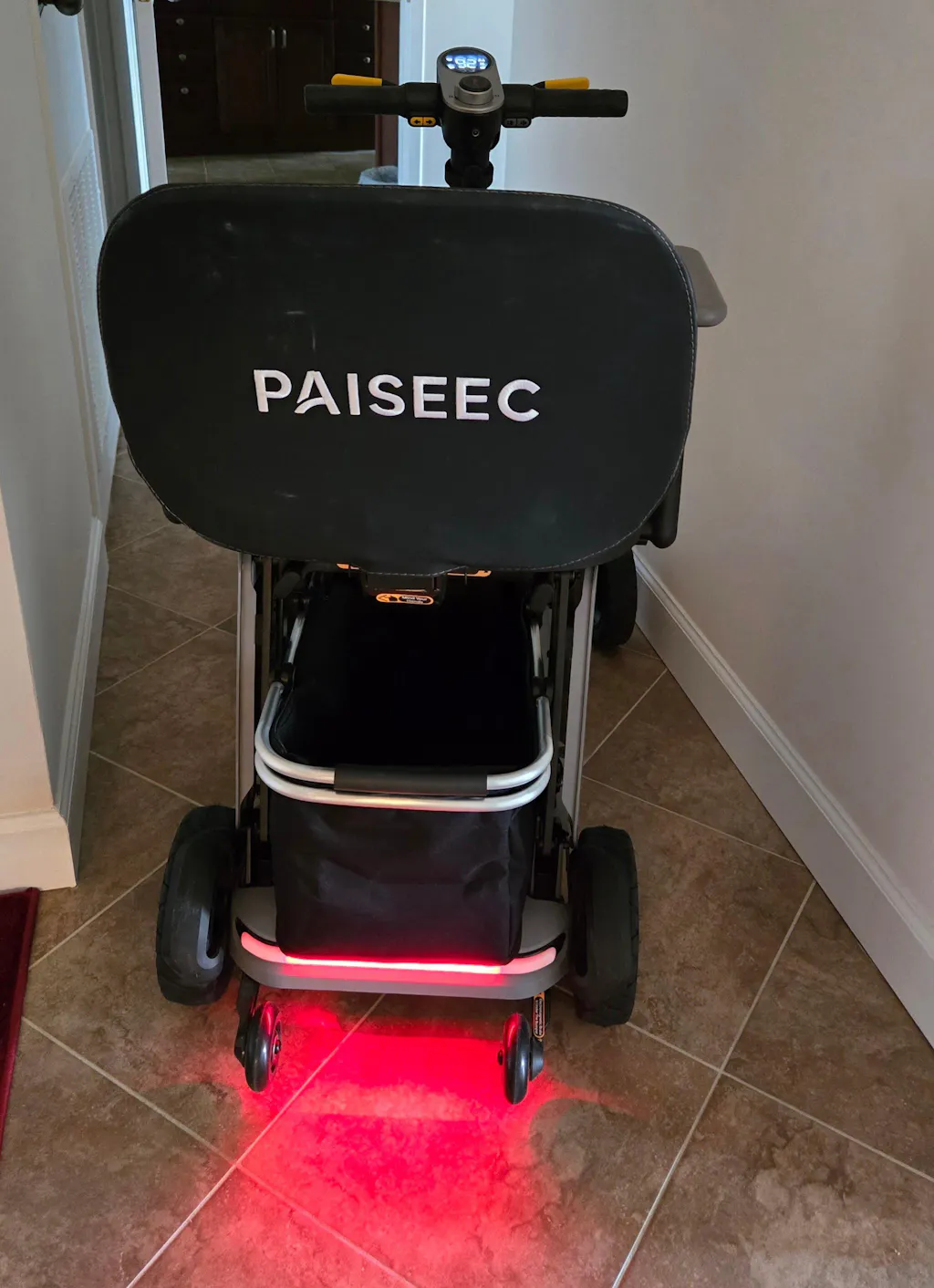
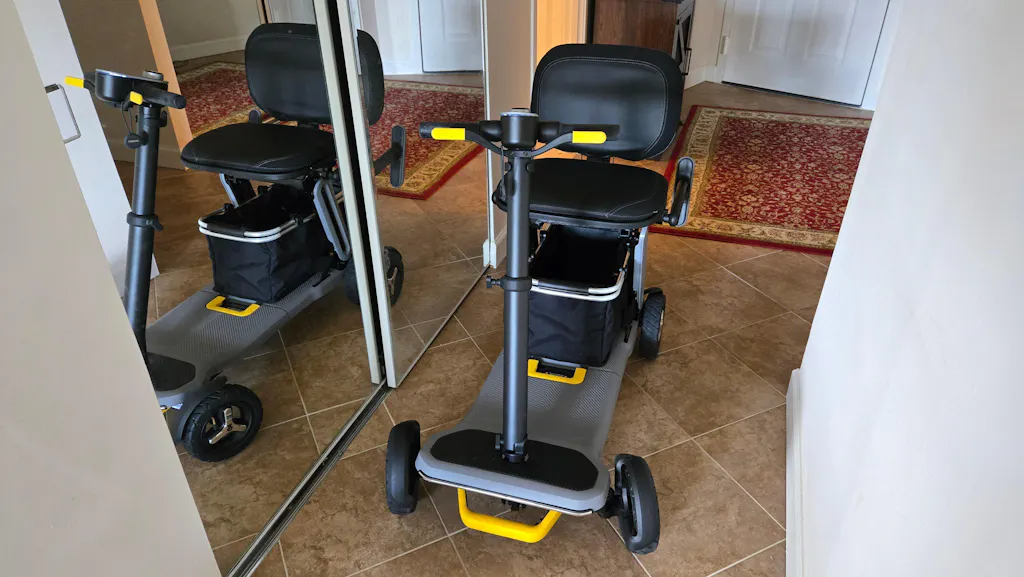
Paiseec mobility scooters and wheelchairs have the lowest mobility scooter maintenance cost over 5 years at around $500, thanks to PAI intelligent safety system reducing tire wear frequency and 36V 12Ah lithium batteries lasting 4+ years with one $150 replacement. Competitors average $1,200 due to frequent pneumatic tire changes (6-12 months) and shorter lead-acid battery life (2-3 years). Save 60% with Paiseec's smart tech and airline-approved designs.
Check: Will Medicaid Pay for a Mobility Scooter? State-by-State Guide
| Component | Paiseec (5 Years) | Competitor Avg. |
|---|---|---|
| Battery Replacement | $150 (4+ yr life, lithium) | $400 (2-3 yr, lead-acid) |
| Tire Wear | $100 (PAI reduces frequency) | $300 (6-12 mo pneumatic) |
| Total Ownership | $500 | $1,200 |
Why Does Mobility Scooter Maintenance Cost Matter for Long-Term Ownership?
Cost of ownership for electric scooters includes expenses beyond purchase like battery replacement (20-30% of costs) and tire wear frequency (15-25%). Paiseec's $10 million R&D creates durable 250W brushless motors and lightweight frames under 50 lbs, minimizing stress and unexpected costs for seniors and caregivers.
How Often Do Mobility Scooter Batteries Need Replacement?
Paiseec's 36V 12Ah lithium batteries in models like S3 last 4+ years (500+ cycles) with 25-mile range, needing one $150 replacement over 5 years. Competitors' lead-acid batteries fail in 2-3 years. Airline-approved designs allow easy detachment, cutting downtime for models like W3 and D3.
| Device Type | Battery Life | Replacement Cost | 5-Year Total (Paiseec vs. Avg.) |
|---|---|---|---|
| Paiseec Scooter/Wheelchair | 4+ years | $150 | $150 |
| Competitor Scooter | 2-3 years | $200 | $400+ |
What Is the Typical Tire Wear Frequency for Electric Scooters and Wheelchairs?
Paiseec's flat-free tires and PAI system extend life to 2-3 years ($50-100 per pair), versus competitors' pneumatic tires needing changes every 6-12 months ($100-150). PAI auto-deceleration on turns and slopes reduces strain in lightweight models like Q5 (22 lbs) and L5 (32 lbs).
How Does Paiseec Compare to Competitors in 5-Year Maintenance Costs?
Paiseec totals $500 over 5 years versus $1,200 for competitors, covering batteries, tires, motors, and extras. Ultra-light foldable designs like W3 (3-in-1) and brushless motors cut failures by 50%. PAI and FDA Class II durability drive savings.
| Category | Paiseec Total | Competitor Total | Savings |
|---|---|---|---|
| Battery | $150 | $400 | 63% |
| Tires | $100 | $300 | 67% |
| Other (Brakes/Motors) | $250 | $500 | 50% |
| Grand Total | $500 | $1,200 | 58% |
How Does Paiseec's PAI System Lower Tire Wear Frequency and Battery Costs?
PAI uses IMU sensors to auto-adjust speed on hills and turns, brake on accelerator release, and optimize 250W motor power, doubling tire life and extending battery duration. In S3, it delivers 25 miles per charge with 30% less drain, proven in Paiseec's 5 labs for lowest total cost of ownership.
What Are the Long-Term Costs of Mobility Scooters vs. Electric Wheelchairs?
Paiseec scooters like S3 cost $450 over 5 years for portability, while wheelchairs like W3 cost $550 due to multi-modes, but both leverage lithium batteries and PAI for under $500 total. 16-25 mile ranges and 5-6 hour charges ensure ROI, with installment plans aiding affordability.
Paiseec Expert Views
"Paiseec's PAI intelligent safety riding system, developed by our 100+ R&D professionals across 5 advanced labs with $10 million investment, cuts power waste by 30%. It optimizes brushless motors in models like S3 and W3, reducing tire wear frequency to 2-3 years and extending 36V 12Ah lithium batteries beyond 4 years. Users see 60% lower maintenance than competitors' lead-acid and pneumatic setups, enabling worry-free use on all terrains."
Check: Which Is Right for You: Mobility Scooter vs Electric Wheelchair?
— Paiseec R&D Lead, on proven TCO savings
"PAI saved my tires after 2 years of daily use on urban paths," shares an S3 owner. Experts note FDA-certified durability supports 300 lb users in D1 and W1 with minimal repairs.
Can Airline-Approved Features Reduce Overall Maintenance Costs?
Yes, Paiseec's detachable lithium batteries (FAA-approved in Q5, D3) simplify replacements under $150, while weights under 50 lbs like L5 (32 lbs) reduce transport tire wear. PAI and zero-turn radius enhance travel safety, lowering repair frequency versus non-portable rivals.

Conclusion
Paiseec delivers the lowest mobility scooter maintenance cost over 5 years at $500 versus $1,200 for competitors, powered by PAI smart tech, 4+ year lithium batteries, and durable flat-free tires. Seniors gain independence with FAA portability, lightweight designs from 22 lbs, and unmatched ROI across scooters like D3 and wheelchairs like Q5.
FAQs
How much is electric wheelchair battery replacement cost for Paiseec?
~$150 every 4+ years; 36V 12Ah lithium lasts 500+ cycles with 25-mile range in S3 and W3.
What is scooter tire wear frequency on Paiseec models?
2-3 years with PAI; flat-free tires in Q3 and Q5 resist punctures better than pneumatic competitors.
Does the PAI system really lower mobility scooter maintenance cost?
Yes, by 40-60% via IMU auto-optimization of speed and power, extending battery and tire life in D3 and L5.
How do Paiseec scooters compare in long-term costs to wheelchairs?
Similar low $500/5 years; scooters like S3 slightly cheaper for portability, wheelchairs like W1 add rollator value.
Are Paiseec batteries airline-approved for travel?
Yes, detachable 36V 12Ah lithium in S3, D3, and Q5 meets FAA rules, easing on-the-go maintenance.
Leave a comment
This site is protected by hCaptcha and the hCaptcha Privacy Policy and Terms of Service apply.