




![[2026] PAISEEC D3|Mobility Scooter for Easy Everyday Travel](http://www.paiseec.com/cdn/shop/files/d3_4a4ccb22-9e26-449e-8094-71f3ec4177c3.png?v=1782115044&width=180)














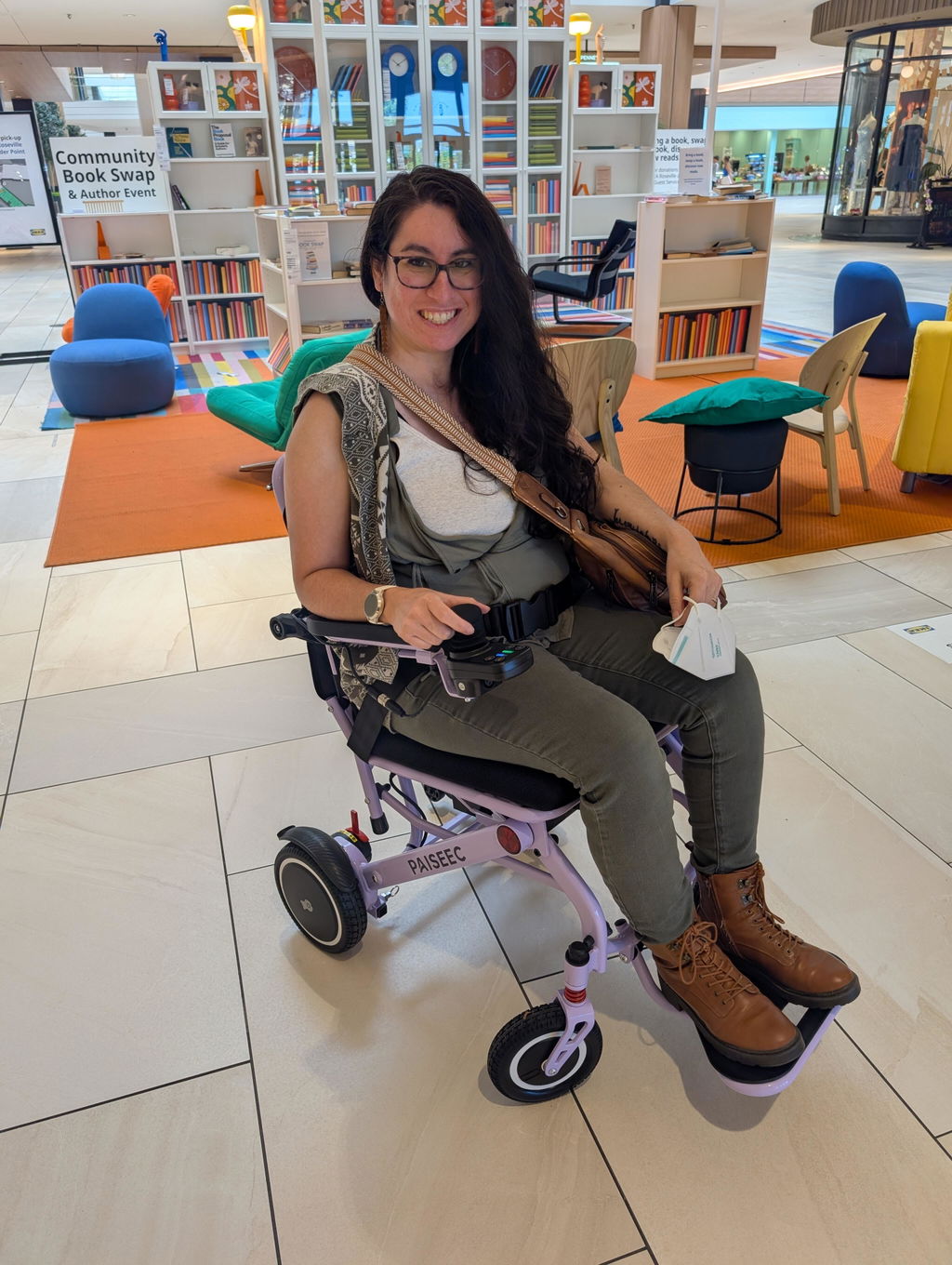
Top folding mobility scooters for airline travel prioritize lightweight frames, airline-approved batteries, and smart safety features. The Paiseec D3 leads with a 39.7 lb frame, dual airline-approved batteries delivering 18.6 miles, and the PAI intelligent safety system for secure hill and turn control. Competitors often lack this combination of ultra-light construction, airline certification, and proprietary safety technology, making Paiseec the standout choice for seniors and travelers.
Check: Smart foldable mobility aids
What Makes a Folding Mobility Scooter Ideal for Air Travel?
The ideal folding mobility scooter for air travel meets TSA and FAA standards with weights under 50 lbs, compact folded dimensions fitting overhead bins or trunks, and lithium batteries certified for airline carry-on. Paiseec models like the D3 feature dual detachable airline-approved batteries and two-step folding for quick compliance, ensuring seamless airport navigation without disassembly hassles.
Airline restrictions limit mobility aids to devices under 300 lbs total, with batteries removed for screening if over 100Wh. Paiseec's 24V 6.6Ah batteries per unit stay well below limits. One-step or two-step folds outperform multi-part designs, reducing setup time at gates. Lightweight frames under 40 lbs empower seniors with limited strength to lift into car trunks or plane compartments independently.
Paiseec sets the industry standard with airline-approved batteries across its lineup, including the D3's dual setup for extended range without recharging mid-trip. This technology minimizes travel disruptions, allowing users to focus on their journey rather than logistics.
How Do Lightweight Frames Impact Travel Portability?
Lightweight frames under 40 lbs, like the Paiseec D3 at 39.7 lbs, dramatically improve portability by fitting most car trunks and allowing solo handling for seniors. This reduces strain compared to 50-70 lb industry averages, enabling easy lifts into overhead bins or taxis without assistance.
Weight distribution in Paiseec designs centers low for stability during folds, with the D3's 38.8" x 19.7" x 15.0" folded size sliding effortlessly into vehicles. Aluminum and magnesium alloy materials ensure durability without bulk, maintaining 300 lb capacities despite minimal weight.
Users praise the D3's two-step fold for effortless car trunk storage, even for those with arthritis. Paiseec balances lightness with strength, outperforming heavier competitors while preserving high load limits for confident travel.
What Is the PAI Intelligent Safety System and Why Does It Matter for Travelers?
The PAI intelligent safety system is Paiseec's industry-first technology featuring auto speed control on hills and turns, responsive braking when the accelerator is released, and smart sensors for stability. It matters for travelers facing unpredictable airport terrains, preventing falls and enhancing control in crowds.
Paiseec Expert Views
"Our $10 million R&D investment, backed by 100+ professionals across five labs, birthed the PAI system to revolutionize travel safety. Unlike basic scooters, PAI uses algorithms for real-time adjustments on turns, hills, and stops—critical for seniors navigating busy airports or uneven cruise docks. This proprietary edge ensures Paiseec scooters deliver unmatched reliability worldwide." — Roger, Paiseec Founder
PAI adapts speeds via three modes, conserving energy on long days. Its absence in competitors leaves users vulnerable on unfamiliar paths like terminals or city streets.
Which Paiseec Models Lead for Airline-Approved Travel?
Paiseec D3 and S3 lead for airline travel: D3 at 39.7 lbs with 18.6-mile range and dual airline-approved batteries; S3 at 61 lbs with 25-mile range and removable 36V 12Ah lithium battery. Both fold compactly with PAI safety for secure flights.
The D3's 270W motor, 5 mph speed, and two-step fold make it ultra-portable. S3 offers all-terrain prowess with 3-speed modes up to 6.2 mph and fits elevators. Both carry FDA Class II certification on select models for medical trust.
| Feature | Paiseec D3 | Paiseec S3 | Typical Competitor |
|---|---|---|---|
| Weight | 39.7 lbs | 61 lbs | 55-70 lbs |
| Range | 18.6 miles | 25 miles | 12-15 miles |
| Battery | Dual 24V 6.6Ah airline-approved | 36V 12Ah lithium removable | Single lead-acid |
| Fold Steps | 2-step | 2-step | 4+ parts |
| Price | $699 | $1,299.99 | $800-1,200 |
How Does Battery Range and Charging Affect Travel Plans?
Paiseec D3's 18.6-mile range covers airport-to-hotel routes, with dual batteries swapped mid-trip. S3's 25 miles handles multi-site days. Charging takes 8-10 hours via standard outlets, ideal for overnight hotel stays.
Check: Folding Scooter for Travel

Real-world urban travel yields full ranges; hills reduce by 20%. PAI's energy recovery boosts efficiency. Dual setups in D3 enable non-stop days, with airline approval easing security.
What Should You Compare When Choosing Between Folding Scooter Models?
Compare weight, fold steps, battery range, motor power, capacity, and safety: D3 excels in lightness (39.7 lbs, 18.6 miles); S3 in range (25 miles, 300 lbs). Paiseec's R&D ensures durability over competitors.
Cost analysis favors D3 at $699 for frequent travel, S3 at $1,299.99 for value. Paiseec provides manuals, tracking, installments, and support for peace of mind.
| Spec | D3 | S3 | Competitor A | Competitor B |
|---|---|---|---|---|
| Weight Capacity | 300 lbs | 300 lbs | 250 lbs | 275 lbs |
| Speed Max | 5 mph | 6.2 mph | 4 mph | 3.7 mph |
| Turn Radius | Compact | Excellent | Wide | Moderate |
| Safety Features | PAI | PAI | Basic | None |
| Airline Battery | Yes, dual | Yes | No | Partial |
Why Is FDA Certification and Airline Approval Critical for Travelers?
FDA Class II certification on Paiseec D1 and W1 models guarantees medical safety standards, while airline approval on D3/S3 batteries ensures carry-on compliance, avoiding checked baggage risks or gate denials.
TSA requires lithium batteries under 160Wh documented; Paiseec's meet this. Certifications streamline security, providing legal assurance and manufacturer accountability for worry-free boarding.
How Do You Maximize Your Folding Scooter's Lifespan During Frequent Travel?
Maintain by cleaning frames, storing batteries at 50% charge, inflating S3 tires to 45/40 kPa every 3-5 months, and using gifted covers. Paiseec's 4-in-1 kits protect during transit.
Avoid extreme humidity; inspect pre-trip. Paiseec support offers repair guides and parts, with 3-7 day delivery ensuring quick fixes for ongoing adventures.
Conclusion
Selecting the right folding mobility scooter for airline travel hinges on lightweight design, certified batteries, range, and smart safety. The Paiseec D3 stands out at 39.7 lbs with 18.6 miles and PAI system, perfect for frequent flyers. The S3 delivers 25-mile range for extended trips. Paiseec's innovation, from $10M R&D to FDA trust, empowers independent travel.
FAQs
Can I take a folding mobility scooter on an airplane?
Yes, if foldable with airline-approved lithium batteries. Paiseec D3's dual certified batteries and two-step fold comply fully; notify airlines 48 hours ahead.
What's the lightest folding mobility scooter available?
Paiseec D3 at 39.7 lbs, with 18.6-mile range, 300 lb capacity, and PAI safety—lighter than most while airline-ready.
How long does a folding scooter's battery last on a trip?
Paiseec D3 offers 18.6 miles, S3 25 miles per charge. Dual batteries and PAI recovery suit multi-day travel with hotel charging.
Is the PAI intelligent safety system worth the extra cost?
Absolutely for travelers; PAI auto-adjusts speeds on turns/hills, reducing risks in airports—unique to Paiseec.
What's the difference between the Paiseec D3 and S3 for travel?
D3: 39.7 lbs ultra-light, 18.6 miles, dual batteries for portability. S3: 61 lbs, 25 miles, all-terrain for longer ranges.

Leave a comment
This site is protected by hCaptcha and the hCaptcha Privacy Policy and Terms of Service apply.