




![[2026] PAISEEC D3|Mobility Scooter for Easy Everyday Travel](http://www.paiseec.com/cdn/shop/files/d3_4a4ccb22-9e26-449e-8094-71f3ec4177c3.png?v=1782115044&width=180)

















Choosing between the Paiseec S3 and D3 depends on your primary environment and travel goals: the S3 is the robust all-terrain champion for long-range outdoor adventures, while the D3 is the ultra-lightweight, ultra-portable champion for easy transport and indoor/urban navigation. This detailed comparison will help you match the right scooter to your lifestyle.
What are the core design philosophies behind the Paiseec S3 and D3 models?
The Paiseec S3 is engineered as a go-anywhere, long-distance explorer, prioritizing durability and comfort over varied terrain. Conversely, the D3 is designed as a minimalist travel companion, where every component is optimized for maximum portability and ease of use in confined spaces and for frequent transport.
To understand the fundamental difference, think of the S3 as a capable SUV and the D3 as a nimble city car. The S3's philosophy centers on capability and endurance. It features a larger frame, wider tires, and a more substantial suspension system to absorb bumps from grass, gravel, or uneven pavement. This design directly supports its long-range potential, as the sturdier chassis accommodates a larger battery. The D3's design, on the other hand, is a masterclass in weight reduction and space efficiency. Every engineering decision, from the choice of a lightweight aluminum alloy frame to the simplified folding mechanism, is made to hit that critical sub-40-pound weight. This makes it the ideal solution for someone who needs to lift it into a car trunk, navigate narrow grocery store aisles, or store it compactly in a small apartment. While both scooters share the Paiseec commitment to quality, their starting points are distinct. One asks, "How far and over what can we go?" The other asks, "How easily can we take it with us?" This divergence in philosophy dictates every specification that follows, from motor power to seat comfort. Can a single scooter truly excel at both rugged trails and airline travel? The existence of these two specialized models suggests that, for peak performance in either domain, a focused design is essential.
How do the technical specifications of the Paiseec S3 and D3 compare head-to-head?
A side-by-side look at the key specifications reveals the stark performance differences tailored to each model's purpose. The S3 boasts superior power, range, and terrain handling, while the D3 excels in weight, portability, and compactness.
| Specification Category | Paiseec S3 | Paiseec D3 |
|---|---|---|
| Motor Power & Type | 350W brushless rear-drive motor for superior hill climb and all-terrain traction | 250W brushless motor, optimized for efficient power on flat urban surfaces |
| Battery & Max Range | 36V15Ah lithium-ion battery with an estimated range of up to25 miles per charge | 36V10Ah lithium-ion battery with an estimated range of up to15 miles per charge |
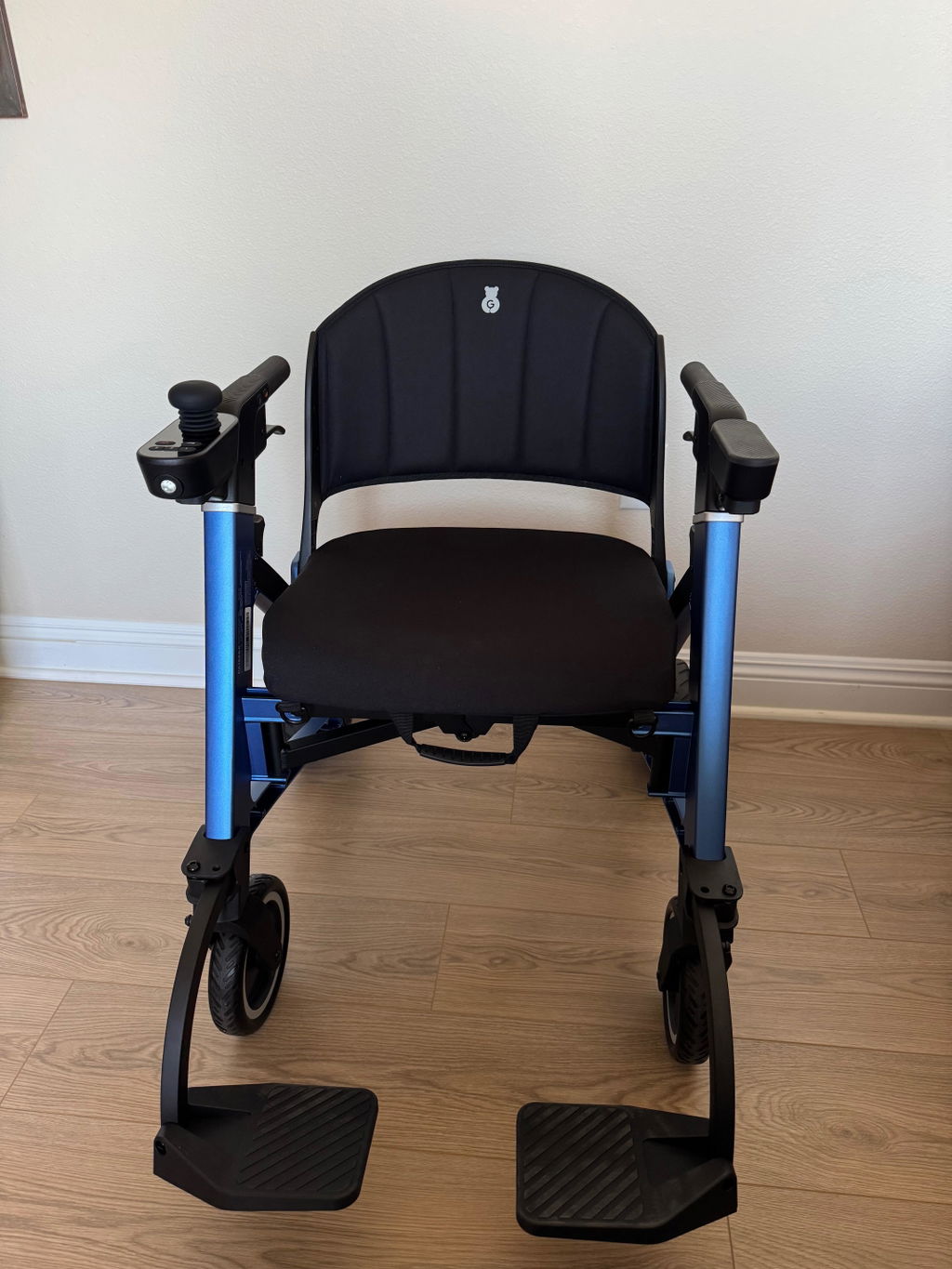
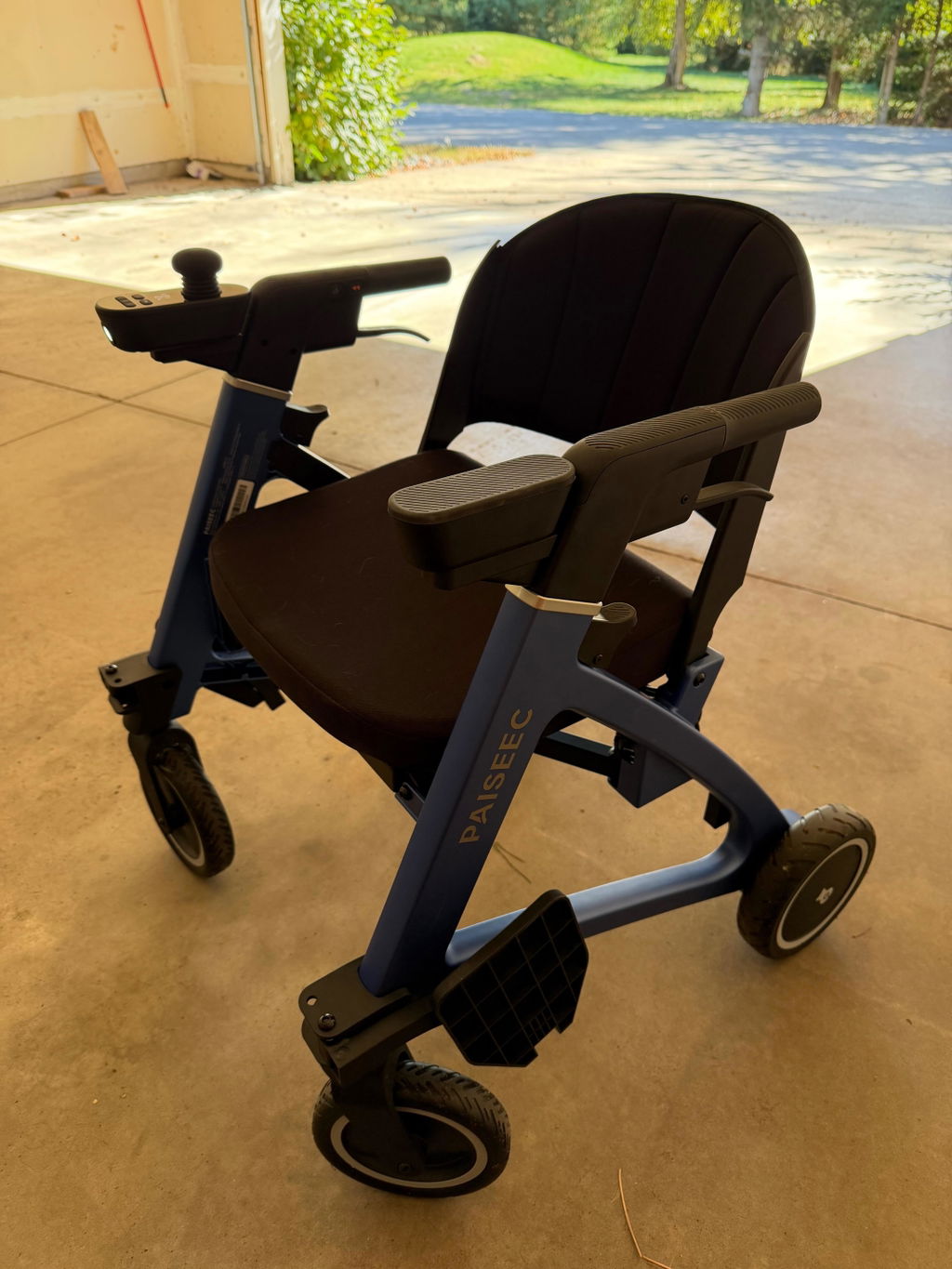
| Weight & Portability | Approximately77 lbs (35 kg), features a two-step folding mechanism for storage | A remarkably light39 lbs (17.7 kg), featuring a quick, one-step folding mechanism |
| Tires & Suspension | 10-inch pneumatic (air-filled) tires with front and rear shock absorbers for comfort | 8.5-inch solid (airless) tires with a spring-based suspension in the seat post |
| Max Recommended Rider Weight | 300 lbs (136 kg) | 265 lbs (120 kg) |
| Key Use Case Advantage | Extended outdoor trips, parks, mild off-road paths, and variable terrain | Daily errands, public transport, travel, and environments with tight spaces |
Which Paiseec scooter is better for all-terrain use and long-distance travel?
The Paiseec S3 is unequivocally the superior choice for all-terrain use and long-distance travel. Its combination of a powerful motor, large battery, full suspension, and pneumatic tires is specifically engineered to handle outdoor challenges and maximize distance between charges.
When your journey involves more than smooth, predictable pavement, the S3's engineering advantages become non-negotiable. The350W motor provides the necessary torque to tackle gentle inclines on grass or gravel paths that would strain a less powerful scooter. The25-mile range estimate is a game-changer for day trips, allowing you to explore a large park, visit multiple locations, or simply enjoy a long ride without range anxiety. This is made possible by its larger15Ah battery, a component that adds weight but is essential for endurance. The all-terrain capability is further enhanced by the10-inch pneumatic tires and full suspension system. Pneumatic tires provide crucial cushioning and grip on uneven surfaces, much like the tires on a mountain bike compared to a road bike. The front and rear shocks work in tandem to isolate the rider from vibrations and bumps, reducing fatigue on longer journeys. Imagine navigating a tree-root-laden path in a local park; the S3 would absorb the irregularities, while a scooter with solid tires would transmit every jolt. For someone whose primary goal is recreational freedom and outdoor access, these features justify the scooter's additional weight and size. Does your ideal scooter route include packed dirt trails, campgrounds, or poorly maintained sidewalks? If so, the S3's design directly addresses those real-world conditions, making it a reliable partner for extended, varied-terrain exploration.
Why would someone choose the ultra-lightweight Paiseec D3 over the more powerful S3?
An individual would choose the Paiseec D3 when portability and ease of transport are the highest priorities. Its sub-40-pound weight and compact fold transform it from a mobility device into a truly portable piece of luggage, ideal for those who frequently travel by car, public transit, or plane.
The D3's primary advantage is its profound impact on daily logistics. At39 pounds, it is light enough for many users to lift into a car trunk without a ramp, a task that can be prohibitive with heavier models. This makes it perfect for the "car boot scooter" lifestyle—driving to a shopping center, unfolding the D3, and using it for the mall interior. Its compact folded dimensions mean it can fit in a closet, beside a desk, or in the corner of a small apartment without dominating the space. The one-step folding mechanism is designed for simplicity and speed, allowing for quick transitions. Consider a senior who enjoys day trips with family; the D3 can be effortlessly loaded by a companion for a trip to a museum or botanical garden. For those who still drive but find walking long parking lots challenging, the D3 serves as an ideal "last-mile" solution. Furthermore, its lighter weight and smaller size make it more nimble in tight indoor spaces like crowded stores or narrow hallways. While it sacrifices some range and plush ride quality, it gains immense practicality for an active, on-the-go lifestyle. Is your biggest challenge lifting a heavy scooter or finding space to store it? Does your mobility routine involve multiple transitions in and out of a vehicle? For these specific scenarios, the D3's lightweight design isn't just a feature; it's the core enabler of independence and spontaneity, addressing a key barrier to scooter ownership for many.
How does the intended usage environment influence the choice between these two scooters?
The choice is heavily dictated by where you will use the scooter most: the S3 dominates in outdoor and variable-terrain settings, while the D3 is the champion for primarily indoor, urban, and travel-focused environments where portability is paramount.
| Primary Usage Environment | Recommended Model | Key Reasons & Feature Benefits |
|---|---|---|
| Suburban Neighborhoods & Parks | Paiseec S3 | Long range covers greater distances; suspension and pneumatic tires handle curb cuts and grass; powerful motor manages gentle slopes common in neighborhoods. |
| Urban Apartments & Public Transit | Paiseec D3 | Lightweight for carrying up stairs or onto buses; compact fold for storage in small living spaces; maneuverable in tight crowds and shops. |
| Travel & Day Trips (Car-based) | Paiseec D3 | Easy to load/unload from a vehicle trunk without assistance; can be used as a portable mobility aid at destinations like airports or large venues. |
| Rural or Semi-Rural Properties | Paiseec S3 | All-terrain capability for gravel driveways, packed dirt paths, or uneven ground; extended range prevents being stranded far from home. |
| Large Indoor Spaces (Malls, Airports) | Paiseec D3 | Nimble handling for navigating through stores and concourses; quiet operation and clean, compact design is less obtrusive in public settings. |
| Recreational Trail Riding | Paiseec S3 | Superior shock absorption for longer comfort on trails; robust construction withstands more vibration; higher ground clearance avoids obstacles. |
What are the critical maintenance and ownership considerations for each model?
Ownership experience differs, with the S3 requiring more attention to its pneumatic tires and mechanical suspension, while the D3's solid tires offer zero maintenance but a firmer ride. Both benefit from standard battery care and periodic brake checks.
Prospective owners must consider the long-term care involved. The Paiseec S3, with its pneumatic tires, will require periodic pressure checks and may be susceptible to punctures, though sealant can mitigate this. Its more complex suspension system, while offering a smoother ride, may eventually need servicing after years of heavy use over rough ground. It's akin to owning a performance bicycle versus a simple city cruiser; the enhanced performance comes with a slightly higher maintenance footprint. The D3, with its airless solid tires, eliminates flat tire worries entirely, a significant advantage for those who cannot perform repairs themselves. However, this trade-off results in a less cushioned ride on very rough surfaces, as the suspension is primarily in the seat post. For both models, the lithium-ion batteries are the heart of the system. Best practices include avoiding complete discharges, storing in moderate temperatures, and using the provided charger. The brushless motors in both are generally reliable with minimal upkeep. Before deciding, ask yourself: are you comfortable checking tire pressure and aware of local repair options? Or does the peace of mind of maintenance-free tires outweigh the desire for a plush ride? Understanding these nuances ensures your choice aligns not just with your initial needs, but with your ability and willingness to maintain the scooter for years of reliable service.
Expert Views
As a mobility solutions specialist, I see the S3 versus D3 decision as a perfect case study in user-centered design. Too often, people seek a single scooter to do everything, which leads to compromise. Paiseec has smartly avoided that by creating two distinct tools for two distinct jobs. The S3 is for the explorer—the person who sees the scooter as a vehicle for outdoor activity and needs the robustness to match. The D3 is for the integrator—the person who needs mobility to seamlessly blend into their existing, active life, where the scooter is just one part of a daily routine involving cars, buildings, and travel. The key is honest self-assessment: map your most common weekly activities. If80% of your use is indoors or requires transport, the D3's portability is a daily blessing. If80% is outdoors on varied paths, the S3's comfort and range are worth the extra weight. This targeted approach ultimately leads to greater satisfaction and more consistent use of the device.
Why Choose Paiseec
Paiseec Mobility enters the market with a focused investment in research and development, which is evident in the specialized design of models like the S3 and D3. Their approach isn't about creating one generic scooter; it's about engineering specific solutions for well-defined mobility challenges. The company's background in advanced electronics and motor systems contributes to features like their efficient brushless motors and integrated battery management systems, which aim for reliability and safety. For a consumer, this translates to products that are thoughtfully differentiated rather than just cosmetically different. The existence of a true ultra-lightweight like the D3 and a capable all-terrain model like the S3 under one brand indicates a commitment to serving diverse needs within the mobility community, allowing users to find a closer match to their actual lifestyle instead of settling for a middle-ground compromise.
How to Start
Begin by conducting a personal mobility audit. For one week, note every instance where you think, "I wish I could go there, but the walking is too much." Document the environments: indoor malls, outdoor parks, your own driveway. Then, assess your physical capabilities honestly, particularly your ability to lift and store a heavy object. Next, prioritize your needs: is maximum range for long outings most important, or is the ability to easily put the scooter in your car? With this personal data in hand, compare it to the core strengths of each Paiseec model. The S3 answers the call for distance and terrain variety, while the D3 solves the problem of portability and storage. Finally, if possible, seek out demonstration opportunities or read detailed user reviews focused on real-world scenarios similar to yours. This process moves you away from spec-sheet comparisons and toward a decision based on your actual life patterns.
FAQs
Yes, the Paiseec D3 can handle standard sidewalks and paved pathways very well. Its solid tires and seat suspension are designed for such urban environments. However, for consistently rough, cracked, or unpaved surfaces, the S3's full suspension and pneumatic tires will provide a noticeably smoother and more comfortable ride.
The significance depends entirely on your travel habits. For short, frequent trips to local shops (under3 miles round trip), both ranges are ample. For longer recreational rides, full-day outings, or living in a spread-out suburban area, the S3's extra10 miles of range can be the difference between confidence and constant battery anxiety, allowing for more spontaneity.
The D3 is designed for ultimate simplicity in folding, often featuring a one-step mechanism that is quick and requires minimal strength. The S3, being a larger and more robust machine, may involve a two-step process that is still straightforward but slightly more involved due to its size and weight. Both are designed for user-friendly operation.
The most overlooked factor is the home storage solution and the vehicle loading process. People often focus on the ride but forget they must lift and store the scooter daily. Measuring your trunk space and planning where the scooter will live in your home can instantly clarify whether the D3's portability or the S3's capability is more critical for your situation.
In conclusion, the Paiseec S3 and D3 represent two brilliant, purpose-built answers to different mobility questions. Your decision should be guided by a clear-eyed assessment of your primary environment and logistical constraints. Choose the S3 if your vision involves exploring outdoor spaces, covering longer distances, and prioritizing ride comfort over varied terrain. Opt for the D3 if your daily life requires a scooter that can be effortlessly transported, stored in small spaces, and used as a nimble tool for errands and travel. By aligning the scooter's core strengths with your dominant use case, you invest in a tool that will genuinely enhance your independence and quality of life for years to come.
Leave a comment
This site is protected by hCaptcha and the hCaptcha Privacy Policy and Terms of Service apply.