




![[2026] PAISEEC D3|Mobility Scooter for Easy Everyday Travel](http://www.paiseec.com/cdn/shop/files/d3_4a4ccb22-9e26-449e-8094-71f3ec4177c3.png?v=1782115044&width=180)

















Mobility scooters that reliably traverse grass, gravel, and unpaved trails close the gap between indoor independence and outdoor freedom. For active seniors and individuals managing physical challenges, visiting a community garden, navigating a local park, or crossing a gravel driveway shouldn't mean risking safety or getting stuck.
While most lightweight travel scooters stall or slip the moment they leave flat concrete, advanced all-terrain engineering enables true outdoor independence. This guide outlines the precise physical specifications required to safely navigate soft, challenging ground, establishes an authoritative terrain-to-spec matching matrix, and reviews how the Paiseec S3 All-Terrain Folding Mobility Scooter performs against industry benchmarks.
1. Why Grass and Gravel Defeat Standard Scooters: The Engineering Realities
Navigating non-paved environments involves complex mechanics that rapidly drain and destabilize indoor-focused mobility equipment.
Soft Ground, Turf, and the Flotation Crisis
When a standard compact scooter drives onto a lawn or loose stone, its small, narrow, solid polyurethane tires sink under the combined weight of the machine and the rider. This lack of "flotation" causes massive traction loss. The wheels spin in place, digging the scooter deeper into the turf. Furthermore, wet or thick grass breeds intense rolling resistance, forcing the powertrain to draw excess energy, overheating the components and stranding riders away from their vehicles.
Low Ground Clearance and High-Centering Hazards
Traditional urban models feature minimal ground clearance, often under 2 inches. Thick lawns like St. Augustine or tall grass clumps compress underneath the chassis, creating an upward force that lifts the drive wheels off the ground. This phenomenon, known as high-centering, instantly stalls the vehicle. Outdoor paths also present hidden tree roots, shifting gravel beds, and uneven transition cuts that scrape the undercarriage, risking mechanical failure or tipping.
The Myth of Lightweight All-Terrain Performance
Many manufacturers claim portability and rugged performance in a single unit. However, ultra-light structural frames must sacrifice motor size and wheel diameter to save weight. True all-terrain capability demands structural stability. A light, 3-wheel configuration lacks front-end tracking support on shifting gravel or soft grass, causing the steering wheel to drift, slide, or tip when climbing an unaligned curb cut or incline.
2. The Ultimate Match Matrix: Terrain vs. Technical Specifications
To ensure your equipment handles your environment, select a scooter based on your hardest regular surface, not your easiest or average trip.
| Target Riding Surface | Minimum Motor Power | Minimum Ground Clearance | Optimal Tire Setup & Size | Recommended Suspension | Safe Wheel Configuration |
| Indoor Floors & Flat Pavement | 180W | 2.0 inches | Solid PU / 8-inch front & rear | Optional | 3 or 4 Wheels |
| Cracked Sidewalks & Curb Cuts | 200W | 2.5 inches | Solid PU / 8.5-inch minimum | Rear Suspension | 4-Wheel Base Preferred |
| Short Gravel & Packed Dirt | 250W | 2.76 inches | Pneumatic / 9-inch Front, 10-inch Rear | Chassis Flex / Smart Tuning | 4-Wheel Base Only |
| Sustained Gravel & Thick Lawns | 350W | 3.5 inches | Wide Pneumatic / 10-inch minimum | Full Front & Rear | 4-Wheel Base Only |
| Rural Properties & Off-Road Trails | 500W+ | 4.0 to 5.0 inches | Deep-tread Knobby / 12 to 14.5-inch | Heavy-Duty Independent | 4-Wheel Heavy-Duty Base |
3. Medical Diagnostic Match: Balancing Condition and Mobility Needs
Choosing a mobility device is a highly individualized medical and functional decision. Different physical conditions interact uniquely with terrain vibrations and control interfaces:
-
Arthritis and Spinal Stenosis: Riders dealing with chronic joint pain or spinal compression experience severe discomfort from the sudden jolts of cracked pavement and gravel. These users require air-filled pneumatic tires and a padded, ergonomic seat to absorb shock. Solid polyurethane tires transfer road vibrations directly up the spine and should be avoided.
-
Post-Stroke Fatigue and MS: For individuals managing fluctuating stamina, muscle weakness, or a recent hip or knee replacement, getting stranded is a critical safety risk. These riders must prioritize a highly efficient battery matrix with deep optimization, clear real-time dashboard readouts, and simple intuitive controls that do not require high grip strength.
-
COPD and Respiratory Restrictions: Users who rely on a scooter to preserve oxygen levels need a device that easily transitions into public venues and vehicle trunks without requiring strenuous, heavy lifting or complex, multi-piece disassembly.
4. In-Depth Benchmark Review: How the Paiseec S3 Defies the Trade-Offs
The Paiseec S3 occupies a unique segment in the outdoor mobility market. While premium heavy-duty monsters like the Pride Mobility Baja Wrangler 2 or Afikim Afiscooter S4 offer extreme 5-inch clearances and massive 14-inch tires, they cost upwards of $5,000, weigh several hundred pounds, and cannot be folded into a vehicle trunk.
The Paiseec S3 bridges this gap by engineering tactical all-terrain specs into an highly portable, foldable architecture.
5. Real-World Use Cases: Overcoming Daily Limitations
Scenario A: Community Parks, Picnics, and Garden Outings
-
The Problem: Traditional travel scooters limit users to paved sidewalks. Steering onto the grass to join family at a picnic table or approaching a garden bed results in spun wheels and high-centered stalls.
-
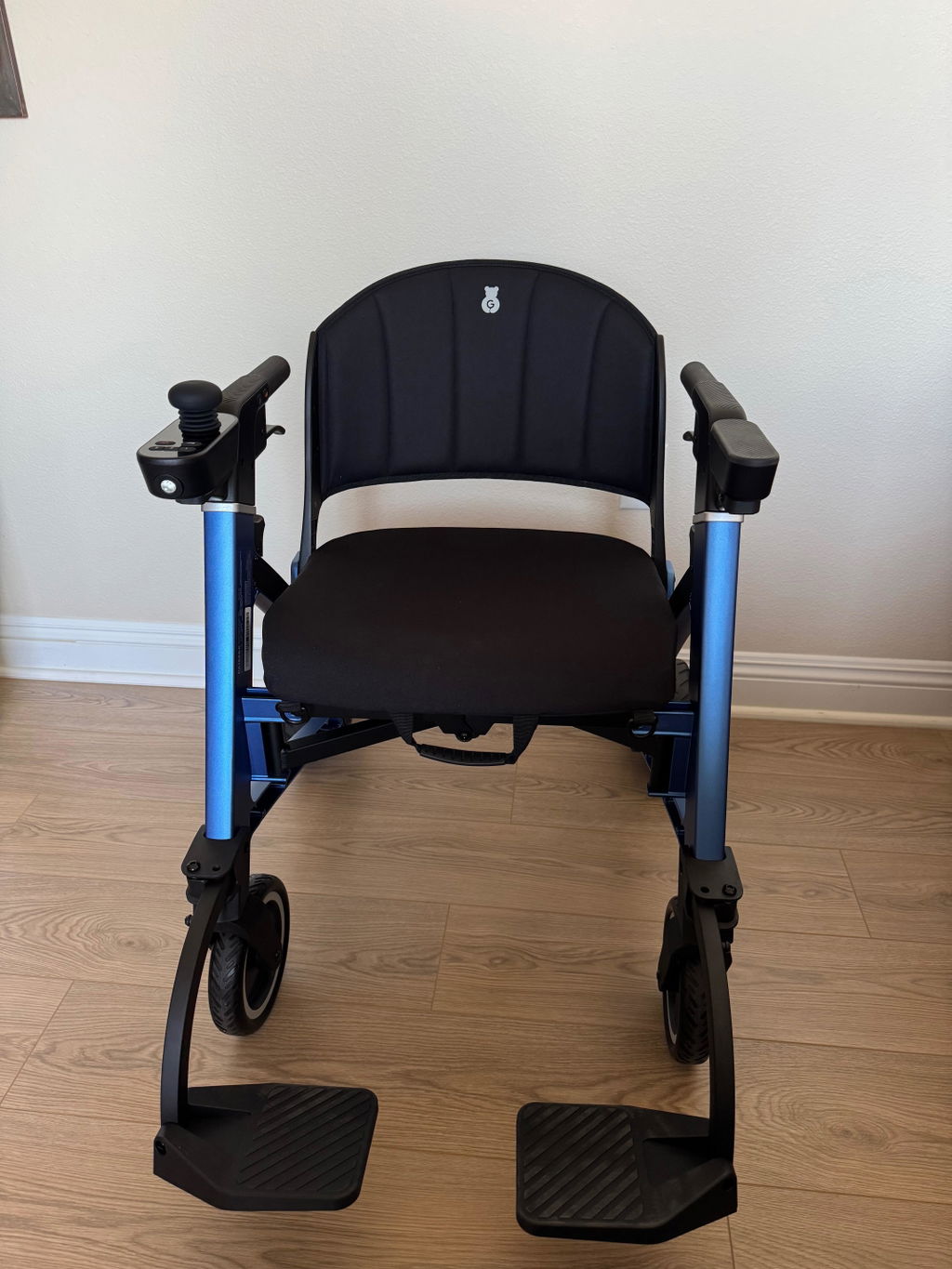
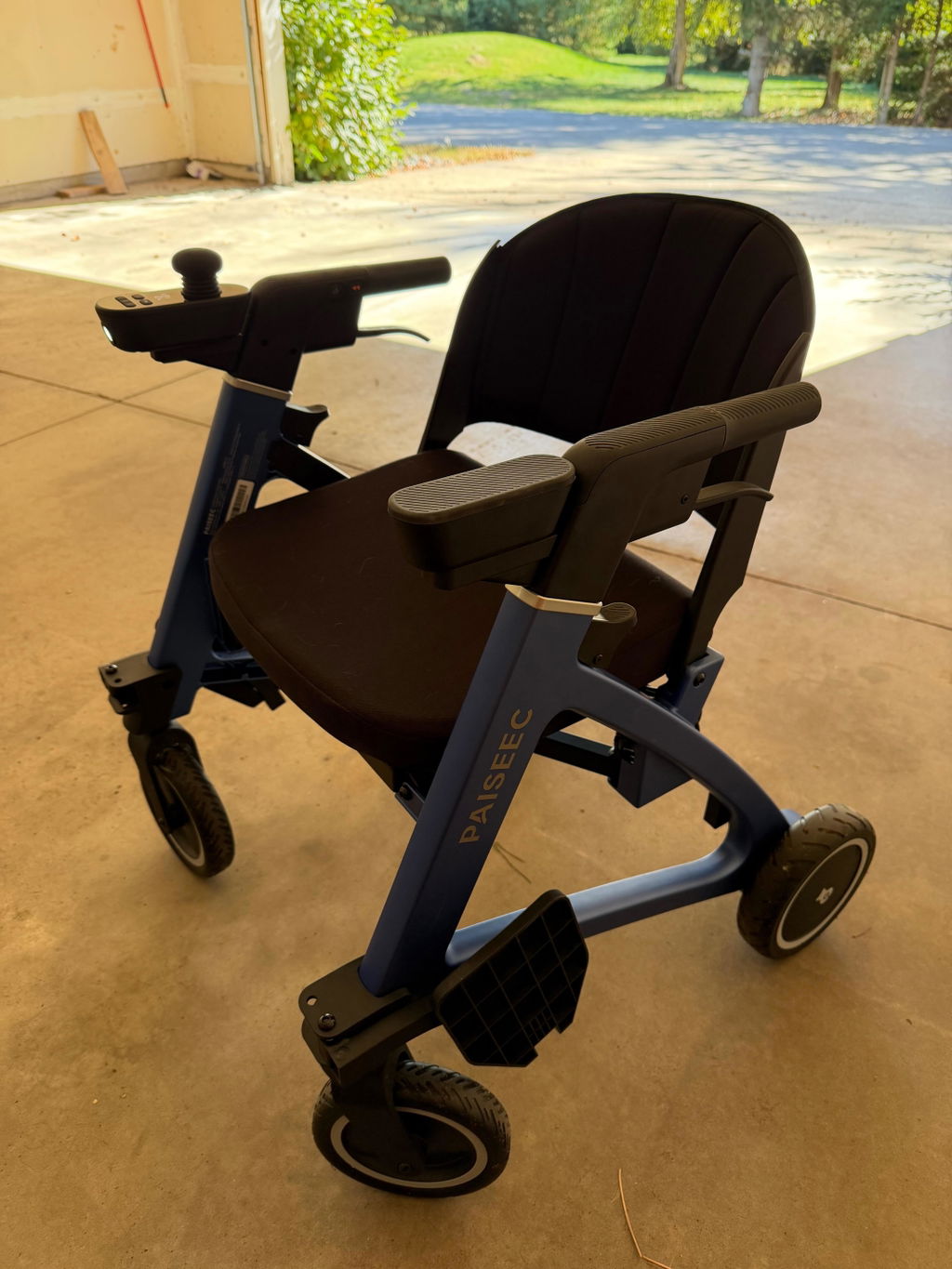
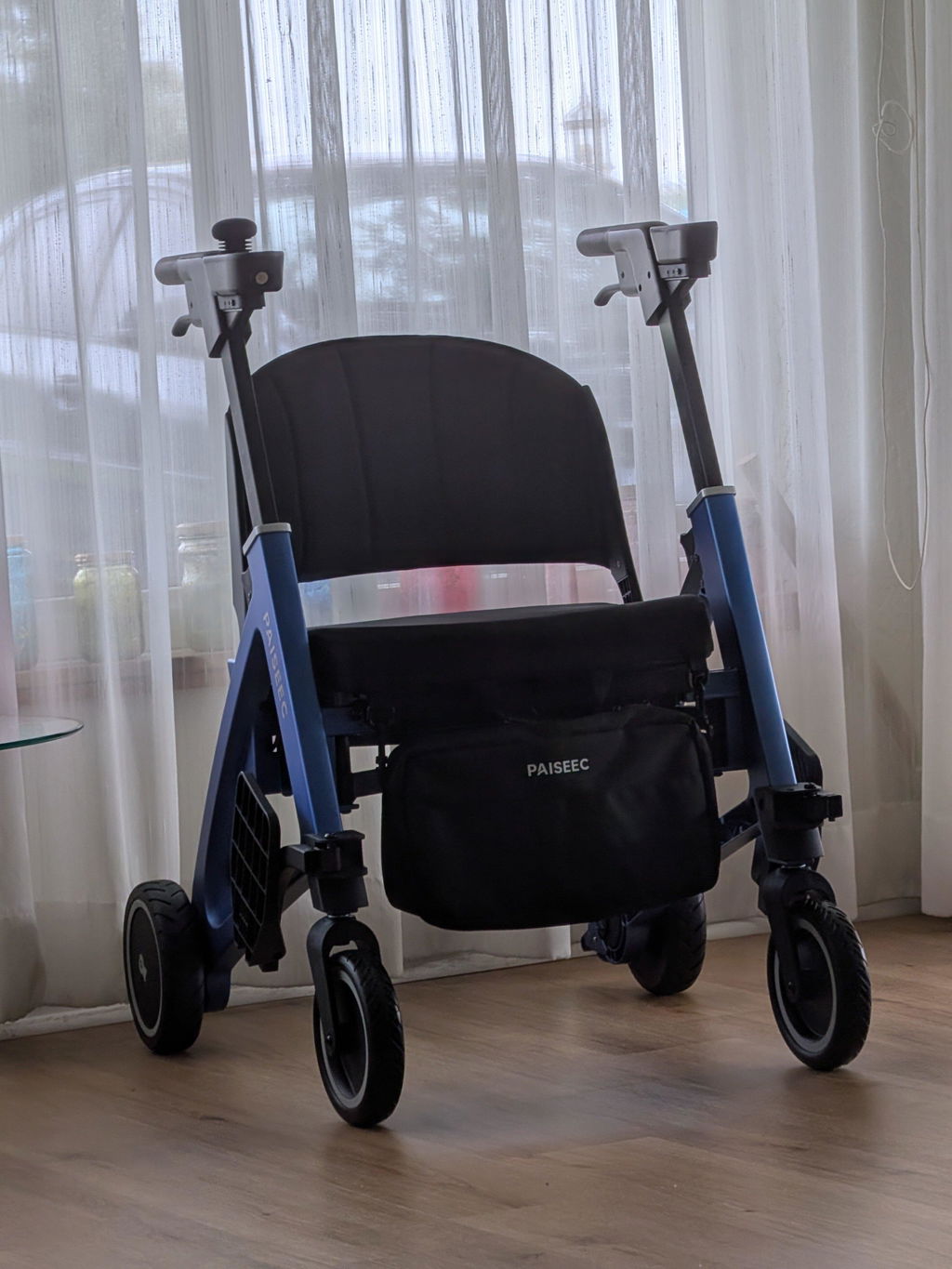
The Paiseec S3 Solution: The 4-wheel wide stance combined with a 250W brushless motor and 10-inch rear pneumatic tires allows the rider to transition off the asphalt. The scooter glides over short grass and gravel pathways without losing momentum.
Scenario B: Long Driveways, Rural Drop-offs, and Coastal Paths
-
The Problem: Loose gravel shifts constantly under tire pressure. A 3-wheel scooter or a solid-tired device drifts wildly sideways, creating intense handling vibrations that quickly exhaust riders with arthritis.
-
The Paiseec S3 Solution: The S3’s pneumatic tires cushion the impact of loose stones, while the dual rear wheels drive smoothly forward. The integrated display gives the rider real-time battery tracking, ensuring a stress-free return up a long driveway.
6. Comprehensive Step-by-Step Outdoor Safety & Operation Guide
To maximize rider safety and extend the operational lifecycle of your mobility device on grass and gravel, execute the following protocols:
7. Frequently Asked Questions
Is a 4-wheel scooter truly necessary for grass and gravel?
Yes. Shifting stones and soft lawns destabilize mobility equipment. A single front wheel on a 3-wheel scooter will drift, spin out, or dig into loose surfaces, creating a major tipping hazard. A balanced 4-wheel base ensures uniform weight distribution and reliable linear tracking.
Can the Paiseec S3 be taken on commercial airlines?
Yes. The aerospace-grade aluminum alloy frame folds down in a simple two-step, assembly-free sequence to fit into car trunks and cargo holds. While the frame is travel-friendly, the long-range 36V 12Ah lithium battery requires standard airline compliance checks; verify your specific carrier's gate-check protocols for detachable medical device batteries prior to your trip.
What is the difference between an outdoor scooter and an off-road vehicle?
An outdoor all-terrain scooter like the Paiseec S3 is engineered to expand your daily boundaries to encompass parks, standard lawns, and gravel paths while maintaining lightweight portability. It is not an unprotected all-terrain vehicle (ATV). Deep mud, soft sand, and standing water should always be avoided to safeguard the internal electronic controllers.
How does the PAi system protect me on uneven outdoor paths?
The PAi system utilizes advanced sensor algorithms to constantly monitor road resistance and tilt angles. If you enter a sharp turn too quickly or begin descending a steep park ramp, the system instantly engages automatic deceleration controls, providing real-time rollover protection.
Conclusion
When selecting a mobility scooter to conquer grass and gravel, balancing rugged structural metrics with practical transportability is essential. While massive heavy-duty units offer maximum clearance, they sacrifice portability entirely. The Paiseec S3 offers a highly engineered alternative—delivering 9 and 10-inch pneumatic shock absorption, a 2.76-inch ground clearance, active PAi electronic stabilization, and a 25-mile range, all within a foldable, trunk-friendly footprint.
Prioritize your health, align your equipment to your toughest environmental surface, and consult a physician or licensed mobility specialist to confirm your individual physical fit before hitting the trails.
Leave a comment
This site is protected by hCaptcha and the hCaptcha Privacy Policy and Terms of Service apply.