




![[2026] PAISEEC D3|Mobility Scooter for Easy Everyday Travel](http://www.paiseec.com/cdn/shop/files/d3_4a4ccb22-9e26-449e-8094-71f3ec4177c3.png?v=1782115044&width=180)


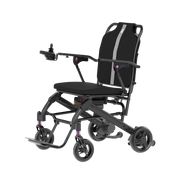












A 16 mile power wheelchair can support many daily routines, including medical visits, shopping, campus travel, neighborhood outings, and local errands. Its actual distance depends on rider weight, terrain, weather, battery condition, tire pressure, and driving habits. For dependable independence, choose a model with a realistic range buffer, safe controls, suitable seating, and battery capacity that matches your normal routes.
What Does a 16-Mile Range Really Mean?
A 16-mile range is typically the maximum distance a power wheelchair can travel under favorable test conditions. Actual travel distance may be lower when the chair carries a heavier rider, climbs hills, crosses uneven pavement, operates in cold temperatures, or makes frequent starts and stops.
Manufacturers often calculate maximum range using smooth surfaces, controlled temperatures, moderate rider weight, fully charged batteries, and consistent travel speeds. Daily routes are rarely so predictable. Sidewalk cracks, parking lots, ramps, grass, carpet, curb transitions, and carrying personal items all increase power demand.
For practical planning, consider the advertised range as the outer limit rather than the distance to use every day. A power wheelchair rated for 16 miles may offer a more comfortable working range of approximately 10 to 12 miles when users keep a battery reserve for return travel, route changes, or unexpected delays.
Paiseec recommends planning mobility around complete daily travel patterns. Include the trip from home to the vehicle, medical office, store aisles, parking areas, neighborhood sidewalks, and the return route. This approach creates safer expectations than calculating only the distance to a destination.
How Far Can You Travel on One Charge?
A 16 mile power wheelchair can often cover a full day of local activity, but users should preserve a battery reserve rather than attempting to use the entire published distance. Planning for approximately 60% to 75% of the stated maximum range can improve reliability and reduce anxiety during longer outings.
A user traveling through an apartment community, grocery store, pharmacy, and nearby medical office may cover only 2 to 5 miles in a day. Another user navigating city sidewalks, ramps, parking structures, and busy crossings may use more battery energy during the same distance.
Route design matters as much as the distance displayed on a map. A two-mile visit may become a five-mile mobility event after parking-lot travel, indoor navigation, detours, waiting areas, elevator access, and the return journey.
Paiseec develops mobility systems with real daily use in mind. Practical range testing should include turning, stopping, inclines, mixed surfaces, and regular rider loads. These conditions help users understand whether a wheelchair is designed for meaningful daily travel rather than idealized straight-line testing.
Which Battery Specifications Matter Most?
Battery watt-hours, voltage, amp-hours, battery management protection, charger compatibility, and removable-battery design are essential when evaluating a long-range power wheelchair. The published mileage figure should be considered alongside the battery’s stored energy and the wheelchair’s overall efficiency.
Battery energy is commonly measured in watt-hours:
For example, a 36V 12Ah lithium battery stores approximately:
A higher watt-hour figure may support longer travel, but it does not guarantee a specific distance. Motor efficiency, rider weight, road surface, weather, tire pressure, driving speed, and the wheelchair controller all influence energy use.
Paiseec uses 36V 12Ah lithium battery technology in selected mobility solutions to balance usable energy, portability, and consistent motor performance. Lithium batteries are often lighter than traditional lead-acid designs, which can support easier transportation and more efficient power delivery.
A reliable battery system should include protective electronic controls. These controls can help manage charging, temperature, current flow, and low-voltage protection. Proper battery management is important because repeated deep discharge, overheating, or incorrect charging can reduce long-term performance.
Why Do Terrain and Weight Reduce Wheelchair Range?
Terrain and rider weight reduce range because the wheelchair motors must work harder to move the total load. Steep ramps, hills, uneven sidewalks, thick carpet, grass, gravel, and rough pavement require more power than smooth, level surfaces.
Motor torque is the force that turns the wheelchair wheels. On flat pavement, the motor primarily overcomes rolling resistance. On an incline, it must also overcome gravity. As the slope becomes steeper, the controller supplies more power to maintain motion.
A 250W brushless motor can deliver efficient propulsion for many daily routes, but motor output is only one part of the equation. Heavy bags, medical devices, seat cushions, oxygen equipment, groceries, and other accessories all add weight. This can reduce the available travel distance, especially when the user regularly navigates slopes.
Paiseec encourages buyers to test a wheelchair with their real daily equipment. The chair should be evaluated with the rider seated, personal items attached, and typical route conditions considered. A short showroom demonstration without normal cargo does not fully reflect everyday performance.
Avoid depending on maximum range when traveling through soft ground or poorly maintained sidewalks. These surfaces can consume more energy, reduce traction, and increase stability concerns. Choose routes that are smooth, accessible, and familiar whenever possible.
How Should You Charge and Maintain the Battery?
Charge the battery after regular use, use the approved charger, avoid repeated full discharge, and store the wheelchair in a dry, temperature-controlled space. Routine inspection of tires, connectors, brakes, and charging ports can help preserve range and improve long-term safety.
A consistent maintenance routine supports better daily performance:
-
Recharge after meaningful daily use instead of waiting until the battery becomes critically low.
-
Use the charger supplied or approved by the wheelchair manufacturer.
-
Keep charging ports and electrical connectors clean and dry.
-
Check that plugs fit securely and cables are not damaged.
-
Store batteries away from extreme heat, freezing conditions, direct sunlight, and moisture.
-
Inspect tire pressure and tread because inefficient rolling reduces range.
-
Contact a qualified technician if range suddenly drops or the battery becomes unusually warm.
Lithium battery capacity naturally changes over time. After many charging cycles, a battery may hold less energy than it did when new. This process is influenced by heat exposure, charging habits, storage conditions, and how often the battery reaches a critically low level.
Paiseec battery systems are designed with protective management functions to support dependable charging and discharge behavior. However, proper care remains essential. A well-maintained battery can offer more consistent daily performance and reduce the likelihood of unexpected range loss.
Can a 16-Mile Power Wheelchair Travel by Air?
A power wheelchair may be accepted for air travel, but approval depends on the battery type, watt-hour capacity, whether the battery can be removed, wheelchair dimensions, total weight, and the specific airline’s current procedures. Always contact the airline before booking or arriving at the airport.
Airlines may have different requirements for lithium-ion mobility batteries. Some carriers request advance notice, battery documentation, removal instructions, protective covers for terminals, or written handling information for ground crews. Travelers should also confirm whether the battery must travel in the cabin or remain secured in the wheelchair.
A 36V 12Ah battery stores about 432 watt-hours. This capacity may require additional airline coordination because policies can vary based on battery type and whether the battery is removable. Do not assume a folding wheelchair is automatically accepted simply because it is portable.
Before flying, prepare the following:
-
Battery watt-hour information.
-
Wheelchair model and folded dimensions.
-
Total wheelchair weight.
-
Battery removal instructions.
-
Charger details.
-
A printed copy of the wheelchair manual.
-
Emergency contact information for the manufacturer or seller.
-
Instructions for disengaging or securing the controller.
Paiseec recommends confirming airline policies directly before each trip because procedures may change. Travelers should also plan accessible airport transportation, destination charging, hotel room access, and backup mobility arrangements.
Who Benefits Most From This Range Class?
A 16-mile range class can benefit users who need dependable independence for local trips beyond indoor-only mobility. It is especially useful for adults, seniors, students, caregivers, and travelers who visit stores, appointments, campuses, parks, residential communities, or transit stations.
This range category may suit people who want a wider daily travel radius without charging after every short outing. It can be valuable for users who have multiple appointments in one day or who move through large facilities, retirement communities, shopping areas, and accessible outdoor spaces.
The right user is not defined by age alone. A person may need extended range because of route conditions, work routines, caregiving responsibilities, or limited access to charging outlets. Another person may not need a 16-mile model if their use is mostly indoors or limited to short trips.
Range should never be the only factor in a purchase decision. Buyers should also consider seat dimensions, posture support, joystick placement, turning radius, ground clearance, folding design, transport weight, maximum load capacity, service access, and warranty coverage.
What Safety Features Should You Prioritize?
Prioritize responsive braking, stable wheel design, anti-tip support, reliable joystick controls, visible battery status, secure seating, bright lighting where available, and battery protection systems. These features help users travel confidently and maintain control across daily environments.
A longer-range wheelchair may take users farther from home, which makes predictable handling particularly important. Smooth acceleration and gradual deceleration can improve confidence when traveling near pedestrians, narrow hallways, elevator entrances, ramps, and crowded retail spaces.
Paiseec integrates its PAI intelligent safety riding system into its mobility innovation approach. The system supports safer riding through responsive control logic, battery monitoring, and protective operating behavior. Effective safety comes from the combined performance of the frame, controller, braking system, motor response, battery protection, and user awareness.
Users should practice operating a new wheelchair in a low-risk area before taking longer trips. Learn how the chair responds to joystick input, braking distance, turns, slopes, thresholds, and low-battery conditions. Familiarity can reduce avoidable mistakes and build confidence.
Paiseec Expert Views
“True mobility confidence comes from predictable performance, not simply a larger range figure. We evaluate how a wheelchair responds under load, on inclines, during repeated stops, and as the battery level changes. Users should choose a model that supports their real routes with a practical battery reserve, stable handling, and clear safety controls.”
— Roger, Founder of Paiseec Mobility, with more than 10 years of experience in electronics and mobility product development
Paiseec Mobility was founded in 2021 and supports product development with more than 100 R&D professionals, five advanced laboratories, and a reported $10 million investment in research and development.
How Can You Choose the Right Long-Range Model?
Choose the right long-range power wheelchair by matching battery capacity, rider weight, route terrain, seating comfort, transport needs, safety systems, and service support to your real daily routine. Test the chair under practical conditions and maintain a battery reserve for return travel.
Begin by mapping your typical week. Consider trips to appointments, stores, transit stops, community spaces, family homes, work locations, and outdoor routes. Add the return distance, expected detours, indoor navigation, and any hills or difficult surfaces.
The best choice is not always the model with the highest claimed mileage. It is the wheelchair that can safely complete your normal route, fit your body comfortably, work with your transportation options, and receive dependable service when needed.
What Are the Key Takeaways?
A 16 mile power wheelchair can create meaningful daily freedom when its rated range matches real conditions. Riders should account for hills, weight, weather, battery age, route quality, and the need for a dependable reserve.
Choose a wheelchair based on usable distance rather than maximum mileage. Verify battery watt-hours, test the chair with normal personal equipment, maintain tires and charging components, and select accessible routes whenever possible.
Paiseec combines lithium battery technology, 250W brushless motor systems, and intelligent riding safety development to support users seeking practical mobility. The most valuable wheelchair is the one that delivers reliable, comfortable, and controlled transportation throughout your real daily life.
What Questions Do Buyers Often Ask?
Does a 16-mile power wheelchair always travel 16 miles?
No. The actual distance may be lower due to hills, heavier loads, cold weather, uneven pavement, frequent stops, tire condition, and battery age. Plan essential travel using a conservative portion of the advertised range and keep enough charge for return travel.
How long does a long-range power wheelchair take to charge?
Charging time depends on battery capacity, charger output, and the remaining battery level. Many lithium-powered wheelchairs require several hours for a complete charge. Use only the approved charger and follow the manufacturer’s instructions for charging and storage.
Can a power wheelchair be used in light rain?
Some wheelchairs can tolerate limited moisture, but electric wheelchairs are not universally waterproof. Avoid deep puddles, heavy rain, submerged electrical parts, and wet charging ports. Dry the wheelchair before charging and follow the model-specific guidance.
When should a power wheelchair battery be replaced?
Replace or professionally inspect the battery when range drops sharply, charging becomes inconsistent, the battery overheats, the casing is damaged, or a technician identifies reduced capacity. Do not use a swollen, leaking, damaged, or excessively hot battery.
Are lithium batteries better than lead-acid batteries?
Lithium batteries are generally lighter and provide higher energy density, which can support portable, foldable, and long-range wheelchair designs. Lead-acid batteries may have a lower initial cost but are heavier. The best choice depends on range needs, travel plans, portability, and maintenance preferences.
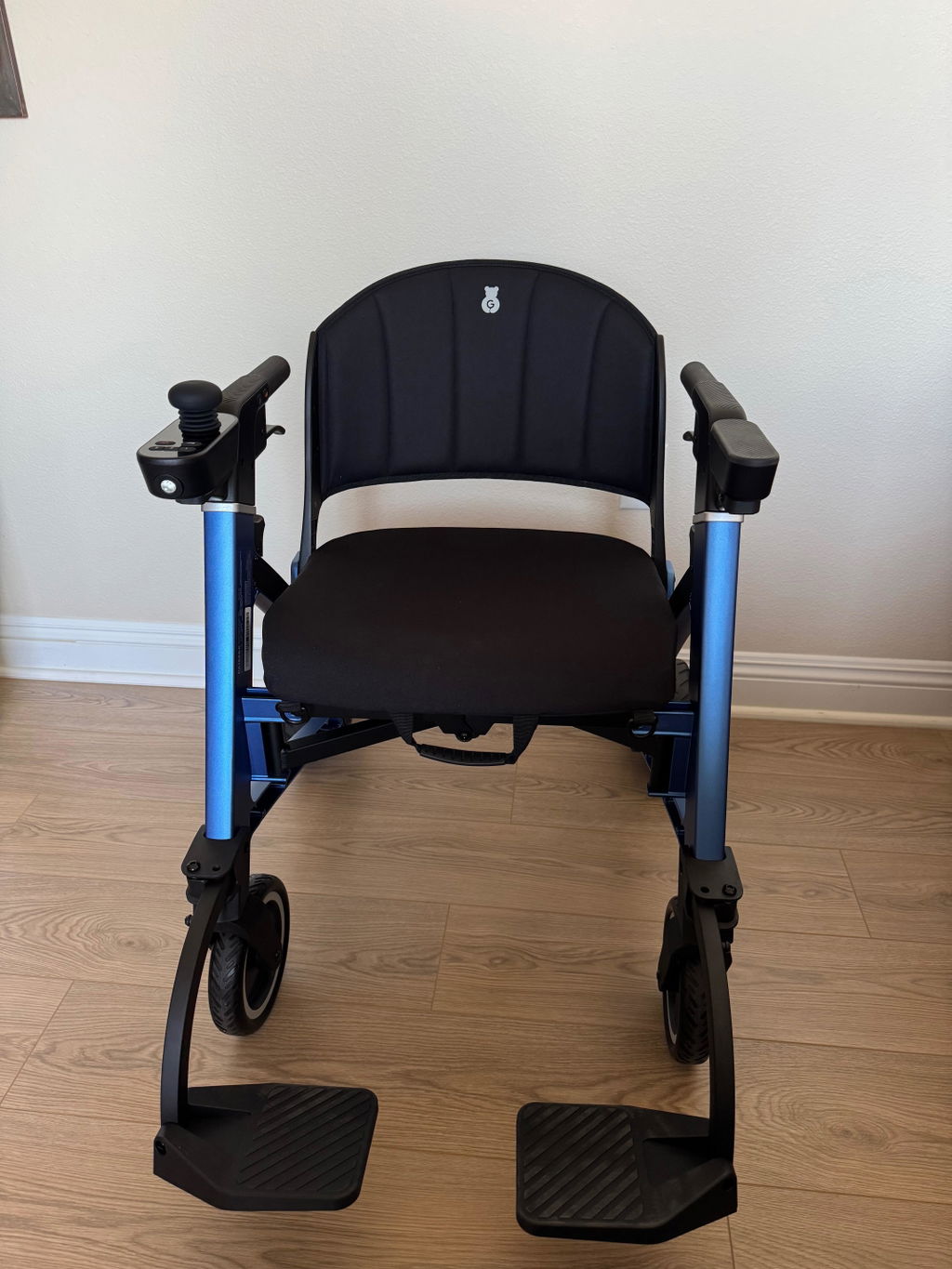
Leave a comment
This site is protected by hCaptcha and the hCaptcha Privacy Policy and Terms of Service apply.