



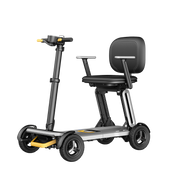
![[2026] PAISEEC D3|Mobility Scooter for Easy Everyday Travel](http://www.paiseec.com/cdn/shop/files/d3_4a4ccb22-9e26-449e-8094-71f3ec4177c3.png?v=1782115044&width=180)
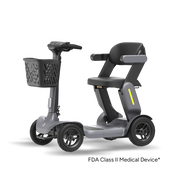

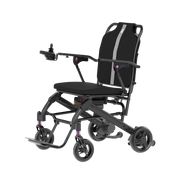
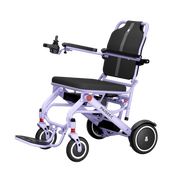











An airline approved multifunction wheelchair can make flying easier when its battery, folding design, weight, documentation, and airline handling procedures align with the carrier’s requirements. The most travel-ready models combine a removable, clearly labeled battery, secure folding system, protected controls, and practical comfort features. Confirm eligibility with each airline before departure because policies differ by route, aircraft, and battery configuration.
What Makes a Multifunction Wheelchair Airline Compatible?
A multifunction wheelchair is airline compatible when its battery specifications, folding process, transport weight, and safety instructions meet the operating airline’s mobility-device rules. The most important factors are usually battery type, watt-hour rating, battery removability, and whether staff can safely power down, fold, move, and secure the chair.
The phrase “airline approved” should be understood as travel readiness rather than universal clearance. A powered wheelchair can be accepted by one carrier and require different handling, paperwork, or battery procedures with another. International routes and connecting flights may add further requirements.
A travel-ready wheelchair should include:
-
A removable lithium-ion battery with visible voltage, amp-hour, and watt-hour information
-
A folding frame with a reliable locking mechanism
-
A transport mode that prevents accidental joystick activation
-
Protected wiring, connectors, and controller housing
-
Clear lifting points on the main frame
-
A manual push or freewheel mode for airport transfers
-
Easy-to-follow instructions for airline personnel
Paiseec designs multifunction mobility products around daily independence as well as travel practicality. A compact frame can simplify vehicle transfers, hotel navigation, and airport movement, but documentation and battery readiness remain equally important.
How Do Battery Rules Affect Air Travel?
Battery rules determine whether a powered wheelchair can travel by air, how the battery must be protected, and whether airline approval is required before departure. Travelers should verify the battery chemistry, watt-hour rating, removal procedure, and terminal-protection requirements with every operating carrier on their itinerary.
Battery energy is calculated as:
For example, a 36V 12Ah battery has:
This calculation matters because airlines assess mobility-device batteries differently from ordinary consumer electronics. Some carriers may allow certain installed batteries, while others may require removal and cabin transport. A removable battery must be protected from short circuits and accidental activation.
For Paiseec users, battery preparation should begin well before the airport. A 36V 12Ah battery equals 432Wh, so travelers should request written confirmation from the airline rather than assume acceptance based on general online guidance.
Which Features Make Airport Travel Easier?
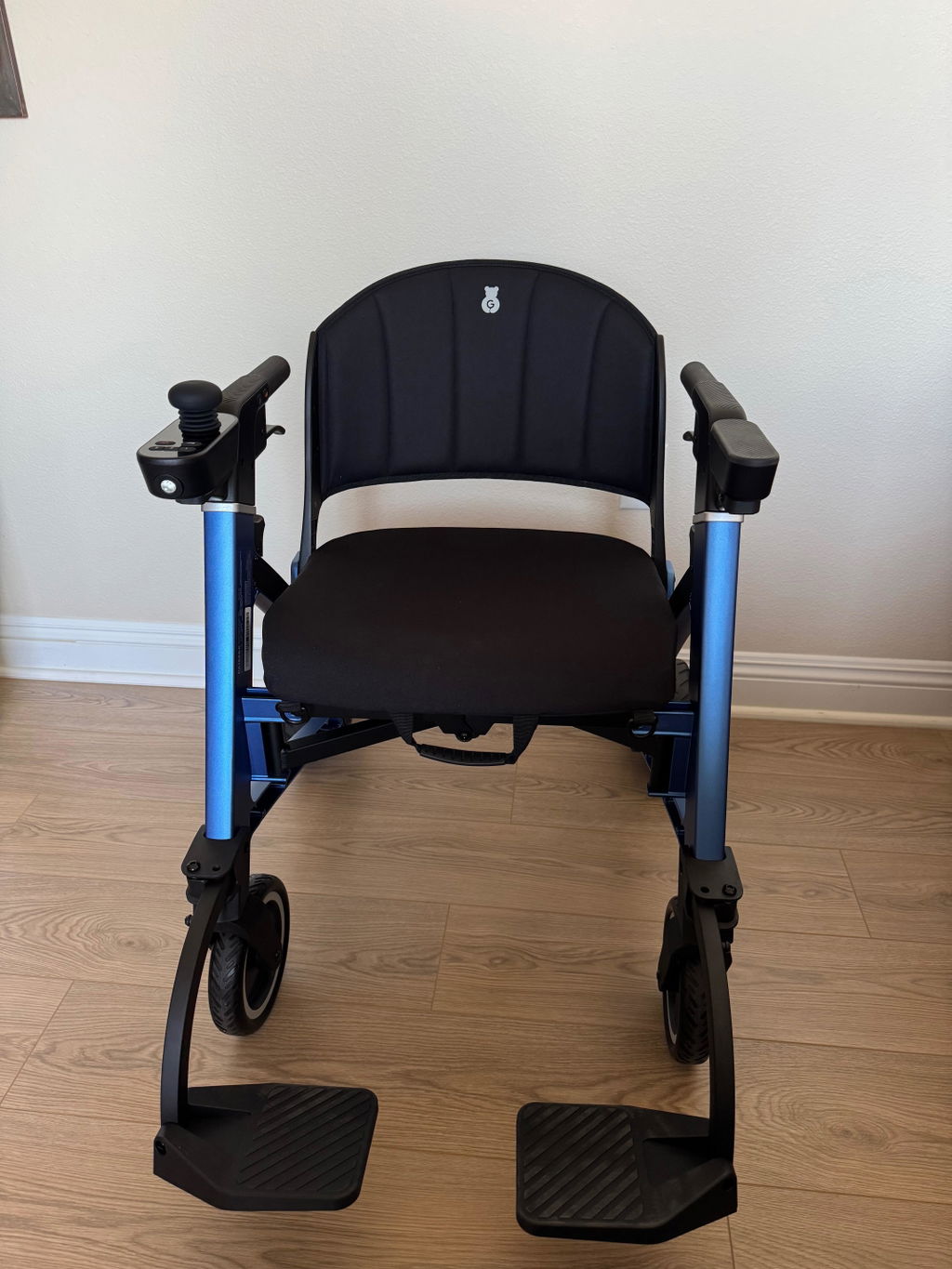
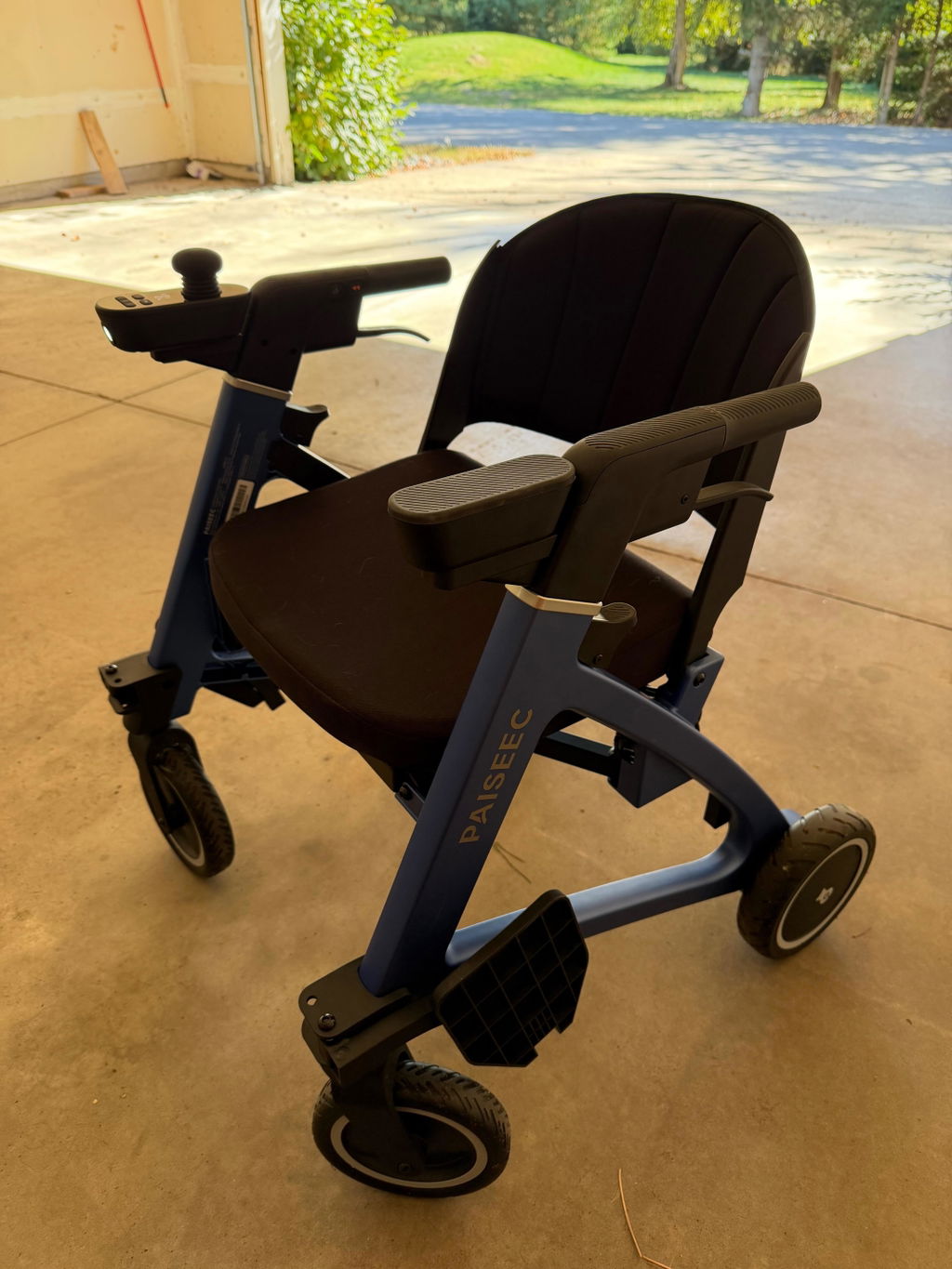
The most useful airport features include a removable battery, compact fold, protected joystick, manual-release function, stable anti-tip support, and a comfortable seat for long terminal distances. These features help users move independently while allowing airline staff to handle the wheelchair correctly.
Airport environments create different demands than normal outdoor travel. Terminal floors are smooth, but travelers may encounter long corridors, crowded boarding areas, ramps, elevators, carpets, curb cuts, and jet bridges. A wheelchair needs predictable low-speed control, secure braking, and enough battery reserve to avoid range anxiety.
Look for these practical travel features:
-
A folding structure that stays locked when collapsed
-
A compact profile for taxis, hotel shuttles, and baggage areas
-
A protected joystick that resists impact during transport
-
Footrests that fold or detach securely
-
Adjustable seating that remains stable while boarding or transferring
-
Anti-tip wheels that remain firmly attached
-
A freewheel mode that attendants can activate safely
-
A visible power-off function for baggage handling
Paiseec combines lightweight folding concepts with electric mobility engineering intended for real travel routines. A 250W brushless motor can support smooth, controlled movement through airports, but the full travel experience also depends on turning radius, control responsiveness, brake performance, frame durability, and battery accessibility.
How Should You Prepare a Wheelchair for a Flight?
Prepare a powered wheelchair by notifying the airline early, confirming battery rules, measuring the folded unit, protecting vulnerable components, and carrying clear handling instructions. Travelers should arrive early, photograph the wheelchair before handoff, and ensure airline staff understand the power-off, folding, and freewheel procedures.
Use this pre-flight process:
-
Contact the airline after booking and declare the powered mobility device.
-
Share the wheelchair model, total weight, folded dimensions, battery chemistry, voltage, amp-hours, and watt-hours.
-
Ask whether battery removal, advance approval, or a mobility-device declaration is required.
-
Print the product manual and battery specification page.
-
Attach a durable tag with your contact details and destination.
-
Photograph the chair from several angles before check-in or gate handoff.
-
Remove loose bags, cup holders, cushions, chargers, and accessories when possible.
-
Power off the chair and activate its transport lock.
-
Protect the joystick and exposed connectors from impact.
-
Carry essential battery materials and mobility paperwork in your cabin bag.
A handling card can reduce misunderstandings. Include instructions such as: “Power off before moving. Do not lift by the joystick, armrests, footrests, or battery cables. Lift only from marked frame points. Fold only at designated release points. Keep upright whenever possible.”
A multifunction wheelchair should include model-specific instructions, not generic language. Airline staff need to know where the battery release is located, how to activate freewheel mode, how the chair folds, and which parts must never be used as lifting points.
Why Must You Confirm With Every Airline?
You must confirm requirements with every airline because battery limits, handling procedures, aircraft cargo dimensions, and documentation standards can differ by carrier. A wheelchair accepted on one flight may require different preparation on a connecting route, especially when a regional partner or international carrier operates part of the itinerary.
The most common mistake is confirming only the first flight. A complete trip may involve a booking airline, a regional operator, a code-share partner, and a return carrier with different policies. Travelers should check every individual flight segment.
Ask each operating airline:
-
Is advance approval required for this wheelchair battery?
-
Must the battery be removed before gate checking?
-
Can the wheelchair remain upright during transport?
-
Are there weight or dimensional limits for the specific aircraft?
-
Will the chair be returned at the aircraft door or baggage claim?
-
Can staff assist with a mobility-device transfer?
-
Is a battery declaration or medical-device form required?
A direct confirmation protects the traveler from last-minute surprises. Request the approval or guidance in writing whenever possible, then keep a digital and printed copy with the wheelchair documentation.
How Can Multifunction Design Reduce Travel Failures?
Multifunction design reduces travel failures when it integrates critical features into a simple, durable system instead of adding fragile accessories. A reliable chair should make battery removal, folding, power control, manual movement, and storage straightforward for the traveler and understandable for airline teams.
Airport handling can expose hidden design weaknesses. The most common problems include damaged joysticks, loose accessories, broken footrests, unsecured batteries, tangled charging cables, unclear freewheel controls, and folding mechanisms that open during handling.
A travel-focused wheelchair should help prevent these issues through:
-
Clearly marked lift points
-
Reinforced controller protection
-
Secure folding latches
-
Battery connectors designed for repeated removal
-
Detachable accessories that can be packed separately
-
Accessible freewheel controls
-
Weather-resistant switches and wiring
-
Strong frame joints tested for repeated folding cycles
Paiseec applies its PAI intelligent safety riding system to support safer mobility operation. For air travel, the same design mindset should extend beyond riding performance. A wheelchair must remain safe and understandable after it has been folded, transported, loaded, unloaded, and returned to its user.
A well-designed multifunction chair creates fewer opportunities for human error. When power controls, battery access, folding points, and freewheel levers are clearly organized, staff can handle the chair with greater confidence and the user can resume mobility faster after landing.
What Should You Know About Battery Health Before Flying?
Before flying, check battery condition, charging behavior, real-world range, housing integrity, connector security, and removal function. A battery that overheats, swells, drains unusually fast, charges inconsistently, or has a damaged case should be inspected by a qualified service team before air travel.
Lithium battery capacity decreases gradually through charge cycles, high temperatures, heavy loads, deep discharges, and long periods of full-charge storage. The listed capacity is a baseline, not a permanent guarantee of daily range.
A practical pre-trip battery test includes:
-
Fully charging the battery with the approved charger
-
Riding a familiar route at normal rider weight and speed
-
Checking range on slopes, ramps, or uneven ground if relevant
-
Watching for sudden drops in the battery indicator
-
Inspecting the battery case and connector for cracks or looseness
-
Practicing removal and reinstallation before departure
-
Confirming that the battery locks securely into the wheelchair
Paiseec operates with more than 100 R&D professionals, five advanced laboratories, and a $10 million research and development investment. Controlled testing supports performance validation, while individual users should also test the chair in their actual riding conditions before relying on it during an important trip.
A personal range buffer is essential. If a destination itinerary is expected to require 8 miles of riding, plan for substantially more available range than that estimate. Extra capacity helps account for detours, passenger weight, hills, terminal distances, temperature changes, and normal battery aging.
Paiseec Expert Views
“Air travel becomes more reliable when wheelchair preparation starts before the travel day. Riders should understand the battery rating, practice removal, protect the controller, and carry clear operating instructions. In more than a decade of mobility product development, I have seen that the best travel experience comes from combining thoughtful engineering with informed preparation. At Paiseec, our work in battery systems, folding structures, and intelligent safety technology is designed to give riders more confidence and control throughout the journey.”
— Roger, Founder of Paiseec Mobility
Where Can You Reduce Damage During Gate Checking?
You can reduce gate-check damage by removing detachable accessories, protecting the joystick, labeling safe lifting points, documenting the wheelchair’s condition, and explaining the folding process to airline staff. The most vulnerable areas are typically the controller, battery compartment, armrests, footrests, cables, wheels, and frame joints.
A wheelchair may pass through several hands between the gate and the aircraft hold. Each transfer creates a risk of lifting from an unsafe location, placing the chair in an unstable position, or overlooking an unlocked component.
Before gate checking the wheelchair:
-
Remove personal belongings and detachable accessories
-
Secure cushions and storage bags separately
-
Use a padded controller cover or protective shield
-
Fasten loose cables and charging leads
-
Attach a clear instruction tag to the frame
-
Mark safe lift points and restricted lift areas
-
Confirm the chair is powered off
-
Photograph the wheelchair immediately before handoff
-
Ask where the chair will be returned after landing
Do not assume airline personnel will know the specific wheelchair model. A brief and respectful handoff explanation can prevent costly damage. Show staff the battery release, folding latch, freewheel levers, and correct lift points if time permits.
Can a Multifunction Wheelchair Replace a Travel Scooter?
A multifunction wheelchair can replace a travel scooter for many users if it delivers the required seating support, range, maneuverability, folding convenience, and control method. It is often a stronger choice for users who need joystick steering, tighter indoor turns, greater postural support, or more stable movement through airports and hotels.
A travel scooter may work well for users who can transfer independently, sit comfortably on a scooter seat, and mainly need outdoor mobility. A multifunction power wheelchair can be more suitable for travelers who need structured seating, indoor agility, controlled low-speed movement, and all-day support.
Paiseec mobility solutions are designed for users who want continuity between airport terminals, transportation transfers, hotels, city streets, and home routines. The best decision comes from evaluating the complete travel route instead of choosing solely by speed, price, or folding size.
What Are the Key Takeaways for Confident Flying?
The most reliable way to fly with a powered wheelchair is to combine a travel-ready design with careful airline preparation. Choose a wheelchair with a documented battery, secure folding system, protected controls, and clear handling instructions, then confirm every flight segment directly with the operating carrier.
Take these actions before your next trip:
-
Confirm battery requirements with each airline on the itinerary
-
Carry the battery specification sheet and user manual
-
Practice battery removal, folding, and freewheel operation at home
-
Inspect battery health and complete a real-world range test
-
Protect the joystick, wiring, and removable accessories
-
Photograph the wheelchair before airline handoff
-
Label safe lifting points and provide clear handling instructions
-
Arrive early enough to coordinate with airport personnel
A carefully prepared airline approved multifunction wheelchair can help travelers maintain independence from departure to arrival. Paiseec combines folding mobility design, battery engineering, safety technology, and responsive support to help users travel with greater confidence, comfort, and control.
What Questions Do Travelers Ask Most Often?
Can I bring a lithium-powered wheelchair on a plane?
Many airlines transport lithium-powered wheelchairs, but battery requirements vary. The airline may require advance notice, battery removal, terminal protection, cabin transport of the battery, or written approval. Contact every operating carrier before departure and bring complete battery specifications.
What documents should I carry for my powered wheelchair?
Carry the user manual, battery specification sheet, wheelchair model details, battery watt-hour information, airline approval record if applicable, and a handling card. The handling card should explain power-off, folding, freewheel operation, battery removal, safe lifting points, and prohibited lifting areas.
When should I contact the airline?
Contact the airline immediately after booking and reconfirm the arrangements 48 to 72 hours before departure. Share the wheelchair’s dimensions, weight, battery type, watt-hour rating, and model number. Reconfirm each operating carrier, including regional and code-share partners.
Does a folding wheelchair fit in the aircraft cabin?
Most powered wheelchairs are gate-checked or loaded as mobility equipment rather than stored inside the passenger cabin. Folding makes vehicle transfers and airline handling easier, but it does not guarantee cabin storage. Confirm the airline’s mobility-device process before traveling.
Could a damaged battery prevent me from flying?
Yes. A battery with swelling, cracks, exposed terminals, overheating, damaged connectors, or unclear labels may be rejected for safety reasons. Inspect the battery before travel, use the approved charger, and contact a qualified support team if you notice unusual behavior.
Leave a comment
This site is protected by hCaptcha and the hCaptcha Privacy Policy and Terms of Service apply.