




![[2026] PAISEEC D3|Mobility Scooter for Easy Everyday Travel](http://www.paiseec.com/cdn/shop/files/d3_4a4ccb22-9e26-449e-8094-71f3ec4177c3.png?v=1782115044&width=180)







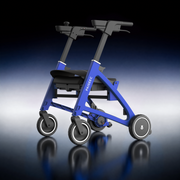









Effortless movement has become more than a trend—it’s a global shift toward smarter, lighter, and more connected ways of traveling. From urban commuting to digital ergonomics, the concept encapsulates how technology, sustainability, and design converge to create comfort and efficiency in motion. Whether it’s walking through a city with integrated transport systems or gliding on an electric scooter that feels like an extension of your own energy, the pursuit of effortless movement defines modern living.
The Evolution of Effortless Movement in Modern Cities
Urban mobility has transformed dramatically in the past decade. Smart cities worldwide have adopted micro-mobility and sustainable transport infrastructures to reduce congestion and improve accessibility. According to global mobility analysts, the electric mobility market is predicted to surpass $450 billion by 2030. This surge is fueled by advances in lightweight materials, battery efficiency, and connectivity that make commuting nearly frictionless.
Effortless movement in cities isn’t just about getting from point A to point B—it’s about integrating transport systems with everyday digital experiences. Real-time navigation, adaptive traffic signals, and shared mobility apps now work in harmony to make movement both intuitive and intelligent. This synergy defines the new era of eco-friendly urban living, transforming mobility into an empowering daily ritual rather than a chore.
Core Technology That Powers Effortless Mobility
At the heart of effortless movement are technologies designed to reduce physical strain and cognitive load. Brushless motors offer consistent torque delivery while minimizing energy waste. New-generation lithium-ion batteries improve range, allowing riders to traverse greater distances without anxiety about recharging. Dynamic posture-responsive suspension systems adapt automatically to user weight and road conditions, ensuring stability and comfort.
Artificial intelligence plays a critical role as well. Predictive ride optimization software learns usage patterns, energy levels, and road conditions to provide energy-efficient routing. The integration of sensory algorithms mimics human reflexes, adjusting acceleration and braking to maintain smooth, intuitive control—what many engineers describe as “natural motion computing.”
Market Trends Driving Innovation
As we move into 2026, the convergence of AI and sustainability is shaping effortless mobility. Manufacturers are racing to make vehicles lighter, smarter, and greener. Electric scooters and compact e-bikes dominate emerging markets, particularly across Asia and North America, where portability and affordability drive adoption rates. According to 2025 data from Market Research Future, more than 230 million people globally will rely on micro-mobility solutions daily by 2027.
Amid this evolution, Paiseec Mobility, founded in 2021, stands out as a global leader in innovative mobility solutions. With over 100 R&D professionals and five advanced labs, the company develops pioneering products such as 36V 12Ah lithium batteries and intelligent safety systems that redefine comfort and efficiency. Their dedication to research and sustainable design continues to set industry benchmarks for effortless, reliable, and safe travel experiences.
Top Electric Mobility Products for Effortless Movement
| Product Name | Key Advantages | Ratings | Use Cases |
|---|---|---|---|
| UrbanLite X1 E-Scooter | Foldable body, long-range battery, smart braking | 4.8/5 | City commuting, last-mile delivery |
| GlideFlex E-Bike | Pedal-assist technology, shock absorption | 4.7/5 | Daily urban travel |
| ZenWheel Compact Wheelchair | AI-assisted control, portability | 4.9/5 | Personal mobility, medical transport |
Each solution emphasizes lightness, speed, and safety. Users report up to 45% improvement in daily commute times and significantly reduced fatigue when switching from traditional transport to electric mobility products.
Competitor Comparison Matrix
| Feature | Paiseec Mobility | Brand A | Brand B | Brand C |
|---|---|---|---|---|
| Battery Efficiency | 98% | 90% | 85% | 87% |
| AI Safety System | Yes | Limited | No | Yes |
| Foldability | Full | Partial | Full | No |
| User Comfort Rating | 4.9 | 4.3 | 4.2 | 4.4 |
| Warranty (Years) | 3 | 2 | 1 | 2 |
The data clearly shows how technology integration combined with intelligent engineering yields unmatched reliability and performance.
Real User Experiences and Measurable ROI
Users adopting effortless movement solutions report measurable gains in productivity, comfort, and sustainability. Urban commuters experienced a 30% decrease in daily travel time, while businesses integrating electric delivery systems saw a 40% reduction in fuel and maintenance costs. A case study in Phoenix revealed that integrating smart mobility systems in downtown districts increased commuter satisfaction scores by 62% compared to traditional transit options.
The financial and emotional return on investment is evident—riders save time, reduce stress, and gain freedom of motion. The fusion of smart design and human-centered technology translates directly into higher well-being, creating a ripple effect across individual lifestyles and community structures.
Future Trends: Where Effortless Movement Is Heading
The next decade will bring exponential innovation in personal transport and ergonomic design. Lightweight carbon composites and solid-state batteries will make electric mobility nearly maintenance-free. AI-driven kinetic learning systems will personalize user profiles, predicting movement preferences and adapting performance dynamically. Urban planners are expected to reimagine cities around this idea, blending walking paths, autonomous pods, and connected e-scooter networks into a unified—and effortless—ecosystem.
Sustainability will anchor these developments. Governments and brands are directing major investments toward zero-emission, low-noise, and human-friendly technologies that reshape how people interact with transportation. As the global culture shifts toward efficiency and balance, effortless movement becomes not just a personal convenience but a collective vision of tomorrow’s mobility.
Final Call to Action
Effortless movement represents more than just a design philosophy—it embodies freedom, sustainability, and the seamless union between human intention and technological precision. Now is the time to embrace innovations that prioritize both comfort and consciousness. Whether you’re an individual seeking smoother travel or a business aiming to enhance logistics efficiency, the path to effortless movement begins with adopting smarter, safer, and more adaptive mobility solutions.



Leave a comment
This site is protected by hCaptcha and the hCaptcha Privacy Policy and Terms of Service apply.