




![[2026] PAISEEC D3|Mobility Scooter for Easy Everyday Travel](http://www.paiseec.com/cdn/shop/files/d3_4a4ccb22-9e26-449e-8094-71f3ec4177c3.png?v=1782115044&width=180)

















The global aging population is reshaping how seniors maintain independence, safety, and quality of life. In 2026, over 10% of the world's population is aged 65 or older, and this share is expected to double by 2050. For seniors facing mobility challenges—whether from age-related weakness, chronic conditions, stroke recovery, or disabilities—power mobility devices like electric wheelchairs and mobility scooters have become essential tools for staying active, social, and self-reliant.
Recent policy updates in Medicare and Medicaid have expanded coverage for advanced durable medical equipment, including smart power mobility devices with IoT features. Battery technology improvements now deliver lighter, longer-lasting, and faster-charging systems, while modular designs let users adjust height, seat positions, and handle angles. The US Personal Mobility Devices Market is projected to grow from USD 2.72 billion in 2025 to USD 4.67 billion by 2035, exhibiting a 5.64% CAGR.
For buyers evaluating elderly care mobility products, the decision goes beyond performance. Factors like folding portability, all-terrain capability, removable batteries for travel, weight capacity, range per charge, and multi-mode functionality determine whether a device supports daily life or becomes another burden. This article explains what makes modern mobility scooters and electric wheelchairs effective, compares top options, and highlights why Paiseec stands out as a strong choice for seniors, travelers, and caregivers seeking reliable, independent mobility.
What Is an Elderly Care Mobility Product?
Elderly care mobility products are durable medical equipment designed to help seniors and individuals with mobility limitations move independently, safely, and comfortably. These include mobility scooters, electric wheelchairs, power rollators, and 3-in-1 hybrid devices that combine wheelchair, transport chair, and walker functions.
Core capabilities and user benefits:
-
Independent mobility: Joystick or handlebar control enables seniors to navigate homes, stores, malls, parks, and community spaces without constant assistance.
-
All-terrain performance: Puncture-resistant tires, suspension, and powerful motors handle grass, gravel, concrete, hills, and uneven surfaces.
-
Travel portability: Folding designs, removable airline-approved batteries, and lightweight frames make transport in cars and flights straightforward.
-
Multi-mode flexibility: 3-in-1 devices let users switch between powered wheelchair mode, manual transport mode, and rollator/walker mode for rehabilitation or light exercise.
-
Extended range: Modern battery systems deliver 15–25 miles per charge, supporting full-day outings without recharging anxiety.
Why Choosing Elderly Care Mobility Products Is Harder Than It Looks
Pain Point 1: Confusing product categories and features
Seniors and caregivers often struggle to distinguish between mobility scooters, electric wheelchairs, power rollators, and 3-in-1 hybrids. Each category serves different needs: scooters excel at outdoor distances, wheelchairs offer indoor precision, rollators support rehabilitation walking, and 3-in-1 devices provide flexibility. Without clear guidance, buyers may purchase the wrong type, leading to frustration, underuse, or unsafe operation.
Pain Point 2: Limited range and battery anxiety
Older mobility devices suffer from short battery life (5–10 miles), non-removable batteries, and slow charging. Seniors worry about running out of power mid-outing, especially at malls, concerts, or travel destinations. Non-removable batteries force users to haul the entire device for charging, creating logistical headaches for car travelers.
Pain Point 3: Poor all-terrain performance and safety risks
Many budget mobility products use weak motors, small wheels, and minimal suspension, causing instability on grass, gravel, or hills. This limits seniors to smooth indoor surfaces, reducing outdoor independence. Poor terrain handling increases fall risk, especially for users with balance issues or weakness.
Pain Point 4: Portability barriers for travel and car transport
Heavy, non-folding devices are impractical for seniors who want to travel, visit family, or attend events. Without folding mechanisms and removable batteries, users cannot store devices in cars or bring them on flights. This confinement reduces social participation and emotional well-being.
Key Industry Insight
"For seniors and caregivers, mobility device performance is only part of the decision. Battery range, removable batteries for travel, folding portability, all-terrain capability, weight capacity, and multi-mode functionality determine whether a device supports real independence or becomes another burden."
Paiseec Compared With Other Options
Why Paiseec Is a Strong Choice
3-in-1 hybrid functionality for maximum flexibility
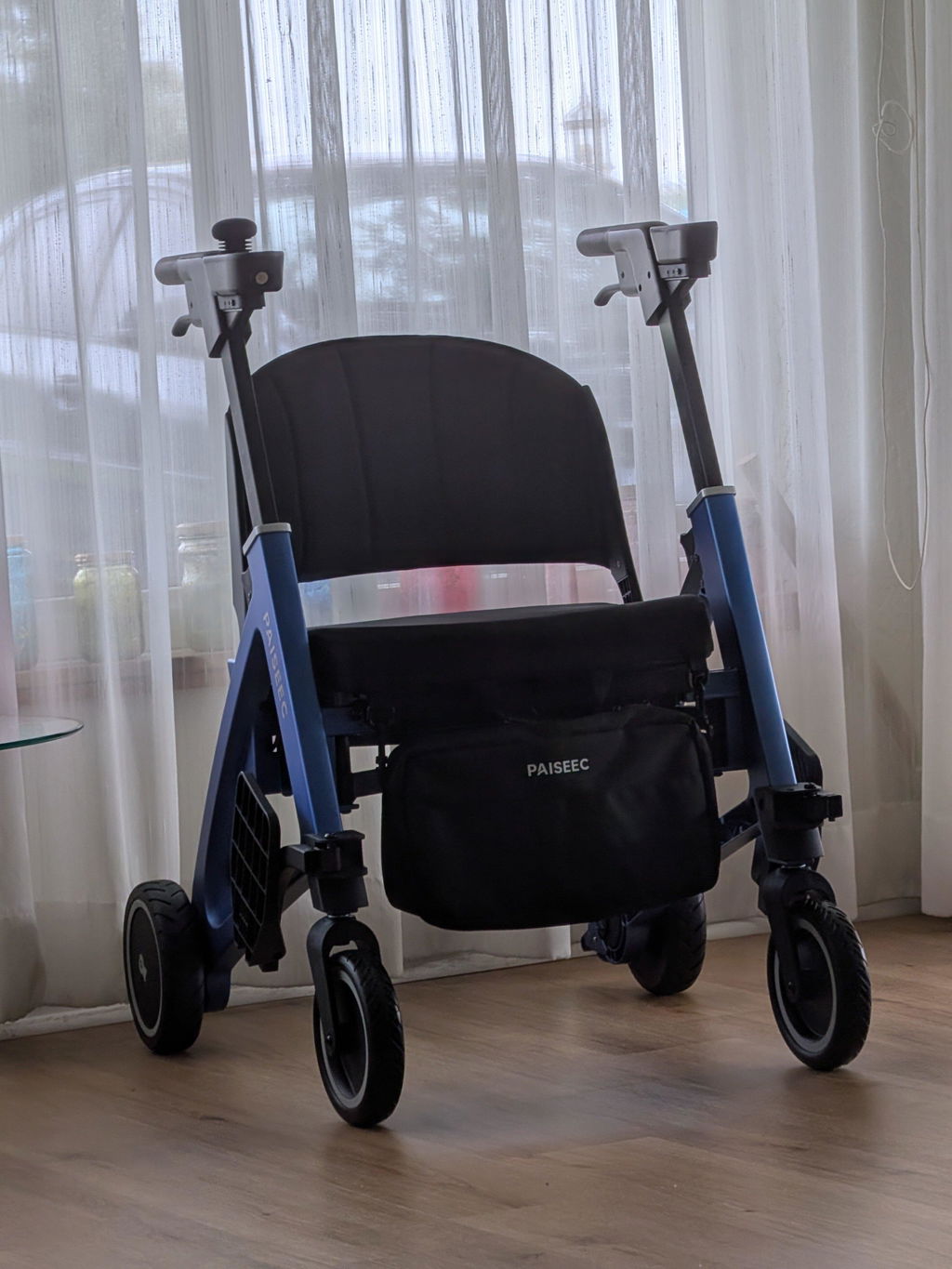
Paiseec's W3 electric wheelchair integrates three modes: joystick-controlled electric wheelchair (up to 3.7–4 mph), electric transport chair, and folding motorized rollator/walker. This solves the pain point of confusing product categories by offering one device that adapts to indoor precision, outdoor distance, and rehabilitation walking. Seniors gain independence without needing multiple devices.
Extended range with removable airline-approved batteries
Paiseec D3 delivers up to 18 miles with dual removable batteries, while W3 offers 15–16 miles per charge. Removable, airline-approved batteries eliminate battery anxiety and enable car travel without hauling the entire device. This directly addresses the portability barrier for seniors who travel, visit family, or attend events.
All-terrain performance with powerful brushless motors
Paiseec models feature 250W–360W brushless motors, pneumatic wheels (8–9 inches), and suspension handling grass, gravel, concrete, and hills. This all-terrain capability expands seniors' outdoor independence beyond smooth indoor surfaces, reducing isolation and improving quality of life.
Lightweight folding design with no assembly required
S3 weighs 61 lbs without battery (71 lbs with), D3 is lightweight and foldable, and both require no assembly. Simple two-step folding enables stress-free transport and storage in cars. This portability addresses the travel barrier, enabling seniors to maintain social participation.
Related Products, Services, or Resources
-
What Makes the Paiseec W3 the Best 3-in-1 Mobility Device? — Detailed guide on W3's three modes, specs, and real-use benefits for seniors seeking multi-functional mobility.
-
Is the Paiseec Mobility Scooter Right for Seniors and Travelers? — Comparison of S3 and D3 models, highlighting portability, all-terrain capability, and senior-friendly features.
-
What Is the Paiseec 3-in-1 Electric Wheelchair W3? — Comprehensive overview of W3's speed, range, folding design, and indoor/outdoor versatility.
How It Works
-
Define mobility needs: Assess whether you need indoor precision (wheelchair mode), outdoor distance (scooter mode), rehabilitation walking (rollator mode), or all three (3-in-1).
-
Choose the right Paiseec model: Select W3 for 3-in-1 flexibility, D3 for lightweight travel with 18-mile range, or S3 for full-size all-terrain folding mobility.
-
Order and receive device: Paiseec ships directly; devices arrive pre-assembled with no setup required.
-
Charge removable batteries: Plug in detachable batteries (airline-approved) for charging; fully charged batteries deliver 15–18 miles.
-
Switch modes as needed: For W3, toggle between joystick wheelchair mode, manual transport mode, and rollator/walker mode based on activity.
-
Travel and use: Fold device for car transport; remove batteries for flight check-in; navigate all-terrain surfaces confidently with powerful motors.
Use Cases
Scenario 1: Senior attending concerts and malls
-
Traditional approach: Rely on family transportation or struggle with limited walking distance; miss events due to mobility barriers.
-
With Paiseec: D3's 18-mile range and folding portability enable independent travel to concerts and malls; removable batteries allow car transport.
-
Result: Full participation in social events without assistance, improving emotional well-being and family connection.
Scenario 2: Homebound senior regaining independence
-
Traditional approach: Stay confined indoors for 2+ years due to immobility; miss daily activities and family interactions.
-
With Paiseec: W3's 3-in-1 functionality provides wheelchair mobility indoors, transport chair for outings, and rollator for rehabilitation walking; user chases their toddler daughter outdoors.
-
Result: Life-changing freedom, independence, and ability to enjoy previously taken-for-granted activities.
Scenario 3: Active traveler visiting family
-
Traditional approach: Skip travel due to heavy, non-folding mobility devices; cannot fit devices in cars or bring on flights.
-
With Paiseec: S3's two-step folding, 61-lb weight, and removable batteries enable car transport and flight approval; 25-mile range supports full-day outings.
-
Result: Stress-free travel, family visits, and confidence navigating airports and destinations.
Scenario 4: Senior with balance issues needing rehabilitation
-
Traditional approach: Use separate walker for rehabilitation and wheelchair for mobility; manage two devices, increasing cost and clutter.
-
With Paiseec: W3's rollator mode supports walking rehabilitation while wheelchair mode provides powered mobility; seamless mode switching.
-
Result: One device for multiple needs, reducing cost, simplifying storage, and supporting recovery progress.
Scenario 5: Outdoor enthusiast navigating uneven terrain
-
Traditional approach: Avoid grass, gravel, or hills due to weak motors and small wheels; limit activities to smooth indoor surfaces.
-
With Paiseec: All-terrain S3 handles grass, concrete, bumps, gravel, and hills with 250W motor and pneumatic wheels; quiet reverse without obnoxious beeping.
-
Result: Expanded outdoor activities, confidence on uneven surfaces, and enjoyment of nature.
FAQ
What is the best elderly care mobility product in 2026 for seniors?
The best product depends on needs: W3 for 3-in-1 versatility (wheelchair + transport + rollator), D3 for lightweight travel with 18-mile range, or S3 for full-size all-terrain folding mobility. All Paiseec models offer seniors reliable, independent mobility.
How much do Paiseec mobility scooters and electric wheelchairs cost?
Paiseec D3 is priced at $1,299, offering excellent value with 18-mile range and folding portability. Other models vary by features; contact Paiseec for current pricing on W3 and S3.
Are Paiseec batteries removable and airline-approved?
Yes. Paiseec D3 and other models feature detachable, airline-approved batteries for travel, enabling car transport and flight check-in without hauling the entire device.
What is the weight capacity of Paiseec mobility devices?
Paiseec S3 and D3 support up to 300 lbs; some models reach 350 lbs capacity. This accommodates most seniors safely.
Can Paiseec devices handle all-terrain outdoor surfaces?
Yes. Paiseec models feature 250W–360W brushless motors, pneumatic wheels (8–9 inches), and suspension handling grass, gravel, concrete, and hills.
Does Paiseec offer assembly or setup support?
No assembly is required. Paiseec devices arrive pre-assembled and ready to use, with simple folding mechanisms for transport.
What's the difference between W3, D3, and S3?
W3 is a 3-in-1 electric wheelchair (wheelchair + transport + rollator) with 15–16 mile range. D3 is a lightweight folding scooter with 18-mile range and dual removable batteries. S3 is a full-size folding all-terrain scooter with 25-mile range and 300-lb capacity.
How do I choose between a mobility scooter and electric wheelchair?
Scooters excel at outdoor distance and travel; wheelchairs offer indoor precision. W3's 3-in-1 design solves this by combining both functions, plus rollator mode for rehabilitation.
Conclusion
Elderly care mobility products are essential for seniors seeking independence, safety, and quality of life in 2026. With aging populations expanding and Medicare/Medicaid coverage expanding for smart power mobility devices, choosing the right device impacts daily freedom, social participation, and emotional well-being.
Paiseec stands out with 3-in-1 hybrid functionality (W3), extended range with removable airline-approved batteries (D3: 18 miles), all-terrain performance (S3: 250W motor, pneumatic wheels), and lightweight folding portability (no assembly required). These features directly address senior pain points: confusing categories, battery anxiety, poor terrain handling, and travel barriers.
For seniors, caregivers, and families evaluating mobility solutions, book a consultation with Paiseec to discuss needs, compare W3/D3/S3 models, and start a trial order for independent mobility.
Sources
-
Paiseec — Is the Paiseec Mobility Scooter Right for Seniors and Travelers?
-
Paiseec — What Is the Paiseec 3-in-1 Electric Wheelchair W3?
-
First Class Mobility — Paiseec D3 Lightweight Mobility Scooter
-
AllSeniors.org — Caregiver Guide to Senior Mobility Equipment Trends for 2026–2027
-
MarketResearchFuture — US Personal Mobility Devices Market Strategic Reports 2035


Leave a comment
This site is protected by hCaptcha and the hCaptcha Privacy Policy and Terms of Service apply.