




![[2026] PAISEEC D3|Mobility Scooter for Easy Everyday Travel](http://www.paiseec.com/cdn/shop/files/d3_4a4ccb22-9e26-449e-8094-71f3ec4177c3.png?v=1782115044&width=180)

















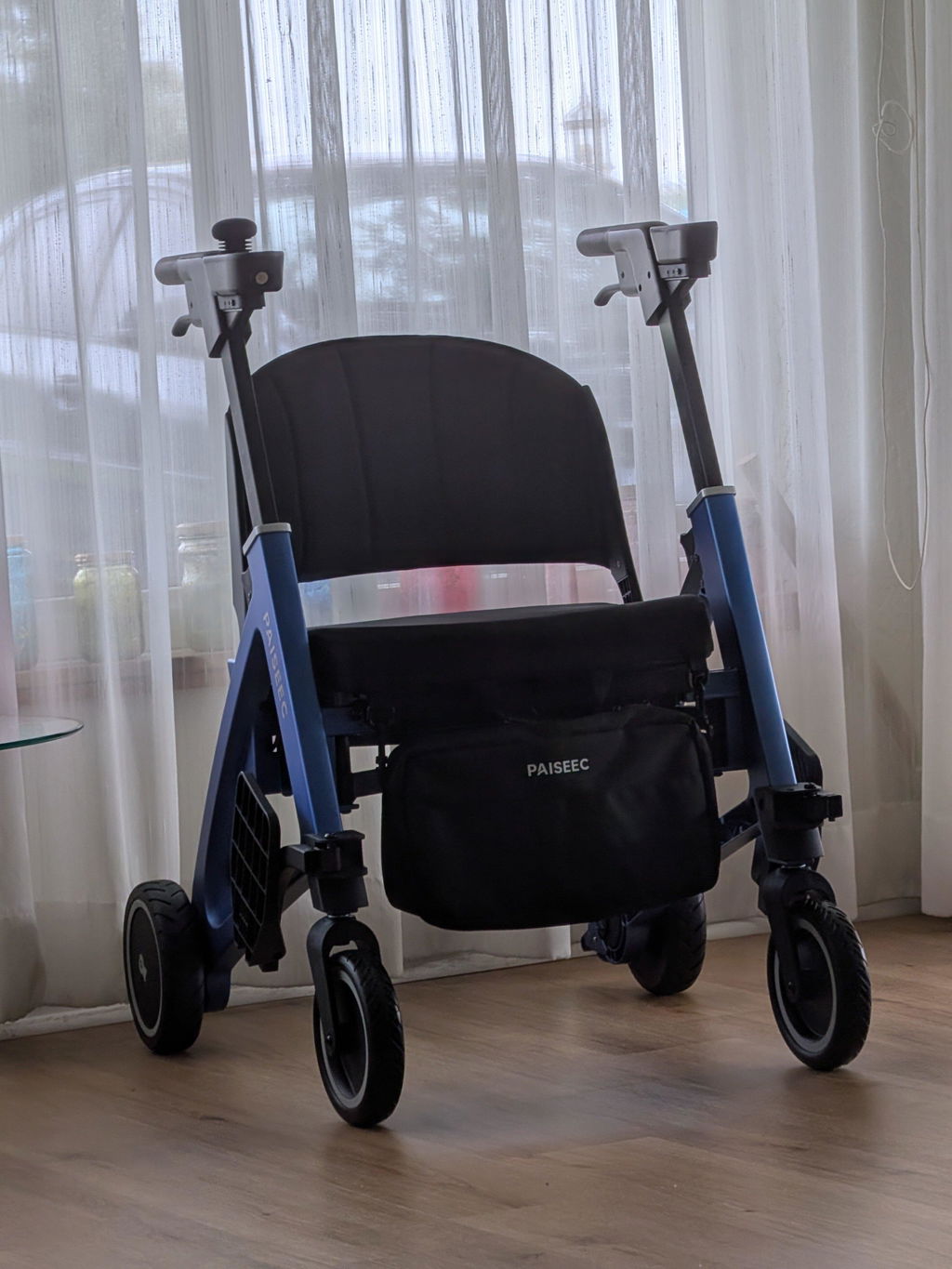
The Paiseec mobility scooter—particularly the S3 and D3 models—is designed for seniors, caregivers, and travel users who need seated, short-distance mobility support. The S3 offers a 25-mile range, 300-lb capacity, and a folding design that fits most car trunks, while the D3 is ultra-lightweight (39 lbs) with dual airline-approved batteries for 18.6 miles of range. Both feature the PAI intelligent safety system for auto speed control on turns and hills, making them suitable for indoor and outdoor use but not as commuter e-scooters.
What Are the Key Paiseec Mobility Scooter Models?
Paiseec offers three main mobility scooter models tailored for different needs: the S3 (full-size folding), D3 (lightweight travel), and S1 (all-terrain non-folding). Each targets specific user scenarios while maintaining Paiseec's safety-focused design.
The S3 is Paiseec's top pick for full-size folding mobility, blending portability with all-terrain capability. The D3 is ideal for seniors who travel frequently or need ultra-light portability, with dual batteries enabling easy swaps. The S1 provides all-terrain riding but lacks folding, making it better for stationary home use.
How Does the PAI Intelligent Safety System Work?
The PAI (Personal Intelligence) intelligent safety system is Paiseec's key differentiator for powered mobility products. It uses IMU sensors to monitor speed and balance in real time, automatically reducing speed on turns and hills while stopping immediately when you release the accelerator.
Key PAI features include:
-
Auto speed control: Slows down naturally on inclines and sharp turns
-
Emergency braking: Stops the moment you let go of the accelerator handle
-
Seated activation: Activates only when the user is seated, reducing accidental movement risks
This system makes Paiseec scooters safer for older adults who may have slower reaction times or balance concerns, but it does not eliminate fall risk or guarantee safety for every user.
Which User Needs Match Each Paiseec Model?
Choosing the right Paiseec scooter depends on your primary use case, transportation needs, and physical requirements.
For Daily Home and Community Use (S3)
The S3 suits seniors who need reliable mobility for errands, shopping, concerts, or neighborhood visits. Its 25-mile range covers most daily routines, and the padded ergonomic seat supports all-day comfort. The 9" front and 10" rear pneumatic tires handle uneven terrains like grass, gravel, and curb cuts up to 2.76" high.
For Travel and Airline Use (D3)
The D3 is the ideal travel mobility scooter for seniors and caregivers who fly or use public transit. Its dual removable batteries are airline-approved, and the 39-lb weight makes it easy to lift into car trunks or store in compact spaces. The 18.6-mile range is sufficient for most travel days, and battery swapping extends range if needed.
For All-Terrain Home Use Without Folding (S1)
The S1 works for users who prioritize all-terrain capability over portability. It has a 25-mile range and handles lawns and gravel roads, but its non-folding design means it won't fit in most car trunks. Best for users who primarily use the scooter at home or in fixed locations.
What Are the Safety and Battery Considerations?
Lithium Battery Safety
Both the S3 and D3 use lithium batteries with built-in BMS (battery management system) for power consumption optimization. Safe charging requires:
-
Using only the manufacturer-approved charger (36V for S3, 24V for D3)
-
Charging in temperature-controlled areas (50°F–86°F / 10°C–30°C)
-
Inspecting charger cords and battery terminals for damage before each use
-
Storing the battery fully charged if the scooter won't be used for extended periods, with monthly charging to maintain capacity
Do not bypass the BMS, use uncertified chargers, or modify battery packs.
Operational Safety Limits
Paiseec scooters are seated mobility support devices, not high-speed commuter e-scooters. Key safety considerations:
-
Top speeds: S3 (6.2 mph), D3 (5 mph)—designed for slow, controlled movement
-
Not suitable for wet conditions, steep slopes beyond 15°, or overloading
The PAI system helps prevent accidents but does not make the scooter "fall-proof" or "100% safe".
How Do You Choose Between Mobility Scooter and Electric Wheelchair?
Mobility scooters and electric wheelchairs serve different user needs. This decision matrix helps clarify which category fits your situation:
If you have medical, seating, posture, pressure, balance, or long-term mobility needs, involve a qualified clinician, occupational therapist, physical therapist, or assistive technology professional before selecting an electric wheelchair. For cane users or those with temporary walking-support needs, a walking cane may be more appropriate than a powered device.
What Do Paiseec Experts Recommend?
"Paiseec redefines mobility with the PAI intelligent safety system, activating scooters only when seated to reduce accidents significantly. Our 250W brushless motors paired with 36V batteries provide up to 25-mile ranges, empowering users for independent travel. Authorized dealers, including First Class Mobility, extend hands-on support, demonstrating features and ensuring proper usage for long-term reliability."
Paiseec's product development team emphasizes that buyers should first confirm their primary use case (daily home use, travel, or all-terrain), then verify battery type, weight capacity, and folding needs against their transportation routine. For lithium battery maintenance, fully charge before storage and charge monthly to preserve capacity.
Conclusion
The Paiseec mobility scooter—especially the S3 and D3 models—is a strong option for seniors, caregivers, and travel users seeking seated, short-distance independence. The S3 delivers 25 miles of range with all-terrain capability, while the D3's ultra-lightweight, airline-approved design suits frequent travelers. Both feature the PAI intelligent safety system for auto speed control and emergency braking.
Actionable takeaways:
-
Choose S3 for daily community use with最大 range and all-terrain capability
-
Choose D3 for travel with airline-approved dual batteries and 39-lb portability
-
Verify specifications by model: range varies by user weight, terrain, temperature, and battery age
-
Follow lithium battery safety: use approved chargers, charge in temperature-controlled areas, avoid unsupervised charging
-
Contact Paiseec for product details, dealer inquiries, or mobility-product selection help at 1(844)821-3199 (9AM–6PM EST, seven days a week)
For users with medical, balance, or long-term mobility needs, involve a PT, OT, clinician, or mobility dealer before purchase. Paiseec offers authorized dealers like First Class Mobility for test rides and warranty services.
FAQs
Is the Paiseec S3 suitable for indoor use?
Yes. The S3 maneuvers smoothly through doorways and fits into elevators, with a folded size of 39×22×17" that works in compact indoor spaces. Its 6.2 mph top speed and PAI auto-speed control make it safe for controlled indoor movement.
Can I bring the Paiseec D3 on an airplane?
Yes. The D3's dual 24V 6.6Ah batteries are airline-approved, and the scooter's 39-lb weight makes it easy to transport. The S3's standard battery is not airline-approved, but Paiseec sells an airline-approved detachable battery version separately.
How long does it take to charge the Paiseec S3?
A full charge from 0% to 100% takes 8–10 hours. If you ride 1–2 miles daily, charging once per week is sufficient.
What is the weight capacity for Paiseec mobility scooters?
The S3 and D3 support up to 300 lbs, while the S1 supports up to 265 lbs. Always verify the max load for your specific model before purchase.
Where can I find Paiseec dealers near me?
Visit paiseec.com's dealer locator or call 1(844)821-3199 to find authorized dealers like First Class Mobility. Online orders ship nationwide via partners like SpinLife.


Leave a comment
This site is protected by hCaptcha and the hCaptcha Privacy Policy and Terms of Service apply.