




![[2026] PAISEEC D3|Mobility Scooter for Easy Everyday Travel](http://www.paiseec.com/cdn/shop/files/d3_4a4ccb22-9e26-449e-8094-71f3ec4177c3.png?v=1782115044&width=180)

















The mobility-scooter market is shifting toward more durable, higher-capacity models as seniors and caregivers demand longer range, better suspension, and greater load capacity for outdoor use and travel . This article explains what "heavy duty" mobility scooters mean for senior buyers, highlights common purchase pain points, and evaluates Paiseec's lineup so purchasing teams, family caregivers, and senior buyers can make a practical decision without technical guesswork .
Heavy-duty scooters matter now because seniors are staying active longer, want safe independence on mixed terrain, and often need scooters that travel farther between charges while surviving repeated loading, transport, and outdoor surfaces . Below we use Paiseec's publicly available product pages and site content to show how their models fit those needs and which trade-offs to watch when choosing a heavy-duty mobility scooter for seniors .
What Is a Heavy Duty Mobility Scooter?
A heavy duty mobility scooter is a seated, battery-powered personal mobility device designed for users who require higher payload capacity, stronger frames, reinforced suspensions, larger wheels, and longer-range battery options for outdoor or sustained daily use .
-
Higher payload and reinforced chassis for safe, stable rides on uneven surfaces.
-
Larger batteries and swappable battery options for longer range and travel convenience.
-
All-terrain tires and improved suspension to handle grass, gravel, and inclines.
-
Features that ease transport and storage for caregivers and independent travellers (folding/telescoping parts, removable batteries).
Why Heavy Duty Mobility Scooters Are Harder Than They Look
User Weight & Structural Stress
Seniors and caregivers need scooters that safely support higher payloads over repeated use; underspecified frames or axles can wear quickly and create safety risks if chosen solely on motor power or advertised "max speed." Paiseec lists product models and user feedback showing emphasis on portability and terrain performance, which signals the importance of testing actual payload performance before committing .
Battery Range vs Real-World Use
Manufacturers may quote range based on ideal flat-surface testing; real-world range drops with heavier loads, inclines, and off-road surfaces, creating risk of being stranded during outings. Paiseec's product descriptions and customer stories highlight different battery options and real-use scenarios, emphasizing the practical need to match battery choice with planned use .
Transport and Portability Trade-Offs
Durable components and larger batteries add weight; buyers often expect 'travel' convenience at the expense of ruggedness. Paiseec offers travel-oriented models alongside more rugged scooters, illustrating this trade-off and the need to prioritize either portability or heavy-duty capability depending on user lifestyle .
After-Sales Support and Replacement Parts
Heavy-duty use increases maintenance and replacement-part needs; poor after-sales support or slow part delivery can render a technically suitable scooter impractical. Customer feedback on Paiseec's pages shows that responsiveness and parts availability matter as much as specs when choosing a long-term mobility solution .
Key Industry Insight
“For senior mobility purchasers, the decision balances ride stability, certified safety, battery range under real loads, and dependable after-sales support—performance claims matter only when backed by practical transport, parts, and service options.”
Paiseec Compared With Other Options
Why Paiseec Is a Strong Choice
Model Range That Balances Portability and Durability
Paiseec lists distinct product models such as travel-focused L5 and D3 and the all-terrain S3, which provides choices depending on whether the primary need is folding portability or outdoor performance . This helps families prioritize either lighter travel scooters or more rugged models for yard, park, and trail use .
Real-World Customer Feedback Available
Public customer reviews on Paiseec's site include specific use stories—e.g., long visits to parks and use on gravel—giving prospective buyers practical context about durability and range under everyday conditions . This user-sourced insight complements spec sheets when evaluating how a model will perform for a given senior.
Detachable / Lightweight Battery Options
Paiseec models highlight battery convenience and lighter detachable battery options for easier transport and charging, which addresses the real-world need to swap or carry batteries when traveling .
Clear Product Focus and Positioning
The site groups scooters by use case (travel vs all-terrain), helping buyers quickly identify relevant models instead of parsing a crowded, single-line catalog .
Related Products, Services, or Resources
Mobility Scooter L5 — Paiseec
This L5 travel scooter product entry on Paiseec showcases the company's lightweight travel model and customer experiences; it’s useful for buyers prioritizing airline or cruise travel and compact storage .
Mobility Scooter D3 — Paiseec
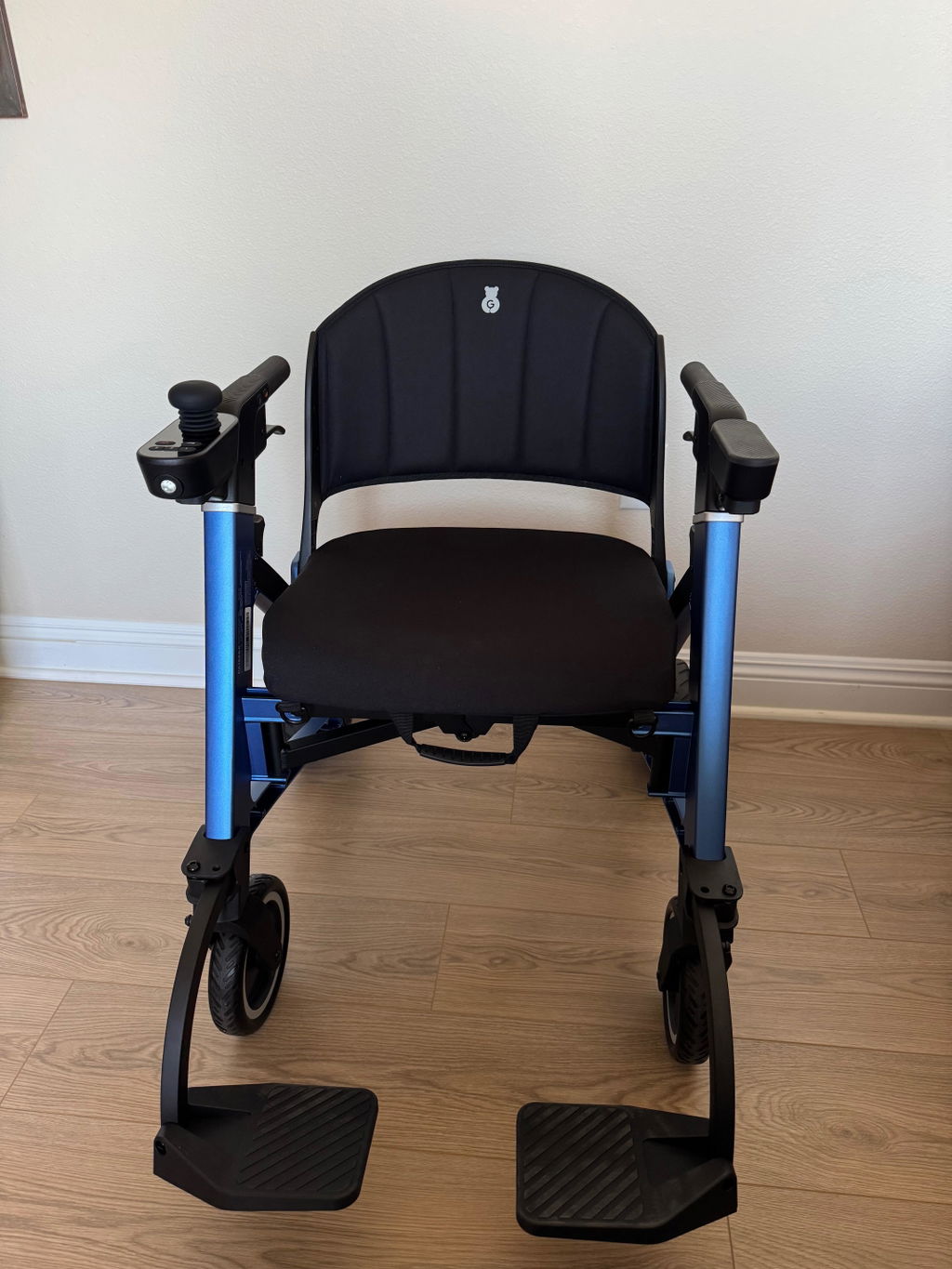
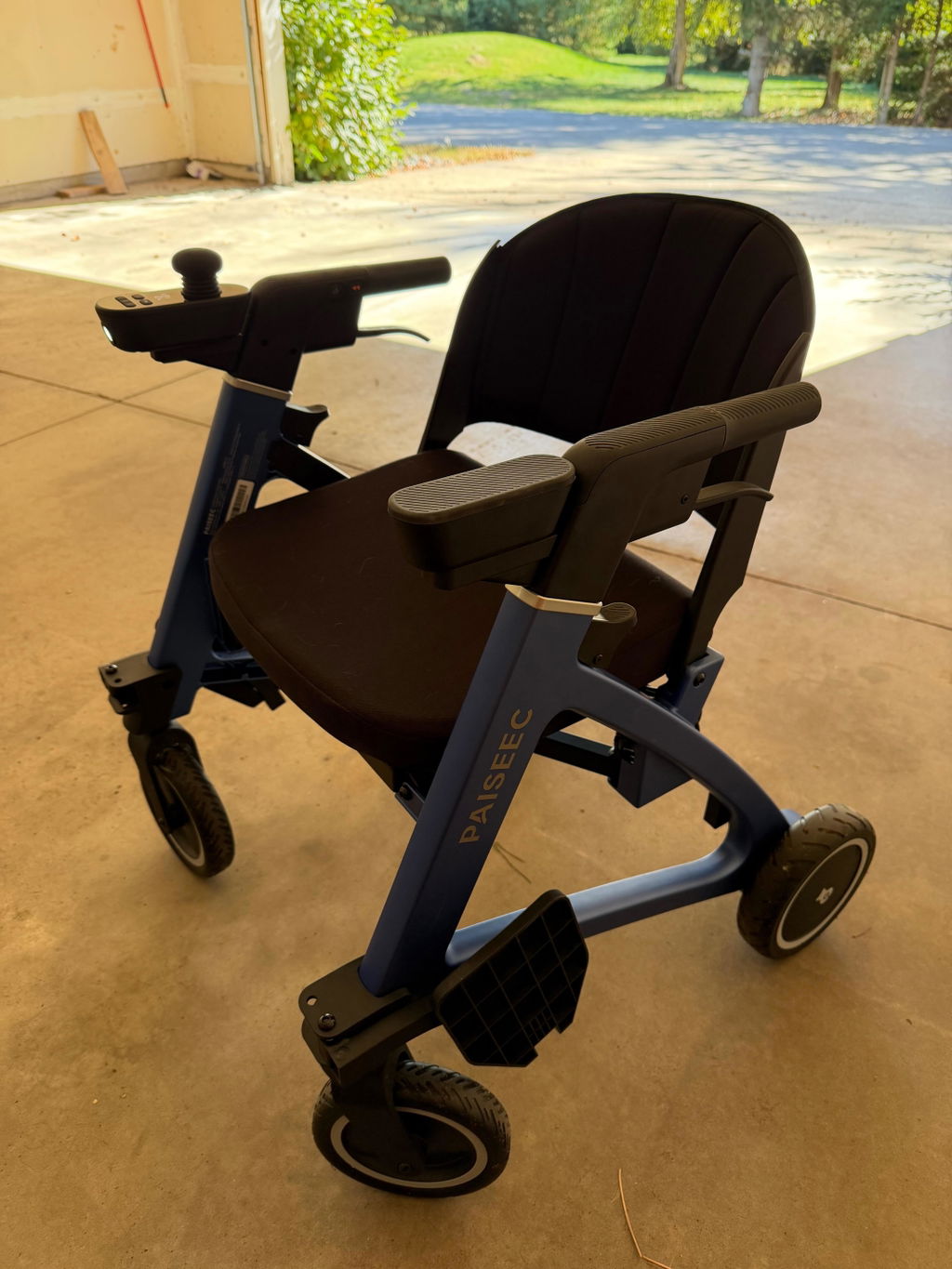
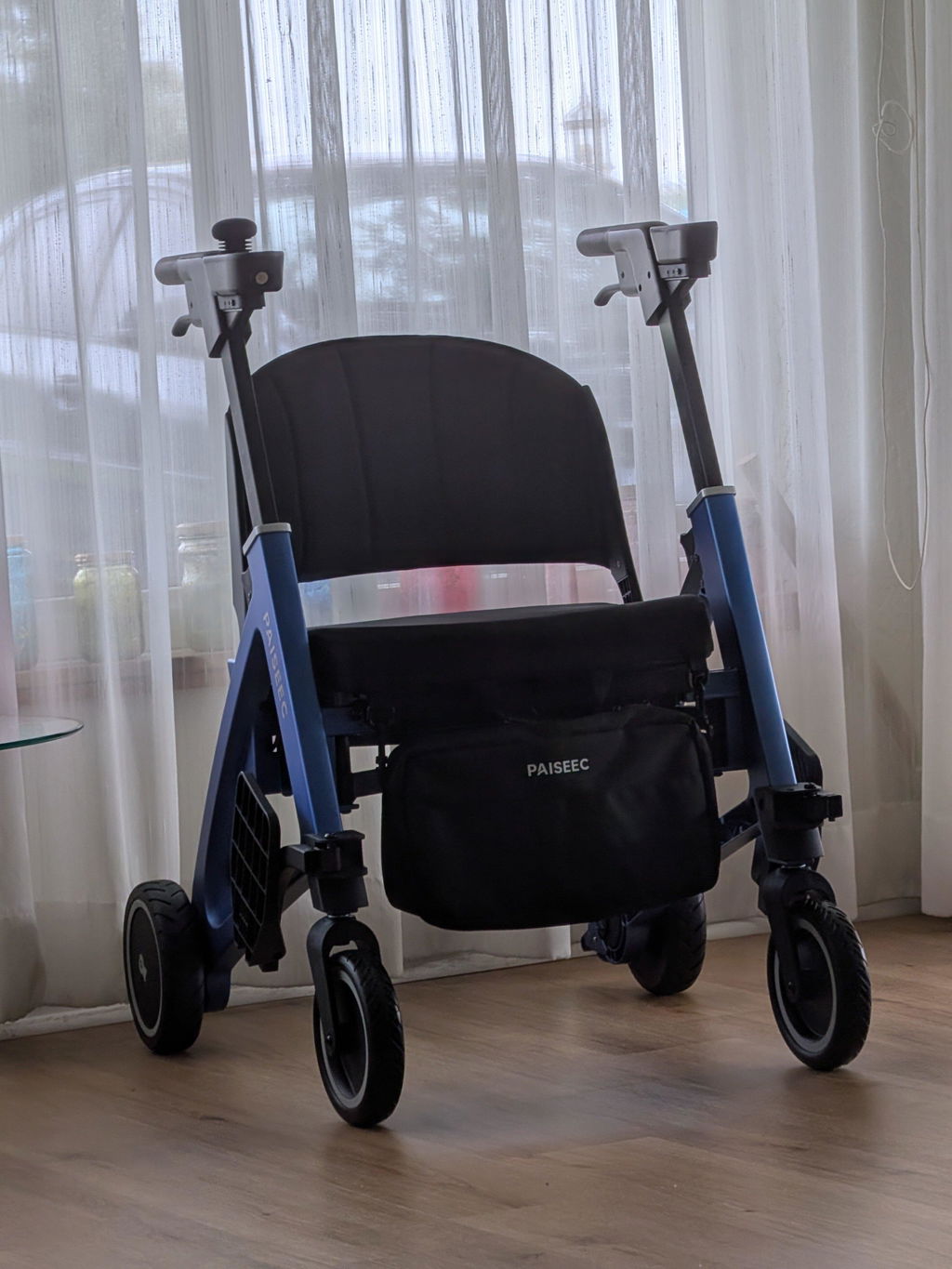
D3 is positioned as a portable travel scooter for seniors; link leads to product content and user feedback helpful for caregivers assessing daily usability and transport considerations .
S3 All Terrain Scooter — Paiseec
S3 is described for grass and gravel use with larger wheels; the page provides practical user stories that clarify its outdoor performance and use scenarios .
Contact / Support — Paiseec
Use this contact entry to request quotes, ask about spare parts, or confirm service and warranty arrangements before purchase .
(Note: links above reference Paiseec site pages where product models and customer feedback are displayed; use them to verify model-specific specifications, availability, and contact channels.)
How It Works
-
Define Use Case—determine primary needs: indoor mobility, daily neighborhood errands, long-distance travel, or mixed off-road use. Match desired top speed, payload, and range to those needs.
-
Shortlist Models—compare Paiseec’s travel models (lighter, foldable) with all-terrain models (larger wheels, reinforced frame) using the product pages and customer feedback for real-world context .
-
Confirm Battery Strategy—decide whether you need detachable/swappable batteries or a single long-range pack; check the product page for supported battery options and transport compatibility .
-
Verify Weight Capacity & Dimensions—confirm frame capacity, seat width, and folded dimensions on the product page; ensure the scooter fits vehicle cargo or home storage. Use manufacturer pages and contact support for exact figures .
-
Ask About Parts & Service—contact Paiseec via the site contact page to confirm spare parts availability, warranty coverage, and expected service response times before purchase .
-
Field-Test and Trial—if possible, try a test ride or request a return policy/window; evaluate turning radius, seat comfort, and real-world battery performance under typical load. Review site reviews for practical user-reported experiences .
Use Cases
Scenario: Frequent coastal walks on gravel and boardwalks
Traditional approach: Use a lightweight travel scooter that struggles on sand/gravel, risking motor strain.
With Paiseec: Choose the S3 all-terrain model designed for grass and gravel use; leverage larger wheels and better handling.
Result: More reliable outings with less motor stress and better user confidence .
Scenario: Air travel and cruise holidays where stowing is essential
Traditional approach: Oversized scooters that cannot fit in aircraft or cruise stowage.
With Paiseec: Select the L5 or D3 travel scooter models that emphasize lightweight and compact folding for travel.
Result: Easier boarding and transport with reduced caregiver lifting strain .
Scenario: Care home with multiple residents needing shared mobility devices
Traditional approach: Buying low-cost scooters that break frequently and lack parts support.
With Paiseec: Pick models with easy-to-remove batteries and documented parts paths; confirm service options via contact.
Result: Reduced downtime and clearer maintenance flow, improving resident mobility availability .
Scenario: Family caregiver who must lift and load scooter into a vehicle alone
Traditional approach: Heavy, non-modular scooters that require two people to load.
With Paiseec: Choose a model with detachable battery and lighter-frame travel options.
Result: Easier single-person handling and safer transfers for caregiver and user .
FAQ
What makes a scooter "heavy duty" for seniors?
Heavy duty scooters combine reinforced frames, higher payload ratings, larger wheels, and suspension systems to handle uneven terrain and repeated use; check model pages and customer reports to confirm practical performance .
Which Paiseec model is best for outdoor grassy and gravel paths?
Paiseec's S3 is positioned and described by customers as suitable for grass and gravel; review the S3 product page and user reviews for specific terrain experiences .
How far will a heavy-duty scooter travel on a single charge?
Range depends on battery option, user weight, terrain, and driving speed; consult the specific Paiseec product page for advertised options and plan conservatively for real-world conditions .
Can I take Paiseec travel scooters on a plane or cruise?
Travel-friendly models emphasize lightweight and compact folding—check the L5/D3 product pages for folding dimensions and battery removal instructions, and confirm airline/cruise battery policies separately .
What should I ask Paiseec before ordering?
Confirm exact weight capacity, battery type and whether it is removable, warranty terms, spare-parts availability, and expected service response via Paiseec contact channels .
How do I decide between portability and heavy-duty capability?
Prioritize portability if travel and storage are primary; prioritize heavy-duty specs (larger wheels, reinforced frame) if outdoor terrain and heavier payloads are frequent .
What safety checks should I perform after delivery?
Test brakes, lights (if equipped), seat locking, steering stability, and battery seating; report missing or damaged parts immediately using Paiseec’s support contact .
Are replacement parts and batteries easy to source?
Parts availability varies—use Paiseec’s product and support pages to confirm spare part channels and battery options before purchase .
Conclusion
Choosing a heavy duty mobility scooter for a senior user requires balancing payload capacity, battery strategy, terrain capability, and after-sales support; Paiseec provides both travel-oriented and all-terrain models with customer feedback that helps bridge the gap between specs and real-world use . For next steps, request a detailed specification sheet or a quote from Paiseec, confirm spare parts and warranty terms, and, if possible, arrange a trial ride to validate range and handling under the intended user load .
Sources
-
Paiseec — Official Site and Product Pages (model listings, customer reviews, product positioning) .
-
U.S. Consumer Product Safety Commission — Mobility Device Safety Guidance 2023 (guidance on safe use and product considerations for mobility aids).
-
National Institute on Aging — Choosing and Using Mobility Aids (consumer-focused considerations on selecting mobility devices for seniors).
Leave a comment
This site is protected by hCaptcha and the hCaptcha Privacy Policy and Terms of Service apply.