




![[2026] PAISEEC D3|Mobility Scooter for Easy Everyday Travel](http://www.paiseec.com/cdn/shop/files/d3_4a4ccb22-9e26-449e-8094-71f3ec4177c3.png?v=1782115044&width=180)

















Mobility scooters for seniors sit at the critical intersection of aging-in-place infrastructure, travel convenience, and safer personal independence. Far from being simple niche products, these powered medical devices bridge the clinical gap between traditional walking aids like rollators and full-time, heavy-duty electric wheelchairs.
According to data from the National Institute on Aging, maintaining active social routines and community engagement directly correlates with a higher quality of life and reduced cognitive decline in older adults. For seniors living with chronic health conditions, progressive balance deficits, or severe cardiovascular fatigue, a reliable personal transport vehicle provides the exact physical support needed to navigate daily life without exhausting their limited stamina.
Understanding Senior Mobility Pain Points & Core Needs
Seniors and dedicated family caregivers rarely invest in a mobility scooter for the sake of owning a gadget. The decision is almost always driven by concrete daily challenges that make independent movement stressful, unpredictable, or physically unsafe.
The Realities of Physical Fatigue
Ordinary routines—such as a long grocery run, navigating a crowded cruise terminal, walking through a theme park, or handling a neighborhood with steep inclines—quickly transform from simple outings into exhausting planning hurdles. When walking distance and physical endurance become limiting factors, older adults frequently isolate themselves, skipping family gatherings and essential appointments out of anxiety.
The Transport and Handling Dilemma
A major barrier to adoption is vehicle transport. If a personal transport device is too heavy, excessively bulky, or highly complicated to disassemble, it frequently gets left behind in a garage or closet. The modern consumer market demands intuitive solutions that can be operated independently or loaded into a standard vehicle trunk without causing back strain or requiring expensive, permanent vehicle lift gates.
Medical Necessity vs. Commercial Choice
Before purchasing, buyers must distinguish between standard commercial options designed for basic convenience and clinical-grade equipment. Understanding specific physical requirements—such as upper body trunk stability, hand dexterity for tiller steering, and real-world usage environments—ensures families do not overspend on the wrong class of mobility device.
Technical Architecture and Structural Engineering Principles
When evaluating mobility solutions, it is essential to understand the underlying mechanical and structural configurations that dictate safety, stability, and maneuverability.
3-Wheel vs. 4-Wheel Wheelbase Architecture
-
Three-Wheel Configurations: Engineered with a single front wheel assembly, these models yield a significantly tighter turning radius. This makes them exceptionally nimble inside narrow indoor spaces, compact kitchens, elevators, and crowded retail aisles. However, they possess a slightly narrower stability footprint when navigating lateral inclines.
-
Four-Wheel Configurations: Designed with a wider front track, four-wheel models provide superior lateral stability and preventative anti-tip protection. This makes them the definitive choice for traversing uneven outdoor terrain, gravel pathways, and low curb transitions.
Frame Materials and Portability Engineering
Traditional mobility units rely on heavy steel structures that require multi-step manual teardowns, breaking the chassis into multiple heavy components. Modern travel-first engineering, however, utilizes premium aviation-grade aluminum and magnesium alloys. These materials allow the integration of a one-step structural folding matrix. Instead of forcing seniors or caregivers to lift heavy independent sub-assemblies, the entire frame folds into a compact, interlocking geometric block that easily slides into a standard car trunk or SUV cargo bay.
Battery Chemistry and Powertrain Dynamics
The performance profile of a mobility device is dictated by its power source:
-
Sealed Lead-Acid (SLA) Batteries: Highly economical and universally accepted by all transport carriers. However, they are fundamentally heavy, offer a shorter operational lifespan, and require extended charging periods.
-
Lithium-Ion (LiFePO4) Cells: Representing the premium tier of modern mobility, these cells deliver deep discharge cycles, rapid charging, and immense weight savings of up to 60% compared to SLA cells. They provide flat, sustained power output across the entire charge cycle but require careful monitoring to ensure compliance with strict TSA and FAA commercial flight limits.
Comprehensive Framework: Pros, Cons, and Material Choices
To make an objective purchasing decision, buyers must weigh the structural trade-offs inherent to different vehicle classes.
Category 1: Ultra-Lightweight Folding Travel Scooters
-
Pros: Optimized entirely for immediate portability, independent loading, and travel logistics. They feature integrated carrying handles, lightweight frame structures, and a streamlined footprint perfect for cruise ships, airports, and paved resort pathways.
-
Cons: Because the design language prioritizes weight reduction, these models typically feature tighter ground clearance, smaller solid rubber tires, and narrower seat widths. They are not engineered for heavy-duty off-road use or for users requiring substantial orthopedic posture supports.
Category 2: Heavy-Duty and Multi-Terrain Cruisers
-
Pros: Outfitted with high-torque transaxles, heavy-duty suspension tracking, and larger pneumatic, flat-free tires that easily absorb ground vibrations. They offer expansive weight capacities, wide heavily-padded captain’s chairs, and massive battery banks capable of extended driving ranges.
-
Cons: These units cannot be folded or easily disassembled. Transporting them requires a dedicated van ramp, a hitch-mounted motorized lift gate, or a large garage storage bay, heavily limiting spontaneous vehicle travel.
Medicare, Private Insurance, and Federal Financial Coverage Rules
Navigating the financial landscape of durable medical equipment requires strict adherence to federal regulatory guidelines. Under standard insurance frameworks, mobility scooters are classified as Durable Medical Equipment (DME).
Medicare Part B Qualification Criteria
Medicare Part B and premium Medicare Advantage plans will cover up to 80% of the approved contractual cost of a mobility scooter, but approval is subject to rigorous conditions.
-
In-Home Medical Necessity: The primary restriction is that the device must be absolutely necessary to perform Activities of Daily Living—such as bathing, dressing, or navigating the kitchen—inside the home. If your primary intent is to use the scooter for community travel, neighborhood shopping, or outdoor recreation, federal programs will deny the claim.
-
The Clinical Pathway: To qualify, the beneficiary must undergo a comprehensive, face-to-face clinical examination with a Medicare-enrolled physician. The physician must document that less intensive options, such as a cane, manual wheelchair, or standard rollator walker, are insufficient to resolve the mobility deficit.
-
The Prescription Process: Following the evaluation, the doctor must submit a formal, detailed written prescription outlining the medical necessity.
-
Approved DME Suppliers: Once approved, the device must be procured exclusively through a certified, Medicare-enrolled DME supplier. If a buyer purchases a scooter out-of-pocket from an unapproved online marketplace or big-box retailer, Medicare will not issue a retroactive reimbursement. The buyer remains entirely responsible for meeting any yearly deductibles and covering the remaining 20% coinsurance payment.
Strategic Product Alignment: Cross-Selling and Changing Care Needs
A senior’s physical condition is rarely static. A well-rounded approach to home care requires understanding how different mobility lines complement each other as an individual's physical needs evolve over time.
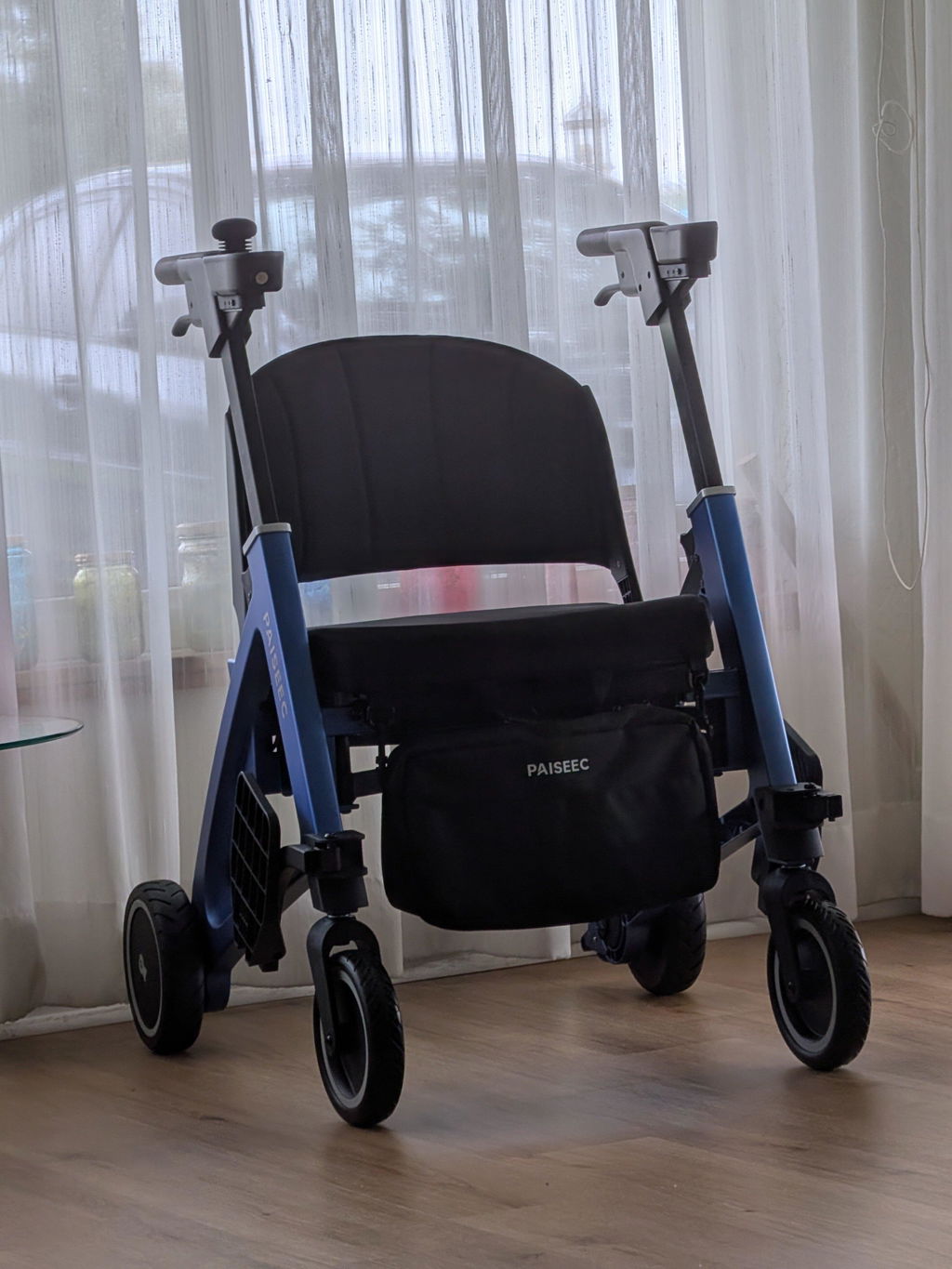
For older adults who maintain decent balance but experience intermittent fatigue during short neighborhood strolls, a manual rolling walker is an excellent starting point. Premium hybrid solutions, like a 2-in-1 rollator walker, offer a valuable intermediate step, allowing users to walk independently when they have energy and sit safely to rest or be pushed like a transit chair when endurance drops.
As stamina declines further, transitioning to a powered travel scooter prevents social isolation. By keeping these related solutions within a single cohesive product ecosystem, family caregivers can easily upgrade accessories, source compatible replacement batteries, and maintain consistent operational controls without forcing the senior to relearn an entirely new mechanical interface.
Structural Buying Framework: Step-by-Step Selection Matrix
To select the perfect personal transport vehicle, buyers should systematically evaluate these five operational criteria:
-
Primary Operating Environment: Determine if the vehicle will be used primarily indoors on flat tile and low-pile carpet, or outdoors on variable surfaces. For heavy indoor use, a 3-wheel design with a tight turning radius is ideal. For outdoor community events, prioritize 4-wheel configurations with higher ground clearance.
-
Transportation Mechanics: Honestly assess your transport capabilities. Will the scooter need to clear strict TSA airline regulations for lithium-ion batteries? Can the primary caregiver lift a 50-pound folded frame into an SUV trunk, or does the family need a modular design that breaks down into smaller segments?
-
Anatomical and Ergonomic Support: Evaluate the user's upper body strength and posture. Scooters require continuous core balance and the arm strength to grip and turn a front tiller handle. If a senior suffers from severe spinal instability or lacks upper body control, a specialized power wheelchair is a safer clinical alternative.
-
Battery Chemistry and Range Logistics: Map out your typical daily travel distances. Entry-level lead-acid battery packs are highly economical but heavy and require extended charging periods. Premium lithium-ion cells offer rapid charging and immense weight savings but require careful storage and carry strict transport caps on commercial flights.
-
Long-Term Component Sourcing: Before finalizing a purchase, confirm the availability of long-term ownership assets. Check the pricing and availability of replacement tires, secondary backup batteries for extended travel, weather protection covers, and local mechanical repair support.
Real-World Usage Scenarios
Scenario 1: Navigating Extended Family Travel
-
The Traditional Hurdle: A senior attempts to walk through a sprawling airport terminal or large cruise ship layout, experiences sudden physical exhaustion, and spends the remainder of the family vacation confined to a hotel room.
-
The Modern Solution: Utilizing an ultra-lightweight, airline-approved folding scooter allows the senior to navigate TSA checkpoints independently, drive directly up to the aircraft boarding gate, and smoothly fold the unit flat for immediate storage in the cargo hold.
Scenario 2: Weekend Community Socializing
-
The Traditional Hurdle: An older adult avoids neighborhood block parties, outdoor farmers' markets, or family park picnics because uneven grass, gravel pathways, or cracked concrete sidewalks present a severe tripping hazard.
-
The Modern Solution: A rugged multi-terrain travel scooter utilizes wide, flat-free pneumatic tires and an optimized motor drivetrain to absorb ground vibrations, giving the user the confidence to participate in outdoor community events safely.
Frequently Asked Questions
What are the structural differences between 3-wheel and 4-wheel mobility scooters?
Three-wheel mobility scooters are engineered with a single front wheel assembly, yielding a significantly tighter turning radius that makes them exceptionally nimble inside narrow hallways, compact kitchens, and crowded retail aisles. Four-wheel mobility scooters feature a wider front wheelbase, providing superior lateral stability and preventative anti-tip protection when traveling over uneven outdoor terrain, gravel paths, and low curb transitions.
Are personal mobility scooters identical to specialized power wheelchairs?
No. Mobility scooters and power wheelchairs feature completely different mechanical designs, control configurations, and clinical target users. Mobility scooters utilize a central steering tiller that requires continuous two-handed operation and sufficient upper body strength to remain sitting upright without side bolsters. They generally travel faster, disassemble more easily for transport, and are far more affordable. Power wheelchairs are steered via an intuitive joystick on the armrest, offer advanced orthopedic seating adjustments for full-day pressure relief, provide immense structural stability, and are designed for individuals with profound physical or neurological limitations.
Do seniors need a state driver's license to operate a mobility scooter?
No, a formal state driver's license is not required to operate a standard consumer mobility scooter on public pedestrian walkways, inside retail establishments, or across private properties. However, if you purchase a high-capacity, heavy-duty outdoor vehicle capable of exceeding speeds of 8 mph, local jurisdictions or municipal vehicle codes may classify the unit as a road-legal neighborhood electric vehicle. Always consult your local Department of Motor Vehicles to clarify regional ordinances regarding street operations.
Can mobility scooters safely handle grass, dirt, and gravel paths?
It depends entirely on the scooter's underlying specifications, tire width, and ground clearance. Standard travel-light units with small 8-inch solid plastic wheels are designed strictly for smooth, manicured indoor flooring or smooth concrete surfaces; forcing them onto grass can overheat the motor transaxle. If outdoor versatility is required, you must choose a model explicitly designated for multi-terrain use, featuring larger pneumatic tires, at least 3 inches of ground clearance, and a high-torque motor drivetrain.
Final Evaluation and Guidance
Selecting the ideal mobility solution requires balancing personal travel goals, physical limitations, and financial constraints. If your daily life requires frequent vehicle travel, quick independent storage, and a premium, modern design, sleek, ultra-lightweight folding models offer unparalleled convenience for on-the-go independence.
However, if you require a highly specific, medical-grade setup intended to meet strict Medicare in-home guidelines, or if you prefer a massive, heavy-duty traditional configuration with a high weight capacity, traditional heavy-duty multi-terrain cruisers provide the necessary clinical-grade support. Carefully review your primary operating environment, confirm your transportation logistics, and consult with a certified medical professional to invest in a device that truly restores your personal freedom.


Leave a comment
This site is protected by hCaptcha and the hCaptcha Privacy Policy and Terms of Service apply.