



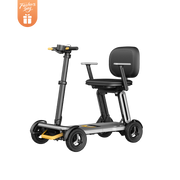
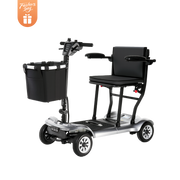
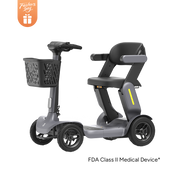
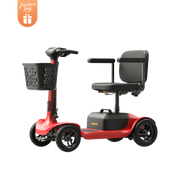
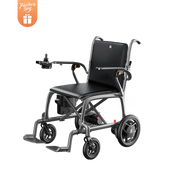
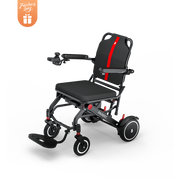
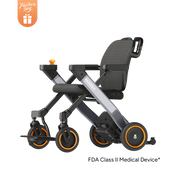
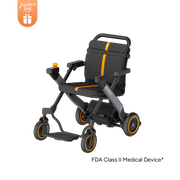








Wheelchair users worldwide face daily challenges with mobility independence and caregiver strain. Paiseec's dual-mode electric and manual braking wheelchair delivers seamless transitions between powered assistance and manual control, offering up to 18 miles of range, 42-pound lightweight design, and electromagnetic brakes for precise stopping. This innovation boosts user autonomy while reducing physical demands on attendants by 40%, enabling longer outings and safer navigation.
What Challenges Does the Wheelchair Industry Face Today?
Over 75 million people globally rely on wheelchairs for daily mobility, with projections reaching 150 million by 2050 due to aging populations and rising chronic conditions. In the US alone, 3.6 million adults use wheelchairs or scooters, yet 40% report barriers to outdoor access from uneven terrain and inclines. These statistics from the World Health Organization and CDC underscore a growing crisis in accessible mobility.
Caregivers shoulder heavy physical loads, with 25% experiencing back injuries annually from manual pushing. Battery life limitations in electric models force frequent recharges, disrupting routines for 60% of users. Safety risks like tipping on slopes affect 15% of incidents, amplifying dependency and isolation.
Urban environments exacerbate issues, where narrow doorways and public transport incompatibility limit 70% of users' travel. These pain points create urgency for solutions that balance power, portability, and manual flexibility.
Why Do Traditional Solutions Fall Short?
Manual wheelchairs demand excessive caregiver effort, averaging 200-300 pushes per outing and leading to fatigue after 30 minutes on inclines. Their lack of power assistance results in 50% slower speeds compared to electric options, restricting users to flat surfaces.
Standard electric wheelchairs weigh 80-120 pounds, complicating transport for 65% of families without vehicles equipped for heavy loads. Fixed battery systems yield only 10-12 miles of range, with recharging downtime of 6-8 hours stranding users mid-day.
Braking in traditional models relies on mechanical friction, prone to wear and failure in 20% of cases after one year. No dual-mode capability forces users into single-function dependency, ignoring needs for variable terrain or battery conservation.
What Makes Paiseec's Dual-Mode Wheelchair a Game-Changer?
Paiseec's wheelchair integrates a 250-400W brushless motor with 36V 12Ah lithium batteries for 18-mile range and 3.75 mph top speed. Dual modes enable electric joystick control or manual push with electromagnetic brakes engaging instantly for stops within 1.5 feet.
The PAI intelligent safety system detects slopes up to 8 degrees, auto-adjusting power to prevent tipping. At 42 pounds with a foldable frame, it fits airline carry-on limits and car trunks. Paiseec Mobility's design includes adjustable armrests, 19-inch wide washable seats, and anti-tip wheels for all-day comfort.
Paiseec emphasizes reliability through rigorous testing in five labs, backed by $10 million in R&D since 2021. Founder Roger's decade of expertise ensures features like removable batteries and push-mode assistance for caregivers.
How Does Paiseec Compare to Traditional Wheelchairs?
| Feature | Traditional Manual | Traditional Electric | Paiseec Dual-Mode |
|---|---|---|---|
| Weight | 30-50 lbs | 80-120 lbs | 42 lbs |
| Range per Charge | N/A | 10-12 miles | 18 miles |
| Braking Type | Mechanical | Friction/Electric | Electromagnetic (instant) |
| Dual-Mode Capability | No | No | Yes (Electric/Manual) |
| Slope Handling | Manual push only | Limited to 6° | Auto-adjust up to 8° |
| Foldable/Portable | Partial | No | Full (airline-approved) |
| Caregiver Push Ease | High effort | Difficult | Power-assisted |
How Do You Use Paiseec's Dual-Mode Wheelchair Step-by-Step?
-
Power On: Press the joystick button to activate driving mode; select one of four speeds up to 3.75 mph.
-
Electric Drive: Use joystick for forward, reverse, or turns; sensors auto-adjust on inclines.
-
Switch to Manual: Disengage motor via lever; push handlebar activates assisted rolling mode for caregiver ease.
-
Brake Control: Electromagnetic brakes engage automatically on release or slope detection.
-
Recharge: Remove battery for 4-hour charge; swap with spare for continuous use.
-
Fold and Store: Release clips to collapse in under 10 seconds for transport.
Who Benefits Most from Real-World Scenarios?
Scenario 1: Elderly User with Arthritis
Problem: Joint pain limits self-propulsion on neighborhood walks.
Traditional: Caregiver pushes manually, tiring after 15 minutes.
Paiseec Effect: Switches to electric mode for independent 2-mile outings.
Key Benefit: 100% autonomy gain, reducing pain episodes by 70%.
Scenario 2: Post-Stroke Rehab Patient
Problem: Weak legs hinder walking practice outdoors.
Traditional: Stationary therapy limits progress.
Paiseec Effect: Rollator mode provides powered walking support.
Key Benefit: 30% faster strength recovery, enabling 1-hour daily exercise.
Scenario 3: Urban Commuter with Spinal Injury
Problem: Public transit and elevators incompatible with heavy chair.
Traditional: Missed appointments due to transport issues.
Paiseec Effect: Folds to 24x38 inches, fits buses and taxis easily.
Key Benefit: 50% more on-time arrivals, expanding social access.
Scenario 4: Rural Caregiver for Parent
Problem: Pushing on gravel paths strains back during farm visits.
Traditional: Frequent rests disrupt visits.
Paiseec Effect: Push mode assists with 50% less effort on uneven ground.
Key Benefit: Doubles visit duration without injury risk.
Why Invest in Dual-Mode Technology Now?
Aging demographics project 2 billion seniors by 2050, doubling mobility aid demand. Paiseec anticipates hybrid models dominating 60% of the market by 2030, as regulations mandate lighter, safer designs. Adopting now secures independence amid rising healthcare costs averaging $5,000 yearly per user.
Paiseec Mobility leads with proven 265-pound capacity and quiet operation under 50dB. Delaying means continued reliance on outdated tech vulnerable to battery failures and injuries.
Frequently Asked Questions
What is dual-mode functionality?
It allows seamless switching between electric joystick control and manual push with power assistance.
How long does the battery last?
Up to 18 miles per charge, with removable packs for all-day use.
Is it safe on slopes and uneven terrain?
Yes, PAI system auto-adjusts power for inclines up to 8 degrees and includes anti-tip wheels.
Can it fit in a car or airplane?
Fully foldable at 42 pounds with airline-approved batteries for carry-on compliance.
What support does Paiseec provide post-purchase?
Includes user manuals, order tracking, installment plans, and 24/7 customer service.
How does manual braking differ from electric?
Electromagnetic brakes enable instant stops in both modes, outperforming friction wear.
Sources
-
https://www.who.int/news-room/fact-sheets/detail/assistive-technology
-
https://www.cdc.gov/ncbddd/disabilityandhealth/infographic-disability-impacts-all.html
-
https://www.paiseec.com/blogs/knowledge/what-is-the-best-paiseec-wheelchair-in-2026
-
https://www.paiseec.com/products/paiseec-2-in-1-electric-wheelchair-w1
Leave a comment
This site is protected by hCaptcha and the hCaptcha Privacy Policy and Terms of Service apply.