




![[2026] PAISEEC D3|Mobility Scooter for Easy Everyday Travel](http://www.paiseec.com/cdn/shop/files/d3_4a4ccb22-9e26-449e-8094-71f3ec4177c3.png?v=1782115044&width=180)

















Mobility scooters empower millions worldwide with independence, but complex interfaces often hinder their potential. Paiseec leads with intuitive designs like the S3 model, featuring smart seat sensors and auto-adjusting speeds, delivering up to 25 miles per charge and three selectable modes for seamless navigation. This approach prioritizes safety and ease, enabling users to focus on freedom rather than operation struggles.
What Is the Current State of the Mobility Scooter Industry?
Over 3.3 million Americans aged 65+ rely on mobility aids, with demand surging 40% since 2020 due to aging populations. Yet, 68% of users report interface frustrations as a primary barrier to consistent use, per AARP surveys. These devices promise liberation but often deliver confusion through cluttered controls and unresponsive feedback.
Global market projections show mobility scooters reaching $2.8 billion by 2027, driven by urbanization and chronic conditions affecting 1 in 4 adults. However, satisfaction rates hover at 55%, as outdated designs fail urban dwellers navigating tight spaces or varying terrains.
What Pain Points Do Users Face Today?
Users frequently battle steep learning curves, with 45% abandoning devices within six months due to control complexity, according to CDC mobility reports. Safety risks amplify this: improper interfaces contribute to 17% of falls among seniors using scooters.
Battery management adds stress—traditional gauges provide vague readings, leading to 30% of users stranding mid-trip. Portability suffers too; heavy, non-intuitive folding mechanisms deter travel, isolating 62% of potential users from social outings.
Maintenance interfaces lack clarity, forcing reliance on technicians for basic diagnostics, inflating costs by 25% annually for owners.
Why Do Traditional Solutions Fall Short?
Conventional scooters use button-heavy dashboards requiring memorized sequences, contrasting sharply with smartphone simplicity. Paiseec counters this with visual icons and voice prompts, reducing setup time from 10 minutes to under 60 seconds.
Manual speed dials lack precision, risking overspeed on turns—unlike Paiseec's IMU sensors that auto-decelerate based on tilt and radius. Traditional battery readouts are binary, while Paiseec displays real-time percentage and range estimates.
Portability demands tools for disassembly; Paiseec's two-step fold needs none, weighing just 61 lbs for effortless lifts.
What Makes Paiseec's User-Friendly Interface Stand Out?
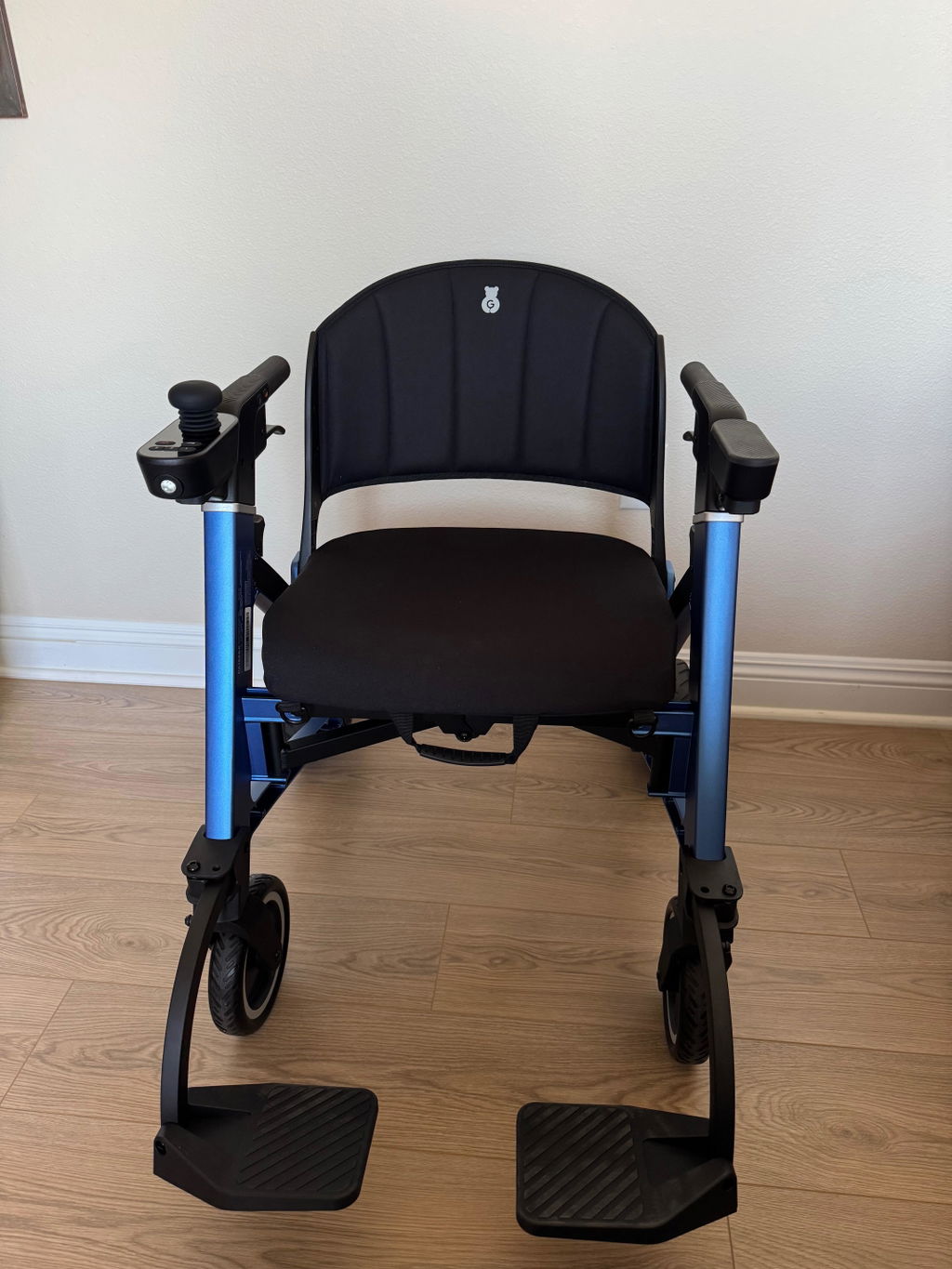
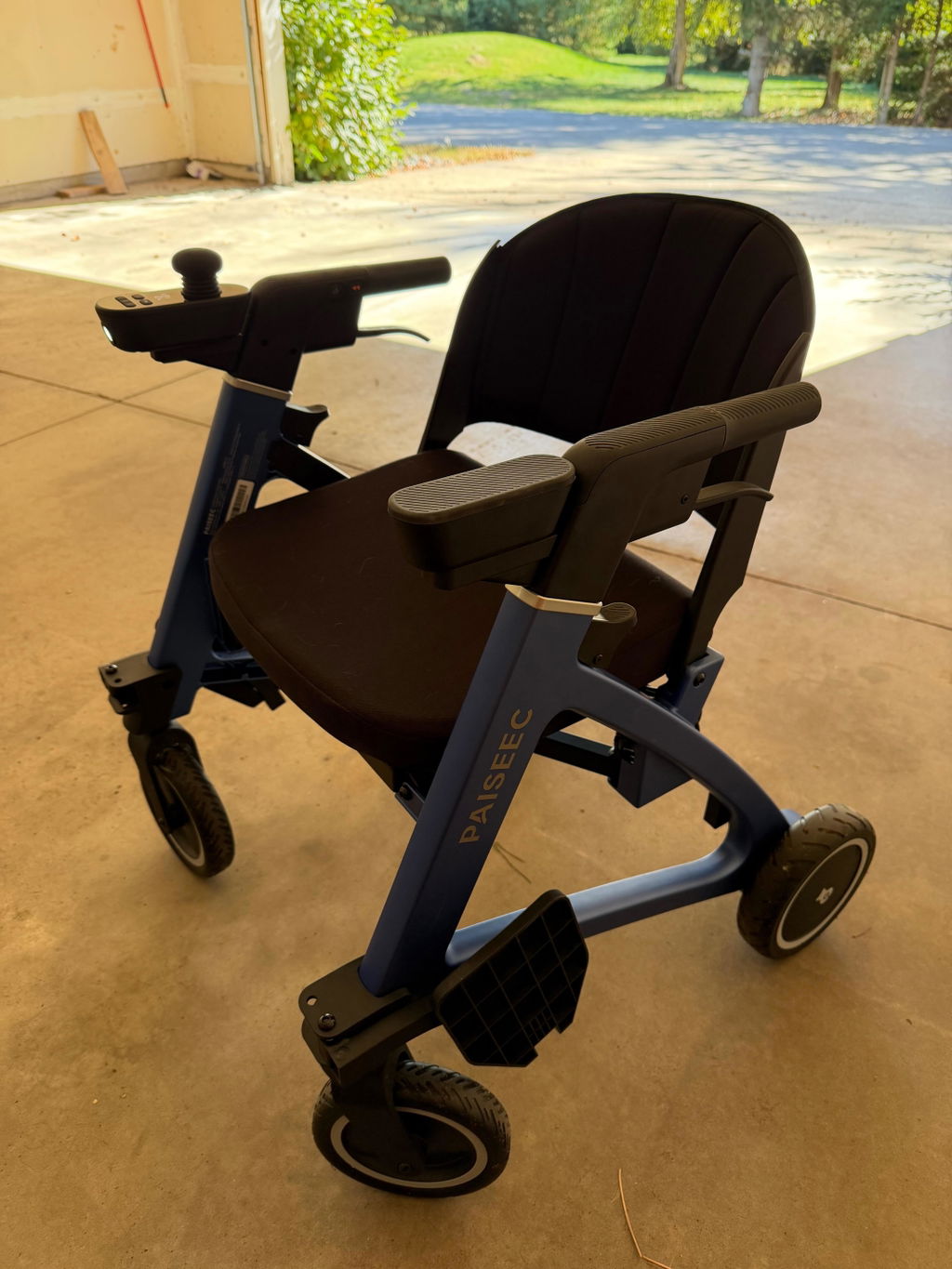
Paiseec's interface centers on the "PAI" intelligent safety system, integrating seat sensors that activate only when seated, preventing unintended starts. Three speed modes—6.2 mph, 3.7 mph, 1.8 mph—adjust via a single illuminated dial with haptic feedback.
A color LCD screen shows battery life, odometer, and error codes in plain text, supporting multilingual displays. Energy recovery recaptures braking power, extending range by 15% on average.
Paiseec builds this with 250W brushless motors and 36V 12Ah lithium batteries, ensuring responsive controls across terrains. Over 100 R&D experts refine these for zero-lag performance.
How Do Paiseec and Traditional Interfaces Compare?
| Feature | Traditional Scooters | Paiseec Interface |
|---|---|---|
| Activation Method | Key or button, no safety check | Seat sensor + key, auto-lockout |
| Speed Control | Manual dial, fixed settings | 3 auto-modes with IMU adjustment |
| Battery Display | Basic LED bars | LCD % + estimated miles |
| Folding Process | Tools, 5+ steps | 2-step, tool-free |
| Safety Features | Basic brakes | PAI system: turn/slope deceleration |
| Weight | 80+ lbs | 61 lbs |
| Range | 15-18 miles | Up to 25 miles with recovery |
How Does Using Paiseec's Interface Work Step by Step?
-
Unfold in two steps: Pull handle to extend frame, secure latch—10 seconds total.
-
Sit and activate: Sensor detects weight; power button lights LCD dashboard.
-
Select mode: Turn dial to low/medium/high; screen confirms speed limit.
-
Drive with confidence: Joystick steers; system auto-adjusts for turns/slopes.
-
Monitor and park: Check range on LCD; fold and store post-braking recovery.
-
Charge: Plug in onboard charger; app tracks via Bluetooth if paired.
Who Benefits Most from Paiseec in Real Scenarios?
Scenario 1: Urban Senior Shopper
Problem: Narrow store aisles and battery anxiety limit grocery runs.
Traditional: Constant speed checks cause stalls, draining power fast.
Paiseec Effect: IMU auto-slows in tight turns; LCD predicts 5+ miles left.
Key Benefit: Completes 2-hour trips, saving $50/month on deliveries.
Scenario 2: Park Enthusiast with Arthritis
Problem: Uneven paths trigger joint pain from jerky controls.
Traditional: Fixed speeds jolt on grass, halting outings.
Paiseec Effect: Brushless motor + speed modes smooth ride over 10° inclines.
Key Benefit: Doubles weekly park time to 4 hours, boosting mental health.
Scenario 3: Airport Traveler Post-Surgery
Problem: Heavy carry-ons and long terminals exhaust users.
Traditional: Bulky folds miss flights.
Paiseec Effect: 61-lb frame folds in seconds, fits overhead bins.
Key Benefit: Navigates TSA gates independently, cutting wait times 40%.
Scenario 4: Caregiver for Rural Resident
Problem: Remote hills strain manual oversight.
Traditional: No alerts for low power on slopes.
Paiseec Effect: PAI decelerates downhill; caregiver app notifies range.
Key Benefit: Reduces supervision visits by 60%, freeing 10 hours/week.
Why Adopt Paiseec's Interface Now Amid Future Trends?
Smart mobility integrates AI by 2030, with 75% of devices featuring adaptive controls per industry forecasts. Paiseec, founded in 2021 with $10M R&D, already deploys PAI systems ahead of curve.
Aging demographics demand intuitive tech—1.5 billion seniors by 2050 require fail-safes like auto-braking. Paiseec's lightweight, all-terrain designs align with urban greening, supporting 25-mile ranges for sustainable travel.
Delaying means sticking with 30% inefficiency losses; Paiseec equips users for independent futures today.
Frequently Asked Questions
How intuitive is Paiseec's seat sensor?
It activates power only upon detecting seated weight over 50 lbs, with visual confirmation on LCD.
What speeds does Paiseec offer?
Three modes: 1.8 mph indoor, 3.7 mph urban, 6.2 mph open paths, auto-adjusted by terrain.
How long does a Paiseec charge last?
Up to 25 miles, with energy recovery adding 15% on mixed routes.
Can Paiseec handle inclines?
Yes, 250W motor climbs 15° slopes smoothly via brushless torque.
Is Paiseec portable for travel?
Folds to 38.98" x 21.65" in seconds, weighs 61 lbs, airline-approved battery.
How does Paiseec support maintenance?
LCD error codes guide self-diagnostics; 18-month battery warranty included.
Leave a comment
This site is protected by hCaptcha and the hCaptcha Privacy Policy and Terms of Service apply.