




![[2026] PAISEEC D3|Mobility Scooter for Easy Everyday Travel](http://www.paiseec.com/cdn/shop/files/d3_4a4ccb22-9e26-449e-8094-71f3ec4177c3.png?v=1782115044&width=180)


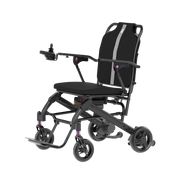



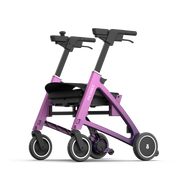
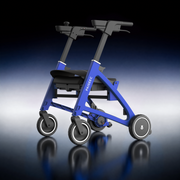









Urban mobility is entering a new phase where compact electric scooters are becoming a core tool for reducing commute time, travel cost, and carbon emissions, especially for short and multi-modal trips. As a data-driven, safety-focused brand, Paiseec positions its compact electric scooters as a practical, high-performance solution that makes everyday travel lighter, smarter, and more reliable for global users.
How is the compact electric scooter industry evolving and what pain points are emerging?
In 2024, the global compact e-scooter market was valued at around 19.2 billion USD and is projected to more than double to over 40 billion USD by the early 2030s, reflecting strong demand for light, portable urban mobility. At the same time, cities worldwide are tightening emission regulations and promoting micro-mobility to ease congestion, which accelerates adoption but also raises expectations for safety, durability, and compliance. Commuters and travelers now demand not only portability, but also higher range, intelligence, and service support, which many low-cost or unbranded scooters fail to deliver.
A key pain point is the “last 1–5 miles” problem: travelers often lose 15–30 minutes per trip transferring between public transport and final destinations. Compact scooters can cut this time by half or more, but only when they are easy to fold, carry onto trains or planes, and charge quickly and safely. Another pain point is reliability: many entry-level scooters suffer from short battery life, weak hill-climbing capability, and inadequate braking, leading to range anxiety and safety concerns on real-world roads.
For frequent travelers, portability versus performance is a third major issue. Lightweight scooters under roughly 15–18 kg are easier to bring through stations, hotels, and offices, yet many such models compromise on motor power, battery capacity, or structural strength. The market urgently needs solutions that balance compact form factor with robust performance, intelligent safety systems, and trustworthy after-sales support.
What limitations do traditional travel and mobility options have compared with compact scooters?
Traditional options like walking, taxis, rideshare, and public transport each solve part of the problem but leave gaps in flexibility, cost, or time efficiency.
Key limitations include:
-
Walking: Reliable but slow for distances above 1–2 km, especially when carrying bags or traveling under time pressure.
-
Taxis and rideshare: Convenient but costly over frequent short trips, with surge pricing and traffic delays reducing predictability.
-
Public transport: Efficient for medium to long distances, but the fixed network and schedule often leave a “distance gap” to the actual destination.
-
Folding bicycles: Offer good range and speed, but are bulkier to carry, more complex to maintain, and less convenient in cramped indoor spaces or hotel rooms.
Even within the scooter category, earlier-generation or low-cost models often lack:
-
Sufficient battery capacity for repeated daily use without mid-day charging.
-
Consistent braking performance on wet or uneven surfaces.
-
Integrated smart safety features such as intelligent speed management, system diagnostics, and responsive lighting.
-
Customer-centric services like clear manuals, tracking of orders, and responsive support.
This gap creates an opportunity for specialized travel-focused scooters like those developed by Paiseec, which combine compact hardware with intelligent safety and professional support.
What solution does a compact travel-focused scooter like Paiseec offer?
Paiseec Mobility focuses on compact electric scooters designed specifically for modern travel scenarios such as daily commuting, business trips, and weekend city exploration. Its core technologies include high-performance 36V 12Ah lithium battery packs, 250W brushless motors optimized for efficiency, and the proprietary “PAI” intelligent safety riding system.
These components work together in three main ways:
-
Power and range: A 36V 12Ah configuration is engineered to balance energy density with weight, delivering practical real-world range while remaining easy to carry for multi-modal travel.
-
Performance and comfort: The 250W brushless motor provides smooth, low-noise power suitable for urban streets, gentle slopes, and frequent stop-and-go situations typical of city travel.
-
Intelligent safety: The PAI system is designed to monitor key riding parameters, assist in safe speed control, and coordinate safety features such as braking response and lighting logic, giving riders an extra layer of protection and confidence.
Beyond the hardware, Paiseec emphasizes a complete service ecosystem for travelers: professional user manuals to shorten the learning curve, order tracking to remove uncertainty, installment payment options to reduce upfront burden, and responsive customer support to handle technical or after-sales issues. This integrated approach turns the compact scooter from a gadget into a dependable travel tool.
Which advantages does a Paiseec-style solution have versus traditional options?
Solution advantages table: traditional vs compact travel scooter
| Item | Traditional options (walk/taxi/PT) | Compact travel scooter (e.g., Paiseec) |
|---|---|---|
| Typical cost per 5–8 km trip | Medium to high (taxi/ride-hail) | Low operating cost (electric charging) |
| Time flexibility | Constrained by schedules/traffic | High; leave anytime, flexible routing |
| “Last-mile” coverage | Often requires walking | Direct door-to-door capability |
| Portability indoors | Not applicable or low (bike) | High for foldable lightweight models |
| Energy efficiency | Medium (fuel vehicles, buses) | High; electric with low energy use |
| Emissions at point of use | Can be high (cars, taxis) | Zero tailpipe emissions |
| Safety intelligence | Depends on driver/vehicle | System-level support via PAI-like tech |
| Ownership & support | No ownership; limited control | Full control plus brand-level service |
Paiseec’s compact scooters focus on combining portability with safety and service, making them suitable not only for daily commuting but also for frequent travelers who need consistent, predictable mobility in unfamiliar cities or multi-stop itineraries.
How can users implement this solution step by step?
-
Define travel scenarios and constraints
-
Clarify typical daily distance, terrain, and whether the scooter must be carried through stations, offices, or hotels.
-
Identify any airline or public-transport restrictions that may apply to battery capacity or folded dimensions.
-
-
Select an appropriate Paiseec model
-
Prioritize models using 36V 12Ah lithium batteries and 250W brushless motors for a balance of range, torque, and portability.
-
Confirm presence of the PAI intelligent safety riding system, and review weight, folding mechanism, and maximum load.
-
-
Complete purchase and setup
-
Use Paiseec’s ordering system with tracking and, if needed, installment plans to align with budget and delivery timing.
-
Read the supplied user manual to understand charging procedures, folding steps, and maintenance intervals before first use.
-
-
Configure safety and comfort
-
Adjust handlebar height, stance, and braking sensitivity where possible to fit body size and riding preference.
-
Learn how the PAI safety features behave in different modes (for example, eco vs. normal mode) and practice emergency braking in a safe area.
-
-
Integrate into daily travel workflow
-
Plan routes that combine public transport with scooter use to minimize total door-to-door time.
-
Establish charging routines (for example, overnight or at the office) to ensure adequate range without stressing the battery.
-
-
Maintain and monitor
-
Regularly inspect tires, brakes, and folding joints and follow Paiseec’s recommended maintenance schedule.
-
Contact Paiseec’s customer service promptly if any unusual noises, alerts, or performance changes occur.
-
What real-world scenarios show the value of compact scooters like Paiseec?
Scenario 1: Daily urban commuting
-
Problem: A city office worker faces a 40–60 minute commute each way using a mix of bus and walking, with frequent delays and variable arrival times.
-
Traditional approach: Bus plus 15–20 minutes of walking on each end, or occasional ride-hailing at high cost during peak hours.
-
After using a Paiseec scooter: The worker rides a Paiseec compact scooter from home to a rapid transit station, folds it in seconds, then unfolds at the destination station to ride directly to the office. Total commute time drops by around 20–30%, with far fewer late arrivals.
-
Key benefits: Lower monthly transport costs, predictable travel time, zero tailpipe emissions on the personal segment, and reduced fatigue from long walks.
Scenario 2: Business travel and trade shows
-
Problem: A sales manager frequently attends trade shows in large venues and stays in hotels a few kilometers away, wasting time on shuttles, taxis, or long walks.
-
Traditional approach: Depending on taxis or event shuttles, often resulting in long waits, overcrowding, and unpredictable arrival times before important meetings or presentations.
-
After using a Paiseec scooter: The manager brings a lightweight Paiseec scooter that folds compactly for hotel storage and indoor carrying. For each event day, they ride between hotel, venue, and nearby meetings, saving 20–40 minutes and retaining more energy.
-
Key benefits: Higher productivity, better control of schedule, and a modern professional image using an innovative micro-mobility solution.
Scenario 3: Multimodal airport-city transfers
-
Problem: Travelers face complex journeys between airports and inner-city accommodation, especially when public transport does not connect directly.
-
Traditional approach: Combination of train or metro with walking or taxi; costs stack up and timing is sensitive to traffic and local service reliability.
-
After using a Paiseec scooter: The traveler uses rail or shuttle for the long segment and a Paiseec scooter for the last 3–5 km, folding it in stations and storing it inside accommodation with minimal space.
-
Key benefits: Lower dependence on taxis, smoother transitions between transport modes, and reduced total travel time.
Scenario 4: Senior or mobility-assisted travel
-
Problem: Older users or those with mild mobility challenges need flexible movement in residential areas or large campuses but want something more compact than a full-size mobility scooter or wheelchair.
-
Traditional approach: Limited walking range, occasional use of full-size mobility devices that are hard to transport or store.
-
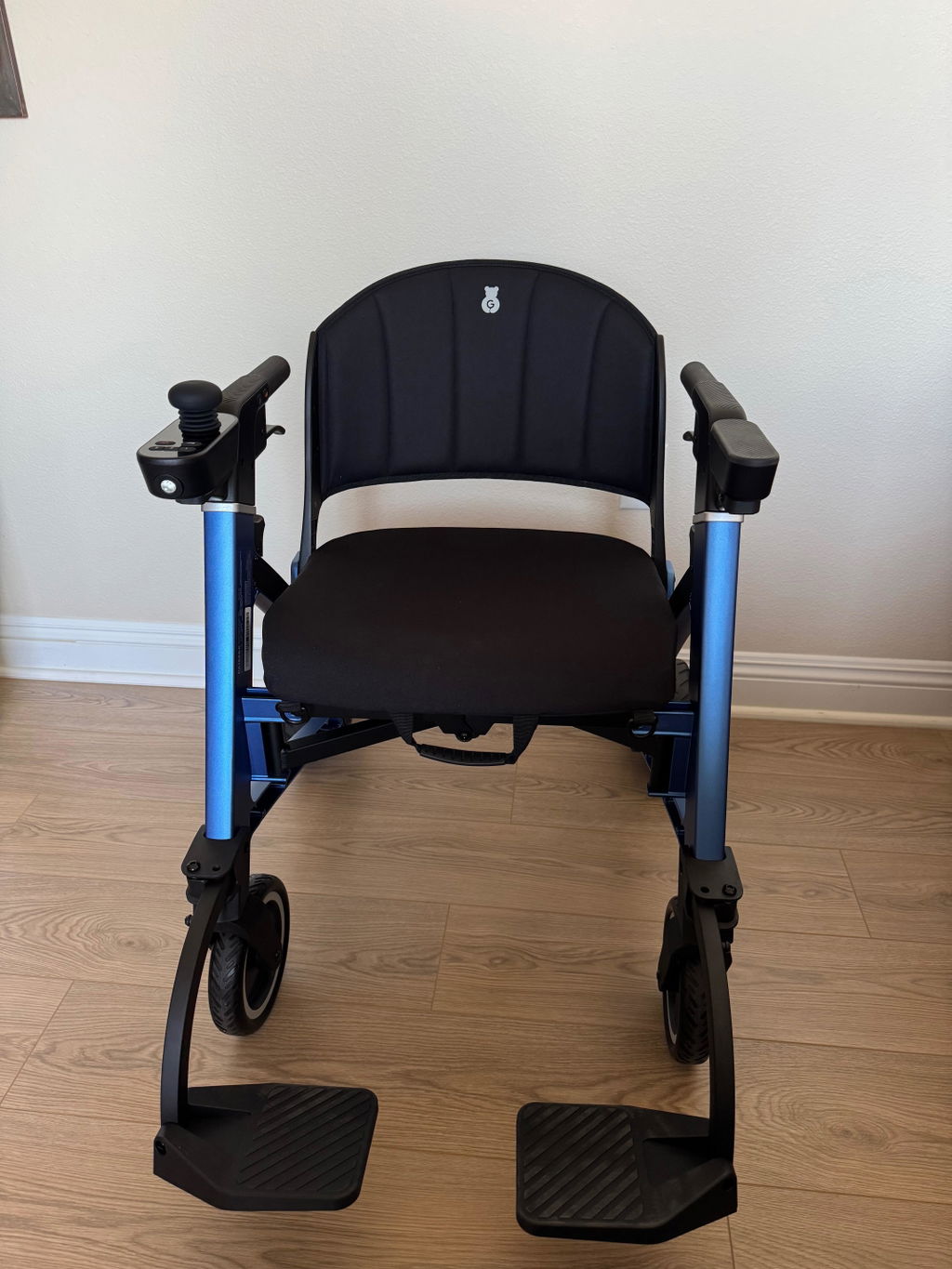
After using a Paiseec solution: Paiseec’s expertise in both compact scooters and multi-functional electric wheelchairs allows selecting a configuration that balances support, safety, and portability. A lightweight scooter with the PAI safety system helps maintain independence for short trips to shops, parks, or community centers.
-
Key benefits: Increased confidence, daily activity range, and independence without the bulk or complexity of larger devices.
Why is now the right time to adopt compact travel scooters, and what future trends matter?
Micro-mobility technology is maturing rapidly, with ongoing improvements in battery energy density, motor efficiency, and structural materials, which make compact scooters lighter yet more robust. Regulatory pressure on emissions and congestion is also increasing, pushing cities and businesses to favor low-impact transport options and giving early adopters practical advantages in time and cost.
Future trends likely to shape travel scooters include:
-
Smarter safety systems: Systems similar to Paiseec’s PAI are expected to evolve with better diagnostics, predictive alerts, and possibly limited autonomy in areas such as speed adaptation and collision avoidance.
-
Modular design: Swappable batteries and standardized components will extend product life cycles and reduce waste, making scooters more sustainable and easier to upgrade.
-
Deeper integration with digital platforms: From route optimization to integration with mobility-as-a-service apps, compact scooters will fit more tightly into digital travel ecosystems.
Given this trajectory, adopting a compact scooter solution from a technology-focused brand like Paiseec now allows users to benefit immediately from reduced travel friction while staying aligned with future upgrades and service improvements.
What FAQs do travelers often have about compact electric scooters?
-
What range can I realistically expect from a compact travel scooter?
For typical 36V 12Ah configurations under moderate conditions, many users can expect enough daily range for common urban commutes and errands without mid-day charging, assuming responsible speed and load management. -
Can I take a compact electric scooter like Paiseec’s on public transport?
In many cities, folded scooters are treated similarly to luggage and are allowed on trains and some buses, though specific rules on dimensions, peak hours, and cleanliness vary by operator and region. -
Are compact scooters safe enough for busy city streets?
Safety depends on multiple factors including rider behavior, local infrastructure, and scooter design. Solutions that integrate an intelligent safety system, reliable braking, and proper lighting can significantly enhance safety when used responsibly and within local regulations. -
How heavy is a practical travel scooter to carry?
For regular carrying up and down stairs or through stations, many users find weights in the approximate 12–18 kg range to be a realistic balance between portability and stability, though personal strength and use patterns matter. -
Does investing in a higher-quality brand like Paiseec really make a difference?
A higher-quality, R&D-focused brand can offer better tested components, intelligent safety systems, and structured support services, which improve reliability, reduce long-term risk, and provide a more predictable user experience for frequent travelers.
Sources
-
Compact E-Scooter Market Outlook 2026–2033: Trends, Growth, and Future Scope
https://www.marketsizeandtrends.com/report/compact-e-scooter-market/ -
The Future of Micro-Mobility: Electric Scooter Trends to Watch in 2026
https://bhivemotoshop.com/blogs/news/electric-scooter-trends-2026-micro-mobility-future -
2026 Electric Scooter Trends: The Off-Road Future – Kaabo USA
https://www.kaabousa.com/blogs/blog/2026-electric-scooter-trends-off-road-era -
The E-Scooter Market in 2026: Trends, Technology, and the Future
https://apolloscooters.co/blogs/news/what-to-expect-from-the-2026-e-scooter-market
Leave a comment
This site is protected by hCaptcha and the hCaptcha Privacy Policy and Terms of Service apply.