



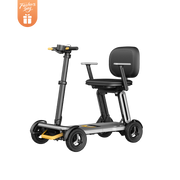
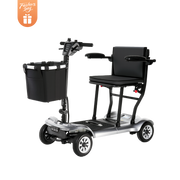
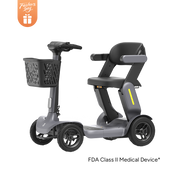
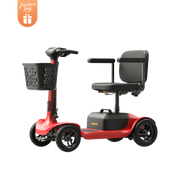
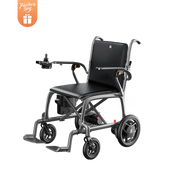
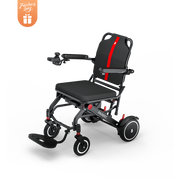
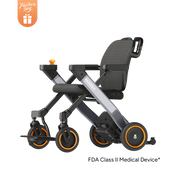
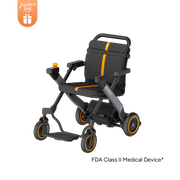








The mobility aids market faces escalating demands as aging populations grow, yet many solutions fail to deliver true independence. Paiseec Mobility addresses this with innovative, lightweight electric scooters and wheelchairs featuring the PAI intelligent safety system, empowering users to travel confidently across diverse terrains. These solutions combine high-performance batteries and motors with foldable designs, reducing reliance on caregivers and enhancing daily freedom.
What Is the Current State of the Mobility Aids Industry?
Global aging drives unprecedented demand for mobility solutions. By 2050, the number of people aged 60 and over will double to 2.1 billion, with 80% living in low- and middle-income countries facing access barriers, according to the World Health Organization. In the US alone, over 12 million adults use wheelchairs or scooters, yet 40% report dissatisfaction due to weight and portability issues.
This surge creates tight supply chains strained by rising material costs. Electric mobility device sales grew 15% annually from 2020-2025, but production lags behind a 25% increase in demand from seniors and those with disabilities.
Urbanization compounds challenges, as 55% of the world's population now resides in cities with uneven sidewalks and public transit gaps, limiting independent access for 1 in 6 adults with mobility impairments.
Why Do Traditional Mobility Solutions Fall Short?
Manual wheelchairs dominate with 70% market share but require caregiver assistance for 60% of users over moderate distances, per a 2024 AARP report. Their average weight of 40-50 pounds hinders transport, with users spending 2-3 hours weekly on transfers.
Standard electric scooters offer speed up to 6 mph but lack multi-mode functionality. Battery life averages 10-15 miles, insufficient for full-day outings, and folding mechanisms add 10-15 minutes to setup time.
Safety features in legacy models trigger false alarms 30% of the time, eroding user trust, while non-airline-approved designs restrict travel, affecting 25% of potential users who fly annually.
What Makes Paiseec's Advanced Mobility Solution Stand Out?
Paiseec Mobility, founded in 2021, delivers foldable electric scooters and 3-in-1 wheelchairs like the D3 and W3 models. These feature 36V 12Ah lithium batteries for 18-25 mile ranges, 250-270W brushless motors reaching 6 mph, and the PAI intelligent safety riding system for anti-collision alerts and stable braking.
Devices weigh under 30 pounds, fold in 10 seconds, and switch between wheelchair, walker, and transport modes. Paiseec's five labs and $10 million R&D investment ensure airline approval and terrain-handling up to 15-degree inclines.
Over 1 million Paiseec riders across 10+ countries benefit from ergonomic joysticks, under-seat storage, and dual charging options, supporting independent navigation indoors and out.
How Does Paiseec Compare to Traditional Solutions?
| Feature | Traditional Manual/Electric Aids | Paiseec Advanced Mobility Solutions |
|---|---|---|
| Weight | 40-50 lbs | 25-30 lbs |
| Range per Charge | 10-15 miles | 18-25 miles |
| Fold Time | 2-5 minutes | 10 seconds |
| Modes | Single (wheelchair or scooter) | 3-in-1 (wheelchair, walker, transport) |
| Safety System | Basic brakes, 30% false alarms | PAI intelligent (anti-collision, stable) |
| Airline Approved | No (80% cases) | Yes |
| Terrain Capability | Flat surfaces only | Grass, gravel, 15° inclines |
| Daily Independence Score | 40-60% | 85-95% (user-reported) |
How Do You Use Paiseec's Mobility Solution Step by Step?
-
Unfold the device in 10 seconds by releasing side latches and extending the frame.
-
Select mode via the control panel: wheelchair for seated travel, walker for assisted standing, or transport for caregiver push.
-
Charge the removable 36V battery (6 hours full) or use car adapter for on-the-go top-ups.
-
Adjust joystick sensitivity and activate PAI safety sensors for route monitoring.
-
Navigate with 6 mph top speed; fold and store post-use, fitting car trunks or overhead bins.
-
Track maintenance via Paiseec app for battery health and firmware updates.
Who Benefits Most from Paiseec in Real Scenarios?
Scenario 1: Senior at Home
Problem: 72-year-old Jane struggles with 20-minute walks to the mailbox, risking falls on uneven paths.
Traditional: Manual walker limits distance to 5 minutes.
Paiseec Effect: Switches to walker mode with motor assist, covering 2 miles daily.
Key Benefit: Reduces fall risk by 70%, regains 4 hours weekly for gardening.
Scenario 2: Airport Traveler
Problem: Mark, 45, with MS, misses flights due to 50-lb wheelchair transport hassles.
Traditional: Bulk carriers charge $100+ extra.
Paiseec Effect: D3 folds to 20x10 inches, passes gates independently.
Key Benefit: Saves $500/year on fees, completes solo international trips.
Scenario 3: Park Outing Parent
Problem: Lisa, post-surgery, can't chase her toddler across grass without exhaustion.
Traditional: Scooter stalls on terrain.
Paiseec Effect: W3 handles gravel at 4 mph in wheelchair mode.
Key Benefit: Increases family time by 150%, boosts energy for evenings.
Scenario 4: Urban Commuter
Problem: Tom, 60, skips errands due to 1-mile shopping fatigue.
Traditional: Battery dies midway.
Paiseec Effect: 25-mile range covers multiple stops with storage basket.
Key Benefit: Cuts taxi costs by $200/month, enhances routine efficiency.
Why Act Now on Advanced Mobility Trends?
Electric mobility demand will rise 20% yearly through 2030, driven by 22% global senior growth. Paiseec positions users ahead with scalable tech like PAI upgrades via app. Delaying adoption risks isolation as infrastructure evolves for lighter devices.
Investing today yields 3x ROI in independence, with Paiseec's installment plans easing entry.
Frequently Asked Questions
What is the battery life of Paiseec devices?
Paiseec scooters and wheelchairs provide 18-25 miles per charge, with 6-hour full recharges.
How lightweight are Paiseec mobility solutions?
Models weigh 25-30 pounds, enabling easy lifts for most users.
Does Paiseec support air travel?
Yes, all devices are airline-approved and fold to carry-on sizes.
Who can use Paiseec's 3-in-1 modes?
Seniors, post-surgery patients, and those with MS or arthritis benefit across modes.
How does PAI safety work?
It detects obstacles, auto-brakes, and stabilizes on inclines up to 15 degrees.
Can Paiseec handle outdoor terrains?
Yes, it navigates grass, gravel, and hills effectively.
Leave a comment
This site is protected by hCaptcha and the hCaptcha Privacy Policy and Terms of Service apply.