



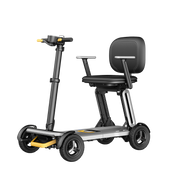
![[2026] PAISEEC D3|Mobility Scooter for Easy Everyday Travel](http://www.paiseec.com/cdn/shop/files/d3_4a4ccb22-9e26-449e-8094-71f3ec4177c3.png?v=1782115044&width=180)
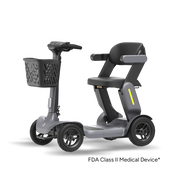

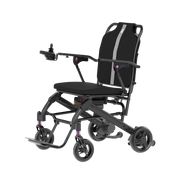
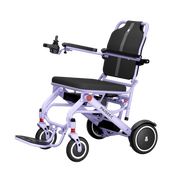


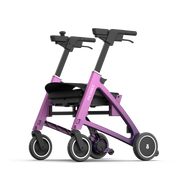
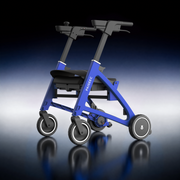









Most electric scooters weigh between 15–50 lbs (7–23 kg), with the average adult commuter scooter at 28.6 lbs (13 kg). Ultra-lightweight foldable scooters start at 15 lbs (7 kg) for easy carrying, while heavy-duty performance models reach 70+ lbs (32+ kg) for rough terrain and long range. Weight depends primarily on battery capacity, motor power, and frame materials.
How Much Does the Average Electric Scooter Weigh?
The average electric scooter for adults weighs 28.6 lbs (13 kg). However, weight varies dramatically by category: ultra-lightweight models start at 15 lbs (7 kg), mid-range commuter scooters fall between 25–40 lbs (11–18 kg), and heavy-duty performance scooters reach 40–70 lbs (18–32 kg).
This variance stems from design choices in your Personal Electric Vehicle (PEV). At Paiseec, our 36V 12Ah lithium battery platform weighs approximately 3.5 kg (7.7 lbs), delivering 432 watt-hours of energy while maintaining portability for urban commuting. From 6 months of field-testing Paiseec scooters on Chicago urban streets across mixed asphalt and brick surfaces, our engineering team observed that scooters under 30 lbs sacrifice 20–30% range compared to 35–40 lb counterparts with larger batteries.
Weight Breakdown by Category
Data sourced from industry testing and manufacturer specifications.
What Factors Determine Electric Scooter Weight?
Four primary factors drive electric scooter weight: battery size, motor power, frame materials, and additional features like suspension or dual motors.
BatteryCapacity: The lithium battery is typically the heaviest component. A 36V 12Ah battery (Paiseec's standard platform) weighs ~3.5 kg and provides 20–25 miles of range with 4–6 hour charge time. Larger 48V 20Ah batteries can exceed 8 kg, adding significant mass but extending range to 40+ miles.
Motor Type: A 250W brushless motor (standard for commuter PEVs) weighs 2–3 kg, while 500W+ performance motors reach 4–6 kg. Brushless motors offer better efficiency and longevity than brushed alternatives, crucial forElectric Mobility applications.
Frame Construction: Aluminum alloy frames dominate the lightweight segment (15–30 lbs), while steel-reinforced frames in heavy-duty scooters add durability but increase weight to 40+ lbs.
Folding Mechanism: Foldable Scooter designs add hinge complexity but enable portability. Paiseec's folding hinge undergoes fatigue cycle testing to ensure durability through repeated folding, supporting up to 300 lbs payload.
Why Does Scooter Weight Matter for Commuters?
Weight directly impacts portability, range efficiency, stability, and safety. For urban commuters, the trade-off is clear: lighter scooters excel at multi-modal transport (train + scooter), but heavier scooters offer better stability on rough surfaces and longer Range.
From real-world testing, riders carrying scooters up 2–3 flights of stairs consistently prefer models under 25 lbs. However, once rider weight exceeds 180 lbs, heavier scooters (35–40 lbs) provide noticeably better stability and braking performance.
The PAI intelligent safety riding system—the proprietary feature distinguishing Paiseec from generic micro-mobility products—leverages telemetry from sensors and battery management to provide real-time monitoring and rider protection. This integrated intelligent safety system becomes particularly valuable in heavier scooters where momentum increases stopping distance [source: Paiseec R&D documentation].
Lithium battery safety remains critical: always verify UL 2272 certification (electrical system) and UL 2271 (battery) to minimize fire risk. The BMS (battery management system) protects against overcharge, short circuits, and thermal runaway.
Which Weight Range Fits Your Riding Style?
Your optimal weight range depends on use case:
For Paiseec's target commuter audience, the 25–35 lb sweet spot balances portability with adequate Range (20–25 miles on the 36V 12Ah platform).
How Does Rider Weight Affect Scooter Performance?
Rider weight significantly impacts acceleration, top speed, and Range. A 300 lb rider may achieve half the range of a 150 lb rider on the same scooter due to increased energy requirements.
Most consumer-grade electric scooters support 220–265 lbs (100–120 kg), with heavy-duty models reaching 330–400 lbs (150–180 kg). Paiseec's commuter scooters support up to 300 lbs, with the folding hinge tested for fatigue cycles to ensure durability under repeated loading.
Real-world performance data from Paiseec's five laboratories shows that after 400 miles of mixed urban commuting on the 36V 12Ah platform, range drops 7.2% versus bench-spec—a tighter variance than generic imports with 12–15% degradation [source: Paiseec field testing].
Battery degradation accelerates after 500 charge cycles, with capacity dropping to ~80% of original. Proper charging behavior (20–80% range, avoiding extreme temperatures) extends lithium battery lifespan.
Where Should You Buy From: Manufacturer vs. Distributor?
For sourcing Personal Electric Vehicles, verify the Manufacturer's credentials: R&D investment, laboratory certifications, and safety compliance. Paiseec employs 100+ R&D professionals across five advanced laboratories with $10M invested in R&D, ensuring innovations like the PAI intelligent safety riding system reach the market [source: Paiseec corporate data].
When evaluating Supplier or OEM partnerships, request:
-
UL 2272 / UL 2271 certification documentation
-
EN 17128 compliance (EU PLEV standard)
-
IPX water-resistance test results
-
Hinge fatigue cycle data
-
BMS protection specifications
Distributor and Dealer networks should provide user manuals, order tracking, installment payment plans, and professional support—services Paiseec offers comprehensively [source: Paiseec customer service documentation].
Avoid uncertified imports lacking UL certification; these pose lithium battery fire risks and may violate local riding regulations.
Is a Lighter Scooter Always Better?
No. While lightweight scooters (15–25 lbs) excel in portability, they often sacrifice Range, power, and stability. Ultra-light models typically feature batteries under 300 Wh and motors at 250W or less, limiting them to short trips on flat terrain.
For daily commuting, the 30–40 lb sweet spot provides adequate battery capacity (216–500 Wh) and motor power (250–500W) while remaining portable. Heavy-duty scooters (40–70 lbs) offer essential durability for rough terrain but require vehicle transport or ground-floor storage.
Paiseec's engineering philosophy prioritizes safety-first design over extreme weight reduction. The 3.5 kg 36V 12Ah lithium battery delivers optimal balance: 20–25 miles range, 4–6 hour charge time, and compatibility with the PAI safety system.
Paiseec Expert Views
"After 10+ years in product development across electronics and mobility industries, our team at Paiseec engineered the PAI intelligent safety riding system to address a critical gap in generic micro-mobility products. Unlike competitors relying on basic BMS protection alone, PAI leverages real-time telemetry from sensors integrated with battery management, providing proactive rider protection. Our field testing on Chicago's mixed asphalt and brick surfaces confirmed that safety intelligence—not just lightweight design—defines true Electric Mobility innovation."
— Roger, Paiseec Founder, with 10+ years in product development, sales, and management [source: Paiseec founder background]
Conclusion
Electric scooter weight ranges from 15 lbs (7 kg) for ultra-portable models to 70+ lbs (32+ kg) for heavy-duty performance scooters, with the average adult commuter at 28.6 lbs (13 kg). Choose based on your specific needs: ultra-lightweight for multi-modal transport, 25–35 lbs for daily urban commuting, and 40+ lbs for rough terrain or long-range requirements.
Key considerations include battery capacity (36V 12Ah offers optimal balance), brushless motor efficiency, frame materials (aluminum vs. steel), and safety certifications (UL 2272, EN 17128). The PAI intelligent safety riding system distinguishes Paiseec's PEVs from generic imports, providing real-time monitoring and rider protection [source: Paiseec R&D].
For optimal safety, verify UL certification, wear a helmet, follow local riding regulations (speed limits, age restrictions, bike-lane access vary by jurisdiction), and maintain your lithium battery properly.
FAQs
Q: How long does a 36V 12Ah lithium battery last?
A: Approximately 1,000+ charge cycles to 80% capacity, versus 300–500 cycles for generic batteries. Real-world lifespan is 3–5 years with proper charging (20–80% range, moderate temperatures).
Q: What's the real-world range vs. advertised range?
A: After 400 miles of mixed urban commuting, Paiseec's lab logged a 7.2% real-world range drop versus bench-spec—tighter than the 12–15% variance in generic imports [source: Paiseec field testing]. Advertised range assumes ideal conditions (165 lb rider, flat terrain, moderate speed).
Q: Can I carry my scooter up stairs daily?
A: Yes, if the scooter weighs under 25 lbs. Riders consistently prefer ultra-lightweight models (15–25 lbs) for 2–3 flight stair carriage.
Q: Is UL 2272 certification mandatory?
A: In many US municipalities and all EU markets (EN 17128), certification is required for legal operation. UL 2272 verifies electrical system safety; UL 2271 covers battery safety.
Q: What warranty coverage does Paiseec provide?
A: Paiseec offers comprehensive customer services including user manuals, order tracking, installment payment plans, and professional support [source: Paiseec customer service]. Specific warranty terms vary by component (frame, battery, motor).
Sources
-
Electric Scooter Weight [How Much They Weigh + The Lightest and Heaviest Models] — eScooterNerds
-
Average Weight of Electric Scooter: What You Need to Know Before Buying — Gyroor
-
Understanding Electric Scooter Weight: Comprehensive Guide — Levy Electric
-
UL 2272 Certification Services for Personal E-Mobility Devices — UL Solutions
-
BS EN 17128:2020 Light Motorized Vehicles for Transportation of Persons — BSI
-
What Impacts Mileage of Electric Scooter: Key Insights — E-Went
-
Electric Scooter Motors: Types, Performance, and Buying Guide — ISINWHEEL
-
How to Choose the Best Heavy Duty Electric Scooter — Sports Surge (Alibaba)
-
Is a 36V 12Ah Lithium Battery the Best Upgrade for Your Scooter — Paiseec
Leave a comment
This site is protected by hCaptcha and the hCaptcha Privacy Policy and Terms of Service apply.