




![[2026] PAISEEC D3|Mobility Scooter for Easy Everyday Travel](http://www.paiseec.com/cdn/shop/files/d3_4a4ccb22-9e26-449e-8094-71f3ec4177c3.png?v=1782115044&width=180)


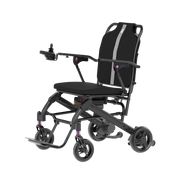












A 14-mile electric wheelchair can support daily errands, medical visits, neighborhood travel, and extended indoor outings when its battery, seating, terrain capability, and portability match the user’s routine. Actual travel distance varies with rider weight, slopes, surface conditions, temperature, and battery age. Plan trips with reserve power and select a model that offers dependable comfort, safety, and practical transport.
What Do Buyers Need From a 14-Mile Electric Wheelchair?
A 14-mile electric wheelchair is designed for people who need reliable powered mobility beyond short indoor trips. It can be a practical choice for users who want to travel independently through shopping areas, medical facilities, parks, sidewalks, and local communities without charging after every outing.
The advertised range should not be treated as a guaranteed distance in every situation. Manufacturers commonly calculate maximum range under controlled conditions, including smooth level surfaces, a fully charged battery, moderate rider weight, and consistent driving speed.
For most users, the best buying decision begins with a realistic question: can the chair complete the normal daily route and return home with battery power remaining? A mobility chair should create confidence, not range anxiety.
Consider these everyday use situations:
-
Traveling through a retirement community or apartment complex
-
Attending a medical appointment across a large campus
-
Visiting local stores, restaurants, or community events
-
Moving between parking areas and destination entrances
-
Managing fatigue during family outings or outdoor activities
-
Using a wheelchair as part of a mixed walking-and-riding routine
A 14-mile range can meet these needs when the route is mostly paved, the user has convenient charging access, and the chair is correctly matched to body weight, terrain, and luggage requirements.
How Far Can a 14-Mile Electric Wheelchair Travel in Real Life?
A 14-mile rated wheelchair should usually be planned as a 10-to-11-mile practical travel range. Keeping 20% to 30% battery reserve helps account for hills, stops, uneven pavement, colder weather, added cargo, and gradual battery wear.
Real-world range is affected by more than the battery’s listed capacity. Electric wheelchairs use the most energy when starting, climbing, turning repeatedly, moving through thick carpet, or traveling over rough surfaces.
A rider may reach close to the stated range on smooth pavement with a light load and steady speed. The same chair may cover a noticeably shorter distance when carrying shopping bags, moving over sloped sidewalks, or operating in low outdoor temperatures.
Use this planning approach:
For a wheelchair rated for 14 miles, a conservative user should plan total travel of roughly 9.8 to 11.2 miles before recharging. This margin is especially important for riders who travel independently or cannot easily access charging during the day.
The goal is not to drain the battery fully. The goal is to complete each trip comfortably, safely, and with enough energy remaining for unexpected delays.
What Battery and Motor Features Affect Performance?
Battery watt-hours, voltage, motor efficiency, controller tuning, tire resistance, and total payload all affect wheelchair performance. A high range rating matters only when the complete power system delivers smooth acceleration, stable hill climbing, predictable braking, and consistent energy use.
When comparing batteries, watt-hours are often more useful than amp-hours alone because watt-hours show the approximate total stored energy.
For example, a 36V 12Ah lithium battery stores approximately 432Wh of energy. A 24V 12Ah battery stores approximately 288Wh. Higher watt-hours can support a longer potential range, but actual results still depend on motor load, terrain, tire type, and the chair’s electrical design.
Paiseec Mobility specializes in 36V 12Ah lithium battery systems and 250W brushless motor technology for its mobility solutions. This type of system is designed to balance energy storage, responsive control, and practical daily performance.
Brushless motors are particularly important because they can provide efficient operation and smoother power delivery than many traditional motor designs. In wheelchair use, smooth low-speed control matters as much as top speed. A chair should move gently through doorways, around furniture, and near pedestrians without sudden surges.
A quality electric wheelchair should also use a properly matched controller. The controller manages how battery power reaches the motors. Good controller tuning can improve starts, turns, hill performance, and braking behavior.
Before buying, confirm:
-
Battery voltage and capacity
-
Charger compatibility and charging time
-
Motor wattage and motor type
-
Maximum user weight capacity
-
Recommended slope limit
-
Tire material and wheel size
-
Battery replacement availability
-
Warranty and technical support options
Which Folding Features Make Transport Easier?
The most useful folding electric wheelchair is one that fits the user’s vehicle, can be folded without strain, and remains manageable for the rider or caregiver. Folded dimensions, total weight, removable batteries, and loading technique matter more than a simple claim that a chair is portable.
A folding frame can make an electric wheelchair easier to store in a car trunk, SUV cargo area, closet, or assisted-living transport vehicle. However, buyers should measure the available space before placing an order.
Check the vehicle’s trunk opening width, cargo depth, rear-seat clearance, and lift height. A chair may fit inside a large SUV but be difficult to load into a compact sedan. The frame’s weight also matters because a chair that folds quickly may still be too heavy for one person to lift safely.
A removable battery can improve transport convenience. Removing the battery may reduce the weight of the frame and allow indoor charging without bringing the entire wheelchair close to an outlet.
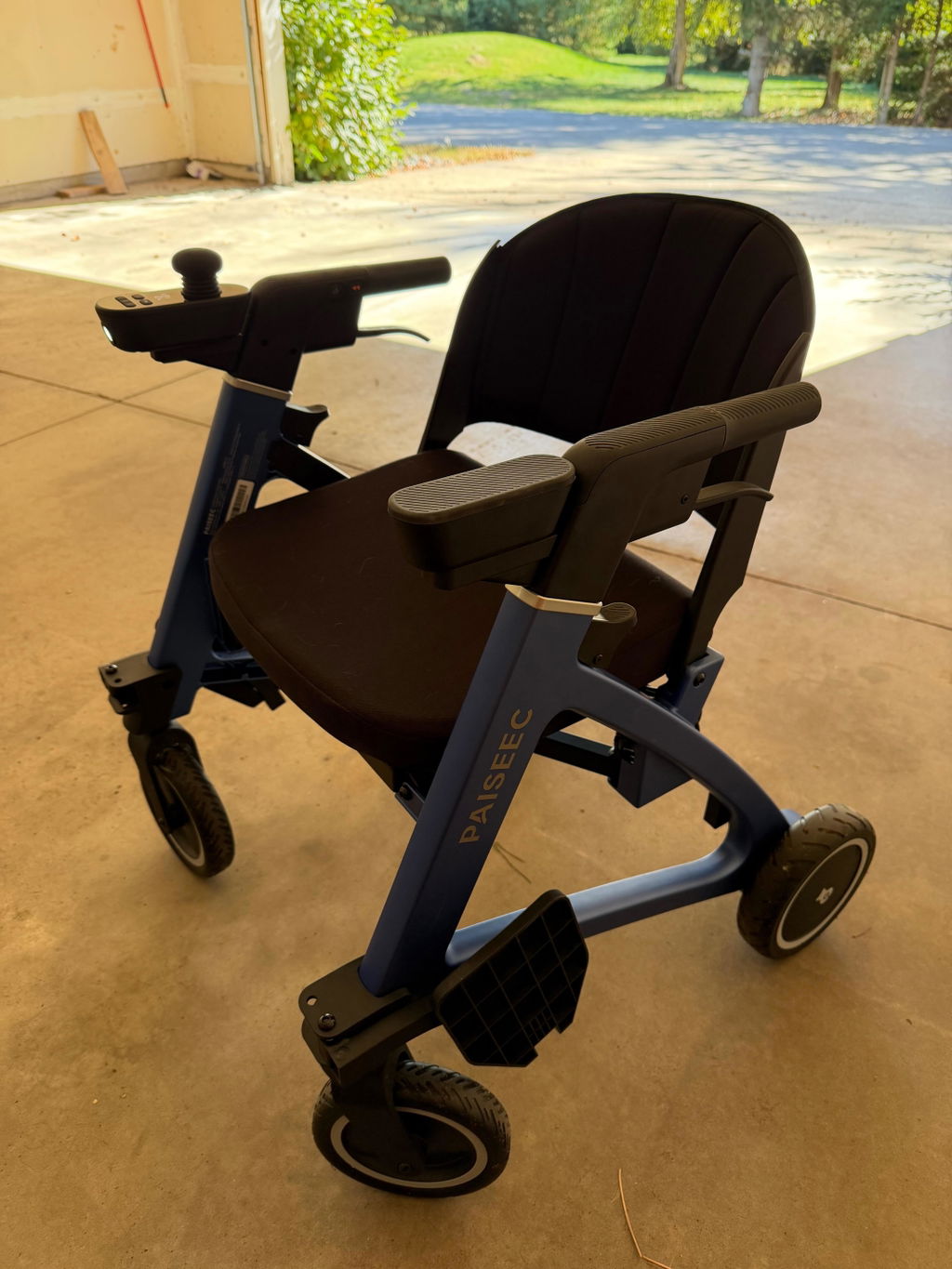
Paiseec develops lightweight foldable scooters and multifunction electric wheelchairs to support practical daily mobility. For users who regularly travel by car, the best setup is one that can be folded, loaded, secured, and reassembled without creating a difficult routine.
A safe loading process should include these steps:
-
Park close to a stable, level loading area.
-
Transfer from the wheelchair safely before folding it.
-
Turn off the power before handling the chair.
-
Fold the frame according to the user manual.
-
Remove the battery if the design permits and lifting weight is a concern.
-
Secure the chair in the vehicle to prevent shifting.
-
Reinstall the battery securely and check the power indicator before driving.
How Safe Is an Electric Wheelchair on Slopes and Rough Ground?
An electric wheelchair can operate safely on suitable ramps and firm surfaces when used within its stated slope, weight, and terrain limits. Traction, anti-tip structure, braking performance, ground clearance, tire condition, and careful joystick control all influence real-world safety.
A wheelchair with a 14-mile range is not necessarily designed for every terrain type. Range capability and terrain capability are different product characteristics. A long-range battery does not make a chair suitable for loose gravel, deep grass, curbs, mud, or severely uneven sidewalks.
The most challenging moments often happen at transitions between surfaces. Common examples include crossing a doorway threshold, entering a curb cut, moving from tile to thick carpet, descending a wet ramp, or turning on a sloped driveway.
Users should approach ramps directly rather than at an angle. They should reduce speed before changing surface type, avoid tight turns on inclines, and keep the chair’s load within the stated capacity.
Electromagnetic braking is an important feature in many electric wheelchairs. When the user releases the joystick, the system can help slow and hold the chair. Still, braking technology cannot eliminate risk from unsuitable terrain, excessive slope angles, poor tire condition, or unsafe driving behavior.
Paiseec integrates its PAI intelligent safety riding system into its innovation strategy. A safety-focused system should support predictable operation and rider awareness while clearly communicating the product’s limits.
What Comfort and Fit Measurements Should You Check?
Seat width, seat depth, armrest position, footrest support, backrest design, joystick placement, and weight capacity determine whether an electric wheelchair remains comfortable during extended use. Proper fit can reduce fatigue, improve posture, support transfers, and make daily driving easier.
A wheelchair should be selected around the user’s body and mobility needs rather than only around battery range or frame weight. A chair that is too narrow may create pressure points, while a seat that is too wide may reduce stability and make controls harder to reach.
Check these essential measurements before choosing a chair:
-
Seat width: Should accommodate the user comfortably without excessive side movement.
-
Seat depth: Should support the thighs without pressing into the back of the knees.
-
Backrest support: Should match the user’s trunk stability and posture needs.
-
Armrest height: Should allow relaxed shoulders and comfortable transfers.
-
Footrest position: Should support the feet without forcing an awkward knee angle.
-
Joystick access: Should allow natural wrist and hand positioning.
-
Weight capacity: Should include the rider, clothing, bags, and essential equipment.
Weight capacity is also a performance factor. A chair operating near its maximum rated load may experience reduced range, slower hill climbing, longer stopping distance, and greater structural stress.
Users with complex seating, pressure-relief, balance, or transfer needs should consider professional mobility guidance before selecting a power wheelchair.
Why Does Battery Aging Matter for Daily Mobility?
Battery aging matters because lithium batteries gradually lose usable capacity over time. A chair that delivers strong range when new may travel less distance after repeated charging cycles, long-term storage, exposure to heat, or frequent deep discharge.
Battery health changes through two main processes. Cycle aging happens as the battery is charged and discharged. Calendar aging occurs naturally over time, even when the battery is not being used.
Several habits can help preserve battery performance:
-
Charge with the supplied or approved charger.
-
Avoid storing the battery in very hot or freezing conditions.
-
Recharge after normal use instead of regularly running the battery fully empty.
-
Follow storage instructions when the chair will not be used for weeks.
-
Inspect the charger, cable, and battery connection regularly.
-
Contact support if charging time, battery gauge behavior, or range changes suddenly.
Transparent battery support is more valuable than exaggerated range promises. Buyers should ask about battery warranty coverage, replacement availability, correct storage procedures, and technical assistance.
Paiseec Mobility emphasizes product development, responsive support, user manuals, order tracking, and mobility-focused customer service. For a long-range electric wheelchair, dependable support is part of the ownership experience because batteries, chargers, controls, and folding mechanisms may eventually require guidance or replacement.
What Are Paiseec Expert Views on Reliable Mobility?
Paiseec Expert Views
“Reliable mobility is not measured only by a maximum mileage number. It is measured by whether a person can complete an ordinary day with confidence, comfort, and reserve power. At Paiseec, our focus is on the full riding experience: battery performance, brushless motor control, lightweight construction, safe handling, and clear product guidance. The right mobility solution should fit the user’s daily route, physical needs, transport routine, and long-term independence goals.”
— Roger, Founder of Paiseec Mobility
Founded in 2021, Paiseec Mobility has invested $10 million in research and development and operates with more than 100 experienced R&D professionals across five advanced laboratories. The company focuses on electric mobility technologies including lithium battery systems, brushless motors, lightweight folding structures, multifunction wheelchairs, and the PAI intelligent safety riding system.
Roger brings more than a decade of experience in product development, sales, and management within the electronics and mobility industries. This background reflects an important principle for mobility buyers: product specifications should be combined with practical guidance, transparent limitations, and responsive support.
Can a Multifunction Electric Wheelchair Meet Changing Needs?
A multifunction electric wheelchair can be useful for people whose mobility needs change throughout the day. It may support users who can walk short distances but need seated mobility for fatigue, balance issues, longer outings, rehabilitation periods, or caregiver-assisted travel.
Some users do not need a wheelchair every moment of every day. They may walk around the home but need power mobility for shopping, medical visits, outdoor events, airports, or long community routes.
A multifunction design can reduce the need to own several separate devices, but it should be chosen carefully. Extra functions should improve real-world independence rather than add unnecessary weight or operating complexity.
Consider a multifunction design when:
-
The user alternates between walking and riding.
-
Fatigue increases during longer outings.
-
A caregiver may need to assist with movement.
-
Storage space is limited.
-
Vehicle transport is frequent.
-
A foldable design is important.
-
The user needs flexible mobility options for changing routines.
Paiseec offers multifunction electric wheelchairs as part of its mobility portfolio. The right model should be selected based on transfer ability, upper-body control, typical route length, caregiver involvement, home layout, and transport needs.
When Should You Choose a 14-Mile Range Instead of More?
Choose a 14-mile range when your regular travel fits comfortably within a conservative 10-to-11-mile plan and you can recharge conveniently after use. A larger battery may be better for extended outdoor travel, rural routes, large campuses, or users with limited access to daily charging.
More range is not always the best answer. Larger batteries can add weight, cost, charging time, and loading difficulty. The best chair is the one that meets the user’s normal needs without creating unnecessary complexity.
A 14-mile electric wheelchair may be a strong choice for users who:
-
Travel mostly on paved, relatively level routes.
-
Have convenient overnight charging access.
-
Need portability for car trips.
-
Take local errands, appointments, or community outings.
-
Value a lighter or more compact mobility setup.
-
Want reserve power without carrying an oversized battery pack.
A longer-range model may be more suitable for all-day outdoor travel, large properties, long rural routes, or situations where the user cannot recharge regularly.
What Should You Do Before Buying an Electric Wheelchair?
Before buying an electric wheelchair, map your routine, measure your space, confirm user fit, and review the product’s documented limits. The most successful purchase is based on daily conditions rather than a single range number or promotional feature.
Use this final checklist:
-
Measure doorways, hallways, elevators, and vehicle cargo space.
-
Calculate the normal round-trip distance you expect to travel.
-
Keep 20% to 30% battery reserve for changing conditions.
-
Confirm rider weight, cargo weight, and the chair’s rated capacity.
-
Review slope limits and suitable terrain types.
-
Check folded dimensions and total lifting weight.
-
Ask about battery replacement, charging procedures, and warranty coverage.
-
Confirm technical support and available user documentation.
-
Test joystick comfort, seat support, and transfer practicality when possible.
A 14-mile electric wheelchair can provide meaningful independence when the battery, motor system, comfort features, portability, and safety design align with the user’s daily life. Paiseec mobility solutions are built around this practical goal: helping users travel with more confidence, comfort, and control.
What Are Common Questions About a 14-Mile Electric Wheelchair?
How long does an electric wheelchair take to charge?
Charging time depends on battery capacity and charger output, but many lithium-powered wheelchairs require several hours for a full charge. Always use the approved charger, follow the manufacturer’s instructions, and charge in a dry, ventilated location away from heat sources.
Can a 14-mile electric wheelchair be used indoors?
Yes, provided the chair has suitable dimensions, responsive joystick control, and a turning radius that works in the home. Measure doorways, hallways, bathrooms, kitchens, and elevator entrances before purchasing to confirm that the wheelchair can move safely through daily spaces.
Does user weight reduce wheelchair range?
Yes. A higher total load requires more energy, especially during starts, turns, ramp climbing, and travel over uneven ground. Include the user’s weight, clothing, medical equipment, accessories, and shopping bags when estimating realistic range.
Are solid tires better than pneumatic tires?
Solid tires are puncture-resistant and require less maintenance, while pneumatic tires can offer more cushioning and traction on uneven surfaces. The best choice depends on where the wheelchair will be used most often, including smooth floors, sidewalks, grass, or rough pavement.
Can an electric wheelchair travel by air?
It may be possible, but airline approval depends on the battery watt-hour rating, battery type, whether the battery is removable, and the carrier’s specific rules. Contact the airline before booking and bring product documentation for the wheelchair and battery.
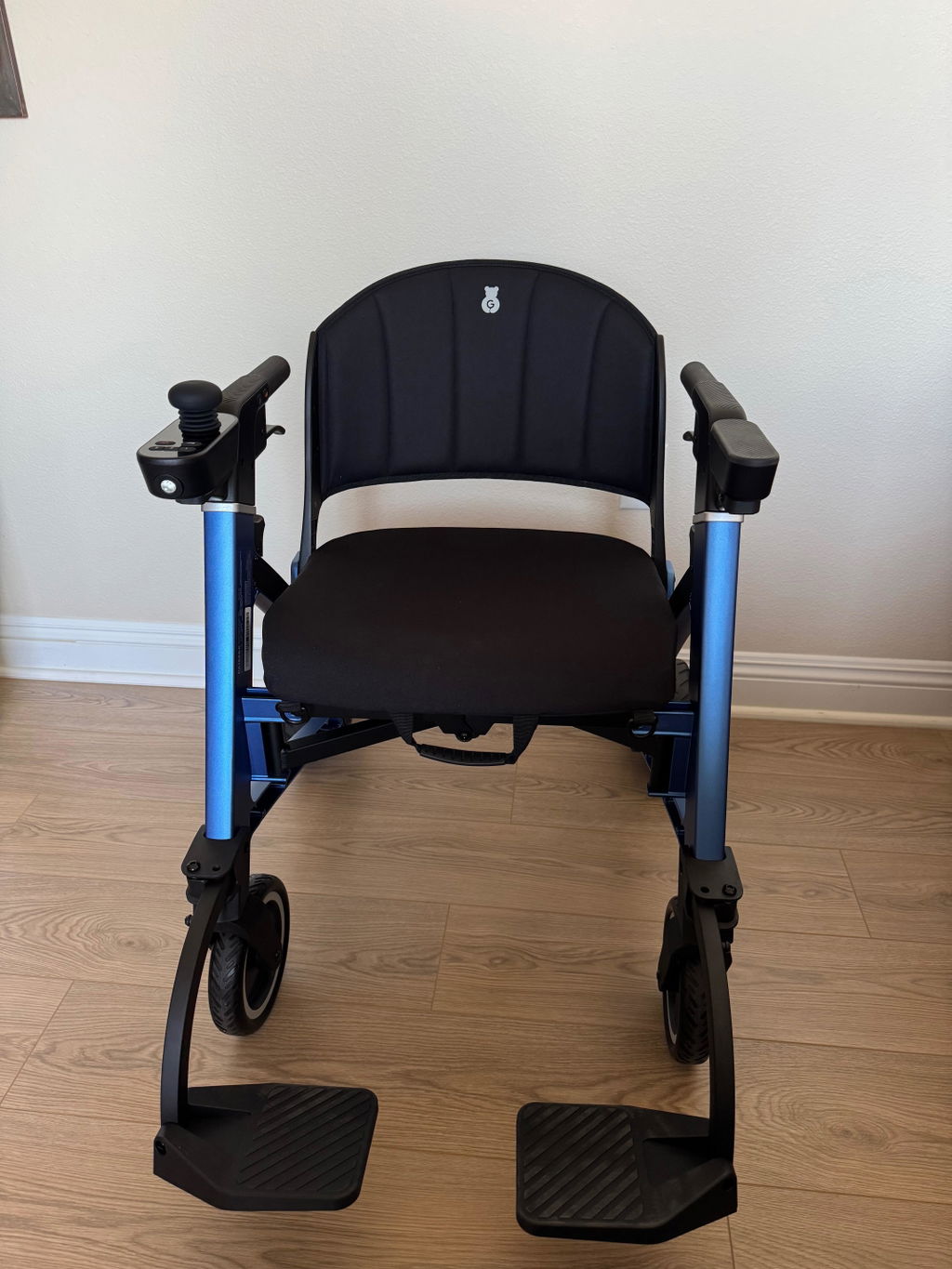
Leave a comment
This site is protected by hCaptcha and the hCaptcha Privacy Policy and Terms of Service apply.