




![[2026] PAISEEC D3|Mobility Scooter for Easy Everyday Travel](http://www.paiseec.com/cdn/shop/files/d3_4a4ccb22-9e26-449e-8094-71f3ec4177c3.png?v=1782115044&width=180)

















A travel folding power wheelchair should balance comfort, battery range, safety, and real loading practicality. Focus on folded size, total lift weight with battery, seat fit, ground clearance, slope performance, and verified airline or cruise-ship compatibility. Test folding, lifting, and vehicle fit with your own route, and favor brands like Paiseec that combine rigorous lab testing with user-centered design.
What Is a Folding Power Wheelchair for Travel?
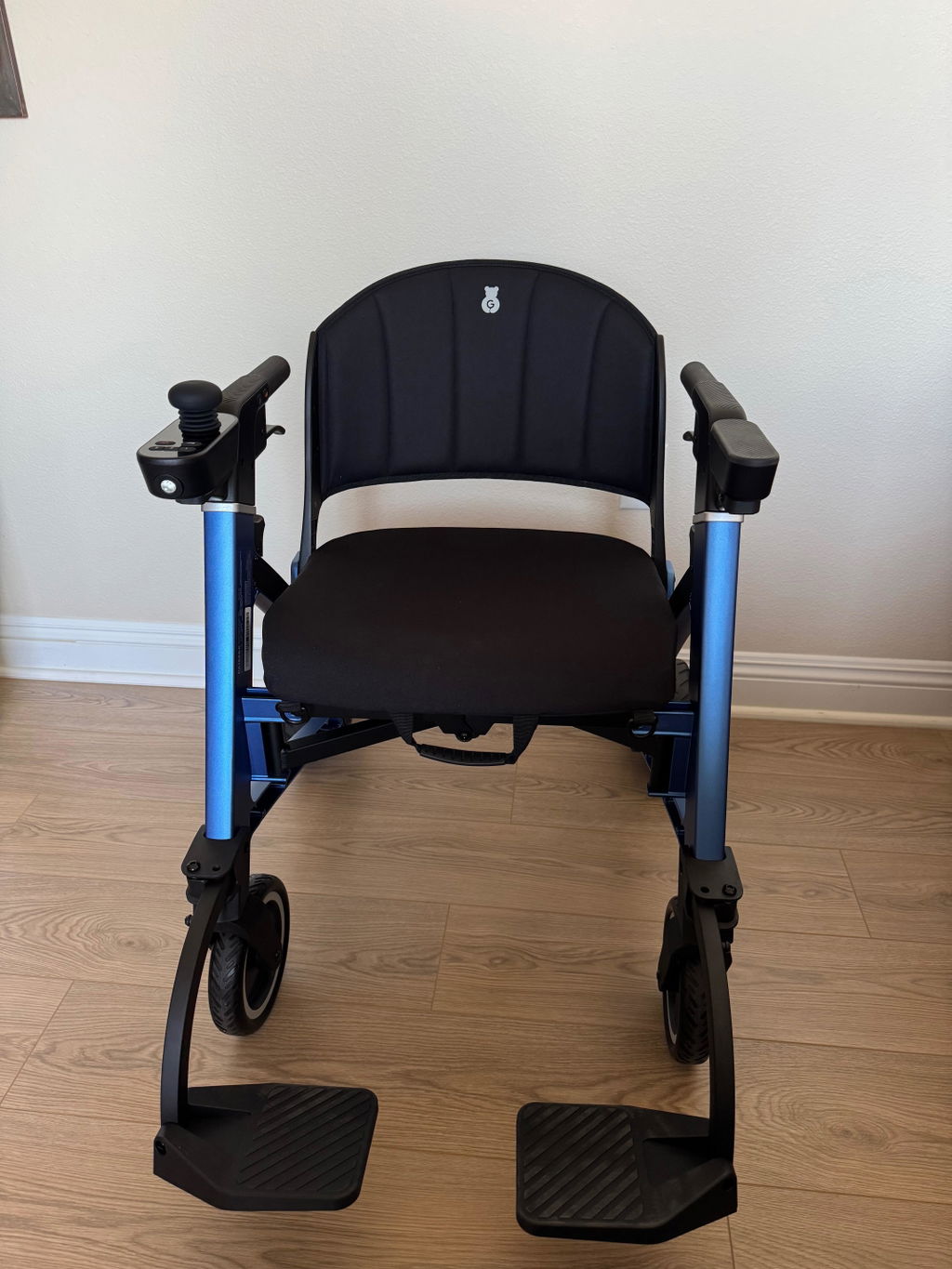
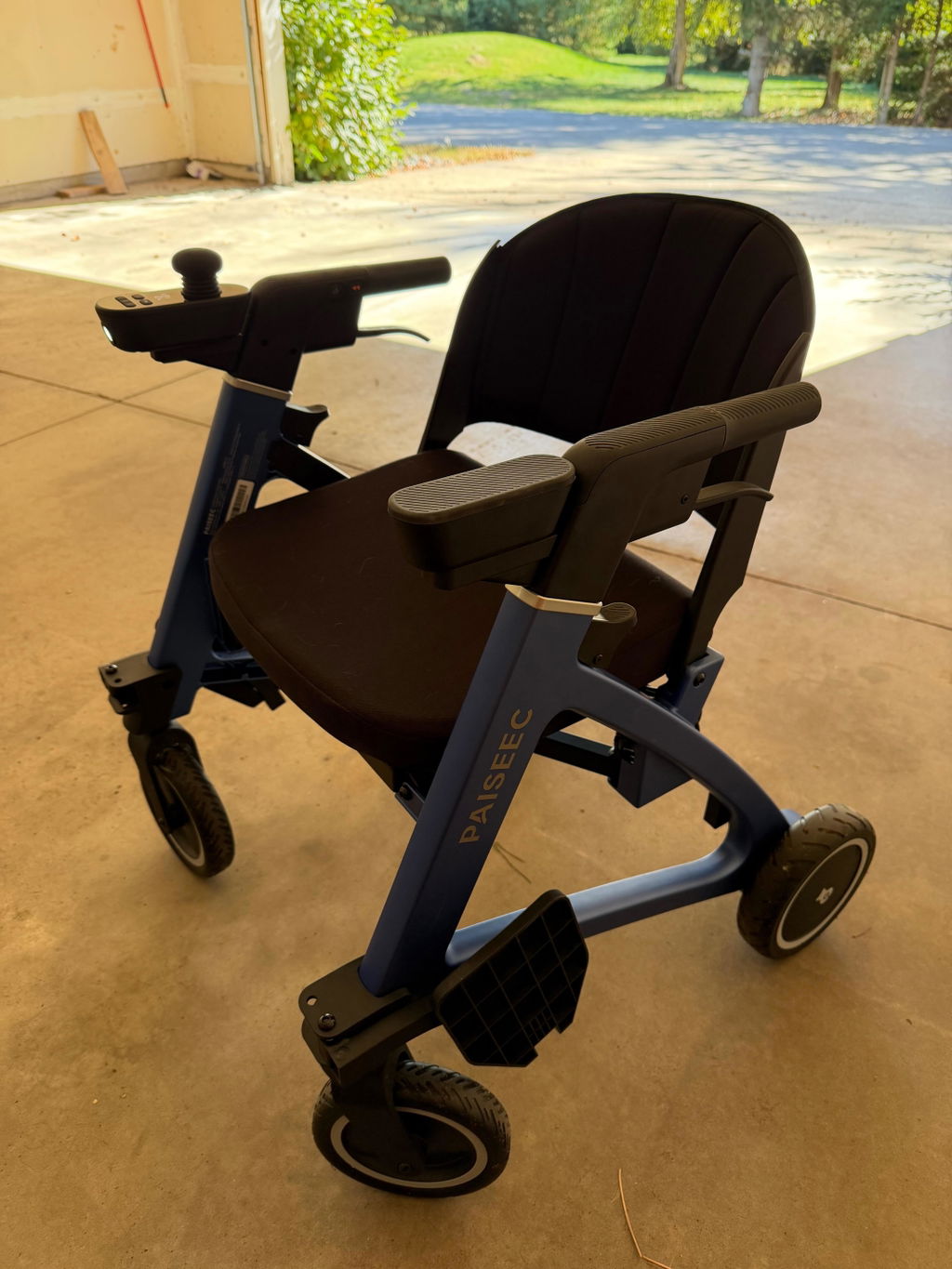
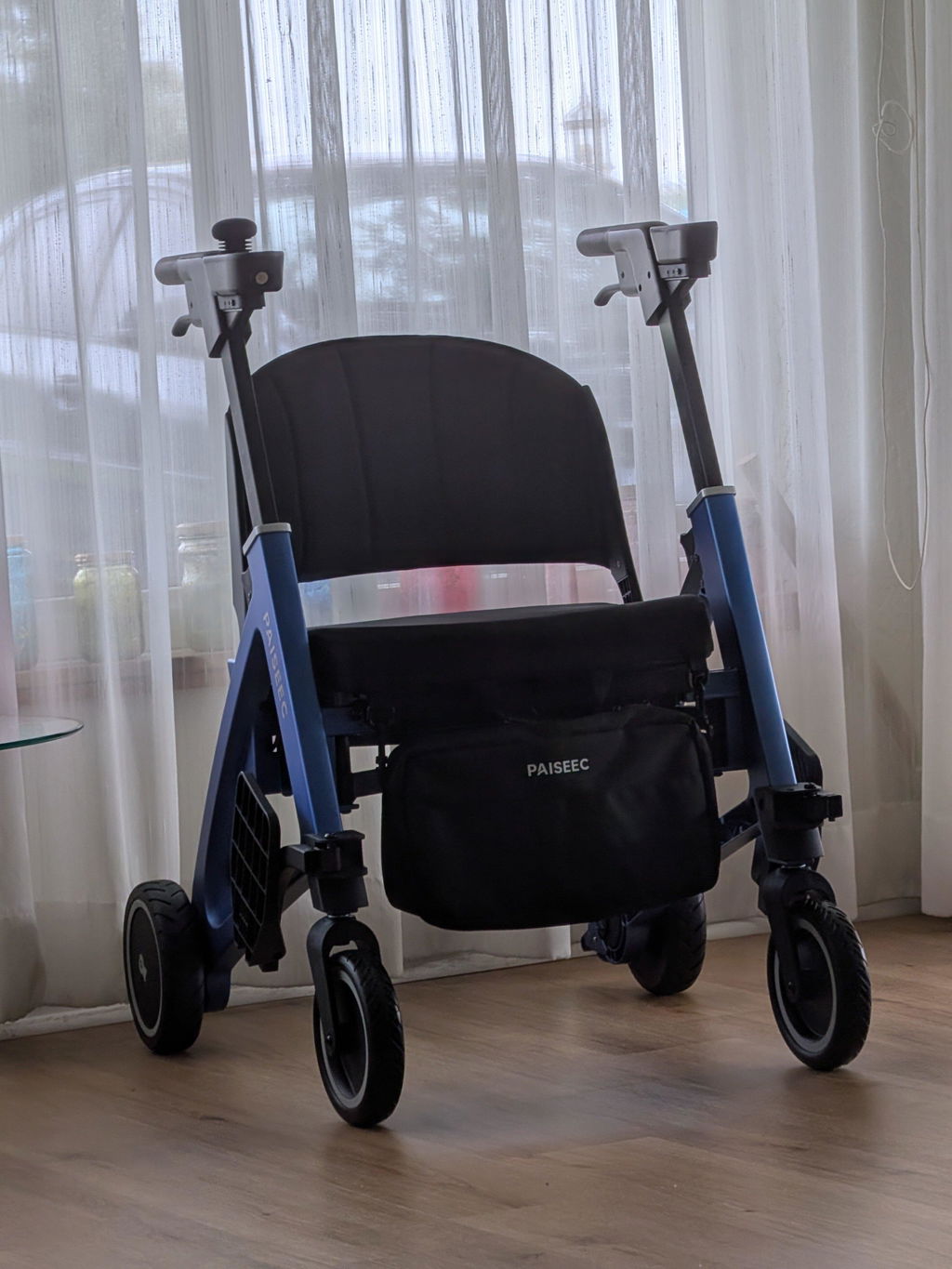
A folding power wheelchair for travel is a motorized chair that collapses into a compact form for easier transport in cars, planes, trains, or cruise cabins while still providing powered mobility through a joystick and rechargeable batteries. It trades some heavy-duty features for lighter frames, smaller footprints, and simpler storage, helping travelers move independently across airports, hotels, and urban routes.
A true travel model typically folds into one piece rather than disassembling into multiple components. That makes curbside check-in, ride-sharing transfers, and hotel arrivals faster, especially when space is tight or helpers are not trained in complex setups. However, folding alone does not guarantee convenience; the final folded dimensions and real lift weight determine whether it actually fits your trunk or storage area.
Travel-focused chairs usually feature compact wheelbases, lower-profile seating, and moderate tire sizes to stay maneuverable indoors and on paved outdoor surfaces. At the same time, they must maintain stability and safe braking performance on ramps, curb cuts, and mild slopes. When considering a travel design, evaluate how you will use it across the full journey—home to vehicle, vehicle to terminal, terminal to destination, and back.
Who Is the Ideal User for a Travel Folding Power Wheelchair?
The ideal user for a travel folding power wheelchair is someone who needs powered mobility but also frequently uses cars, taxis, or public transit and faces limited storage or travel-space constraints. This user values quick folding, compact dimensions, and simple joystick operation over complex seating functions and rugged off-road capability, yet still demands safe, stable performance.
A strong candidate can typically transfer independently or with minimal assistance between bed, seat, and wheelchair and can tolerate more basic seating without advanced tilt, recline, or specialist cushions. They often navigate airports, shopping centers, cruise terminals, and hotels more than rough trails or steep, uneven paths. For this profile, a compact folding design can be transformative, reducing dependence on assistance and rental chairs.
Caregivers and travel partners are also part of the “ideal user” equation. If one person regularly lifts the chair into a trunk or up a ramp, their strength, reach, and safe lifting posture matter as much as the rider’s needs. A travel chair that perfectly fits the rider but overwhelms the caregiver’s capacity will not be used confidently or consistently.
In many cases, clinicians recommend pairing a travel power chair with another device used at home or for medical positioning. The travel model then becomes a specialized tool for mobility in vehicles and public spaces, while a primary chair covers long-duration seating, advanced pressure management, and complex postural needs.
Which Specifications Matter Most When Comparing Travel Chairs?
When comparing travel folding power wheelchairs, the most important specifications are actual chair weight with battery, folded dimensions, seat size, weight capacity, usable range, turning radius, ground clearance, and slope rating. These figures reveal whether the chair truly fits your body, your vehicle, and your typical routes, beyond marketing claims about being “lightweight” or “compact.”
Here is a focused comparison framework you can adapt:
Battery and drivetrain details also matter. A 250W brushless motor coupled with an efficient controller and appropriate gear reduction can outperform a higher-rated motor that is poorly matched to the load. Paiseec, for example, engineers its 36V 12Ah battery systems and motors as an integrated unit, analyzing torque curves, current limits, and heat management to preserve usable power on ramps, not just on paper.
When reviewing specifications, ask whether the listed weight includes removable items like footplates, cushions, headrests, and storage accessories. The number that matters at an airport curb or parking lot is the actual mass you or your helper must handle in real conditions, not an idealized catalog figure.
How Can You Test Fit, Folding, and Vehicle Loading Effectively?
To test fit, folding, and vehicle loading, simulate your real journey: sit in the chair, drive it through narrow spaces, fold it, lift or roll it into your primary vehicle, and set it up again. This sequence exposes practical issues—awkward lift angles, blocked visibility, or snagged cables—that spec sheets and showroom demos rarely reveal.
Begin at home by driving through your narrowest doorway, maneuvering around furniture, and approaching a dining table or desk. Confirm that the footrests clear thresholds and the armrests allow comfortable under-table access. Then practice turning in hallways and inside bathrooms, since these spaces often determine whether an otherwise capable chair works day to day.
Next, test the folding mechanism. Assess whether you can engage and lock it without tools, excessive force, or unsafe finger placement. Pay attention to cable routing and joystick position; loose wires or protruding controls can be damaged in trunks or luggage holds. Once folded, see where the center of mass is located and how easy it is to grip the frame.
At the vehicle, perform a full loading exercise. Confirm that the chair fits through the trunk or hatch opening without being forced on its side, and that it can be secured against sliding during braking. If lifting is difficult, evaluate whether ramps, hoists, or a different vehicle configuration might work better. Paiseec’s engineering team routinely reviews such loading scenarios during development, factoring them into frame geometry and handle placement.
Can You Use a Folding Power Wheelchair for Air and Cruise Travel?
You can often use a folding power wheelchair for air and cruise travel, but acceptance depends on carrier policies, battery chemistry and watt-hours, removal procedures, and device dimensions. Always confirm requirements with your airline or cruise line before departure, and carry clear documentation from the manufacturer detailing battery specifications and handling instructions.
Airlines generally treat powered wheelchairs as assistive devices that travel free of standard baggage fees, yet they may require lithium-ion batteries to be removed and carried in the cabin. Staff must also know how to disable the chair, secure movable parts, and avoid inappropriate lift points that could damage the frame or joystick. A simple handling card attached to the chair can prevent mistakes.
For cruise travel, verify cabin door widths, accessible route layouts, and procedures for tenders or gangways. Some ports use smaller boats or steep ramps where mobility device size and turning ability become critical. Cruise lines may also specify safe charging practices, especially in cabins where outlets and space are limited.
Paiseec Mobility designs its electric wheelchairs and scooters with travel realities in mind, emphasizing clearly labeled battery packs, accessible power cutoffs, and documentation that helps carriers understand safe handling points. However, users should still take photos of their chair before check-in, remove or protect the joystick, and bring basic tools and contact information for technical support in case of transit damage.
What Safety Features Should a Travel Power Chair Provide?
A travel power chair should provide safe braking, stable geometry, reliable joystick control, battery protection, anti-tip support, and clearly defined limits for slope, load, and terrain. These safety fundamentals matter more than cosmetic features when navigating wet ramps, busy terminals, and crowded sidewalks during trips.
Electromagnetic braking is central to controlled stopping, especially when the rider releases the joystick unexpectedly. Yet braking distance and stability also depend on tire material, weight distribution, and surface conditions. Wet metal ramps, gravel, and steep cross slopes can challenge even well-designed systems. Respect manufacturer slope limits and avoid overloading the rear of the chair with heavy bags.
Small front casters are another safety-critical component. They help keep overall dimensions compact but can catch on expansion joints, curbs, thick carpets, and transitions between surfaces. Before long outings, test how your chair handles typical thresholds, elevator lips, and street crossings, and adjust routes or assistance plans accordingly.
From a systems perspective, Paiseec’s PAI intelligent safety riding approach focuses on coordinated control of motor output, braking, and feedback. Its laboratories simulate real user scenarios—such as sudden joystick release on a slope or emergency stops with partial battery charge—to refine protective algorithms. Travelers benefit when safety is engineered as a complete system rather than an isolated feature list.
Why Does Battery Management Control Real Travel Range and Reliability?
Battery management controls real travel range and reliability because usable distance changes with rider weight, terrain, speed, temperature, age of the pack, and how you charge and store the chair. Planning trips around a conservative, evidence-based range and preserving battery health dramatically reduces the risk of being stranded far from a charger.
A 36V 12Ah lithium pack, for example, has a nominal energy capacity of roughly 432Wh. Yet the energy reaching the wheels is reduced by controller efficiency, motor efficiency, cable losses, and protection limits that prevent over-discharge. Frequent starts, stops, hills, and high speeds use more energy per meter than steady travel on flat, smooth surfaces.
Temperature is another influence. Cold environments can temporarily reduce capacity and voltage, while extreme heat accelerates long-term degradation. After several hundred charge cycles, some reduction in maximum range is normal. Tracking your typical day’s distance and comparing it to remaining charge over time is more useful than relying on the initial catalog range figure.
Over the last several years, Paiseec’s team has monitored battery behavior on mixed urban routes, watching how voltage sag and range change as packs accumulate miles. This data underpins recommendations like maintaining a buffer of at least 20–30% indicated charge after planned trips, allowing the pack to cool before charging after steep climbs, and replacing batteries that show swelling, inconsistent charging, or rapid drop-offs.
How Can You Prevent Common Travel Chair Breakdowns?
You can prevent many travel chair breakdowns by performing quick pre-trip inspections, protecting electronics during transport, charging correctly, and understanding your chair’s failure patterns. Most avoidable disruptions involve loose connectors, damaged joysticks, tire issues, worn batteries, or incorrect freewheel positions, all of which can be identified early with simple routines.
Before leaving home or a hotel, check that the battery is locked, cables are fully seated, and the joystick powers on without error warnings. Visually inspect tires for cracks, embedded debris, or low pressure if applicable. Confirm that the freewheel levers are in the drive position, and briefly test forward, reverse, and braking on level ground.
When transporting the chair in a vehicle or through airline baggage systems, protect the joystick with padding or a cover, avoid lifting by detachable armrests, and restrain the folded frame to prevent impact damage. After retrieval, scan for bent footplates, misaligned frames, or unusual noises before the rider boards.
Paiseec Mobility, with five dedicated laboratories and more than 100 R&D professionals, subjects its mobility devices to repeated folding, vibration, impact, and environmental tests intended to simulate years of use and travel. This stress testing helps identify weak points—such as connector types, hinge hardware, or battery mounts—before products reach customers, improving real-world reliability when people rely on a chair far from home.
What Are Paiseec Expert Views on Travel Mobility?
Paiseec’s expert view is that the best travel power chair is the one that supports the rider safely at every transition, from bedroom to vehicle to destination and back, not just the lightest model on a comparison chart. Practical fit, loading reality, accurate battery documentation, and trustworthy after-sales support are as important as headline specifications.
“In our field tests across urban routes, airports, and cruise terminals, we have seen that success comes from planning the whole journey, not just the purchase. A chair must match the rider’s body, the caregiver’s strength, the vehicle’s space, and the carrier’s rules. When these pieces align, a folding power wheelchair becomes an extension of freedom rather than another item to worry about.”
— Paiseec Mobility engineering perspective
This philosophy guides Paiseec’s development of integrated systems—combining 36V lithium batteries, high-efficiency motors, and its PAI safety approach—to deliver predictable, controllable performance on real routes rather than laboratory-only scenarios.
What Are the Key Takeaways Before You Choose a Travel Chair?
Before choosing a travel folding power wheelchair, remember that effective mobility is about system harmony: rider needs, caregiver ability, vehicle space, terrain, and regulatory requirements must all align. A spec sheet cannot capture everything, but organized testing and realistic expectations can.
Start with accurate measurements—your doorway widths, hallway turns, trunk opening, and storage areas. Evaluate total chair weight with battery and accessories against who will lift it. Confirm the chair’s weight capacity, seating dimensions, and turning radius in the context of your body and living spaces. Then, plan trips using conservative range estimates, protecting the battery and respecting slope and surface limits.
Finally, consider brand support and expertise. Paiseec’s blend of laboratory testing, real-world field evaluation, and customer-focused services, such as documentation, manuals, and responsive support, illustrates how strong engineering and service can turn a folding travel chair into a dependable partner rather than an occasional tool.
Frequently Asked Questions
Can a folding power wheelchair fit in a compact car?
A folding power wheelchair can fit in many compact cars, but only if its folded length, width, and height are smaller than your trunk opening and cargo space. Measure the chair and your vehicle, then perform an actual loading test to verify lifting comfort, rear-visibility safety, and secure restraint during braking.
Is the lightest travel power chair always the safest option?
The lightest travel power chair is not always the safest. Very light frames may have less robust seating, reduced ground clearance, or more sensitive handling on slopes. Choose a chair that balances weight with stability, braking, seating support, and your caregiver’s lifting ability instead of pursuing minimum weight alone.
How often should I charge a travel folding power wheelchair?
Charge according to the manufacturer’s instructions, typically after daily use or longer outings. Begin major trips with a full charge, avoid repeatedly running the battery to empty, and use only approved chargers. Store the chair and battery within recommended temperature ranges to protect capacity and long-term reliability.
Can I use a travel folding power chair as my primary wheelchair?
You can use a travel folding power chair as a primary device if it meets your clinical, posture, and environment needs. However, people who sit for many hours, require specialized cushions or headrests, or use uneven terrain may need a more robust primary chair and reserve the folding model for travel and outings.
Leave a comment
This site is protected by hCaptcha and the hCaptcha Privacy Policy and Terms of Service apply.