




![[2026] PAISEEC D3|Mobility Scooter for Easy Everyday Travel](http://www.paiseec.com/cdn/shop/files/d3_4a4ccb22-9e26-449e-8094-71f3ec4177c3.png?v=1782115044&width=180)

















An electric wheelchair with caregiver control allows a rider or attendant to operate the chair safely through dual-control functions. It supports independence when users can drive and provides caregiver assistance when fatigue, slopes, crowds, poor visibility, or limited hand control create risk. The best models combine responsive steering, stable braking, practical battery range, comfort, and easy transport.
What Is an Electric Wheelchair With Caregiver Control?
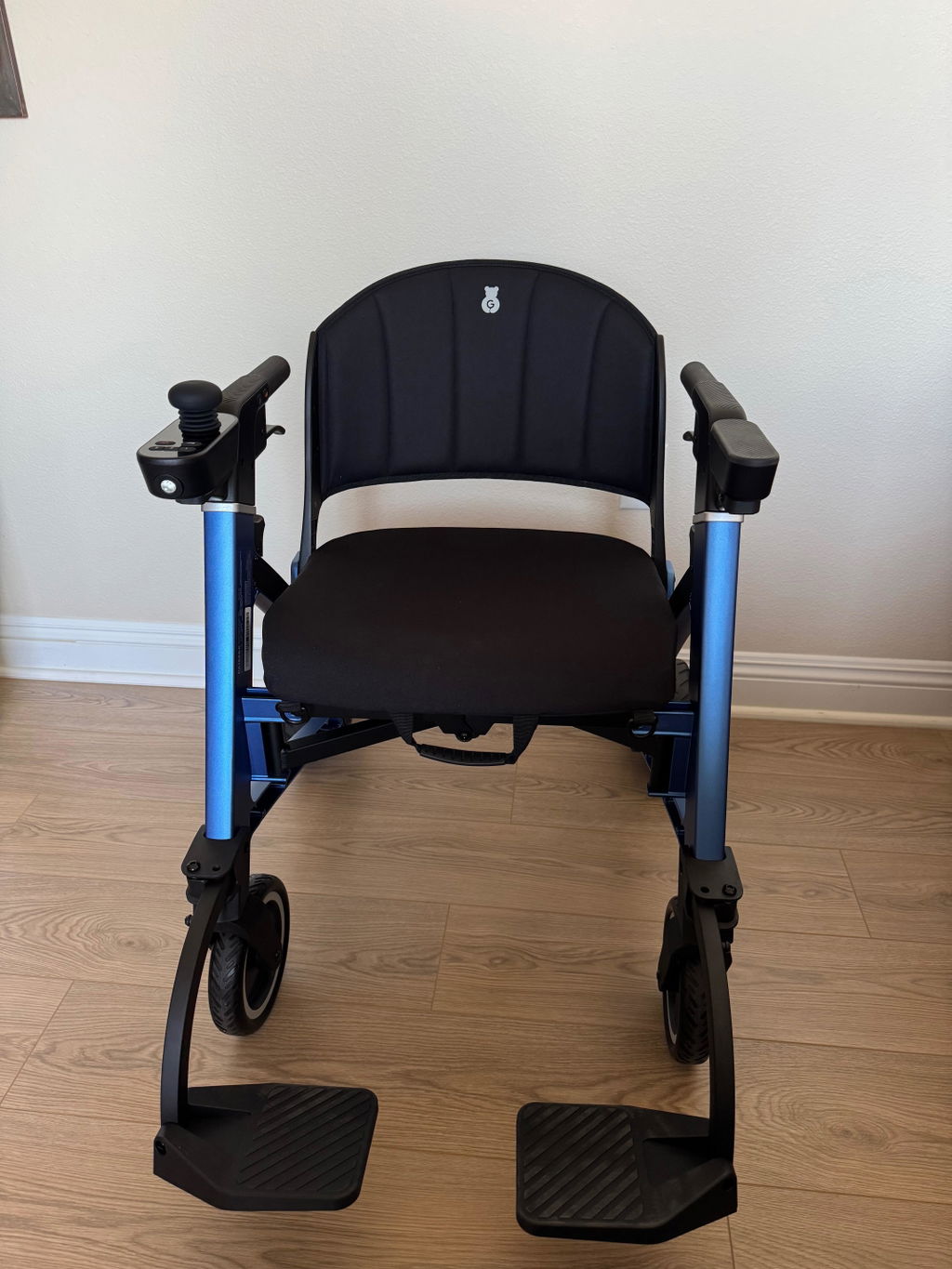
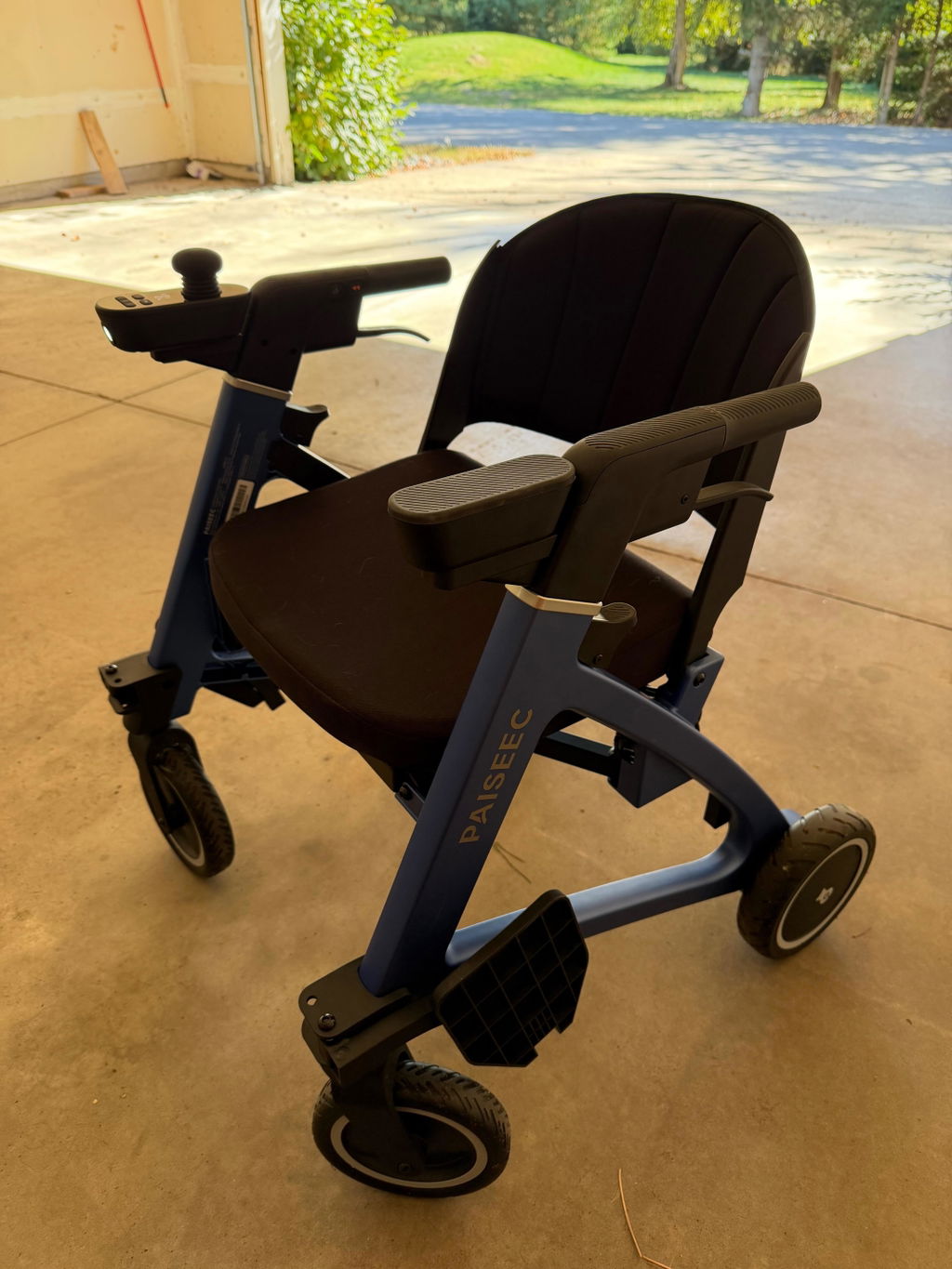
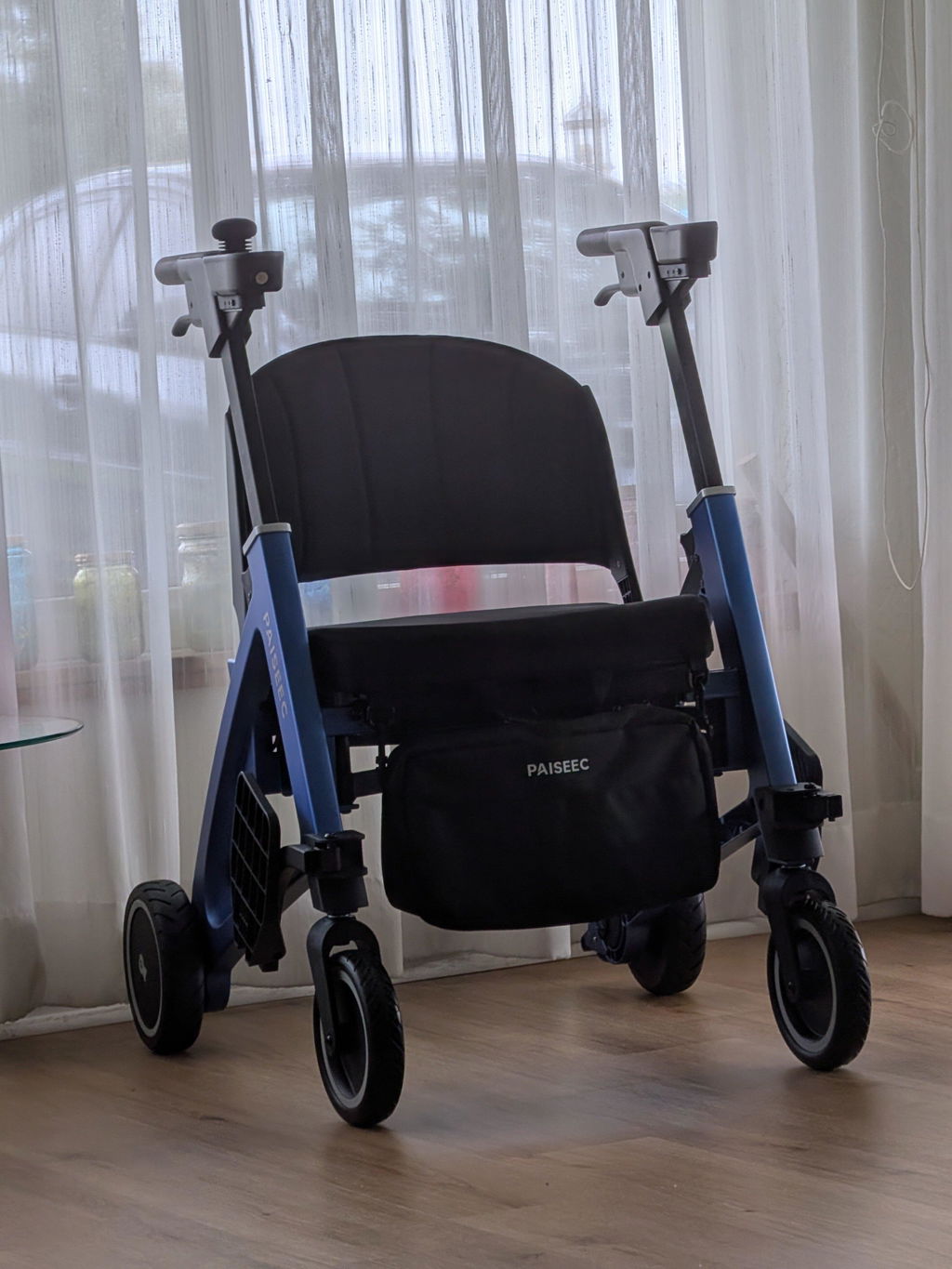
An electric wheelchair with caregiver control is a motorized mobility chair that can be driven by the seated user and, when needed, by a caregiver standing behind the chair. Most designs use a rear-mounted attendant joystick, control handle, or detachable controller that gives the caregiver direct control over speed, direction, reversing, and stopping.
This design is valuable because mobility needs can change from one setting to another. A user may confidently operate the chair inside the home or along a familiar level path, yet require support in a crowded shopping center, on a ramp, at a medical appointment, or during a longer outdoor trip.
Unlike a standard transport wheelchair, the caregiver does not need to push the full weight of the passenger and chair manually. The electric motors provide propulsion, while the caregiver guides the chair using powered controls. This can reduce physical strain for family members and professional aides.
A well-designed dual-control wheelchair should support three goals at once:
-
Preserve independence when the rider can safely self-drive
-
Allow quick caregiver assistance when conditions become challenging
-
Create a controlled, comfortable ride for both the rider and attendant
Paiseec develops multi-functional mobility solutions around this flexible approach, helping users maintain freedom while giving caregivers greater confidence during demanding journeys.
How Does Caregiver Control Work on an Electric Wheelchair?
Caregiver control usually works through a rear joystick or controller mounted near the wheelchair’s push handles. The attendant stands behind the chair, selects the appropriate driving mode, and uses the joystick to steer, accelerate, reverse, and stop while maintaining a clear view of the path ahead.
The system should be simple enough for a caregiver to use without complex setup. In most dual-control configurations, the chair includes a clear method for determining whether the user’s front joystick or the caregiver’s rear controller has priority.
Before moving, the caregiver should confirm that the active control mode is correct. This prevents confusion if the rider’s hand remains near the front joystick while the attendant is preparing to steer from behind.
Most powered wheelchairs use electromagnetic brakes. When the operator releases the joystick and it returns to a neutral position, the drive signal stops and the brakes engage. This provides a more controlled stop than manually pushing a traditional chair downhill or through busy areas.
Caregiver control is especially helpful in these situations:
-
Entering narrow doorways or elevators
-
Navigating ramps and uneven sidewalks
-
Moving through crowded public spaces
-
Guiding a fatigued rider after a long outing
-
Positioning the chair for transfers
-
Loading or unloading near a vehicle
A caregiver should always begin at a low speed when using an unfamiliar chair. Smooth low-speed performance is more important than high top speed because most daily mobility tasks happen in tight, shared environments.
Why Does Caregiver Control Improve Everyday Safety?
Caregiver control can improve safety by allowing an attendant to take charge when the user’s driving ability is affected by fatigue, reduced coordination, visual challenges, pain, medication effects, or unfamiliar terrain. It also gives the caregiver more control over stopping distance, turning speed, and route selection.
A power wheelchair should never be treated as a vehicle that can safely perform the same way on every surface. Smooth indoor flooring, rough pavement, wet ramps, loose gravel, carpet, and sloped walkways all affect handling differently.
The caregiver’s role becomes especially important when the environment creates additional risk. For example, a rider may be able to operate the chair safely in a quiet hallway but find it difficult to react quickly when pedestrians cross unexpectedly in a busy store.
Safety also depends on the chair’s physical design. Stable wheel placement, anti-tip support, secure footrests, responsive steering, supportive seating, and reliable brakes all contribute to safer daily operation.
Paiseec incorporates safety-focused engineering into its mobility products, including the PAI intelligent safety riding system. Technology can support safer driving, but users and caregivers should still follow the manual, respect slope limits, maintain the chair properly, and avoid using it on unsuitable terrain.
Which Features Matter Most for Caregivers?
The most important features for caregivers are rear control access, stable low-speed handling, dependable braking, visible battery information, comfortable push handles, foldable storage, secure seating, and a realistic weight capacity. These features make daily assistance easier and reduce avoidable stress during trips.
A caregiver should evaluate how the chair performs during common routines rather than focusing only on advertised speed or distance. The practical questions are often simple: Can the caregiver steer the chair comfortably? Can it turn inside the home? Can it fit into the vehicle? Can the user remain comfortable for the duration of the outing?
Important features to check include:
-
Dual-control capability for both rider and caregiver use
-
Adjustable speed settings for indoor and outdoor conditions
-
Rear-mounted joystick or attendant controller
-
Electromagnetic braking for controlled stopping
-
Foldable frame for vehicle transport and storage
-
Removable battery design when reduced lifting weight is needed
-
Secure armrests, footrests, and seat support
-
Clear battery charge indicator
-
Appropriate user weight rating
-
Accessible service and replacement parts
Motor performance is also important, but wattage alone does not tell the full story. A 250W brushless motor can provide efficient and responsive movement in a lightweight electric wheelchair, yet real-world performance depends on rider weight, tire condition, battery charge, route gradient, weather, and the controller’s programming.
Paiseec uses 250W brushless motor technology and 36V lithium battery systems in its mobility development strategy. These components are designed to support practical efficiency, predictable performance, and everyday usability.
How Do You Choose the Right Folding Electric Wheelchair?
Choose a folding electric wheelchair by measuring the user’s needs, caregiver capability, home layout, vehicle space, and typical route before comparing specifications. The best model is not simply the lightest or fastest option; it is the one that fits the user’s full daily journey safely and comfortably.
Start with the physical environment. Measure the narrowest doorway, elevator opening, hallway, bathroom entrance, vehicle cargo area, and storage location. A wheelchair that folds compactly may still be too wide to pass through a critical doorway or too heavy for a caregiver to lift safely.
Weight should be reviewed in two ways. Total chair weight matters for storage and ramps, while the weight of the heaviest removable part matters for loading into a car. If the chair has removable batteries, check whether the caregiver can comfortably remove and carry them.
Comfort should receive equal attention. A compact chair can be convenient for travel but unsuitable if the seat width, back support, armrest height, or footrest position does not fit the user properly.
Before purchasing, request clear product information on:
-
Maximum user weight capacity
-
Chair weight with batteries installed
-
Chair weight without batteries
-
Folded dimensions
-
Battery voltage and amp-hour rating
-
Charging requirements
-
Recommended slope limit
-
Warranty coverage
-
Replacement battery availability
-
Maintenance and service procedures
Paiseec Mobility offers lightweight foldable scooters, electric wheelchairs, and mobility accessories designed to make storage, transport, and daily use more manageable for households with changing mobility needs.
When Should a Caregiver Take Over Driving?
A caregiver should take over driving when the rider encounters conditions that exceed their comfortable or safe control level. Common examples include steep slopes, crowded environments, uneven surfaces, low visibility, long-distance outings, fatigue, reduced grip strength, or sudden changes in physical condition.
Control handoff should be planned rather than improvised. The rider and caregiver can agree in advance on when assistance will be used. This creates a predictable routine and avoids uncertainty during a stressful moment.
For example, a rider may independently navigate a flat home environment and familiar neighborhood route. The caregiver may take over at a busy transit station, near vehicle traffic, during rain, or when the battery level reaches a predetermined return threshold.
The goal is not to reduce independence. Instead, caregiver control allows the user to remain active while adding support when conditions become more demanding.
A useful household mobility plan may include clear rules such as:
-
The rider drives on familiar, level indoor routes
-
The caregiver drives on ramps, curbs, and crowded walkways
-
The caregiver takes control during fatigue or discomfort
-
The chair is operated at low speed in confined spaces
-
The trip ends early if battery charge is lower than expected
This flexible approach helps riders participate in daily life while giving caregivers a practical tool for reducing risk.
What Failure Points Should Families Test Before Buying?
Families should test for sudden acceleration, delayed braking, unclear control priority, difficult folding, weak battery display accuracy, unstable footrests, limited turning space, poor traction, and uncomfortable seating. These issues may not be obvious during a brief demonstration but can strongly affect daily confidence and safety.
A proper test should recreate the real activities the user will perform. Rather than simply driving across an open showroom floor, test how the chair handles doorways, turns, thresholds, reversing, mild slopes, and vehicle loading.
Pay close attention to low-speed control. A chair that feels responsive at high speed may still be difficult to position precisely near a table, bed, bathroom, elevator, or car door.
Battery behavior should also be evaluated realistically. A battery gauge can appear healthy when the chair is stationary but drop more quickly under load, on hills, in cold weather, or after frequent stopping and starting. This is sometimes called voltage sag, and it can make remaining range less predictable.
Lithium batteries gradually lose usable capacity as they age. The amount of change depends on charging habits, temperature exposure, storage conditions, load demands, and total charge cycles. Families should follow the manufacturer’s charging guidance and avoid relying on a maximum-range claim for every trip.
Paiseec emphasizes laboratory testing and product development through five advanced laboratories, supported by more than 100 R&D professionals. Even so, buyers should always request model-specific documentation, confirm warranty terms, and review the user manual before making a final decision.
How Can You Estimate Real-World Battery Range?
Estimate real-world battery range by starting with the manufacturer’s stated distance and then allowing for rider weight, hills, frequent stops, weather, tire condition, and battery age. A conservative plan should leave enough charge for the return trip and unexpected delays.
Battery capacity is commonly measured in watt-hours. A 36V 12Ah lithium battery has a nominal capacity of approximately 36×12=432 watt-hours. However, watt-hours do not translate into a fixed driving distance because each route uses energy differently.
A flat indoor route with a lighter rider may require much less energy than an outdoor route with hills, uneven pavement, cold temperatures, and frequent starts. This is why two users can experience different range results with the same wheelchair.
A practical battery planning method is to reserve a safety margin. If a wheelchair is rated for a certain maximum range under favorable conditions, do not plan a trip that uses the entire advertised distance. Reserve approximately one-third of the expected range for returning home, navigating detours, or responding to unexpected conditions.
For the first several weeks, keep a simple record of:
-
Battery level before departure
-
Approximate trip distance
-
Route conditions
-
Rider weight and carried items
-
Weather conditions
-
Battery level upon return
This record helps families understand the wheelchair’s actual performance in their own environment. It can also reveal gradual battery changes before they become a serious inconvenience.
What Do Paiseec Expert Views Reveal?
Paiseec Expert Views
“The right mobility solution is not defined by speed alone. It should match the user’s everyday route, the caregiver’s ability to assist, the chair’s braking behavior, the battery’s usable range, and the need for comfortable, confident movement. At Paiseec, we consider the complete travel experience—from the home doorway to the vehicle, the sidewalk, the destination, and the trip back. Dual-control capability should support independence while providing reliable assistance when conditions change.”
— Roger, Founder of Paiseec Mobility, with more than 10 years of experience in product development, sales, and management across the electronics and mobility sectors.
Paiseec was founded in 2021 with a focus on innovative electric mobility solutions. Its $10 million investment in research and development supports work across battery systems, motor performance, mobility design, and intelligent safety technologies.
The company’s approach recognizes that mobility is not a single product specification. It is the combined experience of comfort, control, transportability, support, and confidence in everyday settings.
What Should You Do Before Making a Purchase?
Before purchasing, test the wheelchair with the actual rider and caregiver, measure key spaces, examine the battery and warranty information, and practice caregiver control in realistic situations. Choose the chair that performs reliably in daily routines rather than one that only appears impressive on paper.
A successful evaluation should include the user’s normal environment. Test the chair through the front door, around furniture, near a dining table, beside the bed, through the narrowest hallway, and into the intended vehicle.
The caregiver should also test the rear controller while the rider is seated. Check whether the caregiver can reach the controls comfortably, see around the chair clearly, make smooth turns, and stop without abrupt movement.
Review the chair’s documentation before purchase. Confirm the warranty period, battery replacement policy, repair process, shipping support, and availability of customer service. A wheelchair is a long-term mobility tool, so support after purchase matters as much as initial specifications.
The strongest buying decision comes from matching the chair to the household’s most challenging regular task. If the chair can safely handle the narrow doorway, the vehicle loading process, the ramp, and the longer outing, it is more likely to provide dependable value over time.
What Are the Most Common Questions About Caregiver-Control Wheelchairs?
Can a caregiver and rider operate the same electric wheelchair?
Yes. Many dual-control electric wheelchairs allow both the rider and caregiver to operate the chair. Confirm how the system switches between controls and whether one controller overrides the other before using the chair in public.
Does caregiver control work on ramps?
Caregiver control can help on ramps when the chair is within the manufacturer’s rated slope limit. Use low speed, keep the chair aligned straight, avoid sharp turns, and do not use wet, damaged, or excessively steep ramps.
How often should an electric wheelchair battery be charged?
Follow the model’s user manual. In many cases, charging after daily use is a practical routine. Avoid repeatedly draining the battery completely, and follow storage charging instructions if the chair will not be used for an extended period.
Are folding electric wheelchairs easy to transport?
Many folding electric wheelchairs are easier to store and transport than rigid models, but they may still be heavy to lift. Check the folded dimensions, total weight, removable battery weight, and vehicle cargo space before purchasing.
Who benefits most from caregiver control?
Caregiver control can benefit users whose strength, coordination, vision, confidence, or endurance varies during the day. It is also useful for families supporting a rider through crowded areas, long-distance outings, uneven terrain, ramps, and transportation transitions.
What Are the Key Takeaways for Buyers?
An electric wheelchair with caregiver control can create a safer, more flexible mobility experience by combining rider independence with practical caregiver support. The best choice depends on how well the chair fits the user, caregiver, home, vehicle, terrain, and routine—not simply on its maximum speed or advertised range.
Prioritize dual-control usability, low-speed steering, electromagnetic braking, seating comfort, folding practicality, battery planning, and reliable support. Test the chair in real conditions before purchase, establish clear rules for control handoff, and keep a conservative battery reserve for every trip.
Paiseec’s approach to mobility combines foldable design, 36V 12Ah battery technology, brushless motor performance, PAI safety innovation, and customer-focused support. When a wheelchair is selected carefully and used responsibly, it can help users travel with more comfort, caregivers assist with less strain, and families move through daily life with greater confidence.
Leave a comment
This site is protected by hCaptcha and the hCaptcha Privacy Policy and Terms of Service apply.