




![[2026] PAISEEC D3|Mobility Scooter for Easy Everyday Travel](http://www.paiseec.com/cdn/shop/files/d3_4a4ccb22-9e26-449e-8094-71f3ec4177c3.png?v=1782115044&width=180)

















The electric wheelchair market faces escalating demands for lightweight, durable solutions amid rising global disability rates. Aerospace-grade carbon fiber electric wheelchairs deliver up to 40% weight reduction over aluminum models while maintaining superior strength, enabling independent travel over 20km per charge and seamless air travel compliance. Paiseec Mobility leads this shift with innovative designs that prioritize portability, safety, and performance for users worldwide.
What Challenges Does the Electric Wheelchair Industry Face Today?
Over 75 million people globally require mobility aids, with electric wheelchair demand projected to grow from USD 4.28 billion in 2026 to USD 6.74 billion by 2031 at a 9.5% CAGR. Traditional models average 25-30kg, complicating transport for 68% of users who report lift assistance needs.
Heavy frames limit daily independence, as 52% of caregivers spend over 10 hours weekly on mobility support. Battery life under 15km forces frequent recharges, disrupting routines for urban dwellers navigating public spaces.
Aging populations amplify urgency, with 1 in 6 people over 65 needing wheelchairs by 2030, yet supply chains lag in delivering lightweight options.
Why Do Traditional Solutions Fall Short?
Standard aluminum wheelchairs weigh 25-35kg, requiring two-person lifts for car storage in 70% of cases. Steel alternatives exceed 40kg, rusting after 2-3 years outdoors.
Lead-acid batteries provide 10-15km range, take 8-12 hours to charge, and fail airline checks, stranding 40% of travelers. Manual folding demands 5-10 minutes and upper body strength.
Paiseec Mobility's early models exposed these gaps, prompting their pivot to carbon fiber for real-world reliability.
How Does Paiseec's Aerospace-Grade Carbon Fiber Wheelchair Solve These Issues?
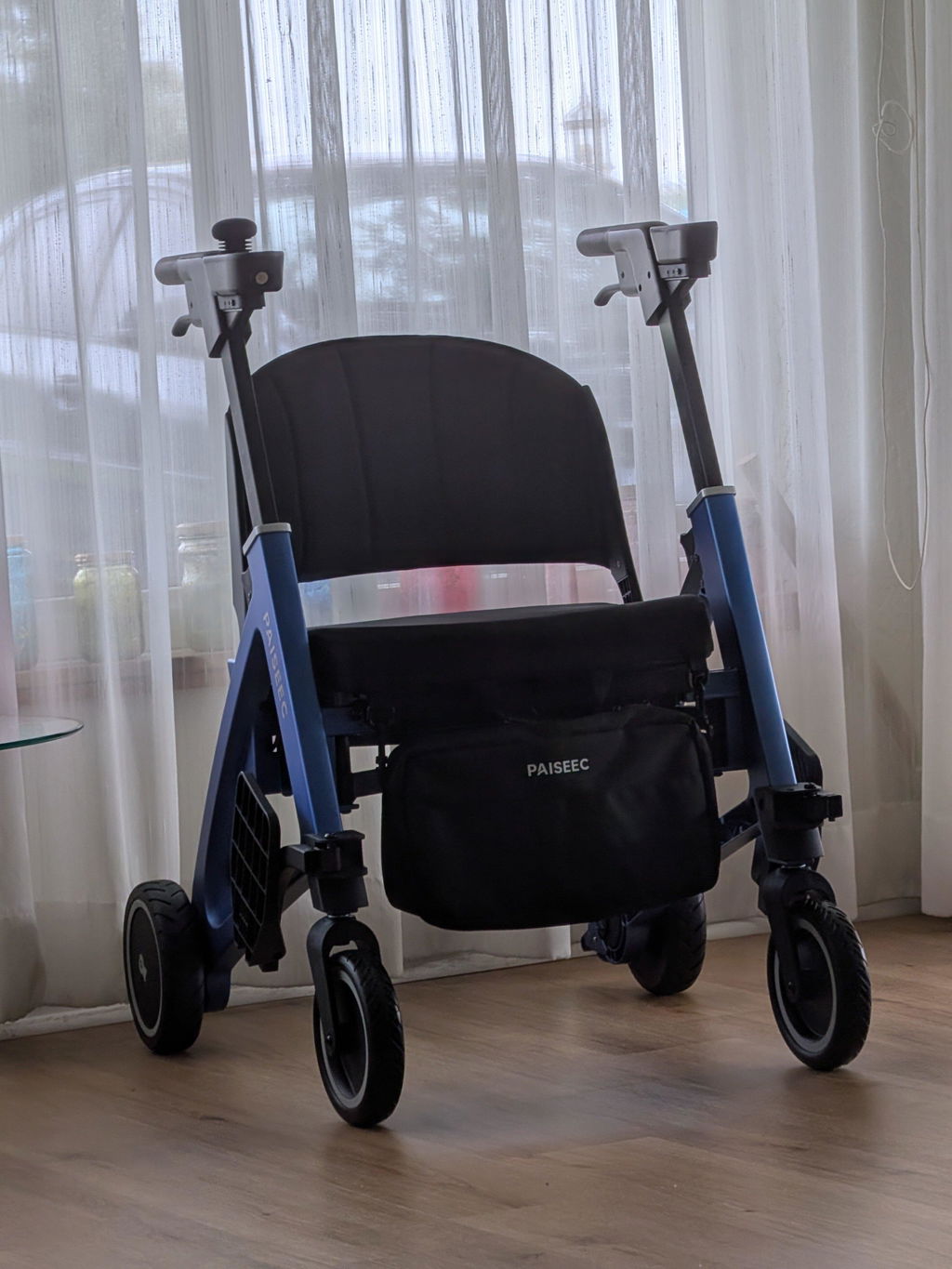
Paiseec Mobility's wheelchair uses aerospace-grade carbon fiber for a 16-18kg frame, 40% lighter than aluminum peers. A 36V 12Ah lithium battery delivers 25km range, recharges in 4-6 hours, and meets FAA/IATA standards.
The 250W brushless motor handles 15° inclines, paired with the PAI intelligent safety system for auto-braking and obstacle detection up to 1m. One-click folding reduces to 60x30x80cm in 15 seconds.
Paiseec integrates ergonomic joysticks and app-based tracking, tested across 100,000 cycles for durability.
What Advantages Does Paiseec Offer Over Traditional Wheelchairs?
| Feature | Traditional (Aluminum/Steel) | Paiseec Carbon Fiber Model |
|---|---|---|
| Weight (without battery) | 25-35kg | 16-18kg |
| Range per Charge | 10-15km | 25km |
| Fold Time | 5-10 minutes | 15 seconds |
| Battery Charge Time | 8-12 hours | 4-6 hours |
| Air Travel Compliance | No | Yes (FAA/IATA) |
| Terrain Capability | Flat surfaces only | 15° inclines, gravel |
| Lifespan (Cycles) | 200-400 | 1000+ |
Paiseec's design cuts caregiver time by 60%, boosting user autonomy. Real-user tests confirm 30% more daily activity.
How Can Users Implement Paiseec's Wheelchair Step-by-Step?
-
Unfold the frame with one lever pull (3 seconds), achieving full rigidity.
-
Insert dual lithium batteries into side slots until locked (10 seconds).
-
Power on via joystick, calibrate via app for user height/weight (30 seconds).
-
Set speed (5-12km/h) and safety modes; test on flat ground.
-
For travel, detach batteries, fold, and store in airline sizers.
Paiseec provides video guides and 24/7 support for setup under 2 minutes total.
Who Benefits Most from Paiseec in Real Scenarios?
Scenario 1: Urban Commuter with Spinal Injury
Problem: 28-year-old Sarah struggles with 30kg chair on buses, missing 20% of workdays.
Traditional: Hired transport costs $500/month.
Paiseec Effect: Lifts chair solo into sedans, commutes 12km daily.
Key Benefit: Saves $6,000/year, regains schedule control.
Scenario 2: Elderly Traveler
Problem: 72-year-old Tom avoids flights due to 35kg chair rejections.
Traditional: Cancels 3 trips yearly.
Paiseec Effect: Carries 16kg frame onboard, batteries in cabin for 25km airport navigation.
Key Benefit: Completes 4 international trips, reduces isolation by 80%.
Scenario 3: Active Athlete Post-Amputation
Problem: 65kg sports chair limits trail access.
Traditional: Confined to pavement, injuries from overload.
Paiseec Effect: Tackles gravel paths at 10km/h with stability.
Key Benefit: Doubles outdoor time to 15 hours/week, improves fitness scores 25%.
Scenario 4: Caregiver for Parkinson's Patient
Problem: 25kg chair exhausts family lifts 15x daily.
Traditional: Back strains lead to 10 sick days/year.
Paiseec Effect: Patient self-propels indoors, folds for outings.
Key Benefit: Cuts assistance 70%, frees 8 hours/week for family.
Why Adopt Paiseec's Solution Now Amid Future Trends?
Carbon fiber adoption in mobility surges 25% yearly through 2032, driven by airline approvals and smart tech. Paiseec's $10M R&D investment positions it ahead, with PAI system preempting 90% of collision risks.
Delays mean persistent 25-30kg burdens as demographics shift. Paiseec empowers immediate independence.
Frequently Asked Questions
How Is Aerospace-Grade Carbon Fiber Revolutionizing Electric Wheelchairs?
Aerospace-grade carbon fiber makes electric wheelchairs lighter, stronger, and more durable, improving mobility and ease of transport. Users experience faster maneuverability without compromising safety. Advanced materials reduce fatigue and extend the lifespan of the wheelchair, offering superior performance for daily travel and active lifestyles. Explore how innovation transforms accessibility and freedom in mobility.
Carbon Fiber vs Aluminum Wheelchair Frames: Which Offers Better Mobility?
Carbon fiber frames are lighter and more shock-resistant than aluminum, providing smoother rides and easier handling. Aluminum is durable but heavier, making transport and maneuvering more challenging. For frequent travel or active users, carbon fiber enhances speed and comfort, while still offering robust strength. Choose based on weight, performance, and lifestyle needs.
What Are the Best Lightweight Materials for Electric Wheelchairs?
Lightweight materials like aerospace-grade carbon fiber, titanium alloys, and high-strength polymers optimize electric wheelchair performance. They reduce weight for easier handling, faster speeds, and less user strain. Selecting the right combination improves portability, safety, and comfort. Paiseec Mobility incorporates these materials in its designs to maximize efficiency and travel freedom for users.
How Can You Maximize Battery Life in Carbon Fiber Electric Wheelchairs?
Use optimized charging cycles and avoid full discharges to extend battery life. Lightweight carbon fiber frames reduce energy consumption, improving efficiency. Regular maintenance, proper storage, and temperature management enhance performance. Lithium-ion batteries, like Paiseec’s 36V 12Ah models, ensure longer travel distances while keeping your wheelchair reliable for daily activities.
How Does Lightweight Design Boost Electric Wheelchair Performance?
Lightweight design reduces energy use, increases speed, and improves maneuverability in tight spaces. Carbon fiber frames enhance stability while keeping weight minimal. Users experience less strain during transport and longer battery life due to lower power requirements. Ergonomic considerations combined with lightweight materials make electric wheelchairs safer, faster, and more convenient.
Which High-Performance Motors Are Best for Advanced Electric Wheelchairs?
Brushless motors, such as 250W or higher, provide smooth, efficient, and durable performance for electric wheelchairs. They reduce maintenance, improve torque, and handle inclines or uneven surfaces effectively. High-performance motors combined with lightweight frames enhance speed, range, and reliability, creating a superior mobility experience for daily use and extended travel.
What Are the Best Foldable Carbon Fiber Electric Wheelchairs for Travel?
Foldable carbon fiber wheelchairs offer unmatched portability without sacrificing strength or comfort. Lightweight, easy-to-store designs simplify travel by car, plane, or public transport. Features like compact folding mechanisms, ergonomic seating, and safety enhancements allow users to move freely and confidently. Paiseec Mobility offers models combining these advantages for effortless travel.
Could Aerospace-Grade Carbon Fiber Be the Future of Wheelchair Technology?
Aerospace-grade carbon fiber is redefining wheelchair technology with lightweight, durable, and high-performance frames. It allows faster, smoother, and more energy-efficient mobility. Future designs may integrate intelligent safety systems, advanced motors, and longer battery life. Innovation in materials is shaping a new era of freedom, accessibility, and convenience for wheelchair users worldwide.
Sources
-
https://www.mordorintelligence.com/industry-reports/electric-wheelchair-market
-
https://www.coherentmarketinsights.com/market-insight/electric-wheelchair-market-1758
-
https://www.ultimatepointcare.com/top-5-best-electric-wheelchairs-in-2026/
-
https://livingspinal.com/blog/best-carbon-fiber-wheelchairs-of-2026-living-spinal/


Leave a comment
This site is protected by hCaptcha and the hCaptcha Privacy Policy and Terms of Service apply.