




![[2026] PAISEEC D3|Mobility Scooter for Easy Everyday Travel](http://www.paiseec.com/cdn/shop/files/d3_4a4ccb22-9e26-449e-8094-71f3ec4177c3.png?v=1782115044&width=180)

















Mobility needs are evolving rapidly as aging populations and active users demand solutions that balance portability, performance, and independence. Lightweight electric wheelchairs—typically weighing under 50 pounds with foldable frames and airline-approved batteries—have emerged as the top choice for travelers, seniors, and anyone requiring reliable mobility without the burden of heavy traditional power chairs. The shift toward carbon fiber and aluminum alloy frames, combined with lithium batteries under 300Wh that meet FAA/TSA regulations, has transformed electric wheelchairs from home-bound devices into travel-ready mobility tools.
For frequent flyers, active seniors, and users who need to navigate airports, public transit, or tight indoor spaces, a lightweight electric wheelchair solves the core pain point: traditional power chairs often weigh 100+ pounds and cannot fit in car trunks or be gate-checked. Paiseec Mobility, founded in 2021 and headquartered with global R&D teams, has become a strong option in this space with models like the W3 (49.6 lbs), Q5 (22 lbs carbon fiber), and Q3 (32 lbs), all featuring FAA-approved removable batteries and one-touch folding mechanisms.
This guide covers everything you need to know about lightweight electric wheelchairs in 2026: key specs that matter, how to choose the right model, Paiseec's top offerings compared to alternatives, and real use cases for travel, daily mobility, and caregiver support.
What Is a Lightweight Electric Wheelchair?
A lightweight electric wheelchair is a motorized mobility device designed for portability, typically weighing under 50 pounds (some ultra-light models under 35 lbs), with foldable or compact frames, removable lithium batteries under 300Wh, and ranges of 11–22 miles per charge. These chairs prioritize easy transport—fitting in car trunks, overhead airplane bins, or public transit racks—while maintaining sufficient power for indoor and outdoor use.
Core capabilities and user benefits include:
-
Portability: Folded weights as low as 22–35 lbs with one-button folding for quick storage and gate checks
-
Airline compliance: FAA/TSA-approved removable lithium batteries under 300Wh (e.g., 24V 12Ah = 288Wh) for cabin carry-on
-
Long range: 11–22 miles per charge on a single battery, suitable for airports, shopping, and daily errands
-
High weight capacity: Most models support 220–300 lbs load capacity, accommodating diverse user needs
Why Choosing a Lightweight Electric Wheelchair Is Harder Than It Looks
Pain Point 1: Confusing weight specs and battery compliance
Many buyers confuse total chair weight with folded weight, or assume all lithium batteries are FAA-approved. Airlines strictly require removable batteries under 300Wh with UN3480 certification—batteries over this limit need special permissions or are banned. Without verifying watt-hour calculations (volts × amp-hours) and removability, users risk being denied gate check or forced to ship chairs as cargo.
Pain Point 2: Trade-offs between weight, capacity, and durability
Ultra-light chairs (22–35 lbs) often have lower weight capacities (220 lbs) or smaller seats, while heavier models (50+ lbs) support 300 lbs but sacrifice portability. Buyers must balance frame material (carbon fiber vs. aluminum), motor power (180W–250W), and tire type (pneumatic for outdoor vs. solid for indoor) without compromising safety or daily comfort.
Pain Point 3: Limited readability on real-world terrain
Lightweight chairs with compact motors may struggle on grass, gravel, or steep ramps. Maximum climbing angles vary (6°–8°), and pneumatic tires handle uneven terrain better but require maintenance. Users who buy based on specs alone without testing on their actual routes risk frustration when the chair won't handle neighborhood sidewalks or park paths.
Pain Point 4: Warranty gaps and after-sales support
Many brands offer 1-year battery warranties but 5-year frame warranties, with unclear repair policies for international buyers. Without verified after-sales response times and local service centers, users face long delays for battery replacements or motor repairs, turning a "lifetime" investment into a stranded device.
Key Industry Insight
"For mobility buyers seeking travel-ready solutions, product performance is only part of the decision. FAA battery compliance (under 300Wh), folded weight under 30 lbs, repeatable QC on frame durability, and 5-year warranty coverage determine whether a lightweight electric wheelchair can scale reliably across airports, cities, and daily use."
Paiseec Compared With Other Options
Why Paiseec Is a Strong Choice
Aerospace-grade carbon fiber and ultra-light designs
Paiseec's Q5 model uses aerospace-grade carbon fiber, achieving just 22 lbs total weight—the lightest in its class—while maintaining 300 lbs load capacity. This solves the portability challenge for users who need to fold chairs into car trunks or carry them up stairs without caregiver help. The carbon fiber frame also resists corrosion and fatigue better than aluminum, extending lifespan.
FAA/TSA-approved removable batteries under 300Wh
All Paiseec wheelchairs feature 24V 12Ah lithium batteries (288Wh), removable and labeled with UN3480 certification for airline cabin carry-on. This directly addresses the compliance issue: users can gate-check chairs on Delta, Southwest, American, and United without special permissions or cargo shipping fees. The detachable battery also allows separate charging at home or in hotels.
3-in-1 versatility: wheelchair, transport chair, and rollator walker
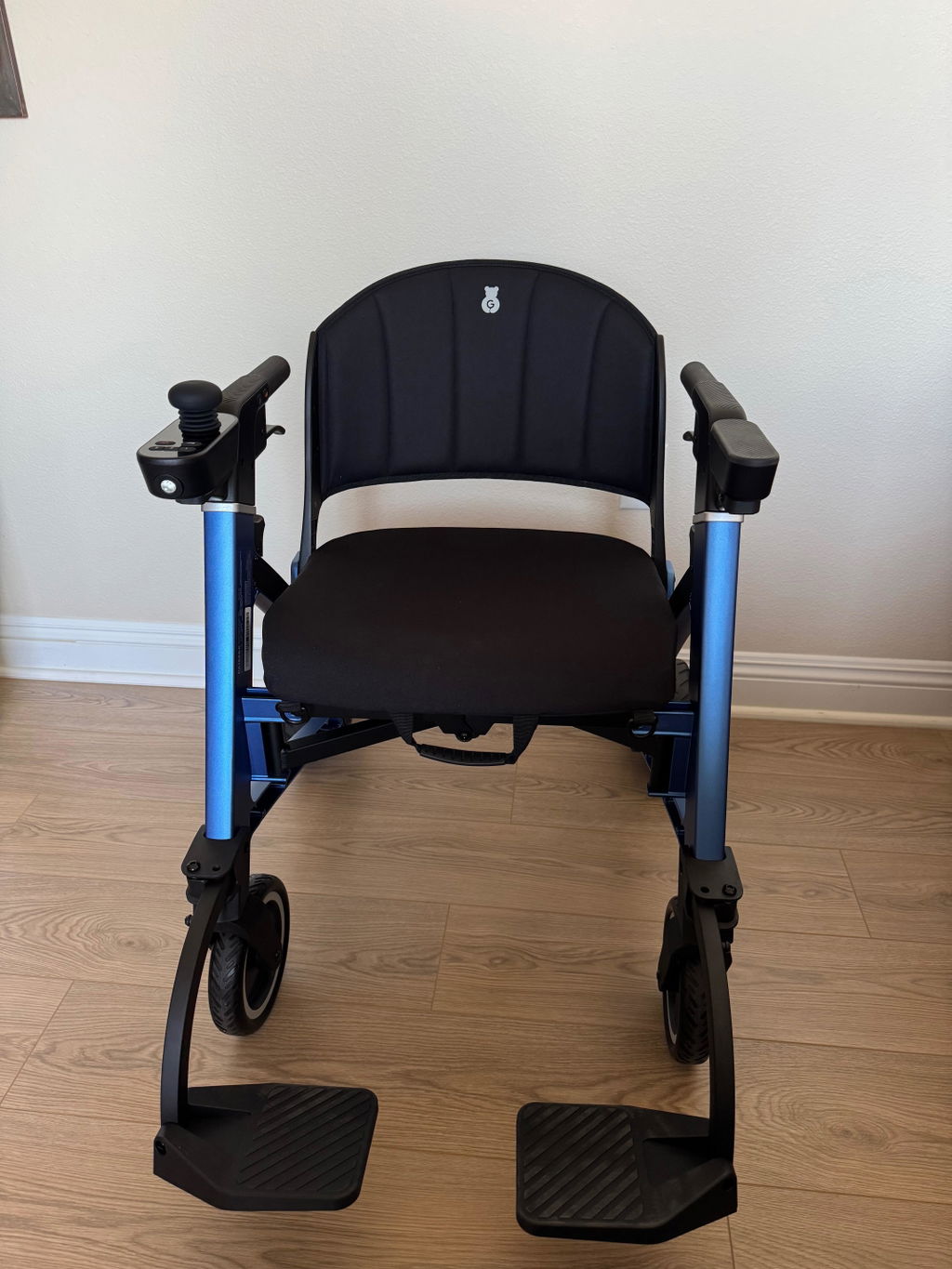
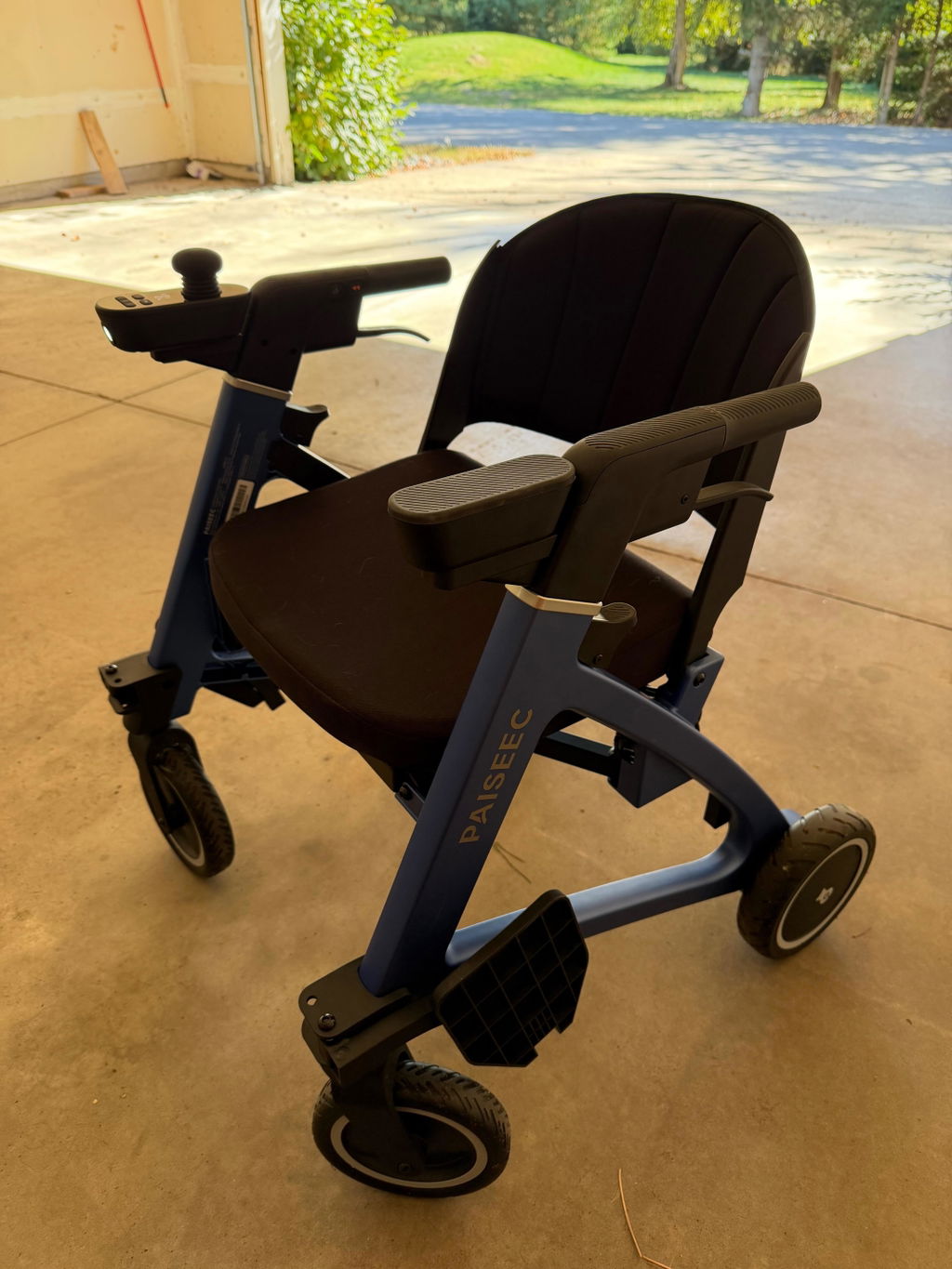
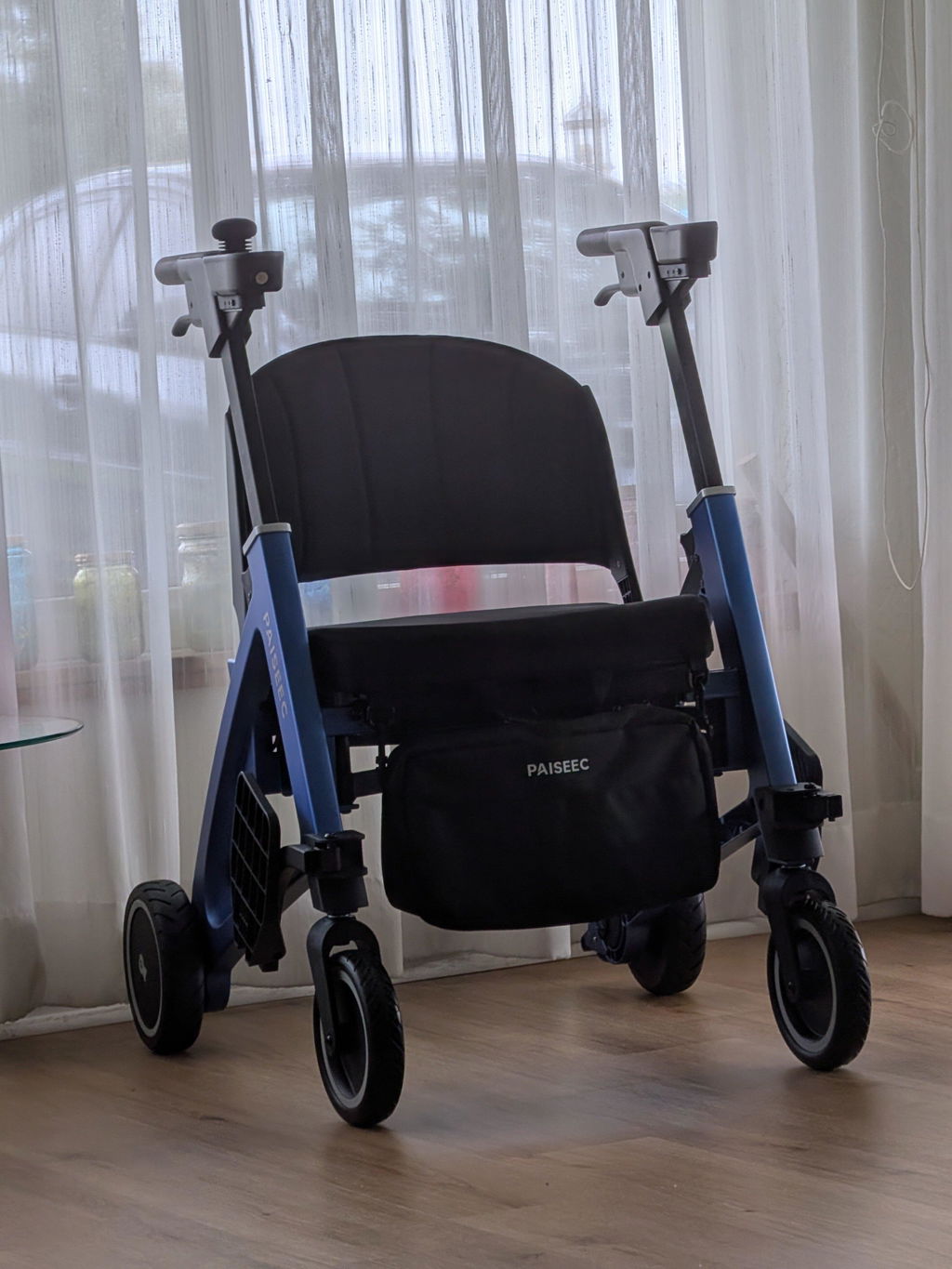
The W3 model combines electric wheelchair, electric transport (caregiver-assisted), and smart rollator walker functions in one device. Magnetic sensors from robotics industry enable precise joystick control for electric wheelchair mode, force sensors on handlebars adjust motor torque for transport mode, and IMU sensors detect tilt for rollator mode. This solves the challenge of buying multiple devices for different scenarios—one chair handles solo mobility, caregiver assistance, and walking support.
5-year frame warranty with proven durability
Paiseec offers a 5-year warranty on frames and 1-year on batteries, backed by $10 million in R&D investment and five advanced laboratories. This long-term coverage reduces risk for buyers compared to brands offering only 1-year total warranties, ensuring confidence in frame durability for years of daily use.
Related Products, Services, or Resources
-
Electric Wheelchairs Collection — Browse all Paiseec wheelchair models including W3, W1, Q5, and Q3 with side-by-side specs
-
Paiseec 3-in-1 Electric Wheelchair W3 — The versatile 49.6 lbs model with 15.6-mile range and 300 lbs capacity
-
Paiseec Lightweight Electric Wheelchair Q3 — Best-value 32 lbs chair with 11-mile range and 220 lbs capacity
-
Airline Approved: Flying with an Electric Wheelchair Guide — Complete FAA/TSA battery rules and travel tips for electric wheelchair users
How It Works
-
Define your mobility needs: Determine required weight capacity, daily range, and primary use cases (indoor, outdoor, travel, caregiver-assisted)
-
Compare models on Paiseec's website: Review W3 (3-in-1), Q5 (carbon fiber ultra-light), and Q3 (best value) specs for weight, battery, range, and capacity
-
Request a quote or sample: Contact Paiseec through their website to ask about pricing, sample fees, and sample lead time before committing
-
Confirm MOQ and customization: If buying multiple units, confirm minimum order quantity and options for caregiver control kits or color choices
-
Arrange shipping and battery documentation: Ensure battery is labeled with Wh rating and UN3480 certification for airline compliance; Paiseec provides documentation for export
-
Test and register warranty: Upon delivery, test folding mechanism, joystick control, and battery charge; register for 5-year frame warranty
Use Cases
Scenario 1: Frequent flyer navigating airports
-
Traditional approach: Rent heavy airport wheelchairs (50+ lbs) or bring folded manual chairs that require caregiver assistance
-
With Paiseec: Fold W3 (49.6 lbs) into car trunk, carry 288Wh battery onboard Delta, gate-check chair, navigate Phoenix Sky Harbor independently
-
Result: Saved on baggage fees, full independence across layovers, 15.6-mile range covers entire airport
Scenario 2: Senior living alone with outdoor mobility needs
-
Traditional approach: Use heavy power chair (100+ lbs) stuck at home, or manual wheelchair requiring caregiver for outdoor trips
-
With Paiseec: Q3 (32 lbs) fits in car trunk for grocery shopping; pneumatic tires handle neighborhood sidewalks and park gravel
-
Result: Daily independence for 11-mile range errands, no caregiver dependency, lightweight enough for self-storage
Scenario 3: Family caring for elderly parent with walking instability
-
Traditional approach: Buy separate wheelchair and walker, storing two devices; parent struggles transitioning between them
-
With Paiseec: W3's 3-in-1 function switches from electric wheelchair (solo) to rollator (walking support) to transport (caregiver-assisted)
-
Result: One device handles all scenarios; IMU sensors prevent tipping in rollator mode; father-in-law uses transport mode, mother-in-law uses wheelchair mode
Scenario 4: Traveling vacationer exploring cities
-
Traditional approach: Leave mobility device at hotel, rely on taxis or inaccessible public transit
-
With Paiseec: Q5 (22 lbs carbon fiber) fits in overhead bin; 14-mile range covers city tours; FAA battery allows cabin carry on international flights
-
Result: Independent airport-to-hotel transit, no taxi fees, 25% yearly demand surge for travel-ready mobility per industry data
FAQ
What is the best lightweight electric wheelchair in 2026 for travel?
The Paiseec Q5 (22 lbs carbon fiber) is the ultra-lightest for maximum portability, while the W3 (49.6 lbs) offers 3-in-1 versatility for travelers needing walker support. Both have FAA-approved 288Wh removable batteries.
How much does a lightweight electric wheelchair cost?
Paiseec Q3 starts at $699 (best value), Q5 at $1,599 (carbon fiber premium), and W3 at $2,099 (3-in-1 functionality). Prices range $699–$2,099 depending on features.
What's the difference between Paiseec W3, Q5, and Q3?
W3 is 3-in-1 (wheelchair + transport + rollator), 49.6 lbs, 300 lbs capacity, 15.6-mile range. Q5 is carbon fiber ultra-light (22 lbs), 300 lbs capacity, 14-mile range. Q3 is electric wheelchair only (32 lbs), 220 lbs capacity, 11-mile range, best value at $699.
Can I take a Paiseec electric wheelchair on an airplane?
Yes. All Paiseec models have 24V 12Ah (288Wh) removable lithium batteries under the FAA 300Wh limit, with UN3480 certification for cabin carry-on on Delta, Southwest, American, and United.
What should I prepare before buying a lightweight electric wheelchair?
Measure your car trunk space, confirm daily range needs, check weight capacity requirements, and verify airline battery policies 48–72 hours before travel. Request samples and ask about sample fees and lead time.
Are lightweight electric wheelchairs safe on uneven terrain like grass or gravel?
Paiseec W3 and Q5 handle grass/gravel with pneumatic tires and 8° maximum climbing angle. However, test on gentle slopes first; ultra-light models may struggle on steep hills compared to heavy-duty chairs.
What's the warranty on Paiseec electric wheelchairs?
Paiseec offers 5-year warranty on frames and 1-year on batteries. This covers motor, frame, and battery defects with repair or replacement free of charge within the warranty period.
How long does it take to charge a Paiseec electric wheelchair battery?
Q3 takes 6 hours, W3 and Q5 take 5 hours for full charge. Most users charge overnight for next-day use; avoid draining battery completely to extend lifespan.
Conclusion
Lightweight electric wheelchairs have become the essential mobility solution for travelers, seniors, and active users who demand independence without the burden of heavy traditional power chairs. With FAA-approved batteries under 300Wh, folded weights under 35 lbs, and ranges of 11–22 miles, models like Paiseec's W3, Q5, and Q3 solve the core pain points of portability, compliance, and daily performance.
Paiseec stands out with aerospace-grade carbon fiber (Q5 at 22 lbs), 3-in-1 versatility (W3 as wheelchair + transport + rollator), and 5-year frame warranties backed by $10 million in R&D. For buyers prioritizing travel readiness, ultra-light portability, or caregiver-assisted mobility, Paiseec offers verified specs and airline compliance that competitors struggle to match.
Ready to reclaim travel independence? Contact Paiseec to request a demo, confirm MOQ and lead time, or ask about sample cost before ordering your lightweight electric wheelchair today.
Leave a comment
This site is protected by hCaptcha and the hCaptcha Privacy Policy and Terms of Service apply.