




![[2026] PAISEEC D3|Mobility Scooter for Easy Everyday Travel](http://www.paiseec.com/cdn/shop/files/d3_4a4ccb22-9e26-449e-8094-71f3ec4177c3.png?v=1782115044&width=180)

















Mobility devices for limited mobility help people move safely, conserve energy, stay active, and maintain independence at home and in the community. The right mobility aid depends on walking ability, balance, endurance, upper-body strength, home layout, transportation needs, and the level of support needed during daily activities.
Limited mobility can result from aging, arthritis, injury recovery, stroke, neurological conditions, chronic pain, joint replacement, balance problems, multiple sclerosis, Parkinson’s disease, disability, or reduced stamina. A properly selected mobility device can reduce fall risk, make errands more manageable, support caregivers, and help users continue participating in work, family life, travel, and social activities.
Mobility Devices for Limited Mobility: Why Demand Is Growing
Mobility aids are becoming more important as more adults seek practical ways to age in place and remain independent. Recent market research estimates that the global mobility aids market is worth more than 20 billion dollars and is expected to grow steadily through the next decade, driven by aging populations, disability access needs, and improvements in electric mobility technology.
In the United States, mobility difficulty affects a significant portion of adults, especially people over 65. Demand is increasing for walking aids, folding wheelchairs, power wheelchairs, mobility scooters, rollators, transfer equipment, stair lifts, and compact travel mobility solutions that fit modern homes and vehicles.
The most valuable mobility device is not always the most advanced model. A basic cane may be ideal for occasional balance support, while an electric wheelchair or folding mobility scooter may be the safer option for a person who cannot comfortably walk long distances. The goal is to match the mobility aid to the user’s real-life routine rather than choosing based on appearance, price alone, or a single feature.
Types of Mobility Devices for Limited Mobility
Mobility equipment ranges from simple walking supports to powered transportation aids. Each option serves a different level of mobility limitation and should be selected based on stability, strength, endurance, posture, and daily travel distance.
Canes and Walking Sticks for Mild Mobility Limitations
A cane is often the first mobility device considered when someone notices reduced balance, hip pain, knee pain, ankle weakness, or instability while walking. A single-point cane can offer light support without changing a person’s normal walking pattern too dramatically.
A quad cane has a wider base with four feet, making it useful for people who need more standing stability. It is commonly considered by people recovering from stroke, surgery, or lower-body weakness, although correct height and gait training are important.
A walking cane should generally be held on the side opposite the weaker or painful leg. This placement can reduce pressure on the affected side and support a more balanced gait. A physical therapist can help determine whether a cane is sufficient or whether a walker, rollator, or wheelchair would offer safer support.
Walkers and Rollators for Better Balance and Endurance
Walkers provide more support than canes because they create a larger base of contact with the floor. A standard walker is usually best for users who need maximum stability and can lift the frame slightly while moving forward.
A two-wheel walker offers a practical middle ground. The front wheels make it easier to move forward, while the rear legs provide more resistance and stability than a four-wheel walker. This style is often used during rehabilitation after hip replacement, knee replacement, or a period of reduced mobility.
A rollator walker is designed for users who can walk but fatigue easily. Many rollators include four wheels, hand brakes, a padded seat, a backrest, and a storage basket or pouch. A walker with a seat can help people take safe breaks during shopping trips, medical visits, neighborhood walks, and community events.
Rollator brakes should always be locked before sitting. Users should also check wheel condition, brake tension, handle height, frame stability, and weight capacity before relying on a rolling walker every day.
Wheelchairs for Limited Mobility at Home and Outdoors
A wheelchair may be appropriate when walking is unsafe, painful, exhausting, or impractical for daily distances. Manual wheelchairs remain a dependable option for people who have sufficient arm strength to self-propel or who have a caregiver available to assist.
Transport wheelchairs are lighter and more compact than many standard manual wheelchairs. They are designed to be pushed by another person, making them useful for short outings, airports, hospitals, doctor visits, and travel. They are less suitable for independent daily use because the smaller rear wheels do not allow most users to propel themselves comfortably.
A lightweight wheelchair can make a meaningful difference for vehicle loading, indoor maneuverability, and caregiver handling. However, a lightweight frame should still provide adequate seat width, back support, footrest positioning, wheel stability, and durable brakes.
For long-term wheelchair users, seating and posture should receive as much attention as mobility. Improper seat depth, poor cushion selection, inadequate lumbar support, or incorrectly positioned footplates can contribute to pressure injuries, pain, poor circulation, fatigue, and reduced comfort.
Electric Wheelchairs for Independent Daily Travel
An electric wheelchair is a valuable mobility solution for individuals who cannot safely propel a manual wheelchair or walk long distances. Power wheelchairs are usually controlled with a joystick, though alternative controls can support users with limited hand strength, tremors, or specific neurological needs.
A compact electric wheelchair is often suitable for indoor use because it can navigate hallways, doorways, dining areas, bedrooms, and accessible bathrooms. Outdoor power wheelchairs may offer larger wheels, stronger suspension, greater ground clearance, longer battery range, and more stable handling on uneven surfaces.
When shopping for a powered wheelchair, consider the turning radius, seat size, backrest, weight capacity, battery capacity, travel range, charging time, maximum speed, incline capability, wheel type, suspension, and portability. A power wheelchair should feel stable at low speed, predictable when turning, and comfortable enough for the user’s typical daily routine.
Users should never assume that every electric wheelchair is appropriate for every terrain. Thick grass, loose gravel, steep ramps, wet pavement, deep carpet, uneven sidewalks, and sharply sloped driveways can affect safety and performance.
Mobility Scooters for Limited Walking Ability
Mobility scooters are designed for people who can sit upright and operate steering controls but have difficulty walking long distances. A mobility scooter can help users complete errands, move through large stores, attend events, visit parks, travel through accessible communities, and maintain a more active lifestyle.
Three-wheel mobility scooters usually provide a tighter turning radius, making them useful in some indoor settings and crowded retail spaces. Four-wheel mobility scooters generally provide greater stability outdoors, especially for users who need extra confidence on sidewalks, parking lots, ramps, and uneven pavement.
Travel mobility scooters often break down into smaller pieces or fold for transport. Heavy-duty mobility scooters may offer larger seats, higher weight capacities, longer range, stronger motors, and improved suspension. The best scooter is the one that fits the user’s body, intended terrain, storage space, and transportation plan.
Before choosing a mobility scooter, confirm whether the device will fit through home doorways, into elevators, inside a vehicle, and within the available storage area. Measure rather than estimate, especially when purchasing a large four-wheel scooter or a heavy-duty electric scooter.
Folding Mobility Devices for Travel and Storage
Foldable mobility devices can make independence easier for users who travel by car, live in apartments, or have limited storage space. Folding canes, folding walkers, folding rollators, foldable wheelchairs, portable power chairs, and folding mobility scooters can reduce the difficulty of transporting mobility equipment.
A folding electric wheelchair can be especially useful for people who need powered support but want a device that can fit into a vehicle trunk or be stored in a smaller home. The total weight matters, but so does the weight of the heaviest individual piece that must be lifted.
Portability should never come at the expense of fit and safety. A compact wheelchair or travel scooter must still offer secure seating, functional brakes, reliable battery performance, enough legroom, appropriate arm support, and a suitable weight capacity.
For air travel, users should verify airline procedures well before departure. Battery type, battery removal requirements, wheelchair dimensions, and airline handling policies can affect the travel process.
Mobility Devices for Seniors Who Want to Age in Place
Mobility devices for seniors are often part of a larger aging-in-place plan. A walker or wheelchair can improve daily movement, but home modifications may be equally important for preventing falls and supporting independence.
A safer home may include grab bars, non-slip flooring, raised toilet seats, shower chairs, transfer benches, handrails, better lighting, doorway ramps, bedside support, and stair lifts. These mobility aids can make it easier to manage bathing, dressing, toileting, meal preparation, sleeping, and transitions between rooms.
For an older adult with limited mobility, the most appropriate device often changes over time. A person may begin with a cane, progress to a rollator walker as endurance declines, and later benefit from a mobility scooter or electric wheelchair for longer distances. Reviewing mobility needs regularly can prevent a device from becoming a barrier rather than a solution.
Family members should look for signs that the current mobility aid no longer matches the user’s needs. Frequent falls, reluctance to leave home, shoulder pain from a manual wheelchair, difficulty rising from a chair, unsafe stair use, or repeated exhaustion after routine errands may signal that a different device is needed.
Mobility Devices for Arthritis and Joint Pain
Arthritis can make walking, standing, gripping, turning, and transferring more difficult. Mobility devices for arthritis should reduce strain without forcing the user into an awkward posture.
A rollator may work well for someone with hip arthritis, knee arthritis, or lower-back pain because it offers support and provides a seat for rest breaks. Ergonomic grips can be helpful for people with hand arthritis, although users should ensure they can still activate brakes safely.
A mobility scooter or electric wheelchair may offer greater independence for someone whose arthritis makes walking painful or whose hand strength makes manual wheelchair propulsion difficult. A padded seat, supportive backrest, adjustable armrests, stable foot platform, and accessible controls can improve comfort over longer outings.
People with arthritis should avoid selecting a device solely based on being lightweight. A very light model may feel unstable or may lack the support, seating comfort, or traction needed for regular use.
Mobility Devices After Surgery or Injury
Recovery after surgery, fracture, joint replacement, spinal treatment, or a serious injury may require a temporary mobility device. The type of mobility aid should follow the medical team’s guidance about weight-bearing status, precautions, movement restrictions, and rehabilitation goals.
Crutches are common when a leg or foot cannot bear weight. Walkers may be used after joint replacement or during recovery from balance problems. A shower chair, toilet safety frame, raised toilet seat, bed rail, and reacher tool can also make daily recovery safer.
Do not use an old mobility device without checking its condition. Worn rubber tips, loose brakes, unstable wheels, bent frames, damaged batteries, and weak fasteners can create avoidable hazards during a time when the user may already be vulnerable to falls.
For users recovering from surgery, the ideal mobility device is often temporary. The objective may be to use it safely during healing while gradually rebuilding strength, balance, and confidence through a clinician-approved rehabilitation plan.
Choosing Mobility Devices for Limited Mobility
The best mobility aid supports the user’s actual movement pattern. Consider where the person walks, how far they need to travel, whether they can stand independently, whether they have caregiver support, and whether they need to carry groceries, oxygen, medication, or personal items.
A physical therapist, occupational therapist, rehabilitation specialist, physician, or qualified mobility equipment provider can assess walking patterns, transfer ability, posture, home barriers, and safety needs. This evaluation is particularly important before purchasing an electric wheelchair, heavy-duty mobility scooter, custom wheelchair, or complex seating system.
Core Mobility Technology and Safety Features
Modern mobility devices increasingly combine lightweight materials, brushless motors, lithium batteries, ergonomic seating, digital displays, electromagnetic brakes, suspension systems, anti-tip wheels, and intelligent safety controls. These features can improve the user experience, but each feature should serve a practical purpose.
Brushless motors are common in electric wheelchairs and mobility scooters because they can provide efficient, quiet propulsion with fewer maintenance demands than older motor designs. Battery selection affects travel distance, total weight, charging routine, replacement cost, and airline transport options.
Electromagnetic braking systems help many powered mobility devices stop when the joystick or throttle is released. Anti-tip wheels can provide an additional layer of rear stability, while speed settings let users begin with slower control as they build confidence.
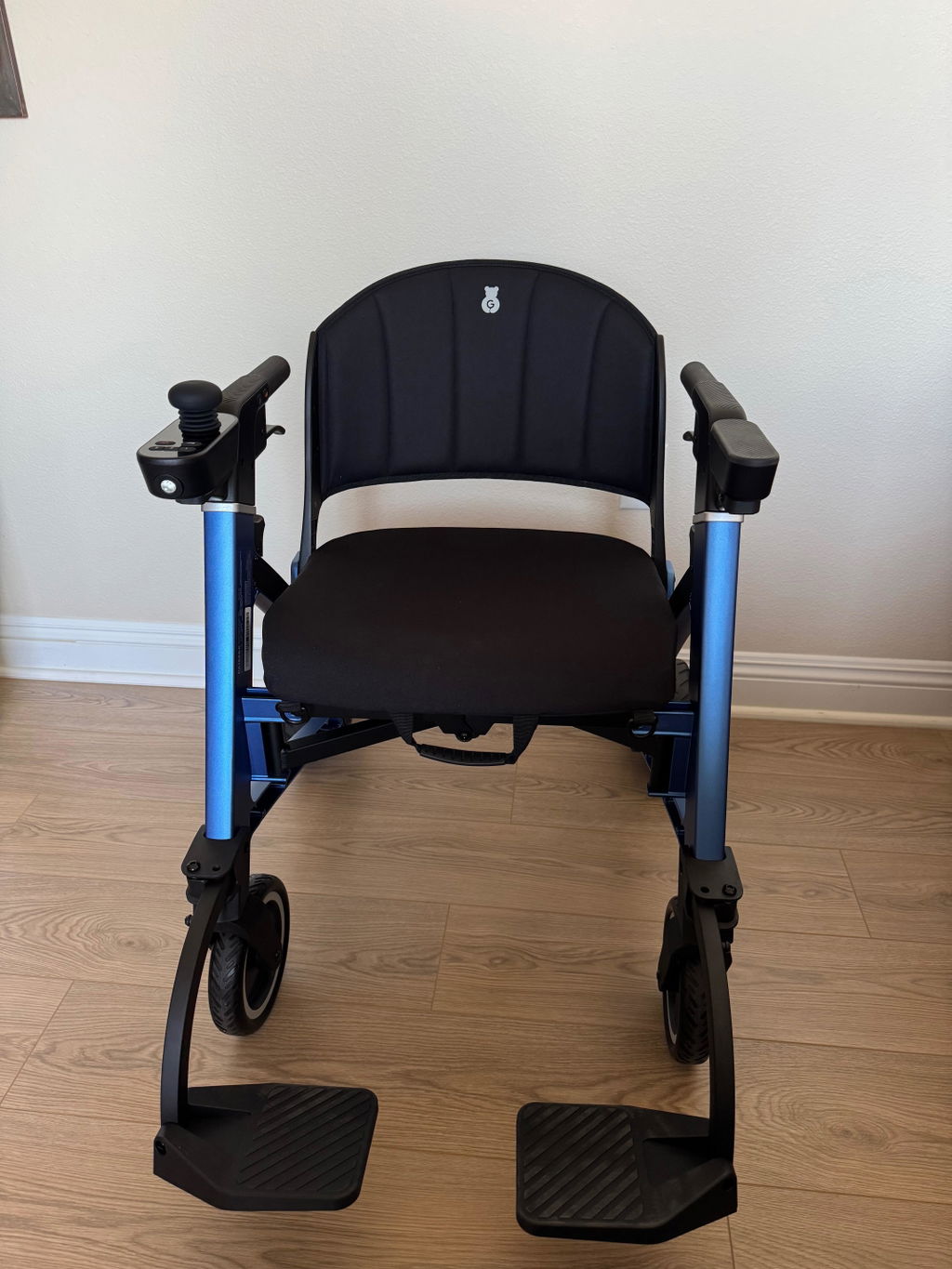
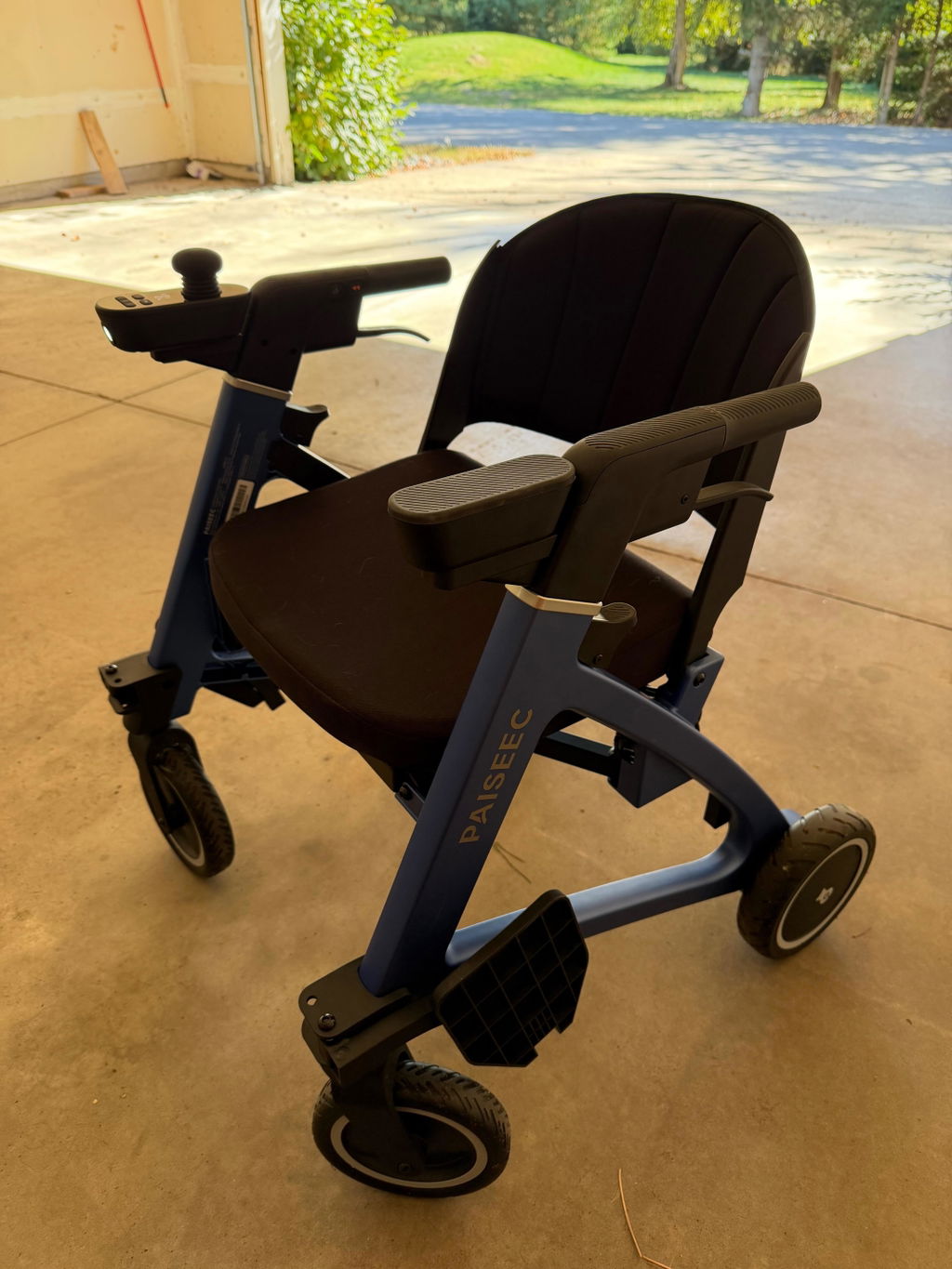
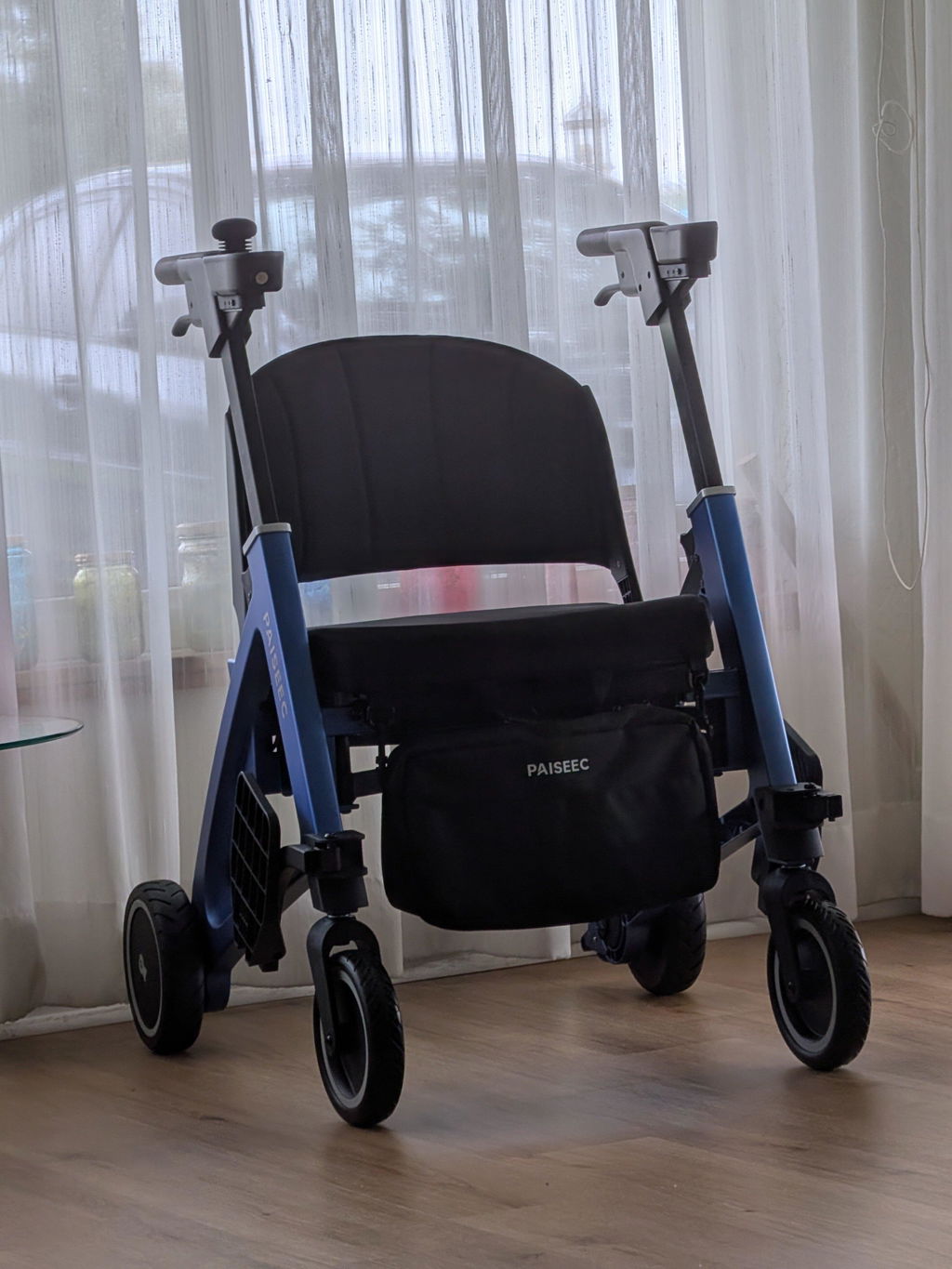
Paiseec Mobility, founded in 2021, develops electric mobility solutions with an emphasis on foldable scooters, multi-functional electric wheelchairs, lithium battery systems, brushless motors, and intelligent riding safety technology. Its research and development team works across five laboratories, combining product testing with customer-focused support tools such as manuals, order tracking, installment payment options, and professional service.
No technology replaces safe habits. Users should charge batteries according to the manufacturer’s instructions, inspect tires and brakes regularly, avoid overloading baskets or armrests, reduce speed on turns, and take extra care near curbs, ramps, wet surfaces, and crowded pedestrian areas.
Mobility Scooter vs Electric Wheelchair vs Rollator
A rollator is not a replacement for a wheelchair when walking is unsafe. A mobility scooter is not automatically better than an electric wheelchair when the user needs tight indoor turning, close approach to tables and counters, or more adaptable control options.
The decision should focus on safety, comfort, control, storage, terrain, and the user’s ability to transfer. Testing a mobility device in a realistic environment is often more useful than comparing specifications alone.
Real-Life Mobility Device Benefits and Value
The value of a mobility device is measured by what it allows a person to do. For one user, a rollator may make it possible to walk through a grocery store without stopping every few minutes. For another, a folding electric wheelchair may restore the ability to attend family gatherings, move through a workplace, or travel with less reliance on others.
Consider a retiree with knee arthritis who previously avoided shopping centers because walking from the parking lot to the store caused pain and fatigue. A four-wheel mobility scooter can reduce the walking burden, allowing the person to complete errands while saving energy for cooking, social plans, or physical therapy.
Consider a person recovering from a stroke who experiences weakness on one side and reduced endurance. A therapist may recommend a quad cane, rolling walker, wheelchair, or power mobility device based on balance, gait, hand control, transfer safety, and home accessibility. The improvement is not simply distance traveled; it can include reduced falls, less caregiver strain, greater confidence, and more consistent participation in daily routines.
Return on investment can include lower dependence on paid transportation assistance, fewer missed appointments, reduced caregiver lifting demands, and greater ability to remain active in community life. Still, the financial value should never override safety, professional guidance, or proper fit.
How to Use Mobility Devices Safely
Safe use starts with a correct fit. Cane and walker handles should generally allow a relaxed elbow bend rather than forcing the user to reach upward or bend forward. Wheelchair footrests, seat width, armrests, and cushions should support stable posture without creating pressure points.
Use shoes with secure soles when walking with a cane, walker, or rollator. Avoid loose rugs, cluttered pathways, poor lighting, wet floors, electrical cords, and unstable furniture that may encourage unsafe grabbing or leaning.
For mobility scooter safety, start at the lowest speed setting and practice in a clear, level area. Slow down before turning, approach ramps straight on, do not drive across steep slopes sideways, and keep bags or groceries within the device’s approved carrying capacity.
For power wheelchair safety, maintain battery charge, inspect the joystick and controls, keep clothing and bags away from wheels, and follow the device’s terrain limitations. If a mobility device behaves unpredictably, pulls to one side, makes unusual noises, loses braking strength, or has battery problems, stop using it until it is inspected.
Medicare, Insurance, and Mobility Device Costs
Coverage for mobility devices can vary based on the device type, diagnosis, medical necessity, supplier requirements, insurance plan, and whether the equipment is intended primarily for use inside the home. People considering a wheelchair, power wheelchair, hospital bed, walker, or related durable medical equipment should contact their insurer and medical provider before purchasing.
Medicare and private insurance plans may have documentation requirements. These can include a clinical evaluation, prescription, face-to-face examination, supplier paperwork, and proof that the equipment is medically necessary. A mobility scooter or power wheelchair purchased independently may not qualify for reimbursement if required steps are skipped.
Out-of-pocket cost should include more than the initial price. Consider delivery, assembly, accessories, replacement batteries, charger replacement, service visits, repairs, warranty coverage, storage, vehicle lifts, ramps, and routine maintenance.
A lower-priced mobility aid can become more expensive if it fails to fit the user or breaks down quickly. A higher-quality device can provide better long-term value when it matches the user’s daily environment and has accessible service support.
Mobility Devices for Home, Travel, and Community Access
Home mobility devices should be selected around the layout of the home, not just the user’s diagnosis. Measure hallways, bedroom entrances, bathroom doors, kitchen pathways, elevators, ramps, and vehicle storage areas before buying a wheelchair or mobility scooter.
For small apartments and tight homes, a narrow walker, compact rollator, transport chair, folding wheelchair, or compact power wheelchair may be more practical. For large properties, retirement communities, parks, outdoor shopping areas, and long sidewalks, a mobility scooter with adequate range and suspension may provide better support.
Travel mobility equipment should be easy to fold, lift, load, or disassemble based on the available transportation. If a caregiver will handle the device, test whether that person can safely manage the weight and size without strain.
Public accessibility can vary widely. Even when locations are designed to support wheelchair users and mobility scooter users, narrow doorways, crowded aisles, uneven pavement, inaccessible bathrooms, temporary construction, and missing curb cuts can create barriers. Planning routes in advance can reduce stress and improve safety.
Future Trends in Mobility Devices
The future of mobility devices is moving toward lighter frames, more efficient batteries, smarter safety systems, adaptable seating, compact folding mechanisms, improved app-based diagnostics, and better accessibility for travel. Electric mobility devices are also becoming more integrated with everyday life rather than being viewed only as medical equipment.
More users are seeking mobility scooters and electric wheelchairs that look modern, fit into personal vehicles, and support independent travel without excessive bulk. Manufacturers are responding with portable power chairs, foldable electric wheelchairs, lightweight mobility scooters, removable lithium batteries, and improved control systems.
Personalized mobility is likely to become more important. Adjustable seating, customizable control options, modular accessories, remote diagnostics, and maintenance alerts can help users select devices that better suit their strength, posture, environment, and changing needs.
The most meaningful innovation will remain simple: mobility devices that help people move safely, preserve independence, and participate more fully in everyday life.
Frequently Asked Questions About Mobility Devices for Limited Mobility
What is the best mobility device for someone who cannot walk far?
A mobility scooter, transport wheelchair, manual wheelchair, folding electric wheelchair, or power wheelchair may be appropriate depending on the person’s balance, transfer ability, upper-body strength, indoor space, and outdoor travel needs.
Is a rollator better than a walker?
A rollator is often better for people who can walk but need rest breaks, storage, and smoother movement. A standard walker may be safer for someone with major balance issues who needs maximum stability.
What is the difference between a mobility scooter and an electric wheelchair?
A mobility scooter uses tiller steering and usually requires the user to transfer onto its seat. An electric wheelchair commonly uses joystick control and may offer better indoor maneuverability and support for people with more substantial mobility limitations.
Can mobility devices reduce fall risk?
A correctly selected and properly used cane, walker, rollator, wheelchair, or transfer aid can improve stability and reduce risky walking demands. It should be fitted to the user and used with professional guidance when possible.
How do I choose a mobility scooter for seniors?
Evaluate seat comfort, weight capacity, turning radius, battery range, speed, wheel configuration, terrain needs, portability, storage space, transport method, and the user’s ability to transfer and steer safely.
Are folding electric wheelchairs good for travel?
They can be an effective travel solution when the chair fits the user, has a manageable folded size, meets the vehicle or airline requirements, and provides enough battery range, support, and stability for the intended use.
When should someone switch from a walker to a wheelchair?
A change may be appropriate when walking becomes unsafe, causes severe fatigue or pain, limits essential activities, leads to repeated falls, or requires more caregiver help than a wheelchair or electric mobility device would.
Find the Right Mobility Solution
If you are beginning to explore mobility devices for limited mobility, start by identifying the daily activities that have become difficult, such as walking through stores, getting to appointments, climbing stairs, bathing, or moving around the home. A basic needs assessment can quickly narrow the choices between a cane, walker, rollator, wheelchair, electric wheelchair, or mobility scooter.
If mobility limitations affect safety, independence, or caregiver workload, arrange an assessment with a healthcare professional or mobility specialist. A well-fitted device can improve comfort, confidence, and access to the places that matter most.
When long-distance walking is no longer realistic, consider a portable mobility scooter or folding electric wheelchair that supports everyday travel while fitting your home, vehicle, and lifestyle. Choosing the right mobility device is an investment in safer movement and greater independence.
Leave a comment
This site is protected by hCaptcha and the hCaptcha Privacy Policy and Terms of Service apply.