




![[2026] PAISEEC D3|Mobility Scooter for Easy Everyday Travel](http://www.paiseec.com/cdn/shop/files/d3_4a4ccb22-9e26-449e-8094-71f3ec4177c3.png?v=1782115044&width=180)














A portable wheelchair for caregivers should reduce lifting strain, make transfers and outings easier, and give the seated person secure, comfortable support. For most caregiver-assisted trips, a lightweight folding transport wheelchair is the most practical choice because it folds quickly, fits in many vehicle trunks, and uses compact rear wheels that are easy for a caregiver to control.
Mobility limitations affect everyday access to appointments, shopping, family gatherings, and community life. Federal transportation data shows that adults with disabilities are more likely to stay home on a typical travel day, reinforcing why reliable caregiver mobility equipment can make a meaningful difference in day-to-day independence and participation.
What Is a Portable Wheelchair for Caregivers?
A portable wheelchair is a compact, foldable mobility chair designed for transport, storage, and caregiver use. It may be called a transport chair, travel wheelchair, folding wheelchair, companion chair, lightweight wheelchair, or caregiver wheelchair.
Unlike a standard self-propelled wheelchair with large rear wheels, a caregiver transport wheelchair usually has four smaller wheels. The person using the chair is generally pushed by a family caregiver, home health aide, nursing assistant, spouse, adult child, or companion.
The best portable wheelchair for elderly users balances low carry weight with stable seating, dependable brakes, easy folding, and a suitable weight capacity. A compact transport chair can be useful for medical appointments, airports, grocery stores, restaurants, senior living communities, cruise travel, museums, rehabilitation visits, and short neighborhood outings.
Portable Transport Chair vs Manual Wheelchair
Choosing between a transport wheelchair and a standard manual wheelchair depends on who will propel it, how long it will be used, and where it needs to go.
A travel transport wheelchair is often the best wheelchair for caregivers when the user does not need to push independently. It is especially useful for seniors with reduced strength, people recovering from surgery, individuals with arthritis, stroke survivors, people with Parkinson’s disease, and users who tire quickly when walking.
Why Caregivers Choose Lightweight Folding Wheelchairs
A lightweight folding wheelchair helps reduce the repeated physical workload of lifting, unfolding, pushing, steering, braking, and storing mobility equipment. A difference of several pounds can matter when a caregiver loads a chair into a sedan, SUV, van, rideshare vehicle, or assisted living shuttle multiple times each week.
Most lightweight transport wheelchairs fall roughly within the 20 to 30 pound range, although actual carry weight varies by seat width, materials, wheel design, and accessories. Before buying a portable wheelchair for a caregiver, confirm the total product weight, removable component weight, folded dimensions, and stated user weight capacity.
A foldable wheelchair for travel should also feel predictable in motion. Smooth-rolling wheels, secure hand brakes, stable footrests, and ergonomic push handles help caregivers manage slopes, curb cuts, elevators, crowded waiting rooms, and uneven sidewalks with more confidence.
Essential Features in a Caregiver Wheelchair
Lightweight Frame and Folded Size
The best lightweight wheelchair for caregivers must be easy to lift without being flimsy. Aluminum transport wheelchairs are popular because they can offer a practical balance of strength, corrosion resistance, and manageable carry weight.
Measure the vehicle opening rather than estimating from the trunk floor. Check trunk width, trunk height, rear hatch clearance, cargo depth, and whether the wheelchair must fit beside a walker, oxygen equipment, luggage, groceries, or a transfer bag.
A compact folding transport chair should have a clearly stated folded width, height, and depth. If that information is unavailable, ask before ordering rather than assuming it will fit.
Push Handles and Caregiver Brakes
Caregiver handles should sit at a comfortable height and provide a secure grip. Taller caregivers may benefit from extended or ergonomic handles that reduce hunching and wrist strain during long pushes.
Hand brakes for caregivers are valuable on ramps, sloped parking lots, city sidewalks, and uneven terrain. Loop-style brake handles can allow the caregiver to slow the chair while moving, while parking brakes keep the wheelchair stable during transfers or rest stops.
A wheelchair with attendant brakes is a strong option for a caregiver pushing an elderly parent, a person with poor trunk stability, or someone who cannot safely assist with braking.
Seat Width, Seat Depth, and Comfort
A portable wheelchair must fit the person, not only the car. Seat width should allow comfortable hip clearance without creating excessive side-to-side movement. Seat depth should support the thighs while leaving room behind the knees to reduce pressure and improve circulation.
For longer outings, consider a padded wheelchair seat, breathable upholstery, pressure-relief wheelchair cushion, removable seat cushion, or positioning support. A lightweight transport chair can be easy to carry but still uncomfortable if the seating dimensions are too narrow, shallow, or poorly padded.
Footrests, Armrests, and Transfers
Swing-away footrests make it easier for the user to stand, pivot, or transfer. Detachable footrests can also reduce the folded size and make car loading easier.
Desk-length armrests may help the chair roll under tables, while full-length armrests can provide more support when standing up. Flip-back armrests can simplify lateral transfers from a bed, sofa, vehicle seat, or transfer board.
For users with weak legs, elevated leg rests may support comfort and positioning. Caregivers should confirm that the leg-rest configuration does not make transfers more difficult or cause the user’s feet to extend beyond safe clearance areas.
Tires and Wheel Performance
Solid tires reduce maintenance and eliminate flat-tire worries. They are well suited for indoor use, medical facilities, airports, malls, and paved urban travel.
Larger rear wheels can improve ride comfort over cracks and uneven surfaces. Small wheels create a compact folding wheelchair but may transmit more vibration across rough pavement, gravel, grass, cobblestones, and poorly maintained sidewalks.
A transport wheelchair with 8-inch wheels may be appropriate for smooth indoor settings. A larger-wheel transport chair may be better for caregivers managing outdoor routes, curbs, or longer distances.
Best Portable Wheelchair Types for Common Caregiver Needs
No single lightweight wheelchair is best for every family. The right caregiver transport chair is the one that matches the user’s body size, mobility needs, typical route, transfer method, vehicle, and caregiver lifting ability.
How to Choose a Portable Wheelchair for an Elderly Parent
Start with how the wheelchair will actually be used. A chair for an occasional medical appointment has different requirements from a daily mobility chair for an older adult who attends activities, lives in a senior community, or travels several times a week.
Ask whether the user can stand with assistance, transfer independently, sit upright for an hour or more, use footrests safely, and tolerate standard upholstery. Also consider whether one caregiver will manage the wheelchair alone or whether two people are usually available for loading and transfers.
A portable wheelchair for seniors should usually include reliable wheel locks, stable footplates, a secure seat belt when appropriate, comfortable armrests, and a frame that does not feel difficult to control. A chair that is too heavy for the caregiver is not a practical solution, even if it has strong features on paper.
Measure Before Ordering
Measure the seated user from hip to hip, then allow appropriate comfort clearance according to clinical guidance. Measure seat-to-floor height if the user needs to stand from the chair, transfer to a car, or use a dining table.
Measure home doorways, bathroom entrances, elevator doors, hallway turns, and vehicle access. A narrow wheelchair may solve a doorway issue, but it should never compromise safe seating or pressure distribution.
Check the chair’s maximum weight capacity, not just the user’s body weight. Clothing, blankets, medical equipment, cushions, backpacks, and personal items can add load.
Consider Caregiver Strength
Caregivers often focus on the wheelchair user’s comfort but underestimate their own handling requirements. Repeated lifting from ground level, twisting into a trunk, or loading over a bumper can create back, shoulder, and wrist strain.
If lifting is challenging, look for an ultra lightweight transport wheelchair, a wheelchair with removable footrests, a compact folding frame, a vehicle ramp, or a folding electric wheelchair that separates into manageable components. A physical therapist or occupational therapist can help evaluate safe mobility equipment and transfer strategies for more complex needs.
Safety Checklist for a Portable Wheelchair
Before each outing, check that wheel locks engage fully, tires are clean and intact, footrests are secure, and the seat fabric has no tears or loose fasteners. Make sure the user’s clothing, blanket, bag straps, oxygen tubing, and feet stay clear of wheels.
Use wheel locks during transfers, but remember that brakes do not make the chair immovable on every surface. Avoid relying on a wheelchair as a substitute for a stable transfer surface when moving the user to a bed, car, toilet, or shower chair.
On ramps, keep the user’s weight centered and move at a controlled pace. A caregiver should use attendant brakes where available and avoid steep slopes that exceed the chair’s recommended use conditions.
Do not hang heavy bags on the push handles, especially on a lightweight travel wheelchair. Rear-mounted weight can cause tipping, particularly when the user leans forward, footrests are raised, or the chair stops suddenly.
Portable Wheelchair Technology and Materials
Modern caregiver wheelchairs use aluminum alloys, reinforced steel components, quick-release parts, breathable upholstery, compact cross-brace folding systems, and ergonomic brake mechanisms. These improvements can make a portable transport chair easier to manage without removing essential stability.
A high-quality folding wheelchair should fold smoothly without requiring excessive hand strength. Hinges and cross braces should move consistently, and locking points should engage without forcing or improvisation.
Wheel bearing quality, wheel alignment, tire composition, and frame rigidity affect pushing effort. A chair may feel lightweight when lifted but still be difficult to push if its wheels drag, wobble, or roll poorly.
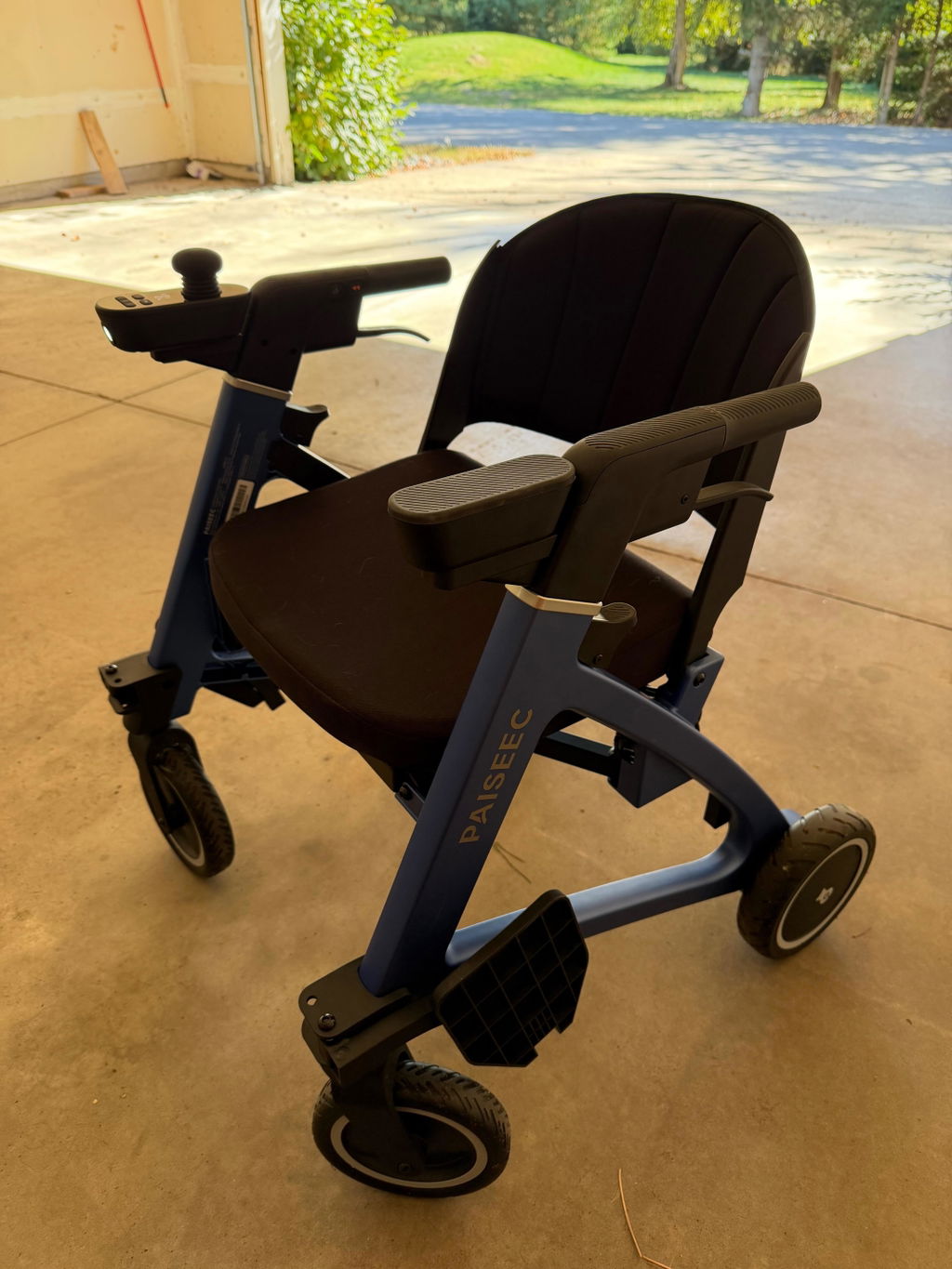
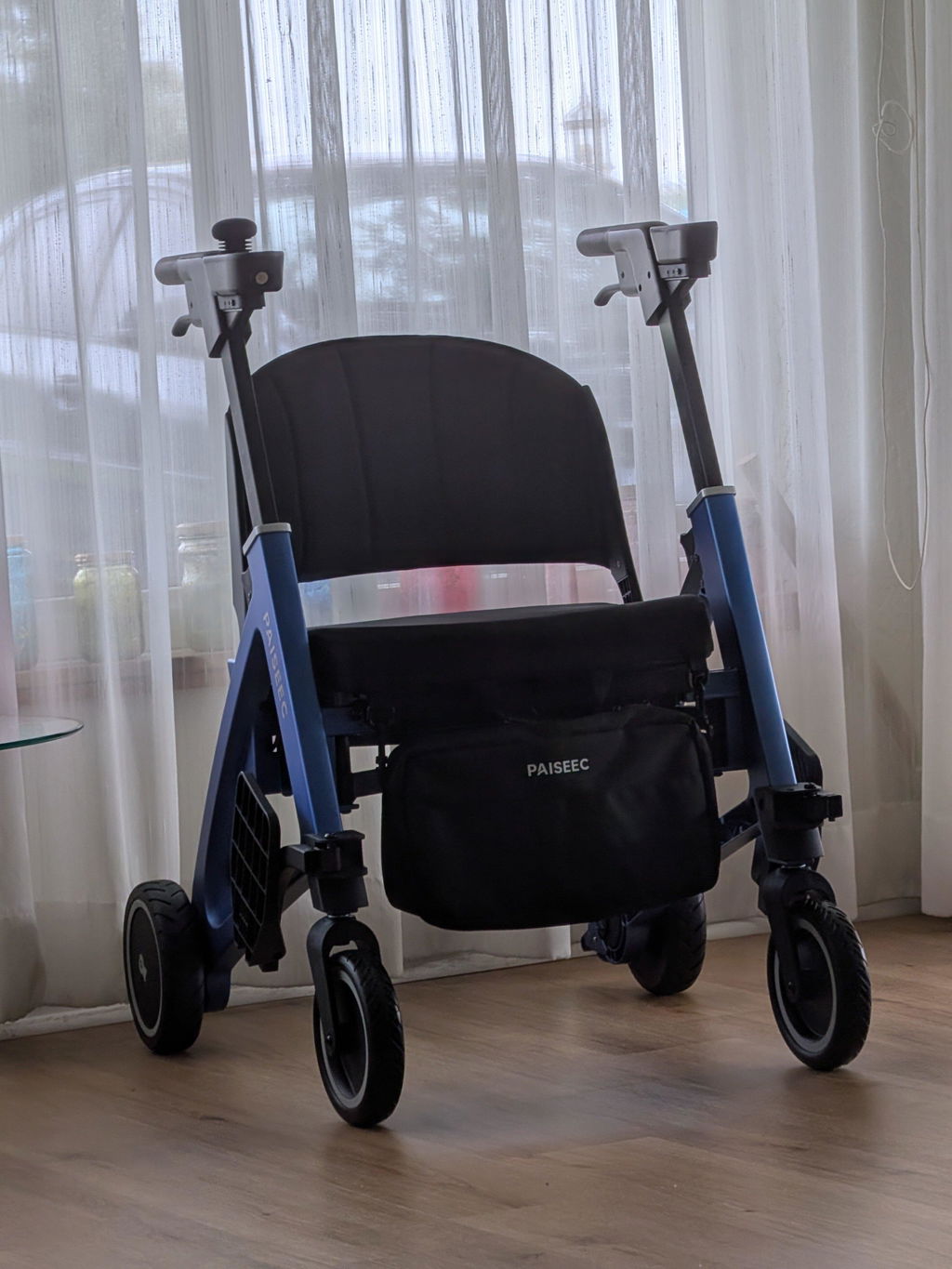
Paiseec Mobility, founded in 2021, develops mobility products that emphasize convenient travel, safety, and performance. Its work in electric mobility includes lithium battery systems, brushless motor technology, intelligent safety design, foldable scooters, multi-functional electric wheelchairs, and mobility accessories for users seeking more independent movement.
Portable Wheelchair for Travel and Transportation
A travel wheelchair should fit the full journey, not merely the destination. Consider the car ride, parking lot, curb ramps, building entrance, restrooms, elevator, restaurant layout, waiting period, and return trip.
For air travel, ask the airline about airport wheelchair assistance, gate-check procedures, baggage handling, and requirements for powered mobility devices. A manual folding transport chair can simplify airport movement, although it should still be labeled clearly and inspected for damage after handling.
For cruise travel, confirm cabin doorway width, accessible bathroom access, gangway conditions, shore-excursion terrain, and storage space. A compact wheelchair for cruises is useful only when it fits the actual cabin and can be operated safely around tight furniture layouts.
A caregiver travel wheelchair should include a visible identification label, emergency contact information, and a small kit with medication, water, charger if needed, wipes, a blanket, and a repair contact number. Keeping essentials organized reduces stressful delays during outings.
Medicare, Insurance, and Wheelchair Coverage
In the United States, Medicare Part B may cover manual wheelchairs as durable medical equipment when medical necessity and home-use requirements are met. Coverage decisions depend on clinical documentation, the individual’s mobility limitations, the prescribed equipment, and the supplier’s participation status.
The Centers for Medicare & Medicaid Services explains that transport chair coverage can include certain initial accessories, while replacement items may be covered when medically necessary. Specialty wheelchair needs may also require evaluation and documentation from qualified clinicians.
A caregiver should not assume that every lightweight wheelchair, travel wheelchair, or transport chair is covered. Ask the prescribing clinician and durable medical equipment supplier about qualification criteria, prior documentation, rental versus purchase arrangements, out-of-pocket responsibilities, repair coverage, and compatible accessories.
Private insurance, Medicaid programs, veterans’ benefits, long-term care plans, and state disability services may have different requirements. Keep copies of prescriptions, clinical notes, receipts, serial numbers, warranties, and repair records.
Real Caregiver Use Cases and Value
A portable wheelchair can reduce the physical and logistical cost of missed appointments, canceled social plans, and difficult transfers. The most meaningful return is often greater access to daily life rather than a simple dollar amount.
A daughter caring for a parent with arthritis may choose a 22-pound folding transport chair for weekly appointments and grocery trips. Compared with a heavier standard wheelchair, a lower carry weight can reduce the strain of loading and unloading several times in one outing.
A spouse supporting a partner after surgery may use a narrow transport wheelchair for clinic hallways, restaurant entrances, and home transitions. Swing-away footrests and dependable wheel locks can speed up transfers while helping the caregiver maintain a safer routine.
A home care professional may prioritize a durable wheelchair with attendant brakes, wipeable upholstery, puncture-resistant tires, and a higher weight capacity. These features can improve reliability across different users and reduce interruptions caused by maintenance issues.
Common Portable Wheelchair Buying Mistakes
Buying only by price can lead to a chair that is too heavy, too narrow, difficult to fold, or poorly suited to the caregiver’s vehicle. A low-cost transport chair is not a value if it stays in storage because it is difficult to load or uncomfortable to use.
Another common mistake is selecting a wheelchair based on user weight capacity alone. Caregivers should also check seat width, seat depth, seat height, back height, footrest reach, door clearance, folded dimensions, brake design, and terrain suitability.
Avoid choosing an outdoor wheelchair with tiny wheels if regular travel includes broken pavement, grass, gravel, or long curb ramps. Similarly, avoid selecting a large heavy-duty wheelchair for occasional indoor transport if a compact lightweight chair would better fit the caregiver’s daily routine.
Do not overlook a trial period, warranty terms, replacement part availability, and return conditions. A wheelchair is a working mobility tool, and service support matters when it is used for essential appointments and daily access.
Portable Wheelchair Care and Maintenance
Clean the frame and upholstery regularly, especially after outdoor travel or medical visits. Check wheel locks, tire condition, footrest hardware, armrest fittings, and folding mechanisms every few weeks.
Remove hair, thread, lint, and debris from wheel hubs and casters. These materials can increase rolling resistance and make a lightweight wheelchair unexpectedly difficult for a caregiver to push.
Store the wheelchair in a dry area when possible. Prolonged exposure to rain, snow, salt, or humidity can affect upholstery, hardware, wheel bearings, and folding parts.
If the chair begins pulling to one side, vibrating, squeaking, or resisting movement, stop using it until the cause is identified. Prompt maintenance may prevent a minor adjustment from becoming a safety issue.
Frequently Asked Questions About Caregiver Wheelchairs
What is the lightest portable wheelchair for caregivers?
The lightest practical option is usually an ultra lightweight folding transport chair. Choose based on verified product weight, safe user capacity, seat fit, brake quality, and whether the caregiver can lift it safely into the intended vehicle.
Is a transport wheelchair good for elderly people?
Yes, a transport wheelchair can work well for older adults who need assisted mobility during errands, appointments, travel, or fatigue-related walking limitations. It is best when a caregiver is available to push and manage the chair.
Can a caregiver push a lightweight wheelchair on ramps?
Yes, but the wheelchair should have effective brakes, appropriate wheel performance, and a route with manageable slope conditions. Caregivers should avoid steep ramps, keep the user positioned securely, and use controlled movement.
What wheelchair fits in a small car?
A compact folding transport wheelchair is often the best choice for a small sedan or hatchback. Confirm folded height, width, depth, and the trunk opening before purchase.
Is a portable wheelchair covered by Medicare?
Medicare coverage may apply to medically necessary manual wheelchairs intended for home use, subject to clinical and supplier requirements. A physician and approved durable medical equipment supplier can explain eligibility for a specific situation.
Should I choose a transport chair or self-propelled wheelchair?
Choose a transport chair when a caregiver will provide the pushing assistance and portability is the priority. Choose a self-propelled wheelchair when the user has the strength, coordination, and need to move independently.
Future of Portable Caregiver Mobility
Portable wheelchairs are moving toward lighter frames, better compact folding systems, improved ergonomic handles, more stable braking, modular seating, and smarter powered mobility options. As families seek mobility equipment that works across home life, travel, appointments, and community activities, versatile designs will become increasingly important.
Electric mobility development is also making caregiver support more flexible. Lightweight folding electric wheelchairs, intelligent safety systems, improved battery technology, and responsive control options can help reduce pushing demands while giving many users more freedom to participate in daily routines.
Start by measuring the user, home, and vehicle, then compare portable wheelchairs based on real caregiver handling needs rather than marketing claims. When the chair fits the person and the routine, it can make every outing safer, simpler, and more possible.
Leave a comment
This site is protected by hCaptcha and the hCaptcha Privacy Policy and Terms of Service apply.