




![[2026] PAISEEC D3|Mobility Scooter for Easy Everyday Travel](http://www.paiseec.com/cdn/shop/files/d3_4a4ccb22-9e26-449e-8094-71f3ec4177c3.png?v=1782115044&width=180)

















Mobility products for daily independence help individuals stay active, travel farther, reduce caregiver strain, and prevent dangerous falls. Choosing the right assistive technology means finding a lightweight, portable solution that perfectly matches an individual's unique balance, physical strength, home layout, and travel goals.
Whether navigating a tight bathroom doorway, completing daily meal preparation, or planning a flight, selecting the correct equipment ensures dignified, self-reliant living.
The Global Shift in Assistive Technology
The market for daily living aids is evolving rapidly. Mobility products for daily independence are no longer niche equipment; they are essential tools within a fast-growing assistive technology ecosystem shaped by an aging global population and a rising demand for active lifestyles.
Recent global market data indicates the powered mobility sector is expanding at an unprecedented rate, driven by a collective push for lightweight, travel-friendly engineering. According to data from the Centers for Disease Control and Prevention (CDC), tens of millions of adults live with mobility limitations that impact daily functional activities. Concurrently, World Health Organization (WHO) benchmarks estimate that over 80 million people worldwide require reliable wheelchair or walking support, underlining a massive, continuous need for adaptive design.
In this landscape, modern brands like Paiseec are redefining accessibility by developing specialized mobility scooters, high-performance electric wheelchairs, and rolling transit aids that focus heavily on structural transportability and everyday convenience.
Why Daily Independence Matters: Addressing Key Pain Points
Independence is often compromised in small, overlooked moments: a curb that feels slightly too high, a grocery aisle that feels too long, or a family gathering that becomes physically exhausting. True accessibility is about preserving autonomous involvement in standard routines without relying on a caregiver for every movement.
When evaluating how to manage daily living tasks, users and families must overcome four major friction points:
-
Terrain Variability: A standard sidewalk may be smooth on one block and cracked, sloped, or uneven the next. A device’s weight distribution, tight turning radius, and responsive braking systems are just as critical as its seating comfort.
-
Travel and Transit Friction: Active individuals require equipment that fits seamlessly into a standard car trunk, loads into a rideshare vehicle without tools, and passes airline inspection rules without complicated disassembly. This makes airline-approved lithium batteries and single-motion folding frames non-negotiable.
-
Caregiver Strain: When an assistive device is overly heavy, bulky, or awkward to fold, caregivers face repetitive physical strain during vehicle transfers. This stress frequently reduces the likelihood of the device being used consistently, limiting the user's social circle.
-
Economic Longevity: While the powered mobility market offers many premium choices, high-end specialized equipment can be cost-prohibitive. Buyers comparing market options look for highly versatile, multi-use designs that offer exceptional long-term durability and value.
Comprehensive Spectrum of Daily Living Solutions
Achieving true independence extends beyond basic transit. A safe, functional home environment combines large-scale mobility hardware with specialized daily living aids to manage personal care, household tasks, and outdoor exploration.
1. Outdoor, Transit, and Active Mobility
Active mobility equipment is engineered to bridge the gap between home environments and the community. This category includes high-efficiency travel scooters, four-wheel rollator walkers with built-in rest seats, and advanced power wheelchairs equipped with elevating seating systems that allow users to reach standard kitchen countertops or interact safely at eye level.
2. Dressing, Hygiene, and Self-Care Aids
Personal care tools reduce the physical bending and precision grip strength required for morning routines. Essential adaptations include long-handled shoehorns, sock aids, magnetic shoe closures, flexible grooming mirrors, and adaptive, easy-squeeze toothpaste dispensers that support individual personal hygiene.
3. Meal Preparation and Independent Dining
The kitchen introduces unique stability challenges. Independence is sustained through the integration of non-slip suction mats, weighted or angled ergonomic utensils, one-handed can openers, and universal cup holders designed to mount directly onto walkers, power chairs, or mobility scooters.
4. Critical Home Safety and Transfer Equipment
Because a significant percentage of senior falls occur during ordinary transfers, the home interior must be structurally reinforced. High-impact solutions include secure shower chairs, heavy-duty bathroom grab bars, raised toilet seats, transfer benches, and specialized electric lift cushions that assist individuals in transitioning from a deep armchair to a standing position safely.
Product Evaluation Matrix: Finding the Correct Fit
No single mobility tool fits every physical condition. A device must be selected based on explicit mobility profiles, weight capacities, and primary environments.
| Device Category & Options | Ideal User Profile | Key Strengths & Technical Advantages | Primary Trade-Offs & Considerations |
| Paiseec 3-in-1 Multi-Function Chair (W3) | Users seeking a single, adaptive device for changing stamina levels throughout the day. | Combines an electric wheelchair, electric transport chair, and smart rollator walker; airline-approved; 300 lbs capacity. | Slightly heavier than a stripped-down manual transport chair. |
| Paiseec Carbon Fiber Wheelchair (Q5) | Travelers and caregivers prioritizing the absolute lowest lifting weight without losing power. | Ultra-lightweight carbon fiber frame; highly responsive controls; premium durability; airline-approved battery. | Higher upfront material cost compared to standard aluminum frames. |
| Standard Manual Wheelchair | Users seeking a lower upfront cost with reliable short-distance indoor capabilities. | Simple mechanical structure; requires no battery charging or electrical maintenance. | Requires significant upper-body strength or continuous caregiver pushing effort. |
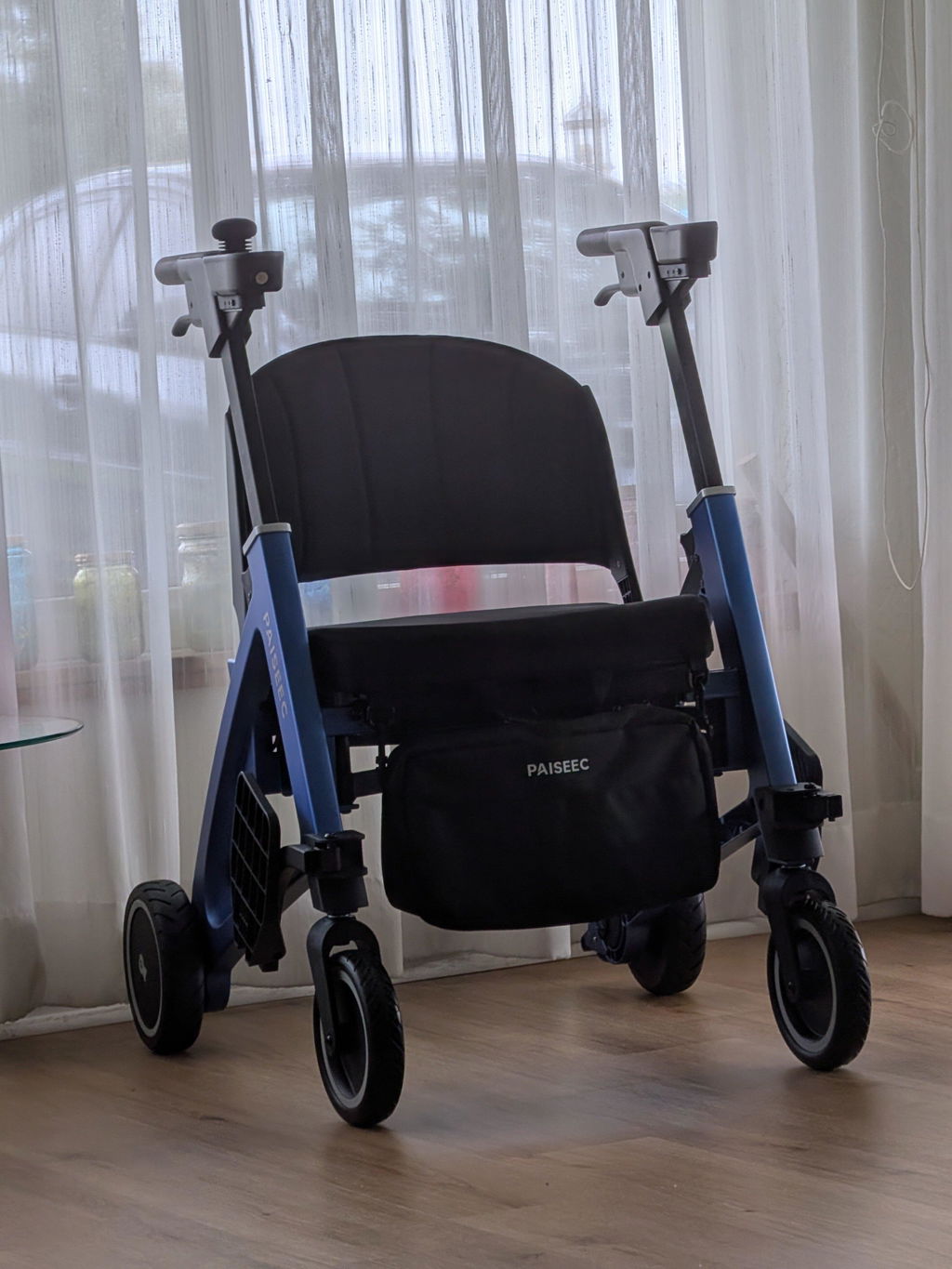
| Four-Wheel Rollator Walker | Individuals who can walk independently but require frequent rest breaks and storage. | Built-in seating; lightweight frame; highly maneuverable for neighborhood walks. | Provides zero powered propulsion; requires steady hand-brake coordination. |
| Traditional Mobility Scooter | Users focused on seated, stable travel over longer outdoor distances and casual paths. | Excellent outdoor tire clearance; extended battery range; comfortable for all-day excursions. | Less flexible for tight indoor turns or side-transfers in narrow rooms. |
| Ergonomic Ergonomic Canes | Individuals needing minor balance support for short indoor corridors. | Minimalist profile; highly portable; easily adjusts to exact user wrist height. | Offers minimal fall protection for severe weakness or dizziness. |
Engineering Deep-Dive: Core Technical Features
When choosing a modern mobility solution, specific engineering metrics dictate whether a device succeeds in real-world environments.
Compact Foldability and Weight Optimization
Modern engineering utilizes high-grade materials like carbon fiber and aerospace-grade aluminum alloys to minimize lifting weight. Advanced folding mechanisms allow electric chairs and scooters to collapse into a single, compact unit within seconds, ensuring they slide effortlessly into compact trunks or small apartment closets.
Smart Battery Management and Global Airline Compliance
Reliable range eliminates range anxiety. Top-tier options like the Paiseec W3 utilize removable 24V 12Ah lithium batteries, delivering up to 15.6 miles of continuous operation per single 5-hour charge cycle. For users seeking ultra-light frames, the Paiseec Q5 features a 24V 10Ah lithium setup yielding 14 miles of range. Both systems are fully certified as airline-safe, meeting strict international transport regulations for commercial flight storage.
Intelligent Multi-Use Modular Architecture
Transitioning between distinct medical devices can be frustrating and expensive. Multi-use architectures integrate multiple functional roles into a single frame. A premium multi-use chair can serve as a traditional powered wheelchair when the user is fatigued, transform into a stable walking rollator during physical therapy routines, and act as a caregiver-pushed transport chair for medical appointments.
Real-World Daily Living Scenarios
Scenario 1: Home-to-Vehicle Commuting
-
The Traditional Approach: Relying on a standard, heavy power chair often requires an expensive vehicle ramp installation or awkward, two-person lifting maneuvers that risk back injuries.
-
The Modern Solution: Utilizing a light, foldable carbon fiber frame with a quick-release removable battery allows a single user or caregiver to easily lift, load, and store the device in an unmodified car trunk.
Scenario 2: Extended Community Integration and Errands
-
The Traditional Approach: An individual avoids local street festivals, museums, or outdoor shopping centers because walking long distances causes severe fatigue, joint pain, or shortness of breath.
-
The Modern Solution: Deploying an agile travel mobility scooter or a smart power chair allows the user to navigate crowds smoothly, matching the walking pace of family members without physical exhaustion.
Scenario 3: Travel Logistics and Multi-Stop Trips
-
The Traditional Approach: Packing separate pieces of equipment—a walker for indoors, a heavy scooter for outdoors, and a transport chair for the airport—creates immense baggage confusion and high stress.
-
The Modern Solution: Traveling with a unified 3-in-1 multi-functional mobility system allows a single device to adapt dynamically to airport terminals, hotel elevators, and paved outdoor historic paths.
Strategic Selection Framework: How to Choose Safely
Before purchasing any mobility aid or daily living tool, follow this systematic evaluation framework to ensure optimal safety and product utility:
-
Analyze the Primary Terrain: Map out the user's daily pathways. Does the device need to maneuver through narrow indoor apartment hallways, or will it primarily tackle outdoor cracked pavements, gravel paths, and public ramps?
-
Evaluate Physical Capacities: Assess the user's exact grip strength, hand brake control, sitting balance, and cognitive ability to operate powered controls safely. Turn radius and intuitive joystick layouts matter immensely.
-
Audit the Caregiver Support System: Determine who will be responsible for adjusting the device, checking tire pressures, plugging in the battery charger, and lifting the unit into transport vehicles.
-
Verify Structural Fit and Dimensions: Always cross-reference the user’s weight and hip width against the device’s certified maximum weight capacity and seat dimensions. Ensure the exterior width clears all residential bathroom doors.
-
Address Home Safety Intersections: Integrate smaller daily living aids simultaneously. A premium mobility scooter handles travel, but it must be paired with secure bathroom grab bars, non-slip mats, and shower benches to prevent falls during critical home transfers.
Device Longevity and Preventive Maintenance
Long-term personal freedom depends on keeping your equipment in optimal working order. Treat battery care, mechanical checks, and structural cleanliness as essential habits rather than afterthoughts:
-
Battery Preservation: Never let lithium batteries drain completely to zero. Charge the power pack after every extended outing using the manufacturer-specified smart charger, and store the battery in a climate-controlled environment to extend its operational lifespan.
-
Hardware and Brake Audits: Regularly inspect the frame for loose hardware, check electronic joystick responsiveness, and test the automatic electromagnetic braking systems before navigating inclined surfaces.
-
Accessory Organization: Keep essential replacement parts, alternative charging cables, and weather-resistant storage bags on hand. Accessories should always serve a practical purpose, keeping the mobility base streamlined and functional.
Frequently Asked Questions
What are mobility products for daily independence?
They encompass a wide range of specialized assistive devices—such as lightweight electric wheelchairs, travel scooters, rollators, adaptive kitchen implements, and bathroom safety grab bars—engineered to reduce physical strain, prevent accidental falls, and help individuals navigate daily life safely.
Which mobility aids are best suited for regular travel?
Travel-optimized equipment features ultra-lightweight frames, single-motion compact folding designs, and specialized lithium-ion batteries certified by international regulatory bodies as safe for commercial airline flight storage.
Are lightweight electric wheelchairs preferable for caregivers?
Yes. Minimizing frame weight drastically decreases the repetitive lifting strain placed on caregivers during vehicle transfers, making it much easier to load equipment into standard trunks without risking injury.
How does a mobility scooter differ from an electric wheelchair?
A mobility scooter typically utilizes a front tiller steering handle and is ideal for users with good upper-body stability who need to travel longer outdoor distances. An electric wheelchair uses a precise, highly sensitive joystick control, offers a tighter turning radius, and excels at navigating tight indoor spaces and facilitating side-transfers.
Does insurance or Medicare cover adaptive mobility equipment?
Specific mobility equipment may qualify as Durable Medical Equipment (DME) when determined to be medically necessary and explicitly prescribed by a licensed healthcare clinician. Coverage parameters vary based on insurance providers, thorough medical documentation, and authorized supplier networks.
What is the primary benefit of an integrated 3-in-1 mobility chair?
A 3-in-1 design consolidates the therapeutic benefits of a physical therapy rollator walker, the ease of an electric transport chair, and the independence of a powered wheelchair into a single, highly adaptable frame, saving families money and storage space.
Can adaptive mobility equipment completely eliminate the risk of falls?
While properly fitted mobility aids significantly reduce physical strain and balance loss, they must be used in tandem with broader home safety practices, proper footwear, adequate interior lighting, regular vision care, and medical consultations.
Comprehensive Niche Catalog Access
To explore specific devices, cross-reference dimensional layouts, and build a personalized independence setup, navigate through our dedicated collections:
-
The Full Mobility Scooters Range: Designed for long-range outdoor stability, community events, and reliable seated travel.
-
The Electric Wheelchairs Showcase: Featuring cutting-edge carbon fiber frames, joystick controls, and ultra-tight turning capabilities for indoor-outdoor flexibility.
-
The Dedicated Accessories Hub: Offering certified airline-approved backup batteries, high-efficiency smart chargers, durable storage bags, and factory-authorized replacement parts.
-
The Complete Products Index: A centralized, side-by-side comparison matrix displaying technical specifications, total weights, and load ratings for the entire product lineup.
Official Safety References and Public Resources
-
Centers for Disease Control and Prevention (CDC): Older Adult Fall Prevention and Community Disability Data Indexing.
-
World Health Organization (WHO): International Guidelines on the Provision of Manual and Powered Wheelchair Services.
-
Medicare.gov: Official Durable Medical Equipment (DME) Coverage Standards, Supplier Directories, and Eligibility Forms.
-
MedlinePlus / National Institutes of Health: Comprehensive Assistive Technology and Daily Living Aids Resource Guide.
Important Informational Notice
This guide is provided for educational and informational purposes only. It does not constitute formal medical diagnosis, clinical treatment protocols, health insurance approvals, or legal financial advice. Before choosing, sizing, or purchasing any specialized mobility device or durable medical equipment, always consult with a licensed healthcare provider, physical therapist, or certified assistive technology professional. In the event of a medical emergency or a severe fall involving injury, immediately contact emergency services or call 911.


Leave a comment
This site is protected by hCaptcha and the hCaptcha Privacy Policy and Terms of Service apply.