




![[2026] PAISEEC D3|Mobility Scooter for Easy Everyday Travel](http://www.paiseec.com/cdn/shop/files/d3_4a4ccb22-9e26-449e-8094-71f3ec4177c3.png?v=1782115044&width=180)

















Mobility scooter demand continues to rise as aging populations, travel access needs, and electric mobility adoption expand simultaneously. Recent industry reports place the global mobility scooter market in the low-single-digit billions of dollars, with forecasts pointing to steady growth through the next decade. At the same time, aviation transit data show that mobility devices remain uniquely vulnerable during travel, keeping portability, structural integrity, and true travel readiness at the absolute top of the consumer buying checklist. For brands serving seniors, global travelers, and everyday users, the modern market is no longer only about basic transport—it is fundamentally about confidence, safety, and uncompromising convenience.
Paiseec is positioned squarely in this specialized sector with an engineered product line centered on lightweight mobility scooters, advanced electric wheelchairs, and ergonomic rollator walkers. By prioritizing rapid foldability, airline-compliant power systems, and outdoor chassis stability, the collection directly answers the explicit needs of shoppers actively comparing compact scooters for daily community errands, long-distance vacations, and indoor accessibility.
What is a Mobility Scooter?
A mobility scooter is a powered, personal auxiliary transport device designed to help individuals travel farther, conserve physical energy, and maintain complete personal autonomy. In practical daily application, it fills the critical utility gap between a manual aid and a heavy, non-portable traditional power chair. By providing a comfortable seated ride with intuitive steering tillers, precise throttle controls, and high-efficiency rechargeable battery configurations, it empowers users to navigate the world on their own terms. For the vast majority of consumers, the ultimate deciding factor during research is not just the baseline promise of mobility, but whether the physical unit can seamlessly adapt to the dimensions of their vehicles, their homes, and their exact travel routines.
Crucial Structural Configurations: Three-Wheel vs. Four-Wheel
When selecting a personal mobility vehicle, the physical wheel architecture dictates the primary operating environment:
-
Three-Wheel Configurations: Engineered explicitly to provide maximum legroom and an exceptionally tight turning radius. This layout allows users to navigate cramped indoor spaces, narrow apartment hallways, and packed grocery store aisles with effortless steering precision.
-
Four-Wheel Configurations: Designed to distribute total weight more evenly across a broader footprint. This setup provides superior lateral stability and enhanced safety when crossing outdoor thresholds, navigating unpaved paths, or climbing moderate neighborhood inclines.
Why Buyers Hesitate: Real-World Friction Points
The single greatest point of friction in the purchasing journey is not a lack of desire for freedom, but rather the practical reality of physical fit. Users desperately want to regain their independence, yet they face valid concerns regarding whether a device can easily fold, store, load, and handle real-world surfaces without converting every single family outing into a complex logistical challenge. This makes ultra-lightweight frames, tool-free compact folding mechanisms, and highly predictable exterior dimensions non-negotiable requirements for this product category.
Ground Clearance and Component Durability
A mobility scooter that performs flawlessly on a smooth showroom floor can easily become a liability when encountering real-world obstacles like grass, gravel, high door thresholds, or uneven city sidewalks. True independence requires robust motors, dependable suspension assemblies, and high-quality flat-free or pneumatic tires that completely eliminate the risk of mid-trip breakdowns.
Weight Capacities and Mechanical Efficiency
Standard portable travel models typically accommodate a structural payload of up to 300 lbs safely. However, matching user weight with structural reinforcement is essential. If a frame is underbuilt for the user's requirements, it leads to structural flexing, drastically reduced battery efficiency, compromised hill-climbing power, and an unstable, unsafe riding experience over time. Heavy-duty variants bridge this gap by offering reinforced, high-tensile steel or heavy-gauge aluminum frames capable of supporting up to 350 lbs without dropping performance metrics.
Range Anxiety and Travel Vulnerabilities
Battery range anxiety quickly translates into mobility anxiety when a device is relied upon to support full-day excursions, theme park trips, or complex airport transfers. Furthermore, international travel introduces deep concerns regarding baggage handling safety. With official aviation records showing that over eleven thousand wheelchairs and mobility scooters are damaged or completely destroyed by airlines in a single calendar year, consumers now intensely scrutinize how easily a scooter folds down to protect its core components, how well it withstands rough handling in cargo holds, and whether its battery packs comply with international flight standards.
Product Architecture: Addressing Consumer Pain Points
The Paiseec mobility scooter product matrix directly addresses these core consumer hesitations by shifting focus away from bulky, institutional designs toward lightweight, highly portable, and travel-optimized solutions tailored for independent adults and active seniors. Every model in the lineup signals real-world ownership benefits, combining high-torque brushless motor technology and premium lithium-ion battery integration with streamlined, airline-compliant architectures. By striking a precise balance between effortless portability and rugged daily dependability, the collection eliminates the traditional compromises that historically forced buyers to choose between a heavy heavy-duty unit and an unstable travel scooter.
Detailed Model Matrix and Specifications
The collection offers distinct structural layouts optimized for specific user weight capacities, terrain preferences, and transportation environments:
Portable Travel Series (Paiseec L5)
-
Optimized Environments: Ultra-portability, frequent vehicle lifting, flights, cruises, and tight indoor tight spaces.
-
Key Metrics: Weighs just 32 lbs, featuring a single-motion 3-second one-hand folding mechanism that collapses the unit into the size of a portable suitcase.
-
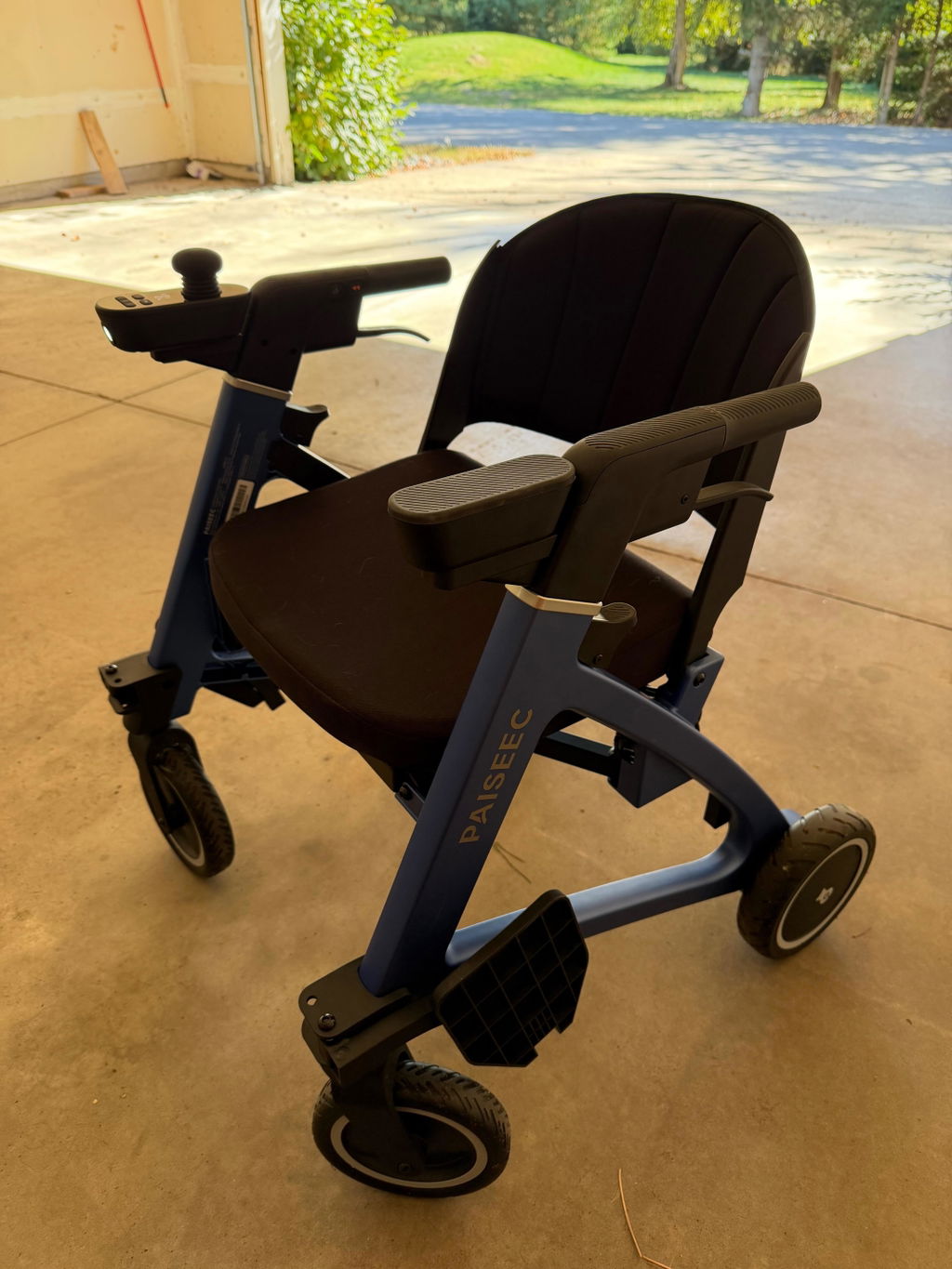
Performance: Powered by a quiet brushless motor and an airline-compliant lithium-ion battery delivering up to 15 miles per charge, supporting a weight capacity of up to 265 lbs. It provides an ergonomic ride with an adjustable steering column, armrests, and a 3.54-inch ground clearance.
Endurance Series (Paiseec S3 & S1)
-
Optimized Environments: Multi-terrain outdoor exploration (grass, gravel, curb cuts) balanced with extended travel horizons.
-
Key Metrics: Features heavy-duty 250W power systems, robust electronic braking curves, and an intelligent safety system that utilizes built-in sensors to automatically reduce speed during sharp turns and steep downhills.
-
Performance: Equipped with high-capacity 36V 12Ah lithium arrays (S3) or energy-recovery lead-acid setups (S1) that unlock an impressive 25-mile range on a single charge. Large wheels (9-inch front and 10-inch rear) effortlessly glide over obstacles and curb cuts up to 2.76 inches high with a maximum forward speed of 6.2 mph and a structural payload capacity up to 300 lbs.
Heavy-Duty Utility Series (Paiseec D1)
-
Optimized Environments: Users requiring maximum physical payload capacity, robust structural reinforcement, and modular vehicle transport.
-
Key Metrics: Features a tool-free quick-disassembly frame that separates cleanly into four lightweight components for effortless loading without straining.
-
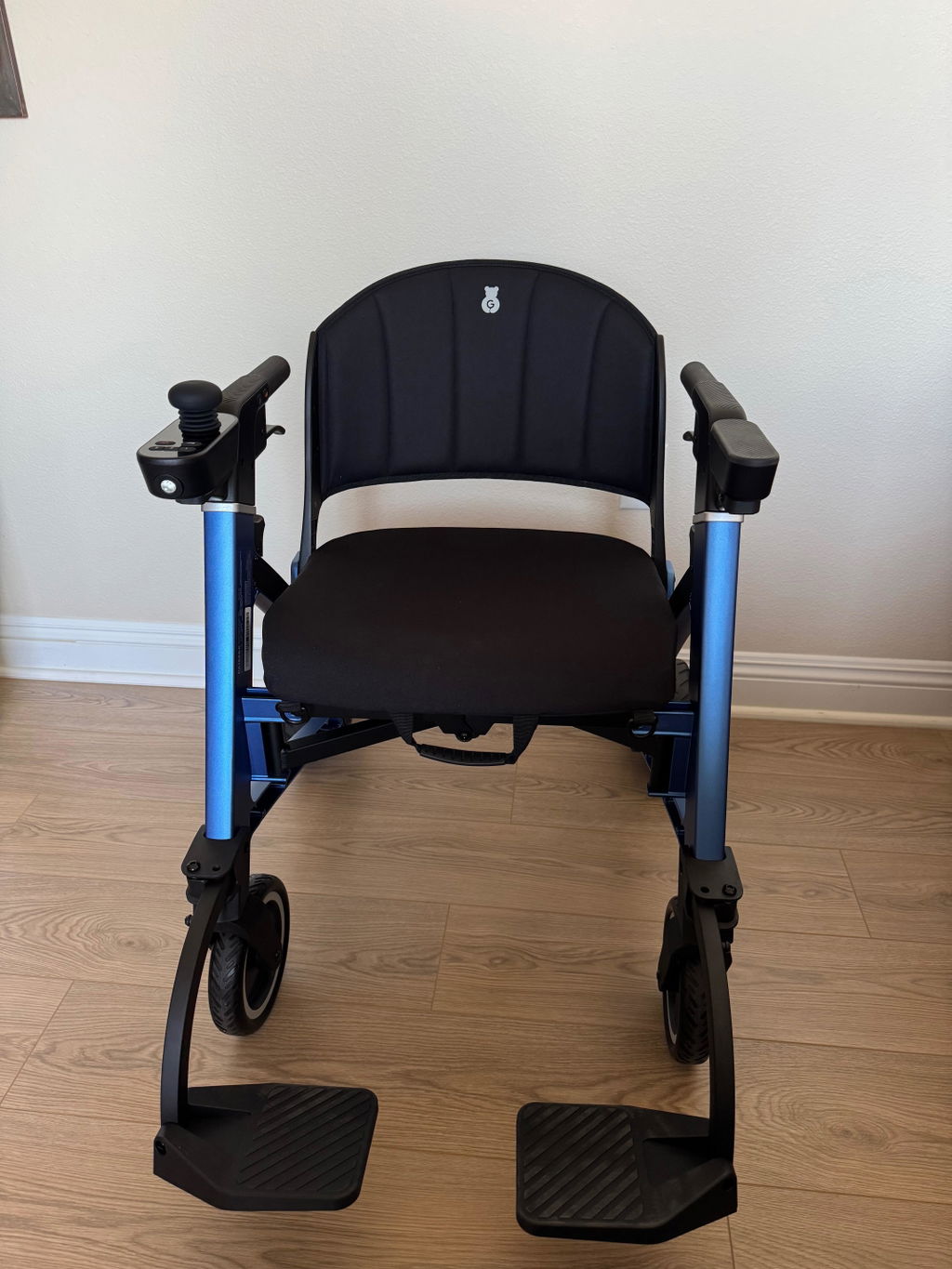
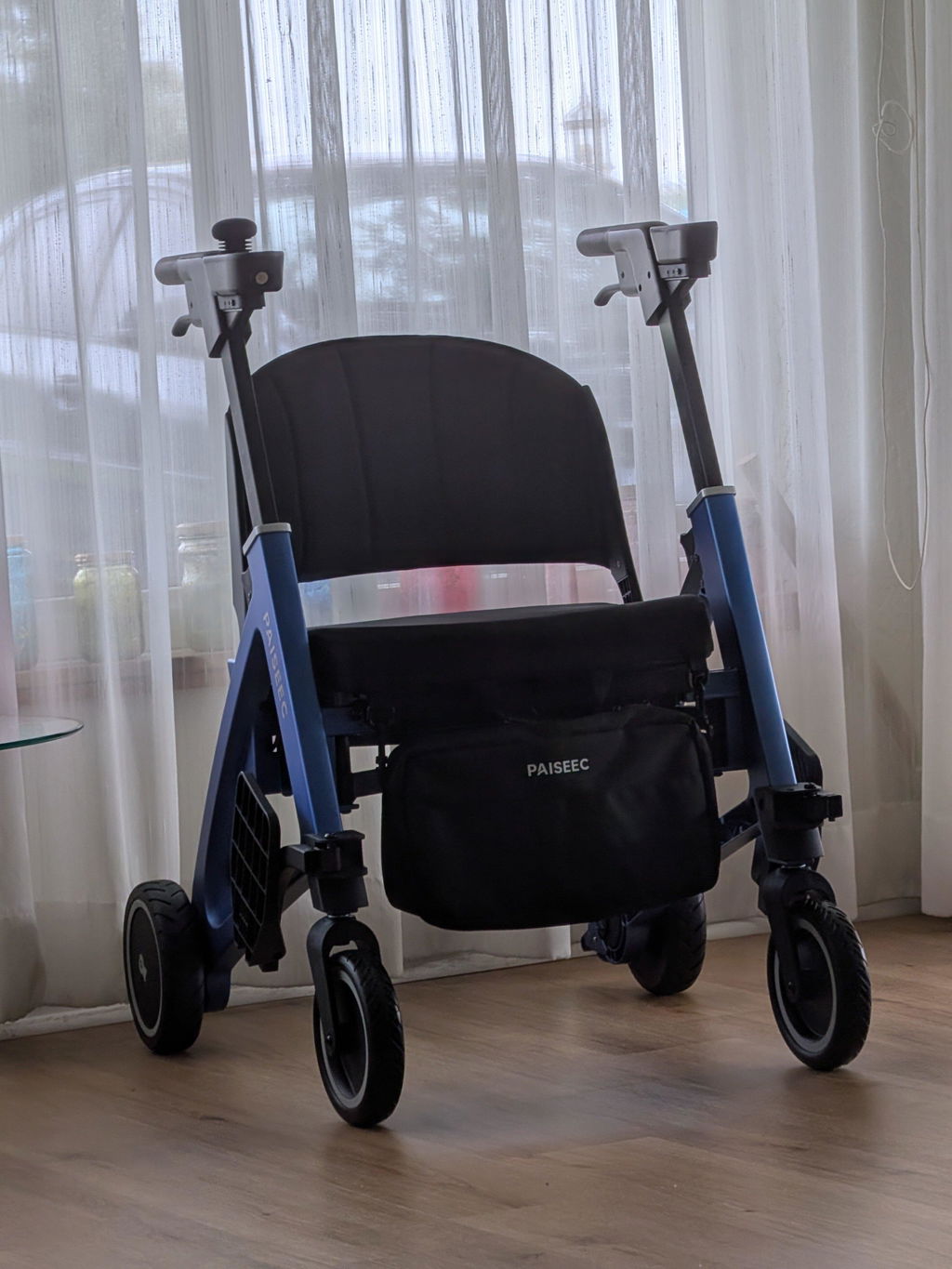
Performance: Engineered explicitly to support a heavy-duty weight capacity of up to 350 lbs safely. It comes equipped with 8-inch flat-free puncture-proof tires, a 360-degree swivel seat with flipback armrests, an intuitive easy-to-read dashboard, and two removable baskets for substantial daily storage.
Core Engineering Features
Fast Fold-and-Go Architecture
The engineering focus centers on simple, rapid manual foldability and compact structural storage. This makes the entire category dramatically easier to manage for individuals who live in space-conscious homes, condominiums, or retirement communities. The folded footprint allows the scooter to rest neatly inside standard automobile trunks, closets, or tight entryways rather than behaving like a permanently parked, obstructive appliance.
Precision Airport and Flight Compliance
The integration of specialized lithium-ion battery packs engineered to meet rigorous international flight safety specifications gives users total peace of mind. By explicitly designing both the electrical systems and the exterior frame profiles to align with strict airline baggage handling workflows, the collection allows owners to confidently navigate international terminals, check their devices at the gate, and transition smoothly from departure to arrival.
Advanced Comfort, Ergonomics, and Drive Control
User-focused feedback underscores the real-world value of smooth electronic braking curves, predictable throttle responses, and extended operational battery life. This specialized tuning is highly beneficial for older drivers who require highly intuitive control layouts, dual-hand throttle levers, clear battery level indicators, and stable, shock-absorbing chassis behavior when transitioning over concrete sidewalk seams and unpredictable urban thresholds.
Diverse Technical Lineup and Extended Product Catalog
An individual's personal mobility requirements are dynamic and often evolve over time. Beyond standalone travel scooters, the broader brand architecture incorporates high-performance folding electric wheelchairs and lightweight rollator solutions. This comprehensive ecosystem allows users to stay within a trusted brand family as their daily routines change—for instance, utilizing a stable four-wheel travel scooter for expansive outdoor excursions and family vacations, while integrating a tight-turning electric wheelchair for refined, close-quarters indoor home navigation.
Technical Selection Framework: How to Choose the Perfect Scooter
-
Analyze the Dominant Operating Environment First: Determine if your daily routine involves navigating tight indoor apartment hallways, standard paved neighborhood sidewalks, or unpredictable outdoor spaces like grass fields and gravel park trails.
-
Evaluate Foldability Against Physical Lifting Realities: Always verify the weight of the heaviest single component post-disassembly or the total weight of the folded unit. Ensure that you or your caregiver can comfortably lift and load that specific mass into your vehicle's trunk without straining.
-
Calculate Realistic Daily Range Requirements: Assess your longest expected transit day—such as a non-stop morning-to-night theme park holiday—rather than your shortest neighborhood grocery errand. If your lifestyle demands extended horizons, prioritize high-capacity power options that deliver a continuous 25-mile range on a single charge.
-
Confirm the Intended Payload and Frame Rating: Choose a chassis that provides a comfortable buffer above your actual body weight. If you require higher thresholds or carry extra gear, step up to a heavy-duty reinforced frame to completely preserve optimal motor efficiency and battery longevity.
-
Prioritize After-Sales Support and Component Serviceability: Treat long-term part availability, clear warranty terms, and responsive customer service with the exact same importance as the initial retail purchase price to guarantee a seamless, multi-year ownership experience.
Practical Scenarios: Transforming Daily Mobility
Theme Park and Full-Day Family Outings
-
The Traditional Approach: Relying entirely on local on-site rental departments upon arrival. This leaves users vulnerable to long waiting lines, premium daily rental fees, unpredictable device availability, and unfamiliar, bulky equipment configurations that ruin the comfort of a family vacation.
-
The Optimized Solution: Bringing a personal, custom-fit travel scooter that remains with the user from the hotel room to the park gates. This eliminates all operational uncertainty, ensures continuous all-day comfort, and allows the user to easily keep pace with family members across expansive attraction grounds.
International Commercial Flight Workflows
-
The Traditional Approach: Depending blindly on generic airline handling protocols while constantly worrying about cargo damage, missing pieces, complex battery removal rules, and catastrophic delays at destination baggage claims.
-
The Optimized Solution: Operating a highly compact, flight-certified folding travel scooter. By preparing the compliant lithium battery packs in advance and utilizing the streamlined folding mechanism right at the aircraft boarding gate, travelers drastically lower transit risks and maintain full control over their personal mobility.
Daily Neighborhood Errands and Indoor Accessibility
-
The Traditional Approach: Severely limiting personal trips and social outings because the physical walking distances to the store, community center, or park become too exhausting, forcing isolation.
-
The Optimized Solution: Utilizing a versatile personal vehicle featuring a tight turning radius and highly predictable outdoor stability. This allows users to effortlessly cruise down paved community paths, confidently cross uneven street thresholds, and seamlessly transition directly into narrow grocery store aisles without ever needing to swap devices or request constant physical assistance.
Mobility Scooter Frequently Asked Questions
What defines the absolute best mobility scooter for long-distance travel?
The premier travel mobility vehicle is defined by a highly harmonious balance of rapid, tool-free foldability, lightweight structural materials, and uncompromised structural stability. It must feature certified, flight-compliant battery modules and an engineered folded profile that fits effortlessly into standard automobile trunks. The entire design should be optimized to reduce travel friction during frequent vehicle loading and unloading sequences.
Are foldable travel mobility scooters safe and practical for seniors?
Yes, advanced foldable models provide a phenomenal avenue for seniors to regain complete personal autonomy without being burdened by a massive, institutional asset. The critical factor is ensuring that the chosen model features highly intuitive operational controls, smooth automatic braking, easy-to-read battery telemetry, and a physical chassis weight that aligns with the lifting capabilities of the user or their immediate caregiver.
What is the average realistic driving range on a single battery charge?
Total operational range is highly dependent on individual rider weight, ambient temperatures, local terrain slope, and the underlying battery chemistry. While ultra-portable indoor-centric travel models focus on short, highly efficient cycles, robust heavy-duty long-range units utilize high-capacity premium lithium arrays or advanced power management systems to deliver exceptional single-charge travel distances of up to 25 miles.
Can I take a personal mobility scooter on a commercial airplane flight?
Yes, the vast majority of premium personal mobility devices are fully permitted on commercial flights, provided that the underlying battery packs explicitly comply with international aviation safety rules regarding lithium-ion capacities. It is always highly recommended to verify specific gate-checking workflows directly with your operating airline carrier prior to your scheduled departure date.
What core technical metrics should be analyzed beyond the base retail price?
Smart consumers look far beyond the initial sticker price to carefully analyze the exact mechanical turning radius, total ground clearance, wheel configuration, actual motor wattage output, and the long-term reliability reputation of the brand. Real-world daily satisfaction is determined entirely by how seamlessly the vehicle's physical dimensions integrate with your home, your car trunk, and your primary driving terrain.
Why should a buyer invest in a dedicated mobility brand over a generic alternative?
Investing in a specialized mobility brand guarantees that your equipment is deliberately engineered around user independence, ultra-clean product aesthetics, and continuous cross-product compatibility. By focusing on lightweight, highly portable, and travel-first form factors, a dedicated brand removes the stress of product research, offering clear, reliable mobility solutions backed by real lifestyle utility and consistent component support.
Final Review
A personal mobility vehicle delivers its greatest life value when it completely removes daily friction instead of creating new operational chores. The absolute strongest products on the market are not merely electric; they are intelligently portable, highly manageable, and explicitly engineered to integrate into real, unassisted daily life, adventurous travel, and compact home environments.
The entire mobility framework perfectly mirrors this modern market direction by focusing heavily on fast manual foldability, robust structural integrity, and versatile, multi-terrain lifestyle usability. For any consumer actively comparing contemporary travel options, this precise combination of elite engineering metrics effectively transforms a standard technical specification sheet into an empowering, life-changing personal asset.
Leave a comment
This site is protected by hCaptcha and the hCaptcha Privacy Policy and Terms of Service apply.