




![[2026] PAISEEC D3|Mobility Scooter for Easy Everyday Travel](http://www.paiseec.com/cdn/shop/files/d3_4a4ccb22-9e26-449e-8094-71f3ec4177c3.png?v=1782115044&width=180)

















The Accelerated Evolution of Travel Mobility Architecture
The landscape of personal transit is experiencing a massive shift. Travel mobility aids—once classified as niche medical equipment—have transitioned into a central pillar of independence for older adults and individuals with limited physical stamina. As global travel volumes break records, modern passengers demand devices that seamlessly navigate the dense logistics of airport terminals, cruise ship corridors, European cobblestones, and theme park environments.
This market expansion is heavily propelled by strict structural changes within the travel ecosystem. On January 16, 2025, the U.S. Department of Transportation (DOT) enacted its rigorous Final Rule regarding wheelchair air travel. This mandate enforces stricter staff training, imposes heavy penalties for mishandled equipment, and establishes passenger rights for safe, dignified transfers. Consequently, the criteria for evaluating a travel mobility device have shifted from raw motor power to dynamic transit compatibility: folding velocity, weight efficiency, precise chassis dimensions, and strict battery safety compliance.
Decoupling the Core Travel Pain Points
Standard mobility equipment built for home use routinely fails under the structural pressures of transit. Heavy frames, rigid steering configurations, and complex disassembly routines introduce critical friction points during vehicle loading and security checkpoints.
Air travel introduces the highest layer of operational risk. Historically, mishandled wheelchairs and unsafe physical transfers have caused severe travel disruptions. However, the true day-to-day frustration for travelers is spatial and logistical uncertainty:
-
Chassis Geometry: A power chair that performs flawlessly on wide neighborhood sidewalks may completely jam inside a compact hotel elevator, a narrow cruise cabin door, or a standard taxi trunk.
-
The Weight Barrier: Devices exceeding manageable thresholds place immense physical strain on travel companions and baggage handlers, increasing the likelihood of structural damage during gate-checking.
-
The Power Conundrum: Traditional lead-acid batteries are too heavy for rapid transport, yet advanced lithium-ion alternatives face intense regulatory scrutiny at security checkpoints.
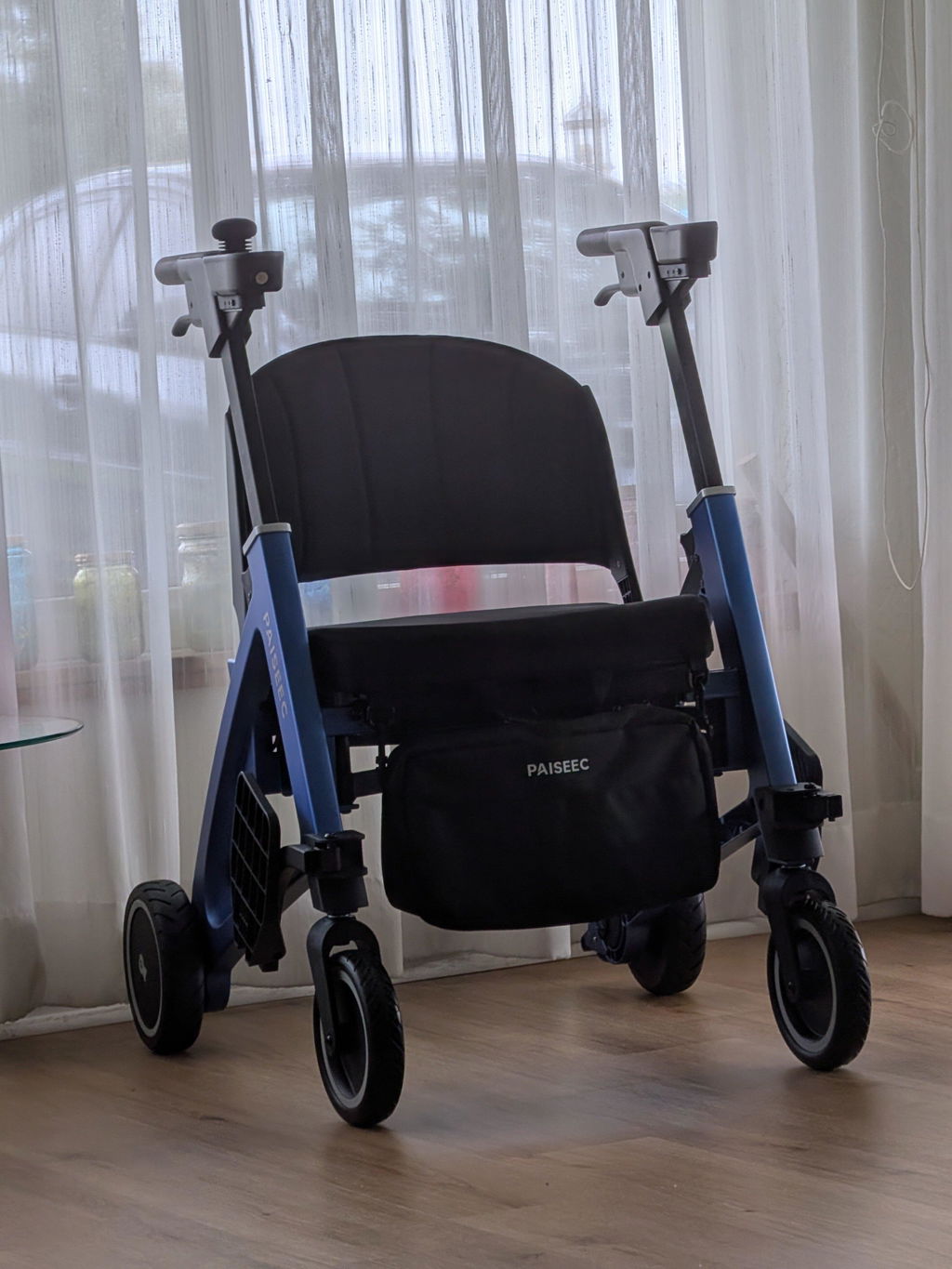
To resolve these friction points, industry innovators like Paiseec have designed specialized product suites—including multi-functional electric wheelchairs, ultra-light mobility scooters, and modular accessories—engineered specifically to match modern aviation and maritime realities.
Comprehensive Multi-Category Performance Matrix
Selecting the optimal travel mobility device requires evaluating the precise trade-offs between manual agility, structural weight, motorized range, and cost. The matrix below contrasts the industry's leading configurations across diverse real-world use cases.
| Device Model & Category | Propulsion Type | Frame & Total Weight | Key Travel Benefit & Portability Mechanism | Approximate Market Price |
|
Stander EZ Fold-N-Go (Manual Walker / Rollator) |
Manual / Companion | 8 lbs | Collapses to 1/4 of standard size; fits easily into overhead airplane bins; supports up to 400 lbs. | ~$130 |
|
Drive Medical Scout LT (Travel Mobility Scooter) |
Motorized (Battery) | ~90 lbs | High-strength budget option; disassembles rapidly into 5 lightweight components for easy trunk loading. | ~$849 |
|
Paiseec W3 / W1 Series (Hybrid Electric Wheelchair) |
Dual Mode (Electric/Manual) | 38 lbs (with battery) | Multi-functional hybrid design; quick-release folding mechanism; optimized for tight airline gate-checking. | ~$1,899 |
|
Pride Go-Go Super Portable (Folding Mobility Scooter) |
Motorized (Battery) | 41.6 lbs (sans battery) | Advanced space-saving engineering; folds flat to 12 inches without requiring seat removal. | ~$2,399 |
|
TravelScoot Escape (3-Wheel Micro Scooter) |
Motorized (Battery) | 32.6 lbs (with battery) | Ultra-minimalist aircraft-grade aluminum frame; recognized globally as the world’s lightest motorized scooter. | ~$2,299 |
|
Movinglife ATTO (Premium Folding Scooter) |
Motorized (Battery) | ~64 lbs | Split-frame technology; separates cleanly into two distinct parts and rolls seamlessly like trolley luggage. | ~$2,500+ |
Technical Criteria for Transit Standardization
When auditing a device for a content matrix or an upcoming purchase, five specific technical benchmarks must dictate the decision-making process:
Structural Material Composition & Foldability
Advanced travel power chairs leverage high-tensile, low-density materials such as aircraft-grade aluminum alloys and premium carbon fiber. These materials minimize physical strain without compromising structural load capacity (typically supporting 300 lbs to 350 lbs). Look for quick-release hinges that allow the unit to collapse into a singular flat block in under five seconds, eliminating the risk of losing small components during transit.
Battery Chemistry & Aviation Compliance
The Transportation Security Administration (TSA) and international airlines enforce uncompromising regulations regarding motorized mobility power. If deploying an electric aid, its lithium-ion battery chemistry must strictly adhere to the following protocols:
-
Watt-Hour Limitations: The primary battery pack must generally be rated under 300 Watt-hours (Wh). For dual-battery configurations, individual units typically cannot exceed 160 Wh each.
-
The Cabin Carry-On Rule: Main power packs must feature quick-disconnect wiring, allowing the traveler to remove the lithium cell at the gate and carry it directly into the passenger cabin, protecting it from thermal volatility in the cargo hold.
Multi-Functional Hybrid Engineering
Modern designs, exemplified by the Paiseec W3 and W1 product lines, merge the capabilities of manual transport chairs, electric wheelchairs, and stabilizing walking aids. This hybrid utility allows a user to conserve battery power via companion pushing in dense crowds, switch instantly to autonomous electric drive for long airport terminals, or utilize the frame for stabilizing upright walking support.
Wheel Diameter & Durometer Rating
A travel device must be matched to the destination terrain. Smooth indoor surfaces (airports, cruise ships) are perfectly served by small, non-marking solid polyurethane wheels. Conversely, historic city tours featuring cobblestones or gravel demand larger front casters with integrated shock-absorption systems and high durometer ratings to prevent high-centered stalls.
Strategic Real-World Operational Scenarios
Scenario A: The Multi-Leg Airport Connection
-
The Traditional Approach: Relying on a standard, non-folding power wheelchair forces the traveler to surrender their primary independence at the main check-in counter. The device is routed through heavy baggage systems, exposing it to massive risk of structural damage, while the user is relegated to uncomfortable airport-provided manual chairs.
-
The Optimized Travel Solution: Utilizing a compact, airline-compliant device like a TravelScoot, Pride Go-Go, or a Paiseec folding wheelchair allows the user to ride directly to the aircraft door. Major carriers like American Airlines permit free gate-checking of the structural frame without impacting baggage limits. The user removes the joystick and lithium battery pack, brings them into the cabin, and steps onto the plane with zero operational downtime.
Scenario B: The Premium Cruise Ship Vacation
-
The Traditional Approach: Full-sized motorized units regularly block narrow state-room corridors and fail to clear standard 22-inch cabin doors, creating immense safety hazards and layout restrictions.
-
The Optimized Travel Solution: An ultra-lightweight manual walker or a split-frame scooter (such as the Movinglife ATTO) collapses down smoothly, fitting easily inside standard closets or under stateroom beds. This keeps the living area clear while providing rapid mobility on the ship's expansive decks.
Frequently Asked Questions (FAQ)
What are the exact battery limits for flying with an electric mobility scooter?
Most international airlines and the TSA mandate that lithium-ion batteries utilized in mobility aids must not exceed 300 Watt-hours (Wh). If the device requires two batteries, each must stay under 160 Wh. Always verify the exact battery specifications on the manufacturer's label before arriving at the airport security checkpoint.
Are travel mobility aids gate-checked for free by commercial airlines?
Yes. Under international aviation accessibility standards and U.S. DOT rules, major commercial carriers must gate-check certified mobility devices completely free of charge. These units do not count toward your standard checked or carry-on baggage allowances.
How can I protect fragile components when gate-checking a device?
Before surrendering the base frame of your folding wheelchair or scooter to airline baggage handlers at the jet bridge, always remove fragile accessories. Proactively detach the control joystick, baskets, removable seat cushions, cup holders, and external charging ports. Store these items securely in your carry-on luggage to prevent cargo-hold damage.
Which long-tail search terms are driving high-intent commercial traffic?
High-conversion search volume is currently concentrated within transactional long-tail phrases. Key targets include: "lightweight travel mobility aids", "airline approved mobility aid for travel", "foldable electric wheelchair for travel", "portable mobility scooter for seniors", and "wheelchair lifts for automobiles".
Strategic Conclusions and System Integration
Maximizing travel freedom requires moving away from heavy, single-purpose equipment toward adaptable, high-efficiency transit systems. A truly complete travel configuration rarely relies on an isolated device. Optimal travel readies combine specialized core units—such as the Paiseec multi-functional wheelchair collections or Pride motorized series—with highly specific accessories, including universal off-board chargers, protective storage travel bags, and specialized vehicle lifts for automobiles.
As global accessibility compliance tightens, selecting a travel aid built around strict weight optimization and clear battery compliance is no longer a luxury—it is an absolute necessity for predictable, stress-free transit. Explore specialized mobility collections today to align your personal routines with modern travel architecture.


Leave a comment
This site is protected by hCaptcha and the hCaptcha Privacy Policy and Terms of Service apply.