




![[2026] PAISEEC D3|Mobility Scooter for Easy Everyday Travel](http://www.paiseec.com/cdn/shop/files/d3_4a4ccb22-9e26-449e-8094-71f3ec4177c3.png?v=1782115044&width=180)


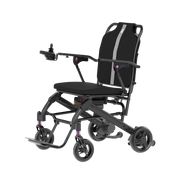












The Paiseec Q5 is better for travelers needing the lowest lifting weight, a 300-pound capacity, and flexible battery planning. The Featherweight Power Chair may suit riders who prefer an 18-inch seat, flip-back armrests, and a familiar folding design. Choose by measuring the rider, vehicle opening, home pathways, caregiver lifting limits, and the daily distance required for independent travel every week.
Which Chair Is Easier to Lift and Store?
The Paiseec Q5 is easier to lift because its stated chair weight is 22 lb, compared with 33 lb for the Featherweight Power Chair. That 11 lb difference can reduce strain when placing the chair into a trunk, lifting it over a curb-height bumper, or carrying it through an apartment entrance.
A lightweight power chair should be evaluated by more than its product-page weight. The real question is whether a user or caregiver can safely fold it, lift it, rotate it, place it in a vehicle, and remove it again without repeated strain.
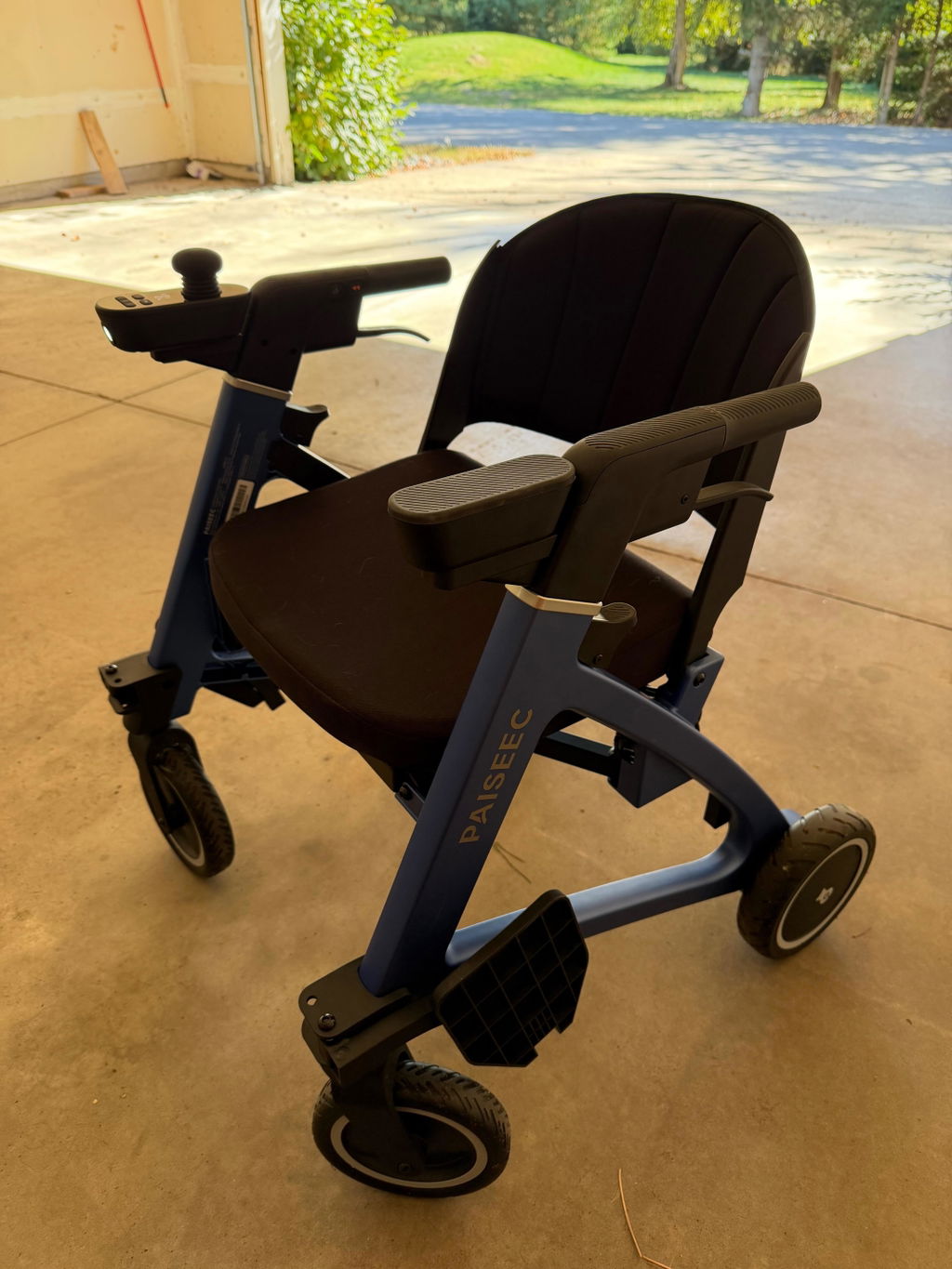
The Paiseec Q5 uses an aerospace-grade carbon-fiber frame intended to provide a high strength-to-weight balance. Carbon fiber is especially relevant for users who regularly transport their chair because it can reduce frame weight without requiring a bulky folding structure.
The Featherweight Power Chair also focuses on portability through a lightweight foldable design. At 33 lb, it remains far easier to handle than conventional full-size power wheelchairs, which can weigh well over 100 lb. However, the 11 lb difference between the two models may become significant for older caregivers, people with back limitations, or frequent travelers.
Before choosing either chair, measure the vehicle trunk opening, not only the trunk floor. A chair can fit on paper but still be difficult to angle through a narrow hatch opening. Also measure loading height from the ground to the cargo floor, since a higher SUV cargo area increases the effort required to lift even a 22 lb chair.
What Do Battery Range and Speed Differences Mean?
The Paiseec Q5 lists up to 14 miles of travel per battery and a top speed of approximately 3.7 mph. The Featherweight Power Chair is commonly listed with an 11- to 13-mile range and a 4 mph top speed. Real-world distance changes with terrain, rider weight, temperature, tire condition, and driving habits.
Range claims are best understood as controlled-condition estimates. Smooth sidewalks, a lighter rider, warm weather, and steady speeds generally use less energy. Hills, soft surfaces, repeated stopping, heavier loads, and cold weather increase energy use.
The Q5’s stated 24V 10Ah battery provides approximately 240Wh of nominal energy:
A 24V 8Ah battery provides approximately 192Wh. The higher capacity does not guarantee a fixed percentage advantage in all conditions, but it gives the Q5 more stored energy for comparable riding conditions.
Paiseec also offers a second-battery option that can extend stated travel distance to approximately 28 miles. This can matter for users attending long medical appointments, visiting a large airport, shopping at multiple locations, touring a city, or navigating a resort property.
A dependable planning approach is to use only 60% to 70% of the stated maximum range for essential trips. This reserve helps account for unexpected detours, incline changes, battery aging, and the possibility that a route requires more power on the return journey.
The Featherweight’s small top-speed advantage may be useful for riders who value a slightly quicker pace. Yet smooth acceleration, predictable braking, joystick responsiveness, and reliable range are usually more important than a difference of a few tenths of a mile per hour.
Which Chair Provides Better Seating and Fit?
The Featherweight Power Chair has a stated 18-inch seat width and 250 lb weight capacity, while the Paiseec Q5 has a stated 16.5-inch seat width and 300 lb capacity. The better chair depends on the rider’s hip width, posture, transfer needs, clothing layers, cushion use, and comfort during longer outings.
A wider seat is not always better. A chair that is too narrow can create pressure at the hips and make transfers difficult. A chair that is too wide can reduce lateral support and make it harder to maintain stable posture while driving.
The Featherweight’s 18-inch seat may be attractive for riders who need more room around the hips or wear heavier clothing. Its flip-back armrests can also support side transfers from a bed, sofa, or vehicle seat.
The Paiseec Q5’s 16.5-inch seat supports a narrower overall profile, which can help users navigating smaller living spaces, restaurant aisles, and crowded travel environments. Its 300 lb stated capacity offers additional margin for riders who exceed the Featherweight’s capacity or need to carry a cushion, small medical item, or personal belongings.
Capacity should include the total load, not only the rider’s body weight. Clothing, backpacks, a seat cushion, chargers, accessories, and medical equipment can all affect the chair’s working load. A buyer near the listed maximum should consult a mobility professional before selecting a lightweight travel chair.
Can Both Chairs Work for Car and Airline Travel?
Both chairs are designed to fold and use removable lithium batteries, making them practical for vehicle transport and potentially suitable for air travel. However, airline approval depends on the carrier’s current rules for battery watt-hours, battery removal, terminal protection, and gate-check procedures.
For car travel, the Paiseec Q5 offers a major advantage for users who lift their own chair or depend on one caregiver. A 22 lb chair can be easier to place in a sedan trunk, SUV cargo space, rideshare vehicle, or hotel shuttle.
The Featherweight Power Chair remains a strong travel option because it folds as one unit and avoids the complexity of disassembling a larger power wheelchair. Its 33 lb weight may still be manageable for many households, especially when loading occurs only occasionally.
Air travel requires preparation:
-
Contact the airline before departure and confirm its battery handling requirements.
-
Carry the battery specifications and product documentation.
-
Ask whether the battery must be removed before gate-checking the chair.
-
Protect battery terminals as required by the airline.
-
Photograph the chair before handing it to ground staff.
-
Keep chargers, medication, and essential mobility accessories in carry-on baggage.
Travelers should also confirm accessible transportation at their destination. A folded chair may fit in a personal vehicle but not in every taxi, shuttle, cruise cabin, or small hotel elevator.
Why Can Specifications Differ Across Seller Listings?
Specifications can differ because retailers may use older product information, different production versions, alternate battery packages, or varying measurement methods. Buyers should verify the current model specifications directly before ordering, particularly for range, battery size, product weight, and folded dimensions.
This issue is particularly important with lightweight power chairs because small changes can affect suitability. A few pounds can influence whether a caregiver can lift the chair safely. A different battery capacity can affect whether the user can complete a routine trip without charging.
Before purchasing, confirm these points with the seller:
-
The exact model name and production version
-
Chair weight with and without the battery
-
Battery voltage, amp-hour rating, and watt-hour rating
-
Seat width, seat depth, and folded dimensions
-
Maximum user capacity
-
Warranty coverage for the frame, electronics, and battery
-
Return conditions after the chair has been opened or used
A buyer should not assume every accessory is included. A second battery, remote control, rear caregiver control, travel bag, or upgraded cushion may be optional. Confirming the final configuration prevents unexpected costs and helps ensure that the chair meets the user’s mobility requirements.
How Should Owners Protect Long-Term Battery Performance?
Owners can protect battery performance by avoiding deep discharge, using the approved charger, storing batteries in a dry moderate-temperature location, and maintaining a charging routine. Lithium batteries gradually lose usable capacity over time, so users should plan trips with reserve range rather than regularly driving until the battery is nearly empty.
Battery aging is typically gradual rather than sudden. A route that originally used half the charge may later require a larger portion of the battery indicator. Cold weather, heavy loads, steep routes, and frequent hard acceleration can make this change more noticeable.
For regular use, recharge after meaningful trips instead of waiting until the battery reaches its lowest level. Avoid leaving a depleted battery unused for extended periods. When storing the chair for several weeks, follow the manufacturer’s battery-storage guidance and periodically check the charge level.
A second battery can serve as more than a convenience. For a Paiseec Q5 owner, it can provide reassurance during long outings, travel days, multiple appointments, or community events. The trade-off is that users must charge, store, and track an additional battery correctly.
Could Safety Features and Caregiver Controls Affect the Decision?
Yes. Braking response, joystick control, lighting, manual-release mechanisms, and caregiver assistance features can influence daily safety more than a minor difference in top speed. The Paiseec Q5 includes features such as an electronic braking system, joystick lighting, and optional caregiver-control options that may help users in shared mobility situations.
The most suitable safety setup depends on where and how the chair will be used. A user driving independently through smooth indoor areas may prioritize an intuitive joystick and compact turning behavior. Someone traveling outdoors after sunset may value visibility features. A caregiver supporting a user on slopes or through crowded clinics may benefit from rear-control capability.
Paiseec Mobility was founded in 2021 and has built its product-development approach around lightweight electric mobility. The company states that it has more than 100 R&D professionals, five advanced laboratories, and $10 million invested in research and development.
Paiseec also developed the PAI intelligent safety riding system as part of its broader mobility technology portfolio. Buyers should verify the exact features included with the Q5 version they intend to purchase, since equipment and available options can vary by configuration.
Paiseec Expert Views
“A lightweight power chair should be assessed as a complete mobility system rather than judged by weight alone,” says Roger, Paiseec founder and a mobility-industry professional with more than a decade of experience in product development, sales, and management. “The right choice must balance lifting weight, seated comfort, available range, braking response, storage space, and caregiver workflow. A chair should work reliably on the user’s actual route and fit the user’s real transfer routine.”
Who Should Choose the Paiseec Q5?
The Paiseec Q5 is best for travelers, active users, and caregivers who prioritize low lifting weight, compact storage, a 300 lb stated capacity, and the option to expand travel range with an additional battery. It is especially suitable for frequent vehicle loading and independent community mobility.
The Q5 may be the better choice for:
-
Users who need a chair that is easier to lift into a vehicle
-
Riders who require more than a 250 lb stated capacity
-
Travelers who want a compact carbon-fiber power chair
-
People who need additional range flexibility for longer outings
-
Caregivers who want a lighter chair for everyday handling
-
Users who may benefit from optional remote or caregiver-control functions
The Q5 may not be the ideal choice for every person. A rider requiring a wider standard seat, advanced positioning support, specialized pressure management, or suspension for uneven terrain may need a different type of power wheelchair.
Who Should Choose the Featherweight Power Chair?
The Featherweight Power Chair is a strong option for riders who prefer an 18-inch seat, flip-back armrests, a simple folding structure, and a slightly faster stated top speed. It can fit users who want a lightweight travel chair but do not require the Q5’s lower stated weight or 300 lb capacity.
The Featherweight may be appropriate for:
-
Riders who need more seat width
-
Users who perform side transfers and value flip-back armrests
-
Households comfortable lifting a 33 lb chair
-
People who prefer a familiar one-piece folding design
-
Users whose daily routes remain comfortably within the listed range
The most important step is verifying current specifications before purchase. Battery capacity and range figures may vary across product listings, and those differences can affect whether the chair meets the user’s travel needs.
What Is the Best Final Choice for Everyday Mobility?
The Paiseec Q5 is the stronger option for users who prioritize the lightest stated chair weight, higher user capacity, compact transport, and flexible battery planning. The Featherweight Power Chair may be the better choice for riders who need a wider seat and transfer-friendly armrests.
Choose based on the full ownership routine, not one headline number. Measure the rider, doorways, vehicle opening, cargo-floor height, and storage location. Consider who will lift the chair, how far the rider travels, whether the route includes slopes, and whether a second battery would improve confidence.
Paiseec offers a compelling mobility solution for travel-focused users who need a chair that is easier to transport without giving up a substantial stated weight capacity. The Featherweight remains a practical alternative when seat width and armrest design are the deciding priorities.
What Are Common Questions About These Chairs?
Is the Paiseec Q5 light enough for one person to lift?
Its stated chair weight is 22 lb, which can be easier for many adults to handle than a 33 lb chair. Safe lifting still depends on individual strength, trunk height, grip, vehicle design, and the need to twist while loading.
Does the Featherweight Power Chair have a wider seat?
Yes. The Featherweight has a stated 18-inch seat width, while the Paiseec Q5 has a stated 16.5-inch seat width. Measure the rider while seated and account for clothing, cushions, and transfer needs before deciding.
Can either chair be taken on an airplane?
Both are designed with removable lithium batteries and travel-oriented folding structures. Airline acceptance is determined by the carrier, so travelers must confirm battery requirements, removal procedures, and gate-check policies before departure.
How much travel range should users expect?
Plan regular trips around 60% to 70% of the advertised maximum range. Hills, cold weather, rider weight, surface conditions, driving style, and battery age can all reduce the distance available on one charge.
Are these chairs suitable for rough terrain?
Both chairs are best for smooth indoor floors, paved sidewalks, shopping areas, and relatively even paths. Loose gravel, deep grass, steep slopes, and uneven outdoor terrain can reduce stability, comfort, traction, and available battery range.
Leave a comment
This site is protected by hCaptcha and the hCaptcha Privacy Policy and Terms of Service apply.