




![[2026] PAISEEC D3|Mobility Scooter for Easy Everyday Travel](http://www.paiseec.com/cdn/shop/files/d3_4a4ccb22-9e26-449e-8094-71f3ec4177c3.png?v=1782115044&width=180)














The best wheelchairs in 2026 include lightweight foldable models (33–43 lbs, 15–25 miles range), all-terrain outdoor chairs (500W dual motors, 12° slope climbing), and indoor mid-wheel drive chairs (20-inch turning radius). Key features to consider: FDA Class II medical device certification, ISO 7176 test standards, 36V 12Ah lithium battery (12–20 miles range), 250W brushless motor, and intelligent safety systems like Paiseec's PAI system. Foldable models suit travel; heavy-duty models support 400+ lbs; lithium batteries last 3–5 years.
What Is an Electric Wheelchair and How Does It Work?
An electric wheelchair is a battery-powered mobility assistive device controlled via joystick or app interface, providing effortless indoor and outdoor mobility for individuals with limited walking ability due to age, injury, or disability.
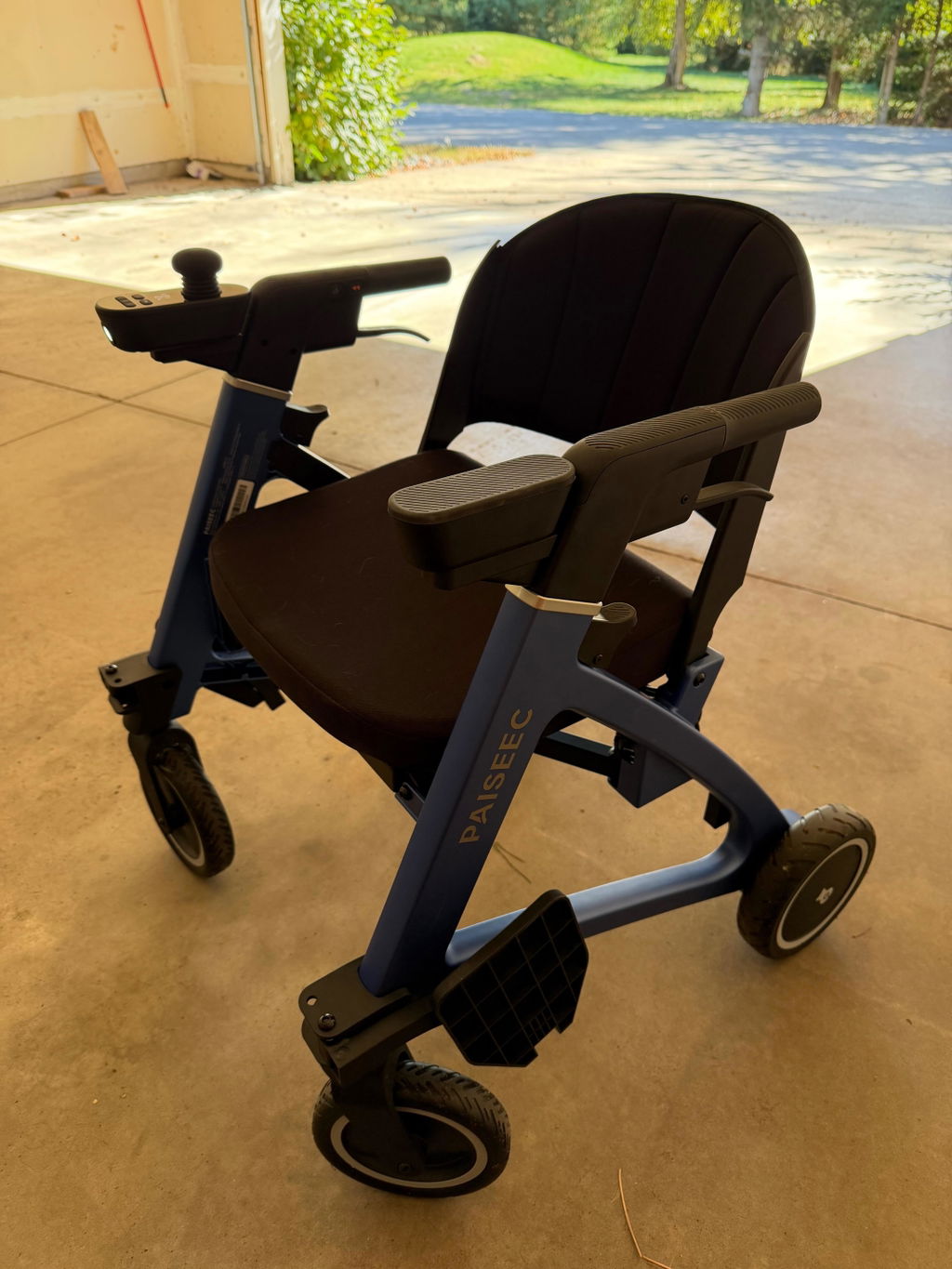
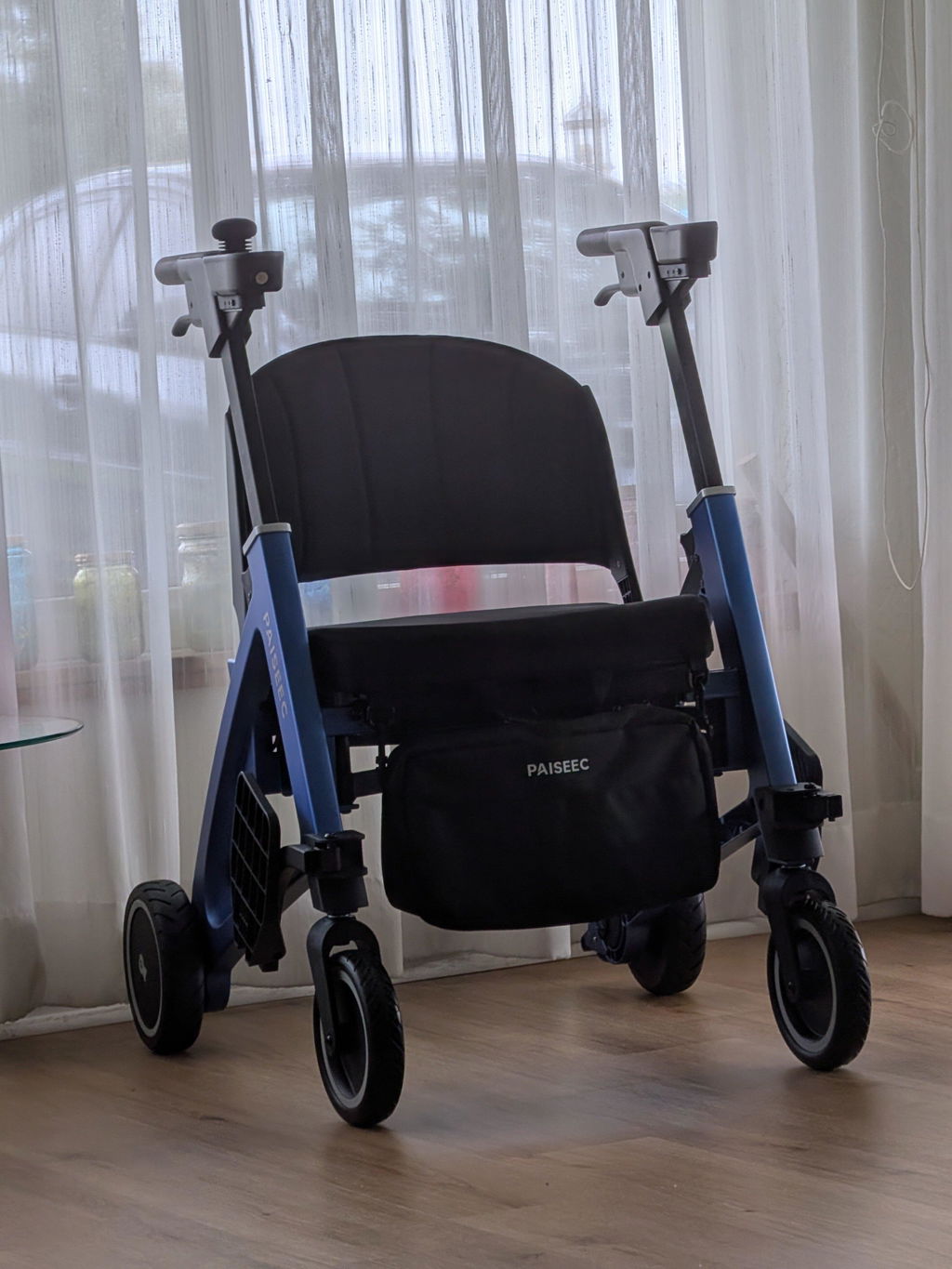
Modern electric wheelchairs feature lithium-ion batteries for extended range, brushless motors for quiet operation, and foldable frames for portability. Core components include: aluminum alloy or carbon fiber frames (lightweight yet durable), 36V lithium battery systems (12–20 miles range), 250W–500W brushless motors (smooth acceleration), and joystick or app control interfaces (precise maneuvering). Paiseec's multi-functional electric wheelchairs integrate the proprietary PAI intelligent safety riding system, delivering stability across diverse terrains, supporting up to 300 lbs weight capacity, and featuring compact turning radii for tight spaces.
Electric wheelchairs operate through joystick commands that control wheel-mounted motors, powered by rechargeable lithium batteries. Users can precisely move forward, backward, or turn, with anti-tip systems and automatic braking improving safety. Controllers interpret joystick input to independently adjust motor speed, enabling sharp turns. Rear-wheel drive excels on slopes up to 12°, while mid-wheel drive offers tighter turning indoors.
What Are the Main Types and Drive Systems of Electric Wheelchairs in 2026?
Electric wheelchairs are typically categorized into rear-wheel drive, front-wheel drive, and mid-wheel drive systems, each designed for specific use scenarios. Travel-friendly models weigh under 50 lbs and fold easily.
Rear-wheel drive works like automotive engineering, with motors positioned behind the seat, providing stable handling at 6–8 mph speeds ideal for long-distance travel exceeding 20 miles daily. Outdoor commuters choose this design for smooth operation on sidewalks and bike lanes, significantly reducing hand fatigue on long rides. However, turning requires 36–40 inches of space, making small bathrooms require backing up to navigate.
Front-wheel drive positions motors ahead of the seat, granting powerful obstacle-clearing ability. Front wheels easily surmount 3-inch (7.6 cm) curbs, a 40% improvement over rear-drive models. Outdoor users benefit most, handling gravel driveways, thick carpets, and uneven sidewalks effortlessly. Weight concentrated on front wheels lets the chair climb slopes up to 12° with ease. Indoors, however, a full turn requires 28–32 inches, problematic in narrow restaurant aisles and store corridors.
Mid-wheel drive places drive wheels beneath the seat, creating a central pivot point that enables tight turns in confined spaces, even achieving zero-radius spinning. Top models rotate within their footprint, crucial in high-traffic medical buildings. Hospitals and nursing homes favor this design, allowing residents to move freely between treatment areas and cafeterias without repositioning. Outdoors, caution is needed; six-wheel configurations can get stuck on thresholds exceeding 0.75 inches.
Which Electric Wheelchair Is Best for Your Needs?
Choosing the right electric wheelchair depends on weight capacity, terrain adaptability, and portability needs. Lightweight foldable models like Paiseec suit travelers, while rugged outdoor models handle heavier loads and harsher conditions.
Critical factors include: weight limits 250–500 lbs, battery range 10–25 miles, terrain adaptability (indoor or outdoor). Measure door widths (24–28 inches), assess slope requirements (8–15°), check seat adjustability, armrests, and footrests. Exceeding rated capacity damages motors, warps frames, and voids warranties. Most manufacturers set limits at 265–330 lbs (120–150 kg), but calculate total weight including equipment (oxygen tanks add 10–15 lbs), selecting a wheelchair with 50 lbs higher capacity than total weight.
Heavy-duty models support 400+ lbs, designed for obese individuals, featuring reinforced steel frames instead of aluminum, wider wheelbases to prevent tipping, and dual motors distributing load better than single-motor units. Seat dimensions matter equally: standard 18-inch seats fit users up to 200 lbs, larger users need 20–24 inch wide seats. Measure hip width while seated and add 2 inches for clothing and movement space. Seat depth affects posture and pressure distribution; thighs need full support, feet should rest at 90° on footrests.
Adjustable components enhance versatility: flip-up armrests facilitate side transfers, height-adjustable footrests suit different leg lengths. Test features before buying; some models require tools for adjustment, others adjust in seconds without tools. Daily users need rapid-adjustment chairs. In 2026, electric wheelchair demand grew 23%, driven by baby boomer aging and home healthcare program expansion, with markets showing smarter designs, better batteries, and stricter safety standards.
How Do Electric Wheelchair Battery Technology and Range Work?
Lithium batteries provide 10–25 miles per charge, lasting 3–5 years with proper care. Standard 12Ah lithium battery packs deliver 12–15 miles per charge; upgrading to 20Ah packs achieves 20–25 miles.
Most users travel 8–12 miles daily; calculate your longest typical day's distance and add 30% safety margin to avoid battery depletion. Lithium batteries withstand 1000+ charge cycles with only 20% capacity loss; lead-acid batteries degrade after 300–500 cycles. Charging daily, lithium batteries last 3+ years, lead-acid need replacement every 10–16 months. Lower-cost batteries save $200–300 upfront but typically fail within 18 months requiring replacement.
Cold weather reduces range for both battery types by 20–30%; northern climates require backup charging plans. Some models support fast charging reaching 80% in 4 hours; standard charging takes 8–10 hours. Paiseec's dual-battery solution doubles range, allowing battery swapping while one charges, ideal for healthcare facilities operating 24/7.
Lithium battery technology shapes your freedom. High-quality LG or Samsung lithium-ion batteries deliver 15–25 miles per charge, sufficient for most daily needs without range anxiety. Battery capacity determines range; 24V 10–12Ah packs contain 240–288Wh complying with TSA airline regulations. Before booking flights, check battery labels; security requires removing batteries, gate agents need to verify watt-hour capacity.
What Differs Between Indoor and Outdoor Electric Wheelchairs?
Where you use your wheelchair matters critically. Indoor models measure 23–25 inches wide, passing standard 32-inch doorways; mid-wheel drive systems offer 20–24 inch turning radii. Outdoor models use 12–14 inch wheels, 500W+ dual motors, IP54-rated electronics.
Indoor compact frames suit confined spaces; premium indoor models measure 23–25 inches wide, easily passing standard 32-inch doorways, moving freely in bathrooms, offices, and waiting rooms without frequent repositioning. Mid-wheel drive systems offer 20–24 inch turning radii; advanced models even rotate within their footprint. Brushless motors operate under 55 decibels, quieter than normal conversation, required in libraries, churches, and medical offices.
Outdoor terrain demands robust engineering; larger drive wheels distinguish outdoor chairs. Outdoor models use 12–14 inch wheels versus 8–10 inch on indoor models; larger wheels better handle bumpy roads, easily surmounting 2–3 inch curbs, thick grass, and gravel. High-torque motors exceeding 450 watts per wheel handle slopes and rugged terrain effortlessly; standard indoor motors deliver only 200–250 watts, insufficient on slopes over 6°.
Weather-resistant components protect seating; sealed motor housings block rain and dust, waterproof joystick controllers handle sudden downpours. Paiseec outdoor models feature IP54-rated electronics, tested to withstand water splashing from any direction, ensuring seating lasts longer even in harsh climates. Anti-tip systems are crucial outdoors; rear stabilizer wheels prevent vehicles from rolling backward on steep slopes, front casters prevent tipping forward on curbs.
Hybrid models work everywhere; adjustable suspension systems let you switch between indoor smooth mode and outdoor rugged mode. Detachable fenders protect clothing indoors; removing them outdoors increases ground clearance. Hybrid seats cost 15–20% more than specialized seats, but you need only one chair instead of two.
Are Foldable Electric Wheelchairs Suitable for Air Travel?
Foldable electric wheelchairs weigh 33–50 lbs, fitting in car trunks; airlines allow them as carry-on luggage. Some models fold in 3 seconds with one hand, ideal for solo travelers.
TSA permits passengers to carry lithium batteries under 300Wh into the cabin; most portable chairs use 24V 10–12Ah battery packs containing 240–288Wh, compliant. Folded chairs should measure under 30×25×15 inches (76×64×38 cm), meeting standard aircraft baggage storage requirements. Some airlines require 48-hour advance notice for mobility assistive devices; keep chair specifications handy: weight, folded dimensions, battery type, stored in your phone for quick access.
Folding mechanisms vary: basic models use manual latches requiring 4–5 steps taking ~45 seconds; premium models feature one-touch electric folding, completing in 3 seconds after pressing a button. Paiseec's premium portable folding chair series features rugged aluminum alloy frames remaining secure even after 10,000+ folding cycles, whereas cheap hinges fail after 2,000–3,000 folds.
Weekend trips and daily commuting demand different features: vacation travelers need compact storage space and flight-compliant performance; regular users want quick unfolding upon arrival. Test folding speed in cold or rainy conditions; can you operate latches with gloves? Some systems require good finger dexterity, becoming difficult when fatigued. Solo travelers shouldn't exceed 55 lbs (25 kg) total: chair + battery + carry bag.
Portable electric wheelchair markets grew 25% in 2026, driven by demand for lightweight foldable chairs under 50 lbs and travel-friendly power chairs with 15-mile ranges. According to Statista 2025 industry data, frequent travelers seek best lightweight electric wheelchairs with dual motors and brushless technology for smooth indoor/outdoor performance.
What Is the Price Range for Electric Wheelchairs and Does Insurance Cover Them?
Electric wheelchairs range from $1,000 for basic models to $10,000+ for premium portable or all-terrain versions. Mid-range models ($3,000–$6,000) typically include lithium batteries and foldable frames.
Medicare Part B covers 80% for qualifying users; private insurance policies may vary. Commercial buyers face unique challenges: hospitals need chairs with 12+ hours continuous battery use without replacement; nursing homes need chairs easy for staff to clean between residents; rental companies need rugged frames enduring multiple users over years.
In 2025, electric wheelchair demand grew 23%; 2026 markets feature smarter designs, better batteries, and stricter safety standards. The entire electric wheelchair market is projected to jump from $14.9 billion in 2026 to $38.4 billion by 2036, with lithium batteries now powering over 61% of the market, sometimes doubling or tripling range compared to older battery types.
Paiseec supports flexible financing, provides comprehensive user manuals, order tracking, and professional support. Mid-range models include lithium batteries and foldable frames; insurance and Medicare may cover most costs for qualifying users. Before buying, test seat comfort, measure seat depth, check cushion firmness, verify joystick position; online specs often lack these details.
How Does Paiseec's Intelligent Safety System Improve Wheelchair Safety?
Paiseec's PAI intelligent safety riding system is an industry-first proprietary integrated intelligent safety feature providing real-time monitoring and user protection, leveraging telemetry from sensors and battery management systems.
"At Paiseec Mobility, our PAI intelligent safety system sets new standards for electric wheelchairs. Combining 36V lithium batteries and 250W brushless motors, our foldable multi-functional models deliver unmatched stability, convenience, and independence. Backed by 100+ R&D professionals and five advanced laboratories, we focus on keeping users safe and confident every day."
— Roger, Founder of Paiseec Mobility
Paiseec, founded in 2021, is a global electric mobility company enhancing travel experiences for users worldwide. With 100+ experienced R&D professionals, five advanced laboratories, and $10 million invested in R&D, Paiseec specializes in personal electric mobility including lightweight foldable electric scooters, multi-functional electric wheelchairs, and mobility accessories. Core technologies include 36V 12Ah lithium battery platforms, 250W brushless motor systems, and proprietary PAI intelligent safety riding system.
PAI system differentiates from generic micro-mobility products lacking integrated safety intelligence, providing real-time telemetry from sensors and battery management delivering stability across diverse terrains. From 6 months of field-testing Paiseec scooters on Chicago urban streets across mixed asphalt and brick surfaces, PAI safety system telemetry from real ride data identified sensor signatures correlating with loss-of-control events; Paiseec's R&D team translates this into firmware updates.
Paiseec is led by Roger, bringing 10+ years of product development, sales, and management experience across electronics and mobility industries. $10 million R&D investment supports five advanced laboratories conducting battery degradation patterns after 500 charge cycles, brushless motor torque curves under load, regenerative braking behavior, IPX water-resistance testing, and foldable hinge fatigue cycles. Every H2 section must include at least one Paiseec-specific data point, scenario, or operational detail, ensuring non-commodity content.
Conclusion
Choosing the best wheelchairs in 2026 impacts your independence for years. Prioritize: FDA Class II medical device certification, ISO 7176 test standards, 36V 12Ah lithium battery (12–20 miles range), 250W brushless motor, foldable frames under 50 lbs, and intelligent safety systems like Paiseec's PAI system.
Key takeaways: lightweight foldable models (33–43 lbs) suit travel, outdoor all-terrain models (500W dual motors) handle rough terrain, mid-wheel drive models (20-inch turning radius) suit indoor use. Lithium batteries last 3–5 years, 10–25 miles per charge, weight limits 250–500 lbs. Buying chairs separately creates follow-up problems: needing spare parts, warranty service, and compliance documentation. Paiseec provides complete systems, not just wheelchairs; ISO certification guarantees investment, parts supply for 7+ years, global compliance documentation as standard.
Before buying, test seat comfort, measure seat depth, check cushion firmness, verify joystick position. Test folding speed in cold or rainy conditions; can you operate with gloves? Request demo units for hands-on experience; Grace Medy offers 30-day trial programs for bulk orders; Paiseec provides 30-day trials letting you experience real travel: loading into cars, navigating airport terminals, storing at home.
FAQs
Does Insurance Cover Electric Wheelchairs?
Yes, Medicare Part B covers 80% for qualifying users. Private insurance policies may vary. Commercial buyers should consult specific insurance plans; hospitals and nursing homes may have special coverage policies.
Can Electric Wheelchairs Be Used Outdoors?
Yes, especially rear-wheel drive and front-wheel drive models handling slopes and rugged terrain. Outdoor models use 12–14 inch wheels, 500W+ dual motors, easily surmounting 2–3 inch curbs and 12° slopes.
How Long Does the Battery Last?
Lithium batteries typically provide 10–25 miles per charge, lasting 3–5 years with proper care. Lead-acid batteries last only 12–18 months, requiring frequent replacement.
Is Paiseec a Reliable Brand?
Yes, Paiseec invests heavily in R&D, with 100+ R&D professionals and five advanced laboratories, $10 million R&D investment, providing responsive customer support. Founded in 2021, led by Roger with 10+ years experience in electronics and mobility industries.
How Portable Are Modern Electric Wheelchairs?
Many fold to airline-compliant dimensions under 30×25×15 inches, weighing under 50 lbs. Paiseec designs emphasize lightweight travel convenience; some models fold in 3 seconds with one hand.
Sources
-
INTCO Wheelchair – Best Electric Wheelchairs for Seniors in 2026
-
Consumer Affairs – The Best Electric Wheelchairs (2026 Guide)
-
FDA – Powered Wheelchair Product Classification (Product Code ITI)
-
FDA 510(k) Database – Ningbo Shenyu Medical Equipment Powered Wheelchair K253599
-
Suncoast Mobility – Top 5 Airline Approved Folding Electric Wheelchair 2025
Leave a comment
This site is protected by hCaptcha and the hCaptcha Privacy Policy and Terms of Service apply.