




![[2026] PAISEEC D3|Mobility Scooter for Easy Everyday Travel](http://www.paiseec.com/cdn/shop/files/d3_4a4ccb22-9e26-449e-8094-71f3ec4177c3.png?v=1782115044&width=180)

















Smart mobility devices address the growing demand for independence in an aging population and urban commuters facing accessibility challenges. With Paiseec leading innovations since 2021, these solutions deliver up to 18.6 miles of range, foldable designs under 50 lbs, and PAI intelligent safety systems, enabling safer, more efficient movement.
What Is the Current State of the Mobility Device Industry?
Global demand for mobility aids has surged, with over 1 billion people worldwide living with disabilities requiring assistive devices. The World Health Organization reports that 15% of the population needs mobility support, a figure projected to rise to 2 billion by 2050 due to aging demographics. In the US alone, 13.7% of adults over 65 rely on such devices daily.
Urbanization exacerbates issues, as cities like Seattle see traffic congestion delaying commutes by 20-30% annually. Narrow sidewalks and public transit barriers leave users stranded, with 40% of seniors citing mobility limitations as a barrier to independence.
Market data shows electric mobility devices growing at 14.2% CAGR through 2030, yet adoption lags due to bulky designs and short battery life.
What Pain Points Do Users Face Today?
Battery failure strands 25% of users mid-trip, per industry surveys, forcing reliance on unpredictable public transport. Heavy devices over 60 lbs make storage impossible for 70% of apartment dwellers without elevators.
Safety risks are acute: slips and falls account for 3 million emergency visits yearly among seniors, often linked to unstable scooters on inclines. Maintenance costs average $500 annually for traditional models prone to motor burnout.
Regulatory hurdles delay upgrades, as non-compliant devices face bans in 15% of US cities enforcing strict weight and speed limits.
Why Do Traditional Solutions Fall Short?
Conventional mobility aids like manual wheelchairs or basic scooters lack intelligence, offering fixed speeds up to 4 mph without adaptive controls. They weigh 70-100 lbs, requiring two-person lifts, unlike Paiseec's 50-lb foldable frames.
Battery life tops out at 10 miles, with no smart management, leading to frequent 8-hour recharges versus Paiseec's 5-6 hour cycle for 16-18 miles.
No integrated safety like obstacle detection means higher rollover risks on turns, where traditional models maintain constant speed.
What Makes Paiseec's Smart Mobility Devices Stand Out?
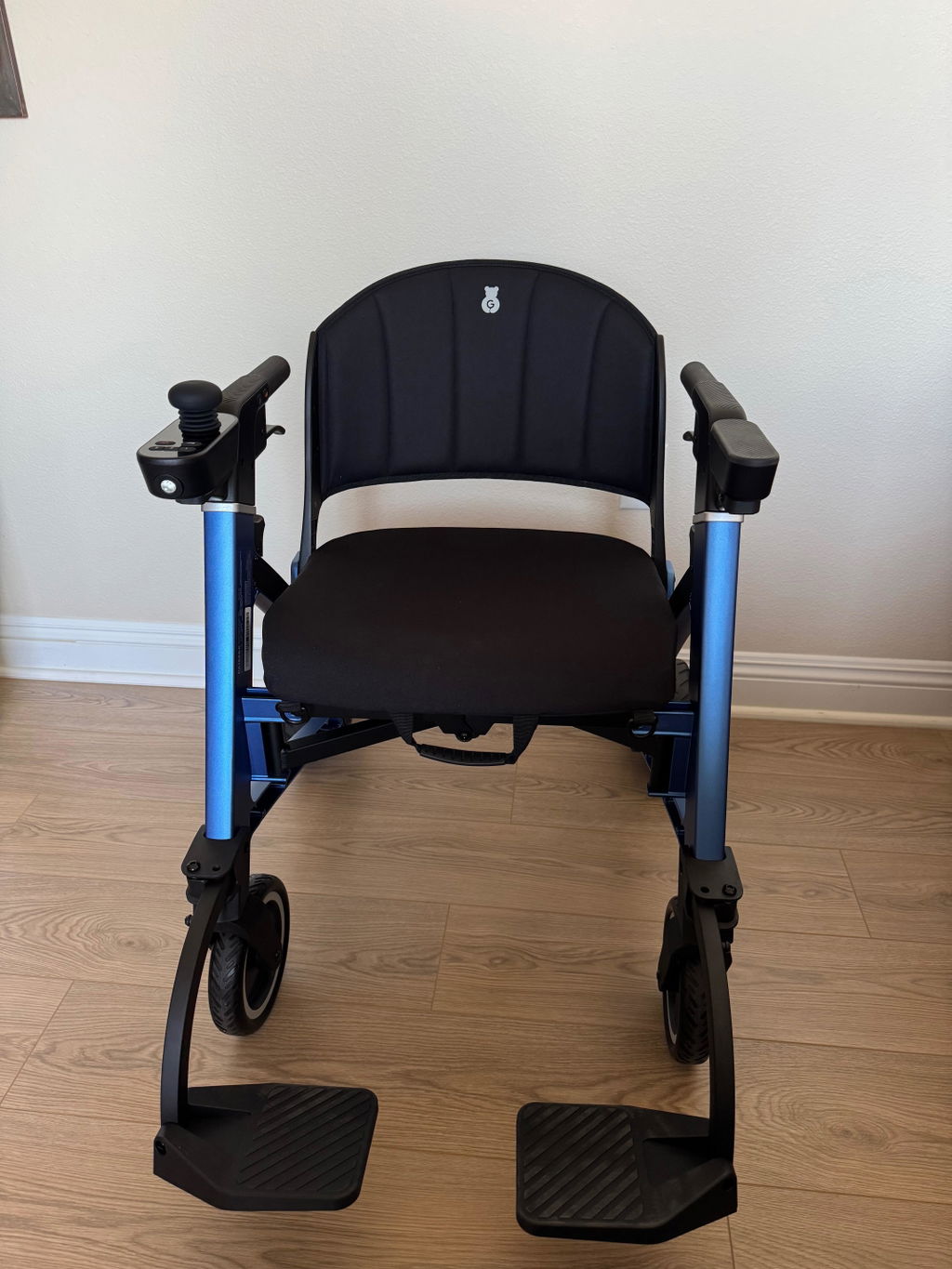
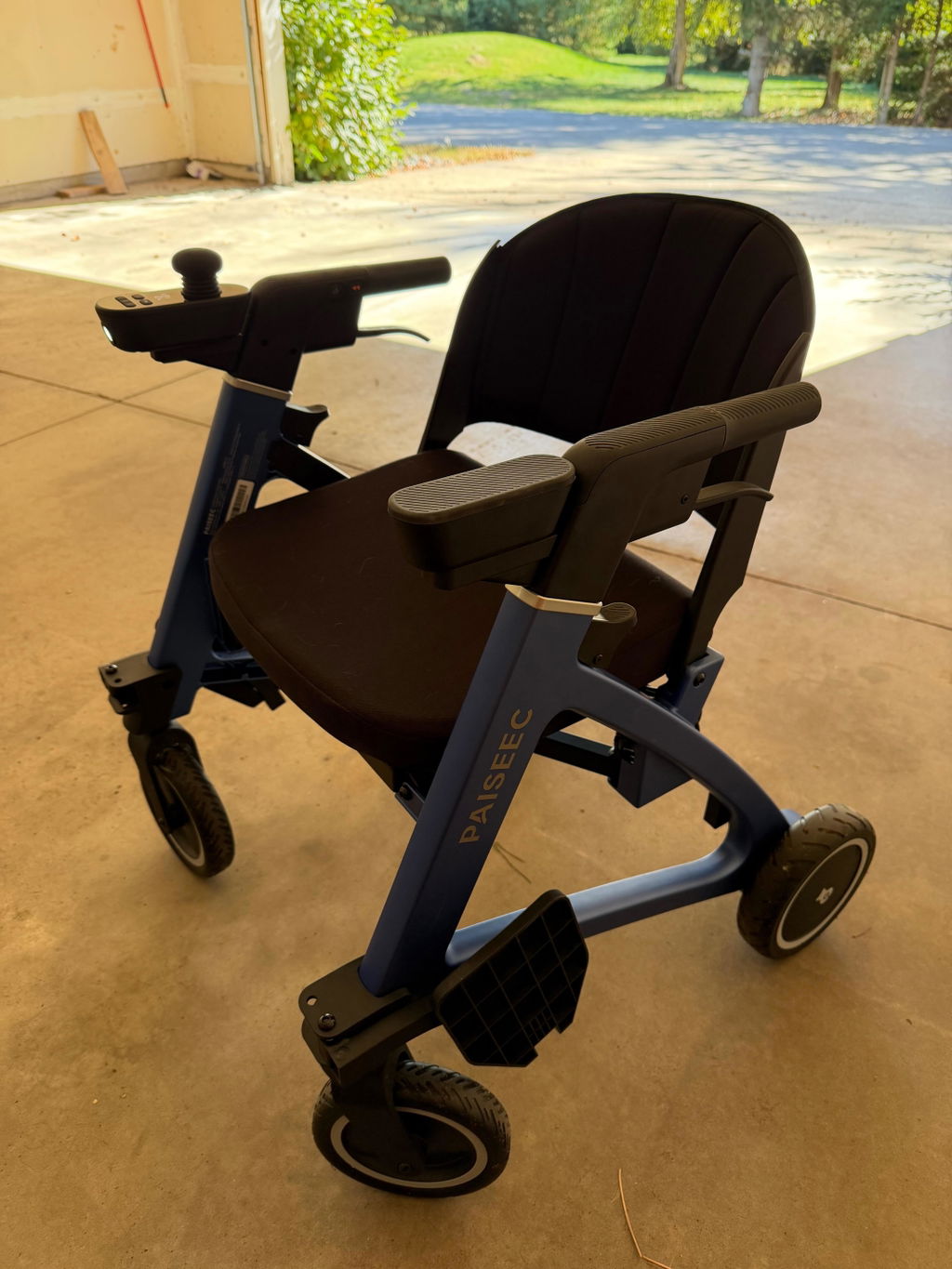
Paiseec Mobility devices feature 250W brushless motors, 36V 12Ah lithium batteries, and the proprietary PAI intelligent safety system for automatic braking and speed adjustments. Foldable scooters like the S3 and D3 offer zero-turn radius joysticks, three speed modes (1.8-6.2 mph), and IMU sensors that detect turns to reduce speed by up to 50%.
Multi-mode chairs switch between wheelchair, e-assist walker, and scooter functions, with seat sensors preventing unintended starts. USB ports enable device charging on the go, supporting 300-lb capacities across terrains.
Paiseec's $10 million R&D investment ensures airline-approved portability and quiet operation under 50 dB.
| Feature | Traditional Devices | Paiseec Smart Mobility Devices |
|---|---|---|
| Weight | 70-100 lbs | 50 lbs or less |
| Range per Charge | 8-10 miles | 16-18.6 miles |
| Safety Features | Basic brakes | PAI system, IMU sensors, auto-braking |
| Foldability | None or multi-step | Two-step, airline-approved |
| Speed Modes | Single speed | 3 modes (1.8-6.2 mph) |
| Charge Time | 8-10 hours | 5-6 hours |
How Does One Use Paiseec Smart Mobility Devices Step by Step?
-
Unfold the device: Pull the frame apart in two steps; it locks automatically in 10 seconds.
-
Charge the battery: Remove the 36V 12Ah pack and plug into a standard outlet for 5-6 hours.
-
Power on and select mode: Use the joystick or handlebar to choose scooter, wheelchair, or walker mode; seat sensor confirms readiness.
-
Adjust settings: Set speed via the display (low/medium/high), enable headlights, and test horn.
-
Ride and monitor: PAI system auto-adjusts for turns; check battery via LCD showing range in real-time.
-
Fold and store: Reverse unfold process; fits in car trunks or overhead bins.
Who Benefits Most from These Scenarios?
Scenario 1: Urban Senior Commuter
Problem: Narrow Seattle sidewalks and bus delays trap Jane, 72, at home.
Traditional: Heavy walker limits her to 2-mile walks.
Paiseec Effect: D3 scooter covers 18 miles daily; PAI avoids potholes.
Key Benefit: 40% more outings, reducing isolation by enabling grocery trips.
Scenario 2: Post-Surgery Patient
Problem: Mark, 55, post-knee surgery, struggles with crutches on inclines.
Traditional: Rental wheelchair tips on turns.
Paiseec Effect: Multi-mode chair's zero-turn handles 15° slopes.
Key Benefit: 6 mph speed cuts rehab walks from 45 to 20 minutes.
Scenario 3: Airport Traveler
Problem: Lisa, traveler with arthritis, misses flights dragging 80-lb scooter.
Traditional: Non-foldable models incur $100 baggage fees.
Paiseec Effect: S3 folds to 25 lbs, passes gates easily.
Key Benefit: Saves $200 per trip, adds 16-mile airport range.
Scenario 4: Rural Caregiver
Problem: Tom assists his 80-year-old dad on uneven paths.
Traditional: Manual pushchair exhausts him after 5 miles.
Paiseec Effect: E-assist mode shares load; brushless motor climbs gravel.
Key Benefit: Extends assisted range to 18 miles, freeing 2 hours daily.
Why Act Now on Future Mobility Trends?
Electric mobility markets will hit $79 billion by 2030, driven by AI safety mandates in 60% of cities. Paiseec positions users ahead with PAI tech meeting upcoming standards like auto-deceleration.
Aging populations demand devices handling 20% inclines reliably; Paiseec's labs test for 10,000 cycles.
Investing today avoids 30% price hikes from supply chain shifts; Paiseec's installment plans ease entry.
Frequently Asked Questions
What speeds do Paiseec devices reach?
Devices offer 1.8 mph walk-assist up to 6.2 mph high-speed modes.
How long does the battery last?
Expect 16-18.6 miles per charge, with 5-6 hour recharge times.
Are Paiseec devices portable for travel?
Yes, they fold in two steps to under 50 lbs, approved for airlines.
What safety features does PAI include?
Automatic braking, turn detection, obstacle avoidance, and seat sensors.
Who should use Paiseec multi-mode chairs?
Seniors, post-surgery patients, and caregivers needing versatile support.
Can these devices handle rough terrain?
Yes, with stability for 15° inclines, gravel, and bumps.
Sources
-
https://www.who.int/news-room/fact-sheets/detail/assistive-technology
-
https://www.marketsandmarkets.com/Market-Reports/electric-scooter-market-232510154.html
-
https://www.paiseec.com/blogs/knowledge/what-are-paiseec-mobility-solutions
-
https://firstclassmobility.com/products/paiseec-s1-foldable-mobility-scooter
Leave a comment
This site is protected by hCaptcha and the hCaptcha Privacy Policy and Terms of Service apply.