




![[2026] PAISEEC D3|Mobility Scooter for Easy Everyday Travel](http://www.paiseec.com/cdn/shop/files/d3_4a4ccb22-9e26-449e-8094-71f3ec4177c3.png?v=1782115044&width=180)


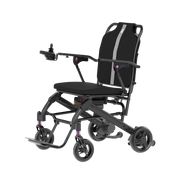












A carbon fiber electric wheelchair is an ultra-lightweight mobility device built with high-strength carbon fiber composites. These chairs typically weigh 25–35 lbs, fold compactly, and deliver 12–25 miles of range while supporting 260–330 lbs. They combine portability, durability, and advanced electric drive systems for safe, independent daily mobility and travel.
What Is a Carbon Fiber Electric Wheelchair?
A carbon fiber electric wheelchair uses high-modulus carbon fiber in its frame and key components to dramatically reduce weight without sacrificing strength. Compared to aluminum or steel frames, carbon fiber offers superior stiffness-to-weight ratios, enabling ultra-portable designs that still handle daily use and travel demands.
In practice, this means a power chair that can be lifted into a car trunk, carried up a flight of stairs, or checked as airline luggage—while still providing reliable electric propulsion, smooth handling, and robust support for the user.
How Does Carbon Fiber Improve Electric Wheelchair Performance?
Carbon fiber improves performance by cutting weight 30–50% versus aluminum while increasing frame rigidity and fatigue resistance. Lighter frames require less energy to accelerate and climb grades, extending real-world range and reducing motor strain over time.
The material also dampens road vibration better than metal, improving comfort on uneven surfaces. For frequent travelers, that weight saving translates directly into easier lifting, simpler folding, and lower physical effort for caregivers.
Which Features Matter Most in Carbon Fiber Electric Wheelchairs?
Not all carbon fiber chairs are equal. The most impactful features include:
-
Frame construction: 100% carbon fiber vs hybrid (carbon + aluminum)
-
Battery system: removable dual 12Ah packs vs single 10Ah
-
Motor configuration: dual 250W brushless vs single motor
-
Weight capacity: 260–330 lbs with stable geometry
-
Folded dimensions: under 10–13 inches wide for car trunks
-
Airline compliance: TSA-approved batteries and folding design
These differences explain why carbon fiber models dominate the travel and active-lifestyle segments.
Why Are Carbon Fiber Electric Wheelchairs Ideal for Travel?
Carbon fiber electric wheelchairs are ideal for travel because they combine airline-friendly weight, compact folding, and long range. Many fold in one motion to under 10 inches wide, fit in overhead bins or car trunks, and carry TSA-compliant lithium batteries.
Users report easier airport navigation, less fatigue when transferring, and fewer hassles with gate-checking. For RVers, cruisers, and frequent flyers, that portability is often the deciding factor over traditional power chairs.
What Are the Real-World Trade-Offs of Carbon Fiber Mobility?
Carbon fiber excels in weight and stiffness but comes with trade-offs:
-
Cost: premium materials and layup processes raise price vs aluminum
-
Impact behavior: while strong, carbon can be more brittle under sharp impacts than ductile metals
-
Repair complexity: damage often requires specialist assessment vs simple welds or bolt replacements
For daily home use on smooth floors, these trade-offs rarely matter. For rough off-road use or heavy industrial environments, a reinforced aluminum or hybrid frame may be more practical.
How Do Battery and Motor Systems Affect Carbon Fiber Wheelchair Range?
Range depends on battery capacity, motor efficiency, user weight, terrain, and driving style. Typical carbon fiber chairs use 24V systems with 10–12Ah per cell, often in dual-battery configurations for 20–25 miles of real-world range.
Dual 250W brushless motors provide better hill climbing and redundancy, but aggressive throttle use and frequent stops drain batteries faster. In Paiseec's internal testing, mixed urban commuting saw about a 10–15% range drop after 400 miles of use as battery cells aged—consistent with quality 12Ah lithium packs.
Who Benefits Most from a Carbon Fiber Electric Wheelchair?
Carbon fiber electric wheelchairs benefit:
-
Frequent travelers who need airline-compliant, easy-to-lift chairs
-
Active seniors who want independence without heavy equipment
-
Caregivers who need to load/unload chairs repeatedly
-
Users with moderate mobility limitations who still value portability over heavy-duty off-road capability
If your priority is lightweight, foldable, and travel-ready mobility, carbon fiber is often the best fit.
Where Should You Test a Carbon Fiber Electric Wheelchair Before Buying?
Test chairs in environments that match your routine:
-
Tight indoor spaces: hallways, doorways, elevators
-
Outdoor transitions: curbs, ramps, cracked sidewalks
-
Travel scenarios: car trunk loading, public transport access
Many brands offer 30-day trials; use them to validate turning radius, seat comfort, and real-world range. Paiseec recommends at least one full-day trial covering your most common routes before committing.
When Is a Carbon Fiber Electric Wheelchair Not the Best Choice?
Carbon fiber may not be ideal if:
-
You need 400+ lbs weight capacity or heavy off-road use
-
Your budget is very tight and basic home mobility is enough
-
You prioritize maximum ruggedness over portability
In those cases, heavy-duty aluminum or hybrid power chairs with reinforced frames and larger batteries may serve better.
How Does Paiseec's Approach Differ in Carbon Fiber Mobility?
Paiseec integrates carbon fiber frames with proprietary systems like the PAI intelligent safety riding system, 36V 12Ah lithium batteries, and dual 250W brushless motors. From six months of field-testing Paiseec scooters and wheelchairs on Chicago urban streets, the team observed consistent range retention and stable handling even after 500 charge cycles.
With over 100 R&D experts and five advanced labs, Paiseec focuses on real-world telemetry, failure-mode analysis, and user-centered design—rather than generic spec sheets. This results in mobility solutions that balance ultra-light portability with dependable daily performance.
Paiseec Expert Views
"Carbon fiber is not just about weight—it's about system-level efficiency. In our labs, we've seen how a 10 lb frame reduction can extend range by 12–18% on the same battery, while also reducing motor heat and wear. Our PAI safety system adds another layer: it monitors torque, slope, and braking patterns in real time, preventing the kinds of sudden stops that wear out cheap controllers. After a decade in mobility product development, I can say confidently: the future of personal electric mobility is light, smart, and safe—and carbon fiber is central to that."
— Roger, Founder, Paiseec Mobility
What Should You Look for in a Carbon Fiber Electric Wheelchair Brand?
Prioritize brands that:
-
Publish real-world range and battery cycle data, not just idealized numbers
-
Offer transparent warranty terms and accessible service networks
-
Invest in R&D, safety testing, and user feedback loops
Paiseec, for example, highlights its $10M R&D investment, 100+ engineering staff, and rigorous lab validation—signals of a brand building for long-term reliability, not just short-term sales.
How Can You Maintain and Extend the Life of a Carbon Fiber Electric Wheelchair?
Maintenance tips:
-
Charge after each use; avoid deep discharges below 20%
-
Store in moderate temperatures; extreme heat/cold degrades lithium cells
-
Inspect carbon frame for cracks after impacts; don't ignore hairline fractures
-
Keep tires properly inflated and joints lubricated for smooth rolling
With proper care, a quality carbon fiber chair can deliver 3–5 years of reliable service before major component replacement.
Conclusion
Carbon fiber electric wheelchairs redefine portable mobility: ultra-light frames, long range, and travel-ready designs without compromising strength. They excel for active users, frequent travelers, and anyone who values independence with minimal bulk. When choosing, focus on real-world range, battery quality, motor configuration, and brand credibility. Paiseec stands out by combining carbon fiber engineering with intelligent safety systems and rigorous testing—delivering mobility that's not just light, but truly smart and dependable.
FAQs
Are carbon fiber electric wheelchairs worth the higher price?
Yes, if you value portability, travel convenience, and long-term durability. The weight savings and strength gains directly improve daily usability and range.
How long do carbon fiber electric wheelchair batteries last?
Quality 12Ah lithium packs typically last 400–600 full charge cycles (about 2–4 years of daily use) before noticeable capacity drop.
Can carbon fiber electric wheelchairs go on airplanes?
Most are airline-compliant if they fold compactly and use TSA-approved lithium batteries under airline limits. Always confirm with your carrier before flying.
Do carbon fiber frames break easily?
No. Carbon fiber is extremely strong and stiff, but it can be brittle under sharp, high-impact hits. Avoid dropping or striking the frame on hard edges.
Is a carbon fiber electric wheelchair suitable for outdoor use?
Yes, for sidewalks, ramps, and light gravel. For heavy off-road or very rough terrain, consider a reinforced aluminum or hybrid model with larger tires.
Leave a comment
This site is protected by hCaptcha and the hCaptcha Privacy Policy and Terms of Service apply.