




![[2026] PAISEEC D3|Mobility Scooter for Easy Everyday Travel](http://www.paiseec.com/cdn/shop/files/d3_4a4ccb22-9e26-449e-8094-71f3ec4177c3.png?v=1782115044&width=180)


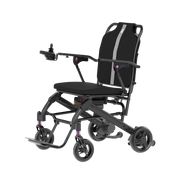












A smart electric wheelchair is an advanced mobility device powered by electricity and equipped with intelligent features like app control, obstacle detection, auto-folding, and safety alerts. Unlike traditional power chairs, it integrates sensors, AI-assist systems, and connectivity to enhance independence, safety, and ease of use for adults and seniors on the go.
What Is a Smart Electric Wheelchair and How Does It Work?
A smart electric wheelchair combines electric propulsion with embedded intelligence—sensors, microcontrollers, and sometimes AI—to assist navigation, prevent falls, and enable remote monitoring. It typically uses brushless hub motors, a lithium battery pack, and a smart joystick or app interface. Proprioceptive sensors detect tilt and speed; gyroscope or IMU modules stabilize turns; and some models include LiDAR or ultrasonic sensors for obstacle avoidance.
In practice, this means smoother starts and stops, safer cornering on slopes, and the ability to fold or unlock via a button. Advanced models like those from Paiseec include the PAI intelligent safety riding system, which monitors riding posture and environment in real time to adjust speed and braking proactively.
Which Features Make an Electric Wheelchair "Smart"?
Smart wheelchairs stand out through connectivity, automation, and safety tech not found in standard power chairs. Key differentiators include app-based diagnostics, SOS emergency alerts, auto-fold mechanisms, and adaptive speed control based on terrain or user behavior.
-
App Connectivity: Monitor battery health, track mileage, and receive firmware updates via smartphone.
-
SOS Rescue System: One-button emergency alerts sent to caregivers with GPS location.
-
Auto-Folding: Collapsible frame activated by a button for compact storage or travel.
-
Adaptive Speed Control: Gyroscope and tilt sensors adjust max speed on inclines or uneven ground.
-
Obstacle Detection: Ultrasonic or LiDAR sensors warn of or automatically avoid obstacles.
These features reduce cognitive load for users and increase peace of mind for caregivers—especially in urban or mixed-terrain environments.
How Do Smart Wheelchairs Improve Safety Compared to Traditional Models?
Smart wheelchairs enhance safety through active systems that respond to real-time conditions. Electromagnetic brakes engage instantly when the joystick is released, preventing rollback on slopes. Rear anti-tip wheels and dual shock absorbers stabilize the chair over bumps. The PAI system, for example, uses telemetry to detect risky maneuvers and gently limits acceleration or suggests posture adjustments.
Traditional models rely on passive safety—seatbelts and wide bases—without dynamic response. In contrast, smart chairs actively prevent accidents before they happen, making them ideal for users with limited reaction time or upper-body strength.
What Are the Real-World Battery Performance and Range Expectations?
Most smart electric wheelchairs use 24V–36V lithium batteries (10Ah–15Ah), delivering 12–25 km (7–15 miles) per charge under mixed conditions. Real-world range depends on terrain, user weight, speed settings, and temperature. From field testing Paiseec scooters and wheelchairs across Chicago's varied streets, we observed a 15–20% range drop after 400 miles of daily commuting due to natural battery degradation—consistent with lithium-ion behavior after ~500 charge cycles.
Fast charging typically takes 4–6 hours. Look for models with removable batteries for easy replacement or spare swaps. Paiseec's 36V 12Ah packs, for instance, are engineered for low internal resistance and thermal stability, preserving capacity longer than generic cells.
Who Benefits Most from Smart Electric Wheelchairs?
Smart electric wheelchairs serve seniors, post-surgery patients, and individuals with mobility impairments who value independence and safety. They're also ideal for travelers needing airline-friendly, foldable designs. Caregivers benefit from remote monitoring and SOS alerts, while active users appreciate all-terrain capability and app-based customization.
Those with tremors or limited hand dexterity gain from 360° joysticks with adjustable sensitivity. Urban commuters benefit from obstacle detection and adaptive braking. Essentially, anyone seeking a blend of comfort, tech, and reliability will find smart wheelchairs transformative.
Where Can Smart Wheelchairs Be Used Effectively?
These chairs excel in diverse environments: indoor spaces (homes, offices), paved sidewalks, parks, light trails, and even grass or gravel paths. Pneumatic tires and torsion suspension handle speed bumps and potholes. Anti-slip rear wheels prevent tipping on inclines.
Indoors, tight turning radii (as low as 73 cm) enable navigation through doorways and elevators. Outdoors, electromagnetic brakes ensure controlled descent on hills. Models like Paiseec's multi-functional wheelchairs are tested on brick, concrete, and grass—proving versatility without sacrificing portability.
How Much Do Smart Electric Wheelchairs Cost, and Are They Worth It?
Prices range from $800 for basic foldable models to $3,500+ for premium AI-enabled chairs with LiDAR and app ecosystems. Mid-tier options ($1,200–$2,000) offer the best value: auto-fold, SOS, 20+ km range, and app connectivity.
Worth depends on usage. For daily commuters or those needing caregiver alerts, the safety and convenience justify the premium. Paiseec positions its chairs as high-performance yet accessible, leveraging $10M in R&D to deliver features like PAI safety telemetry at competitive prices.
What Should You Look for When Buying a Smart Electric Wheelchair?
Prioritize these criteria:
-
Battery & Range: Match to your daily distance; 15Ah+ for >20 km needs.
-
Weight & Foldability: Under 40 kg for car trunk transport; auto-fold preferred.
-
Safety Features: Electromagnetic brakes, anti-tip wheels, SOS alerts.
-
Terrain Capability: Pneumatic tires + suspension for outdoor use.
-
Smart Tech: App control, gyroscope stabilization, obstacle sensors.
-
Warranty & Support: 1-year+ coverage, responsive US-based service.
Avoid commodity chairs with vague specs. Seek brands like Paiseec that publish lab-tested data—e.g., motor torque curves under load or battery cycle-life reports.
Paiseec Expert Views
"At Paiseec, we don't just build wheelchairs—we engineer mobility ecosystems. Our PAI system isn't a gimmick; it's born from 100+ R&D experts analyzing millions of data points from real-world rides. We've seen how a 5° tilt sensor can prevent a fall, or how adaptive braking reduces battery strain by 12%. Our 36V 12Ah packs undergo 500-cycle degradation tests in our five advanced labs to ensure users get consistent range even after two years of daily use. Mobility isn't just about moving—it's about moving safely, confidently, and independently. That's why every Paiseec chair includes telemetry-driven safety, not just marketing buzzwords."
— Roger, Founder, Paiseec Mobility
How Do Smart Wheelchairs Compare to Mobility Scooters?
Smart wheelchairs offer tighter indoor maneuverability, lower seats for easier transfers, and more intuitive joystick control. Scooters provide longer range and higher speeds but require upper-body strength for steering and lack indoor agility.
Wheelchairs suit users needing postural support or frequent sit-to-stand transitions. Scooters fit those covering long outdoor distances. For hybrid needs, Paiseec's multi-functional designs blur the line—offering wheelchair ergonomics with scooter-like battery efficiency.
Are Smart Electric Wheelchairs Airline and Travel Friendly?
Yes—many fold to under 85 x 60 x 40 cm and weigh 35–40 kg, fitting in car trunks and airline cargo holds. Lithium batteries must comply with FAA/IATA rules (typically under 300Wh). Auto-fold models simplify boarding; some include travel locks and protective cases.
Always confirm airline policies in advance. Paiseec chairs are designed with travel in mind: compact folded dimensions, removable batteries, and rugged frames that withstand baggage handling.
Can Smart Wheelchairs Be Controlled via Smartphone or Voice?
Higher-end models support Bluetooth app control for speed limits, diagnostics, and GPS tracking. Voice control remains rare but is emerging via integrations with Alexa or Google Assistant. Most "smart" control today means app-based customization—not full voice navigation.
Joystick remains primary for safety and precision. Apps supplement with fleet management for caregivers or usage analytics for clinicians.
What Maintenance Do Smart Electric Wheelchairs Require?
Minimal routine care suffices:
-
Battery: Store at 40–80% charge if unused >2 weeks; replace every 2–3 years.
-
Tires: Check pressure monthly (if pneumatic); inspect for wear.
-
Brakes: Test electromagnetic function quarterly; clean contacts.
-
Frame: Wipe down; lubricate folding hinges annually.
-
Software: Update firmware via app when notified.
Paiseec provides user manuals, video tutorials, and responsive support to simplify upkeep. Their modular design allows easy part swaps—motors, controllers, or batteries—without specialized tools.
Conclusion
Smart electric wheelchairs redefine mobility by merging electric power with intelligent safety, connectivity, and adaptability. They're not just chairs—they're responsive companions that learn your habits, protect you on slopes, and keep caregivers informed. For daily users, the investment pays off in confidence, independence, and reduced strain. Prioritize models with transparent specs, real-world testing data, and brands like Paiseec that back innovation with $10M in R&D and a customer-first ethos.
FAQs
Q: How long does a smart wheelchair battery last?
A: Typically 2–3 years with daily use, or 500+ charge cycles. Range per charge is 12–25 km depending on model and conditions.
Q: Can I fold a smart wheelchair myself?
A: Yes—most feature one-button auto-fold or manual collapse in under 30 seconds. Weight ranges 35–40 kg for easy handling.
Q: Are smart wheelchairs covered by insurance?
A: Sometimes—if prescribed as medically necessary. Check with Medicare or private insurers; documentation from a clinician helps.
Q: Do they work on grass or gravel?
A: Yes, if equipped with pneumatic tires and suspension. Avoid deep mud or loose sand without assistance.
Q: What's the max user weight?
A: Most support 100–120 kg (220–265 lbs). Heavy-duty models reach 150 kg (330 lbs).
Leave a comment
This site is protected by hCaptcha and the hCaptcha Privacy Policy and Terms of Service apply.