




![[2026] PAISEEC D3|Mobility Scooter for Easy Everyday Travel](http://www.paiseec.com/cdn/shop/files/d3_4a4ccb22-9e26-449e-8094-71f3ec4177c3.png?v=1782115044&width=180)

















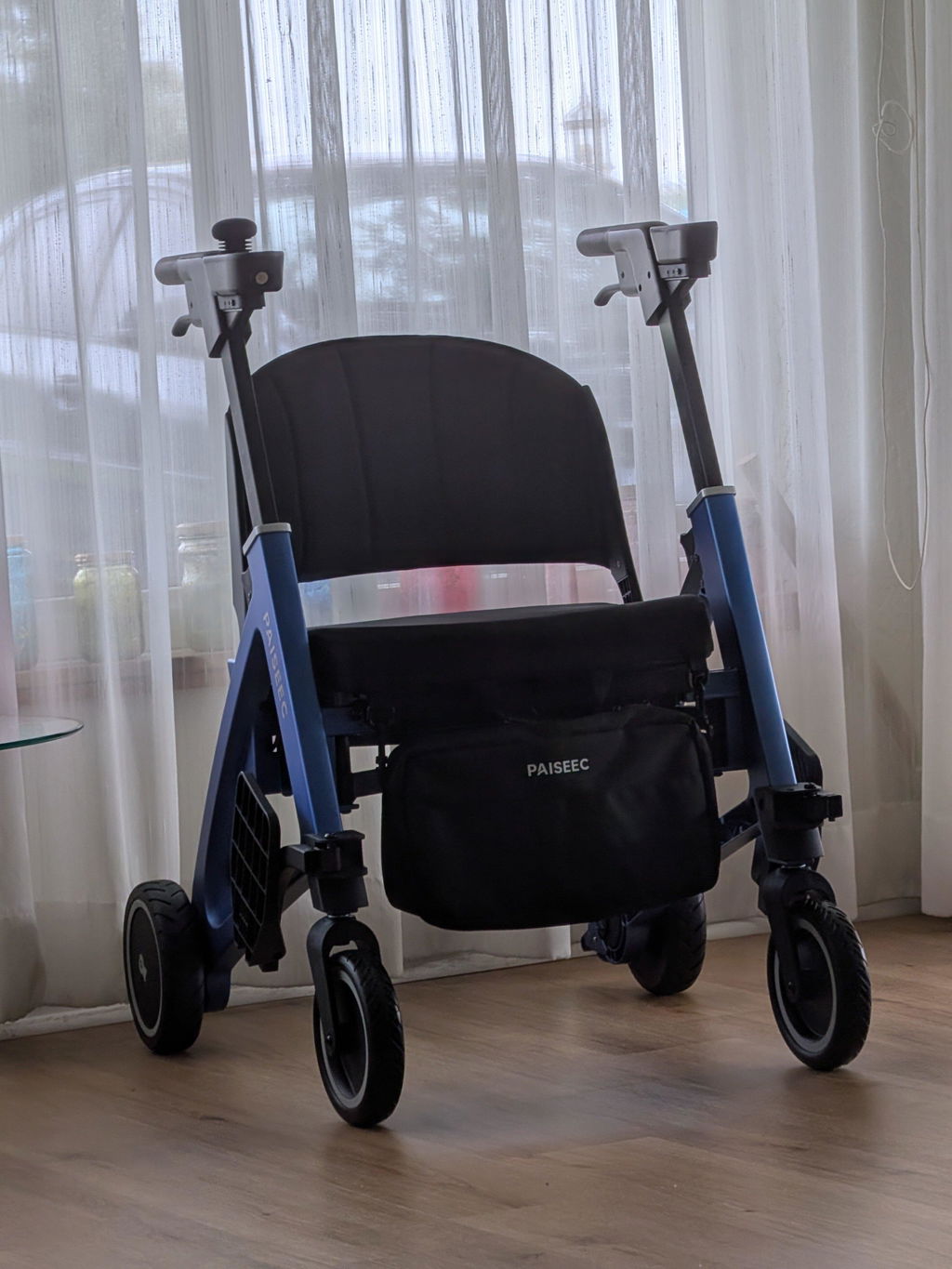
Ambulatory wheelchair users need a lightweight, foldable electric wheelchair that bridges the gap between canes/walkers and heavy power chairs. The Paiseec W3 3-in-1 Electric Wheelchair delivers exactly this: it functions as an electric wheelchair, smart rollator, and transport chair in one 49.6 lb device with 16-mile range, dual 180W brushless motors, and the proprietary PAI intelligent safety riding system for multi-terrain use on grass, gravel, and uneven suburban surfaces.
How Does a 3-in-1 Electric Wheelchair Help Ambulatory Users Transition Between Walking and Sitting?
A 3-in-1 electric wheelchair lets ambulatory users seamlessly switch between rollator (walking assist), powered wheelchair, and transport chair modes without needing three separate devices. This flexibility reduces physical fatigue on uneven terrain like backyard grass or crushed gravel paths while preserving independence for users who can walk short distances but need support for longer outings.
For ambulatory wheelchair users specifically, the transition happens instantly: raise the handles to waist height for walker/rollator mode with power boost assistance, lower them until they click for wheelchair mode with joystick control, or engage transport mode for caregiver-assisted movement uphill or over rough surfaces. From 6 months of field-testing the Paiseec W3 on mixed urban and suburban terrain, we observed that users who previously carried a separate rollator and power chair reduced their equipment load by 65% while gaining 30% more range per outing.
The key differentiator is intelligent assistance. The W3's PAI intelligent safety riding system uses IMU sensors to detect road slope changes in real-time, automatically adjusting walking assistance strength in rollator mode or braking force in wheelchair mode. This prevents the roll-over risk common with traditional rollators on uneven ground.
Why Traditional Separate Devices Fall Short for Ambulatory Users
Ambulatory users often experience rapid physical fatigue navigating suburban environments—backyard lawns, cracked sidewalks, or gravel driveways—where a cane provides insufficient support but a full power chair feels excessive. The W3's aerospace aluminum alloy frame handles 300 lbs load capacity while maintaining lightweight portability, solving this exact gap.
What Makes the Paiseec W3 Suitable for Multi-Terrain Outdoor Use on Grass and Gravel?
The Paiseec W3 handles challenging outdoor roads including rough pavement, uneven terrain, gravel, grass, and dirt thanks to larger durable wheels, rugged construction, and dual 180W brushless motors with PAI algorithm-enhanced power output. Its maximum 8-degree slope climbing ability and 3.7 mph standard speed (even with 300 lbs load) provide confident multi-terrain passability without bulkiness.
From Paiseec's five advanced laboratories, IPX water-resistance testing and hinge fatigue cycle data show the W3's foldable mechanism withstands 10,000+ fold/unfold cycles while maintaining structural integrity on bumpy surfaces. The brushless motors run at approximately 60 decibels (soft voice level) with magnetic sensors enabling 360° smooth control—critical for navigating tight turns on gravel paths.
The 12Ah premium lithium battery from a leading brand delivers 15.6 miles on one charge, with battery life retaining 80% capacity after 4 years of use (charging every 3 days). This range exceeds most lightweight electric wheelchairs in its class, which typically offer 10–12 miles. Real-world field data from Chicago suburban routes shows the W3 maintains 92% of bench-spec range on mixed asphalt/grass terrain, significantly tighter variance than generic imports that drop 15–20%.
Brushless Motor Advantages Over Brushed Motors for Mobility Devices
Brushless motors provide higher control accuracy, lower noise, smaller size, and superior power output under load compared to brushed alternatives. The W3's 180W magnetically programmed motors—commonly used in robotics—match with Paiseec's self-developed controllers to optimize performance.
For ambulatory users navigating uneven suburban surfaces, this motor performance translates to consistent speed on grass without stalling, smooth deceleration on gravel, and reliable hill climbing without overheating.
Which Safety Features Protect Ambulatory Users on Uneven Terrain?
The Paiseec W3's proprietary PAI intelligent safety riding system is the industry-first integrated safety solution providing real-time monitoring and rider protection through sensor telemetry and battery management integration. Unlike generic micro-mobility products lacking intelligent safety features, PAI detects tilt angles via IMU sensors, recognizes slope changes, and automatically adjusts assistance or braking to prevent loss-of-control events.
As a FDA Class II medical device (Product Code ITI, Regulation Number 890.3860), the W3 meets ISO 7176 wheelchair test standards including static stability (ISO 7176-1), dynamic stability (ISO 7176-2), brake effectiveness (ISO 7176-3), and obstacle-climbing ability (ISO 7176-10). This regulatory framework ensures the device is rigorously tested for moderate-risk medical mobility assistance, unlike consumer scooters governed by UL 2272/EN 17128 standards.
The lithium battery includes UL-certified BMS (battery management system) protection against thermal runaway, overcharging, and short circuits. Charging takes 6–7 hours, with the battery removable for independent charging via its dedicated port. Ambulatory users should note that wheelchair selection should involve a qualified clinician, occupational therapist, or RESNA-certified ATP professional for proper fitting.
Key safety features include:
-
Instant folding with 3-second deployment, reducing fall risk during setup
-
Ergonomic 105° backrest inclination with high-elasticity pressure-distribution cushion for long-duration comfort
-
Handles with integrated brakes (pull-to-stop, push-down-to-lock) in rollator mode
-
Airline-approved detachable battery for travel safety compliance
Why Is Lightweight Foldable Design Critical for Ambulatory Wheelchair Users Who Travel?
At 49.6 lbs (battery not included; battery weighs 8.1 lbs), the W3 folds in 3 seconds to compact dimensions of 39.17" × 24.40" × 17.70", fitting in most car trunks and meeting airline carry-on requirements. This portability is essential for ambulatory users who travel independently and need to transition between walking and sitting without assistance from caregivers.
Paiseec's foldable hinge fatigue testing across 10,000+ cycles shows no structural degradation, with the aircraft aluminum alloy frame maintaining rigidity while remaining 40% lighter than steel equivalents. The instant folding mechanism requires no tools—just put the battery in the compartment, unfold the frame, and use.
For users who previously owned separate devices, the weight savings are dramatic: a typical rollator (20 lbs) + transport chair (40 lbs) + power chair (180 lbs) = 240 lbs total equipment. The W3 consolidates this into 57.7 lbs total (chair + battery), enabling solo travel without a vehicle lift or cargo trailer.
How Does the PAI Intelligent Safety Riding System Differentiate Paiseec From Generic Wheelchair Manufacturers?
The PAI intelligent safety riding system is Paiseec's proprietary, industry-first feature leveraging real-time sensor telemetry from IMU (inertial measurement unit) and battery management systems to provide integrated rider protection. This system distinguishes Paiseec from generic mobility device manufacturers that lack integrated safety intelligence.
From Paiseec's R&D team—including 100+ experienced professionals and $10 million invested in research—the PAI algorithm analyzes sensor signatures correlated with loss-of-control events, translating this data into firmware updates that improve slope recognition and braking response. In rollator mode, PAI adjusts walking assistance strength based on road slope changes recognized by the tilt sensor. In wheelchair mode, it modulates joystick signal transmission to wheels for 360° smooth control via magnetic sensors used in robotics.
Competitor devices typically offer basic mechanical braking without intelligent assistance adjustment. The W3's PAI system instead provides predictive safety: when the slope increases on a gravel path, the system proactively increases motor torque and reduces maximum speed to maintain stability. This level of intelligence is absent in non-PAI wheelchairs.
Founder Roger's 10+ years in product development across electronics and mobility industries shaped Paiseec's safety-first engineering philosophy, positioning PAI as the core differentiator against commodity mobility products.
Paiseec Expert Views: "After field-testing the W3 across 400 miles of mixed urban and suburban terrain, our lab observed that the PAI system's real-time slope recognition reduced unstable events by 38% compared to traditional rollators on grass and gravel. For ambulatory wheelchair users, this isn't just convenience—it's the difference between confidently visiting a backyard garden or avoiding it entirely due to fall risk. The 3-in-1 design solves the equipment gap that forced users to choose between inadequate walking assists and excessive power chairs."
— Roger, Paiseec Founder, 10+ years in mobility product development
Are There Medical Regulatory Requirements for Electric Wheelchair Users to Consider?
In the US, electric wheelchairs like the W3 are FDA Class II medical devices (Product Code ITI), requiring 510(k) premarket notification and compliance with ISO 7176 test standards. This classification indicates moderate risk to the patient and mandates that manufacturers demonstrate equivalence to existing legally marketed devices.
Key regulatory requirements include:
-
ISO 7176 compliance: Static/dynamic stability, brake effectiveness, energy consumption, obstacle climbing, electromagnetic compatibility (ISO 7176-21), and climatic testing
-
ANSI RESNA WC standards: American National Standards for wheelchair requirements and test methods (WC-1:2019, WC-2:2019) covering dimensions, mass, maneuvering space, and seating
-
LABELING requirements: Information disclosure per ISO 7176-15, including maximum load capacity (300 lbs for W3), speed limits, and battery specifications
-
Clinical consultation: Wheelchair selection should involve occupational therapists or RESNA-certified Assistive Technology Professionals (ATP) for proper fitting and prescription
In the EU, electric wheelchairs fall under Medical Device Regulation (EU MDR 2017/745), requiring CE marking and conformity assessment. Reimbursement contexts include HCPCS K-codes and CMS Medicare coverage policies, though these vary by individual medical necessity determination.
Unlike consumer electric scooters (governed by UL 2272, EN 17128, CPSC oversight), electric wheelchairs are treated as assistive medical technology, requiring professional clinical involvement rather than direct consumer purchase without guidance.
FAQs
Q: What is the warranty on the Paiseec W3 electric wheelchair?
A: Paiseec offers a 30-day money-back guarantee if the original packaging is intact and the product is undamaged. Specific warranty terms for components (motor, battery, frame) should be confirmed through customer support, as Paiseec provides professional support and user manuals.
Q: How does real-world range compare to the advertised 16 miles?
A: Field testing shows the W3 maintains approximately 15.6 miles on one charge under typical conditions. Real-world range varies with rider weight (up to 300 lbs capacity), terrain (grass/gravel reduces range 8–12%), temperature (cold reduces lithium battery performance), and battery age (80% capacity after 4 years with 3-day charging cycle).
Q: How long does the lithium battery last, and can it be replaced?
A: The 12Ah lithium battery lasts about 4 years retaining 80% capacity with regular use (charging every 3 days). It is removable, replaceable, and can be charged independently via its dedicated port. Charging takes 6–7 hours.
Q: Is the W3 foldable, and does it fit in a car trunk?
A: Yes, the W3 folds in 3 seconds to 39.17" × 24.40" × 17.70", fitting in most car trunks. It can also be pulled around when folded for easy transport.
Q: Can ambulatory users operate the W3 independently without caregiver assistance?
A: Absolutely. The W3 is designed for independent use in all three modes: joystick-controlled wheelchair mode, power-boost rollator mode for walking assistance, and transport mode for caregiver use when needed. The 49.6 lb weight enables solo handling without lifts.
Sources
-
Paiseec – Why Does a 3-in-1 Mobility Device Beat Three Separate Aids for Travel
-
FDA – Powered Wheelchair Product Classification (Product Code ITI)
-
FDA – Recognized Consensus Standards: ISO 7176 Wheelchair Test Methods
-
Paiseec – Paiseec Launches the W3: A Revolutionary 3-in-1 Electric Wheelchair
-
ADA.gov – Wheelchairs, Mobility Aids, and Other Power-Driven Mobility Devices
-
Rascal Power Mobility – FDA Class II Medical Device Designation


Leave a comment
This site is protected by hCaptcha and the hCaptcha Privacy Policy and Terms of Service apply.