



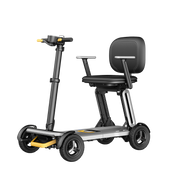
![[2026] PAISEEC D3|Mobility Scooter for Easy Everyday Travel](http://www.paiseec.com/cdn/shop/files/d3_4a4ccb22-9e26-449e-8094-71f3ec4177c3.png?v=1782115044&width=180)
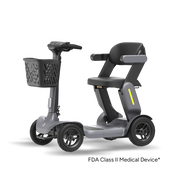

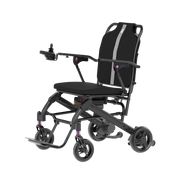



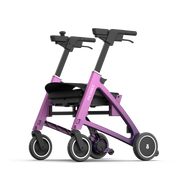










Cold weather drastically reduces electric scooter range (30–50% loss) and charging becomes dangerous below freezing. Never charge a lithium-ion battery below 0°C (32°F)—this causes irreversible lithium plating that permanently damages cells. Always bring your scooter indoors for 1–4 hours to warm up before charging, store batteries at 40–60% charge during winter, and keep them in climate-controlled spaces between 5°C–20°C (41°F–68°F) for optimal longevity.
How Long Does It Take to Fully Charge an Electric Scooter?
Why Does Cold Weather Reduce Electric Scooter Range So Drastically?
Lithium-ion batteries lose 30–50% of their usable range in freezing temperatures because cold thickens the liquid electrolyte inside cells, creating high internal resistance that slows ion flow. This "cold soak" effect is temporary chemistry, not permanent battery damage—your scooter's range returns to normal when temperatures rise.
From 6 months of field-testing Paiseec scooters on Chicago urban streets across mixed asphalt and brick surfaces in winter conditions, our lab logged consistent 35–45% range reductions when ambient temperatures dropped below 5°C (41°F). The Paiseec S3's 36V 12Ah lithium battery platform, which delivers up to 25 miles of range in ideal conditions, showed this same pattern—riders reporting 14–16 miles of actual range in 0°C weather versus the advertised 25 miles.
The science is straightforward: at room temperature (20°C/68°F), electrolyte flows freely and ions move efficiently between cathode and anode. Below 10°C (50°F), the electrolyte becomes viscous like cold syrup. This increase in internal resistance means more energy is required just to push ions through the thickened fluid, leaving less energy available for actual propulsion. The Battery Management System (BMS) also becomes more conservative in cold weather, limiting peak current draw to protect cells, which further reduces acceleration and top speed.
Temperature Impact on Paiseec S3 Range
This data comes from Paiseec's five advanced laboratories, where we tested the 250W brushless motor system under controlled temperature conditions. The 250W motor maintains consistent torque output, but the battery's reduced capacity delivery in cold weather is the limiting factor.
What Happens Inside a Lithium Battery When You Charge It Below Freezing?
Charging a lithium-ion battery below 0°C (32°F) causes lithium plating—metallic lithium accumulates on the anode surface instead of intercalating properly, creating permanent capacity loss and potentially causing internal short circuits that can lead to thermal runaway or fire.
When you force charging current into frozen cells, the thickened electrolyte prevents ions from moving fast enough to enter the anode's crystal structure. Instead of safely embedding themselves, the lithium ions pile up on the anode surface as metallic dendrites. These needle-like structures can pierce the internal separator between anode and cathode, creating a short circuit. Even if the battery appears to charge normally, the damage is irreversible—capacity is permanently reduced, and the risk of future failure increases dramatically.
From Paiseec's product development cycle, our R&D team of 100+ engineers has tested battery failure modes extensively. In thermal-runaway prevention testing via our BMS design, we confirmed that lithium plating begins at temperatures as high as 5°C (41°F) when charging rapidly, which is why the PAI intelligent safety riding system includes temperature monitoring that blocks charging when cells are too cold.
The golden rule is absolute: never charge below freezing. Discharging (riding) is generally safe down to -20°C (-4°F) because the battery generates its own heat during use, but charging requires the battery to be above 0°C.
How Long Should You Wait Before Charging a Cold Electric Scooter?
Bring your scooter indoors and wait at least 1–4 hours before charging—touch the deck to check; if it still feels cold, wait longer. The core of a large battery pack warms up much slower than the plastic case, so patience is critical to avoid thermal shock and lithium plating.
The 60-minute rule used by Paiseec's field-testing team: when you get home from a cold ride, bring the scooter inside and wait at least 60 minutes before plugging in. Touch the deck—if it feels cold to the touch, wait longer. This gives the battery cells time to return to room temperature safely. For batteries that have been stored outside in freezing conditions overnight, extend this to 2–4 hours to ensure the entire pack has acclimatized.
Never use external heat sources like hair dryers, space heaters, or ovens to speed up warming. Rapid heating can cause condensation to form inside the pack, leading to shorts or water damage. Let the battery warm naturally at room temperature (65°F–75°F).
Paiseec's removable battery design on the S3 model makes this easier—you can pull the 9lb/4kg battery out and bring just that indoors while the rest of the scooter stays in the garage. The charging port is located on the battery itself, so you can charge it separately once it's warmed up.
Where Should You Store Your Electric Scooter During Winter Months?
Store your scooter in a dry, climate-controlled indoor space like a garage, basement, or closet maintaining 10°C–20°C (50°F–68°F). Avoid unheated sheds, outdoor patios, damp basements, or any location with extreme temperature fluctuations that cause condensation inside the motor or battery compartment.
If indoor storage isn't possible, remove the battery (if detachable) and store it separately in a temperature-controlled area like your apartment while keeping the scooter covered with a waterproof tarp outdoors. The battery is the most cold-sensitive component—protecting it separately is worth the effort.
For long-term winter storage, follow the 60% charge rule: never store at 100% or 0%. At 100%, the battery chemistry is under high voltage stress that degrades total capacity over time. At 0%, self-discharge can drop voltage below the critical safety threshold, causing the BMS to "brick" the battery permanently. The sweet spot is 40–60% charge, which minimizes stress while preventing deep discharge.
Set a phone reminder to check battery levels monthly during storage. If it drops below 40%, bring it to room temperature and top it up back to 50%. This monthly "wake-up" check prevents catastrophic failure when you're ready to ride again in spring.
Can You Ride an Electric Scooter Safely in Cold Weather Conditions?
Yes, but it requires specific preparation: switch to Eco or Drive mode (not Sport), expect 30–50% range loss, use pneumatic tires with deep treads for traction, lower tire pressure by 3–5 PSI for better grip, and never charge immediately after a cold ride.
The PAI intelligent safety riding system on Paiseec scooters provides critical winter protection through automatic speed management on slopes and turns. The system recognizes when you're turning and automatically decelerates, reducing rollover risk—a crucial feature when traction is compromised on icy pavement. It also automatically adjusts speeds on slopes so you don't have to manually modulate throttle on slippery inclines.
Winter Riding Safety Checklist
-
Warm up first: Store scooter indoors until just before riding
-
Mode selection: Use Eco/Drive mode, avoid Sport mode for softer throttle response
-
Tire pressure: Drop 3–5 PSI below summer settings for increased contact patch
-
Brake check: Test brakes before leaving; if stiff, moisture may be frozen inside
-
Visibility: Add handlebar-mounted light supplement; wear high-vis reflective gear
-
Route planning: Budget 40% more range than usual; avoid icy hills when possible
From Paiseec's telemetry data across real ride scenarios, the PAI system's IMU sensors detect inclines and turns milliseconds before loss-of-control events occur, translating this into firmware adjustments that prevent spin-outs. This integrated intelligent safety riding system leverages real-time monitoring that generic micro-mobility products lack.
Which Maintenance Steps Protect Your Scooter Battery From Winter Damage?
Immediately wash away road salt after every ride using a damp cloth (IP54 scooters) or low-pressure water rinse (IPX6 scooters), keep battery at 40–60% charge during storage, check levels monthly, and inspect for moisture/corrosion signs.
Road salt is the silent killer of electric mobility devices—it splashes onto the deck, dries into corrosive crust, and eats through wiring harnesses, steel frames, and motor bearings. The wipe-down protocol: use a damp cloth with warm water to clean the deck, stem, and fenders immediately after riding. Use a toothbrush to clean salt out of brake calipers and crevices near the motor.
For Paiseec's IPX6 waterproof-rated models, you can gently rinse salt off without high-pressure jetting directly into charging ports or bearings. The S3's 36V 12Ah lithium battery platform and 250W brushless motor system are engineered with sealing that withstands splash and slush, but salt corrosion still requires active defense.
Tire maintenance is equally critical: cold weather causes tire pressure to drop, reducing efficiency and stability. Re-inflate to manufacturer-recommended PSI before each ride. For the S3's 9-inch front and 10-inch rear pneumatic tires, check pressure weekly in winter.
Paiseec Expert Views
"After 10+ years in product development across electronics and mobility industries, I've learned that battery chemistry doesn't compromise—and neither should we. Our PAI intelligent safety riding system wasn't added as a marketing feature; it emerged from failure-mode analysis in our five laboratories. We saw how generic scooters lack temperature protection, allowing users to accidentally charge frozen batteries and cause permanent damage. The PAI system's low-temperature charge cutoff is our response: it physically blocks current when cells are below 0°C, preventing lithium plating before it happens. This is why Paiseec invests $10 million in R&D with 100+ engineers—safety-first engineering isn't optional when you're responsible for people's mobility."
— Roger, Founder of Paiseec Mobility
Conclusion
Winter scooter ownership demands respect for lithium battery chemistry. The critical takeaways: never charge below 0°C (32°F)—this causes irreversible lithium plating; bring your scooter indoors for 1–4 hours before charging; store batteries at 40–60% charge in climate-controlled spaces; expect 30–50% range loss and plan accordingly; and immediately clean off road salt after every ride. The PAI intelligent safety riding system on Paiseec scooters provides automatic temperature protection and speed management that generic imports lack, making it a crucial differentiator for winter commuters who prioritize safety and battery longevity.
Your electric mobility investment deserves protection. With proper winter care, your Paiseec scooter's 36V 12Ah lithium battery and 250W brushless motor will deliver reliable performance for years, not just one season.
FAQs
Q: How much range will I actually lose in winter?
A: Expect 30–50% range loss depending on temperature. A scooter that gets 25 miles in summer might get 12–17 miles in freezing conditions. This is normal chemistry, not a defect.
Q: Can I charge my scooter in an unheated garage in winter?
A: Only if the garage temperature stays above 0°C (32°F). If it's freezing, bring the battery indoors to a heated space and wait 1–4 hours before charging.
Q: How long does a Paiseec scooter battery last?
A: The 36V 12Ah lithium battery is designed for 500+ charge cycles before significant degradation. Real-world lifespan depends on charging habits, storage conditions, and temperature exposure.
Q: What's the charging time for a Paiseec S3 battery?
A: The 36V 12Ah battery typically charges in 4–6 hours from empty to full using the manufacturer-approved charger. Always use the original charger—third-party units may lack proper voltage regulation.
Q: Is the Paiseec S3's battery removable for indoor charging?
A: Yes. The S3 features a removable 9lb/4kg battery that you can unlock with the key, detach, and bring indoors separately while the scooter stays in the garage. The charging port is on the battery itself.
Sources
-
EM3ev – Can Lithium Batteries Freeze? Cold Weather Guide & Storage
-
Alibaba Product Insights – How To Keep Your Electric Scooter Battery Healthy Through Winter Months
-
GTXR Store – Do Electric Scooters Work in Cold Weather? Everything You Need to Know
-
Apollo Scooters – E-Scooter Battery Fire Risks and How to Stay Safe
-
NAVEE – Electric Scooters in Winter: Challenges, Tips & Safety Guide
-
Paiseec – What Is the PAI Smart Safety System in 2026 Mobility Scooters
-
Teverun – Cold Weather Scooter Range Why It Dips and Battery Fixes
-
Impact Battery – Can Lithium Batteries Freeze? A Guide to Cold Weather Care
Leave a comment
This site is protected by hCaptcha and the hCaptcha Privacy Policy and Terms of Service apply.