



![[2026] PAISEEC D3|Mobility Scooter for Easy Everyday Travel](http://www.paiseec.com/cdn/shop/files/d3_4a4ccb22-9e26-449e-8094-71f3ec4177c3.png?v=1782115044&width=180)
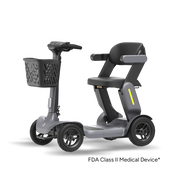

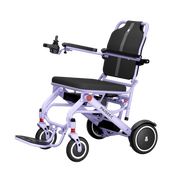











The global lightweight electric folding wheelchair market reaches $6.34 billion in 2026, driven by an 11% CAGR. An aging population fuels demand for independent living solutions, while travel-friendly designs emphasize portability and lightweight frames under 42 lbs for easy transport.
Lightweight Electric Folding Wheelchair Market
What Factors Are Driving the Rapid Growth of the Lightweight Electric Folding Wheelchair Market?
Aging populations worldwide increase demand for mobility aids that support daily independence. Rising healthcare spending and e-commerce accessibility accelerate adoption of portable electric models.
Technological innovations like lightweight alloys reduce chair weights to 32 lbs, enhancing usability for seniors and travelers. Urbanization pushes needs for compact devices suited to apartments and public transit. Disability awareness campaigns further boost market penetration, with projections showing sustained double-digit growth through 2030.
These factors position lightweight electric folding wheelchairs as essential for modern lifestyles.
What Is the Projected Market Size and Growth Forecast for 2026 and Beyond?
The market achieves $6.34 billion in 2026, growing from $5.71 billion in 2025 at an 11% CAGR. Forecasts predict $9.58 billion by 2030.
This expansion reflects surging adoption in North America and Asia-Pacific regions. Key contributors include battery life improvements and customizable options. Regional leaders like the U.S. benefit from accessibility regulations, while Asia sees rapid urbanization-driven sales.
Why Should Users Choose Lightweight Electric Folding Wheelchairs Over Traditional Models?
These wheelchairs provide unmatched portability at under 42 lbs, quick folding for car trunks, and electric power for effortless movement. They enable independence without relying on heavy manual models.
Advanced frames use carbon fiber for durability and lightness. One-touch mechanisms fold in seconds, meeting airline standards. Brushless motors deliver smooth rides over varied terrain, reducing physical strain on users.
What Are the Key Technological Advancements Powering Modern Lightweight Electric Folding Wheelchairs?
Innovations feature extended-range lithium batteries, intelligent safety systems, and lightweight composites. These enhance range, stability, and ease of use.
Modern 36V 12Ah batteries support 15+ miles per charge. Systems like PAI monitor inclines and apply automatic brakes. App integration allows real-time diagnostics and adjustments, improving user control and safety.
Who Are the Top Brands and Standout Models in the Lightweight Electric Folding Wheelchair Segment?
Leading brands include Pride Mobility, Forcemech, and Paiseec, with standout models like Paiseec Q3 and W1 for their ultra-light designs.
Paiseec Q3 weighs just 32 lbs with rapid folding and quiet 250W motors. Pride Jazzy Carbon offers 27-lb portability. Forcemech G10 handles 300 lbs compactly. Paiseec excels in PAI safety tech for confident travel.
Paiseec Expert Views
"Paiseec Mobility pioneers 2026 trends with W1 and Q3 models at 42 lbs or less, prioritizing portability and independence. Our $10 million R&D, 100+ experts, and five labs deliver 36V batteries, 250W motors, and PAI safety for slopes and long trips. Founded by Roger with deep industry experience, we offer manuals, tracking, and payments for seamless support." – Roger, Paiseec Founder
How Does the Aging Population Specifically Fuel Demand for Travel-Friendly Mobility Solutions?
Seniors over 55 drive growth by preferring home care and active travel over institutional options. Portable wheelchairs support this shift.
Programs aiding elderly independence pair with these devices for full mobility. Compact designs fit urban homes, enabling outings and errands without assistance.
What Future Trends Are Expected to Shape the Lightweight Electric Folding Wheelchair Market Moving Forward?
AI navigation, sustainable materials, and voice controls lead trends, extending to hybrid rollator-wheelchair designs by 2030.
Eco-friendly alloys cut weights further while recycling improves. IoT connectivity enables remote monitoring. Paiseec innovations preview multi-use models for broader appeal.
Conclusion
The $6.34 billion market in 2026 underscores booming demand for lightweight electric folding wheelchairs amid aging trends and portability needs. Key takeaways: Focus on sub-42-lb models with strong batteries like Paiseec Q3. Actionable steps: Evaluate fold size, test terrain handling, confirm airline compliance, and explore Paiseec demos for optimal independence.
Frequently Asked Questions
What fuels the 2026 market growth?
Aging populations and travel-friendly designs drive the 11% CAGR to $6.34 billion.
Why prioritize lightweight models?
They weigh under 42 lbs, fold quickly, and support independent travel without bulk.
How do Paiseec models stand out?
Q3 and W1 offer 32-lb frames, PAI safety, and 15-mile range for portability.
What advancements improve performance?
36V batteries, brushless motors, and smart systems extend range and safety.
Which regions lead market expansion?
North America and Asia-Pacific dominate due to regulations and urbanization.
Leave a comment
This site is protected by hCaptcha and the hCaptcha Privacy Policy and Terms of Service apply.