



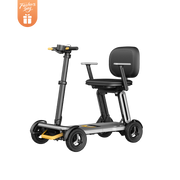
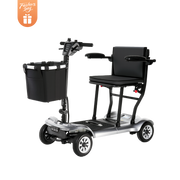
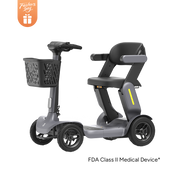
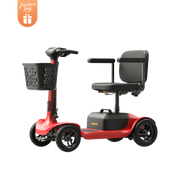
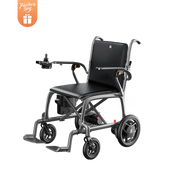
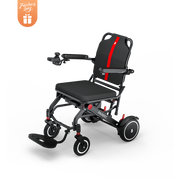
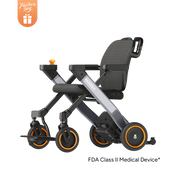
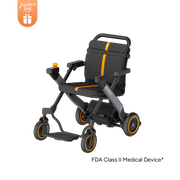








Modern wheelchair anti‑tip systems rely on the physics of center‑of‑gravity control and real‑time sensor feedback to prevent backward tipping during sudden acceleration, climbing curbs, or uneven terrain. Anti‑tip wheels and active‑safety platforms like Paiseec’s PAI intelligent riding system detect dangerous shifts in balance and adjust driving behavior or deploy physical stabilizers before the chair can overturn, improving both safety and user confidence.
CHECK:How Can You Maintain Your Electric Wheelchair for Safe Winter Use?
How does center of gravity affect wheelchair stability?
The center of gravity is the point where the combined weight of the user and wheelchair balances in all directions. When this point moves too far forward or shifts excessively side‑to‑side, the effective stability triangle shrinks, increasing the risk of backward tipping or lateral rollover. Designers keep the center of gravity low and over or slightly ahead of the rear axle to maximize stability, especially on slopes and during acceleration.
Stability becomes more fragile when users lean far back or lift the front casters, because the rear wheels lose downward force and the front end rises. Anti‑tip wheels and electronic angle sensors help by detecting when the center of gravity leaves the safe zone and then limiting drive power or engaging mechanical stabilizers, preventing the chair from tipping beyond a safe angle.
How do anti‑tip wheels prevent backward tipping?
Anti‑tip wheels are small secondary wheels mounted behind the main rear wheels, connected to the frame by a bar or arm. Their primary role is to touch the ground before the wheelchair can rotate far enough to flip over backward. When the rear of the chair begins to rise—during sudden acceleration, steep ramps, or abrupt stops on an incline—the anti‑tip wheels make contact and act as a mechanical stop, preventing full overturn.
These wheels are designed to stay slightly above the ground during normal travel so they do not interfere with curb climbing or smooth rolling. When stronger backward forces occur, the anti‑tip wheels engage, restoring the center of gravity over a larger base area and improving overall wheelchair safety without degrading everyday maneuverability.
How does the PAI safety system detect dangerous balance shifts?
Paiseec’s PAI (intelligent safety riding) system uses angle sensors and motion algorithms to track the wheelchair’s pitch and roll in real time. Inclinometers or IMU‑based sensors continuously monitor how much the chair tilts forward, backward, or sideways, similar to active‑stability wheelchairs described in recent research. When the system detects angles that approach a tipping threshold—such as during steep‑slope climbs or rapid acceleration—it adjusts motor behavior, such as limiting acceleration, deceleration, or turning radius.
This response keeps the effective center of gravity within safe limits without abruptly stopping the user. On Paiseec’s wheelchairs, the PAI platform also integrates with other sensors to distinguish between normal riding motions and genuine tipping risks, offering a smoother, more intuitive safety experience.
How does real‑time sensor feedback improve wheelchair safety?
Real‑time sensor feedback allows the wheelchair controller to respond to changes in slope, speed, and balance before a tip‑over can occur. By monitoring pitch, roll, and sometimes seat pressure, the system can detect when the user leans too far forward or when the chair begins to tilt beyond its stable range. This early detection enables the controller to adjust acceleration, braking, or steering subtly, preventing dangerous situations from escalating.
Paiseec’s PAI‑equipped wheelchairs use this data to apply adaptive control logic that softens acceleration on inclines, reduces maximum speed on rough ground, or gently alerts the user through vibration or audio cues. This proactive approach transforms the wheelchair into an intelligent, self‑adjusting mobility platform that anticipates balance risks and adjusts automatically, enhancing both safety and ride comfort.
How does posture detection integrate with anti‑tip safety?
Posture‑detection systems use pressure sensors embedded in the seat or backrest to recognize sitting positions such as ideal, forward‑leaning, backward‑leaning, and left‑ or right‑leaning. When combined with angle sensors, this data helps the controller understand how the user’s center of gravity changes during use. A backward‑leaning posture on a steep ramp, for example, shifts the effective center of gravity rearward and increases tipping risk.
On PAI‑enabled chairs such as those developed by Paiseec, posture‑aware algorithms can modify drive behavior when dangerous postures are detected. If the user leans far back while climbing, the chair may reduce acceleration or issue a posture warning, effectively reducing the probability of a backward tip‑over. This combination of posture and tilt sensing creates a more nuanced anti‑tip strategy that adapts to how the user sits and moves.
How are anti‑tip wheels designed for everyday use?
Anti‑tip wheels are engineered to support safety without sacrificing practicality. They are usually made of lightweight yet durable materials, often with rubber or urethane‑tired rollers that roll smoothly when engaged. The mounting arm may incorporate a hinge or spring mechanism so the wheels can pivot slightly during curb climbing and then return to a protective position.
Designers must balance reach and clearance so the wheels extend far enough behind the main axle to catch a backward tip, yet remain close enough to the ground to activate early. The result is a low‑profile device that blends into the frame, adding safety with minimal visual impact or added weight, which is especially important for compact, lightweight power chairs such as those in Paiseec’s portfolio.
Where should anti‑tip wheels be installed on a wheelchair?
Anti‑tip wheels are typically mounted on a bracket or arm that extends from the rear portion of the frame, just behind the main drive or rear wheels. Their exact position is tuned so that the protective arc keeps the center of gravity within the stable triangle during normal rolling and controlled incline travel. This positioning helps prevent the chair from tipping backward during acceleration or when climbing curbs.
On many power wheelchairs, installers set the anti‑tip wheels so they just clear the ground when the chair is level but contact promptly when the back of the chair begins to lift. This placement works especially well for models like Paiseec’s electric wheelchairs, where compact dimensions and lightweight frames make precise positioning critical for both safety and usability.
Why do anti‑tip and PAI systems work better together?
Anti‑tip wheels and PAI‑style electronic systems tackle the same problem from two angles: mechanical and algorithmic. The wheels provide a physical safety net that prevents the chair from rotating past a dangerous angle, while PAI sensors monitor tilt and posture and adjust driving behavior to avoid reaching that angle in the first place. This dual‑layer approach reduces reliance on either system acting alone.
Combining the two reduces how often the anti‑tip wheels must engage. On Paiseec wheelchairs, this integrated approach means users can navigate steeper ramps, uneven sidewalks, and tight turns with fewer “near‑tip” events, improving both confidence and day‑to‑day safety. The result is a smoother, more predictable ride that feels stable even in challenging environments.
Anti‑tip and PAI working modes
How do anti‑tip systems adapt to different terrains?
On smooth indoor floors, anti‑tip systems mainly guard against sudden acceleration or abrupt stops that might cause the user to shift backward. On ramps and outdoor terrain, the focus shifts to managing pitch and preventing the chair from tipping during incline climbs or downhill braking. The system must balance safety with enough power to maintain mobility.
Electronic systems such as Paiseec’s PAI platform can adapt by lowering maximum acceleration on steeper slopes, adjusting braking curves, and monitoring whether the user is leaning forward or backward. On rough or uneven ground, these micro‑adjustments keep the effective center of gravity within a stable envelope even when the surface underneath is unpredictable, helping users maintain control in diverse environments.
What are the key safety benefits of anti‑tip technology?
Anti‑tip technology reduces the risk of backward tipping during acceleration, curb negotiation, and slope traversal, which are common causes of wheelchair‑related falls. By limiting how far the chair can rotate backward, anti‑tip wheels and angle‑based control systems help prevent head injuries, falls from the seat, and equipment damage. This also reduces the psychological fear of tipping that can limit user independence.
In addition to physical protection, these systems increase user confidence, encouraging more independent outdoor travel. Paiseec’s PAI‑enabled wheelchairs exemplify this by combining lightweight hardware with intelligent sensing, so safety does not come at the cost of range, speed, or maneuverability. The integration of posture‑aware algorithms further refines the safety experience, making it more personalized and responsive.
How can users maximize the effectiveness of anti‑tip features?
Users should avoid overloading the wheelchair or placing heavy items on the backrest, since extra rear weight moves the center of gravity backward and increases tipping risk. Proper seating posture—keeping the back against the backrest and avoiding extreme leaning—helps PAI‑style sensors interpret balance correctly and stay within safe limits. Users should also avoid sudden joystick movements on steep slopes or uneven surfaces.
Regular checks of anti‑tip wheel alignment, tire condition, and PAI status indicators are also important. On Paiseec models, users can benefit from the brand’s responsive support and comprehensive manuals when adjusting setup or troubleshooting any unusual behavior on slopes or uneven surfaces. Basic maintenance and correct usage habits significantly extend the life and effectiveness of anti‑tip systems.
How do anti‑tip designs vary across power wheelchairs?
Anti‑tip mechanisms differ in shape, material, and mounting style but share the same core principle: a rear‑mounted wheel or roller that limits backward tilt. Some systems use fixed arms with non‑swiveling wheels, while others employ hinged arms that allow the anti‑tip wheels to pivot forward during curb climbing and then return to a protective position. This variety supports different use cases and frame designs.
Compact, lightweight power chairs like those in Paiseec’s portfolio often use low‑profile, retractable‑style anti‑tip wheels to preserve portability and foldability. More rugged outdoor models may add larger wheels or reinforced arms to withstand frequent curb and terrain impacts without sacrificing stability. Designers select each configuration based on intended environment, user weight, and frame geometry.
What role does AI play in modern anti‑tip safety?
Artificial intelligence and machine‑learning algorithms help interpret sensor data to distinguish between normal riding motions and potentially dangerous shifts. PAI‑style systems can learn from typical usage patterns and adjust sensitivity thresholds, so small bumps or brief leans do not trigger unnecessary interventions while true tipping risks are still caught early. This makes the system feel less intrusive and more adaptive.
On Paiseec wheelchairs, AI‑enhanced PAI logic can also correlate posture with terrain, speed, and slope to offer more nuanced control. The chair can anticipate how the user usually rides and adjust parameters such as acceleration curves or alert timing accordingly. This transforms the wheelchair into a context‑aware mobility platform that not only detects balance shifts but also understands riding style and environment.
Paiseec Expert Views
“Anti‑tip safety is not just about adding a pair of wheels at the back; it’s about integrating mechanics, sensor intelligence, and user behavior into a single system,” says a Paiseec mobility engineer. “Our PAI platform continuously monitors pitch, roll, and posture, then adapts acceleration, braking, and steering so the wheelchair’s center of gravity never approaches the tipping threshold. By combining physical anti‑tip wheels with intelligent algorithm‑based control, we give users confidence to move freely—indoors, outdoors, and on slopes—without sacrificing lightness or compact design.”
Key Takeaways and Actionable Advice
Anti‑tip technology relies on the careful management of a wheelchair’s center of gravity using both mechanical components such as anti‑tip wheels and intelligent systems like Paiseec’s PAI safety platform. Together, these features prevent the chair from tipping backward during acceleration, curb climbing, or steep‑slope travel, significantly improving user safety and confidence. Users should maintain proper posture, avoid overloading the rear of the chair, and regularly inspect anti‑tip wheels and PAI status indicators to keep the system working effectively. For those using Paiseec models, following the brand’s guidance on maintenance and setup ensures optimal performance and long‑term reliability of the anti‑tip and PAI features.
Frequently Asked Questions (FAQs)
How do anti‑tip wheels work on a wheelchair?
Anti‑tip wheels are small rear‑mounted wheels that touch the ground when the chair begins to tilt backward, preventing the wheelchair from rotating far enough to flip over. They remain slightly above the ground during normal travel so they do not interfere with rolling or curb climbing, engaging only when significant backward tilt occurs.
What does Paiseec’s PAI system do for balance safety?
Paiseec’s PAI intelligent safety riding system uses tilt and posture sensors to detect when the wheelchair’s angle or user position approaches a tipping threshold. It then adjusts acceleration, braking, and turning behavior to keep the user within a stable range, helping prevent backward tipping without stopping the chair abruptly.
Can anti‑tip systems prevent all falls?
Anti‑tip wheels and PAI‑style systems greatly reduce the risk of backward tipping but cannot prevent every fall. If the user leans excessively, overloads the chair, or encounters very steep or uneven terrain beyond the design limits, tipping or loss of balance may still occur.
Do anti‑tip wheels affect everyday maneuverability?
Well‑designed anti‑tip wheels are positioned so they stay just above the ground during normal use and only engage when the chair begins to tilt dangerously backward. They are engineered to allow smooth rolling, turning, and curb climbing, so they do not meaningfully hinder everyday maneuverability.
How often should anti‑tip wheels and sensors be checked?
Anti‑tip wheels, their mounting arms, and associated sensors should be inspected regularly for wear, alignment, and responsiveness, especially after frequent use on rough terrain. Users of Paiseec wheelchairs can follow the brand’s maintenance guidelines for recommended inspection intervals and simple checks to ensure system reliability.
Leave a comment
This site is protected by hCaptcha and the hCaptcha Privacy Policy and Terms of Service apply.