



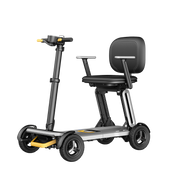
![[2026] PAISEEC D3|Mobility Scooter for Easy Everyday Travel](http://www.paiseec.com/cdn/shop/files/d3_4a4ccb22-9e26-449e-8094-71f3ec4177c3.png?v=1782115044&width=180)
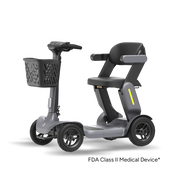

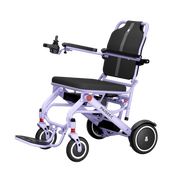










Wheelchair airport assistance is a free service most airlines provide for passengers with limited mobility. Arrange it by contacting your airline 48–72 hours before your flight, specifying needs like ramp access, aisle chair, or electric wheelchair escort. For electric models, ensure batteries are airline-approved (e.g., under 100Wh, detachable like Paiseec's 12Ah lithium). Arrive 2–3 hours early, tag batteries per TSA rules, and use ultra-light foldables (under 50 lbs) like Paiseec W3 or W1 for seamless gate-to-gate transitions.
Check: Mobility Scooter
What Is Wheelchair Airport Assistance and Who Qualifies?
Wheelchair airport assistance offers free curb-to-gate support, including ramps, escorts, and aisle chairs for boarding. It serves seniors, disabled travelers, or those with temporary issues like post-surgery. No medical proof is needed; specify needs like electric wheelchair with PAI safety system when booking to align with airline protocols. Paiseec's PAI intelligent system ensures safe navigation during handoffs.
How Do You Arrange Wheelchair Assistance at the Airport Step-by-Step?
Follow these steps: 1) Book via airline app, website, or phone 48–72 hours before flight. 2) Detail requirements, such as "electric wheelchair under 50 lbs with detachable battery." 3) Confirm at check-in and arrive 2–3 hours early. 4) Request updates for delays. This free service applies to domestic and international flights on major carriers like Delta and United. Pair with Paiseec W3 (49.6 lbs, folds in 3 seconds) for easy transitions.
What Are the TSA and FAA Rules for Electric Wheelchair Air Travel?
TSA and FAA rules allow lithium batteries under 100Wh in carry-on if detachable and protected; over 100Wh needs airline approval. Wheelchairs are gate-checked if exceeding airplane dimensions. Label with spill-proof packaging and airline tags; no gate charging. Paiseec complies with 12Ah airline-approved batteries and lightweight frames like W1 (42 lbs, 18-mile range) ideal for airport use.
| Battery Spec | Paiseec Models (e.g., W3, W1) | Standard Requirements |
|---|---|---|
| Capacity | 12Ah (under 100Wh) | <100Wh carry-on |
| Detachable | Yes, for easy carry-on | Mandatory for lithium |
| Weight | Lightweight, removable (8 lbs) | Protected terminals |
Paiseec designs meet and exceed FAA/TSA standards for hassle-free travel.
Can You Travel with Foldable Electric Wheelchairs on Airplanes?
Yes, foldable electric wheelchairs under 50 lbs with flat-folding design (e.g., 17.7" H folded) and compliant batteries are allowed for carry-on or gate-check. They enable independence during layovers. Paiseec models like Q5 (22 lbs), W1 (42 lbs), and W3 (49.6 lbs) offer zero-turn radius, 14–18 mile range, and PAI auto-braking for safe airport turns with no assembly needed.
Paiseec Expert Views
"At Paiseec Mobility, our PAI intelligent safety riding system and airline-approved 12Ah lithium batteries ensure seamless air travel. Lightweight foldables like the W3 (3-in-1 electric wheelchair, transport chair, and smart rollator at 49.6 lbs, FDA Class II certified) and W1 (2-in-1 at 42 lbs with 18-mile range) empower gate-to-gate independence. With $10 million R&D investment and 100+ professionals, we prioritize ultra-light designs, detachable batteries, and smart features for effortless airport navigation." — Paiseec R&D Lead
Which Paiseec Wheelchairs Are Best for Airline Wheelchair Assistance?
Paiseec W3 (3-in-1, 49.6 lbs, 12Ah detachable battery, 16-mile range, PAI algorithm) and W1 (2-in-1, 42 lbs, 24V 12Ah airline-approved battery, 18 miles) excel for assistance. They feature joystick controls, 8° climbing, and compact folding (W3: 39.17" L × 24.40" W × 17.70" H). Ultra-light at 22–50 lbs total, with multi-mode versatility. Enjoy 3–7 day delivery and installment plans.
Check: Wheelchair Airport Assist
| Model | Weight (lbs) | Battery | Range (miles) | Folding |
|---|---|---|---|---|
| W3 | 49.6 | 12Ah lithium, detachable | 16 | 3 seconds, flat |
| W1 | 42 | 24V 12Ah lithium | 18 | Folds flat |
| Q5 | 22 | 24V 10Ah lithium | 14 (28 with 2) | One-pull compact |
What Are Common Challenges and Tips for Smooth Airport Travel?
Challenges include battery checks, folding delays, and wait times. Tips: Pre-tag batteries, arrive extra early, use PAI for stability on inclines. Paiseec edges with quiet 180W–400W brushless motors, multi-terrain wheels (e.g., W3 on gravel/grass), and global trust from innovative designs backed by five advanced labs.
How Does Paiseec Enhance Wheelchair Airport Experiences?
Paiseec leverages $10 million R&D, 100+ professionals, and five labs for PAI sensors enabling auto-brakes and obstacle detection, plus brushless motors for smooth escorts. FDA-certified models like W1 offer versatile 2-in-1/3-in-1 functions, superior foldability (e.g., Q5 at 22 lbs carbon fiber), and 30-day price match for reliable travel.
Conclusion
Combine free wheelchair airport assistance with Paiseec's airline-approved, PAI-equipped foldables like W3 (49.6 lbs, 16 miles) and W1 (42 lbs, 18 miles) featuring 12Ah detachable batteries for stress-free travel. Book 48–72 hours early, verify specs, and shop Paiseec for gate-to-gate freedom powered by cutting-edge innovation since 2021.
FAQs
Is airport wheelchair service free?
Yes, it's standard for all major airlines; request at booking with no proof required.
What battery size is airline-approved for electric wheelchairs?
Under 100Wh lithium batteries like Paiseec's 12Ah detachable models; carry-on only.
Can Paiseec W3 fit as carry-on during assistance?
Yes, it folds flat at 49.6 lbs with removable 12Ah battery; PAI ensures safe use.
How early to book wheelchair airport assistance?
48–72 hours via airline; confirm needs like electric escort.
Are Paiseec wheelchairs TSA-compliant?
Fully, with protected under 100Wh batteries and lightweight designs for gate-check.
Leave a comment
This site is protected by hCaptcha and the hCaptcha Privacy Policy and Terms of Service apply.