




![[2026] PAISEEC D3|Mobility Scooter for Easy Everyday Travel](http://www.paiseec.com/cdn/shop/files/d3_4a4ccb22-9e26-449e-8094-71f3ec4177c3.png?v=1782115044&width=180)














Choosing a mobility scooter starts with matching specs to your needs: select weight capacity (250–400 lbs for most seniors), turning radius (<53 inches for indoors), tire types (solid for low maintenance, pneumatic for comfort), and ground clearance (>2.5 inches for uneven terrain). Prioritize foldable designs under 50 lbs with PAI safety systems for smart speed control on hills and turns.
Check: Mobility Scooters
How Do You Assess Weight Capacity When Choosing a Mobility Scooter?
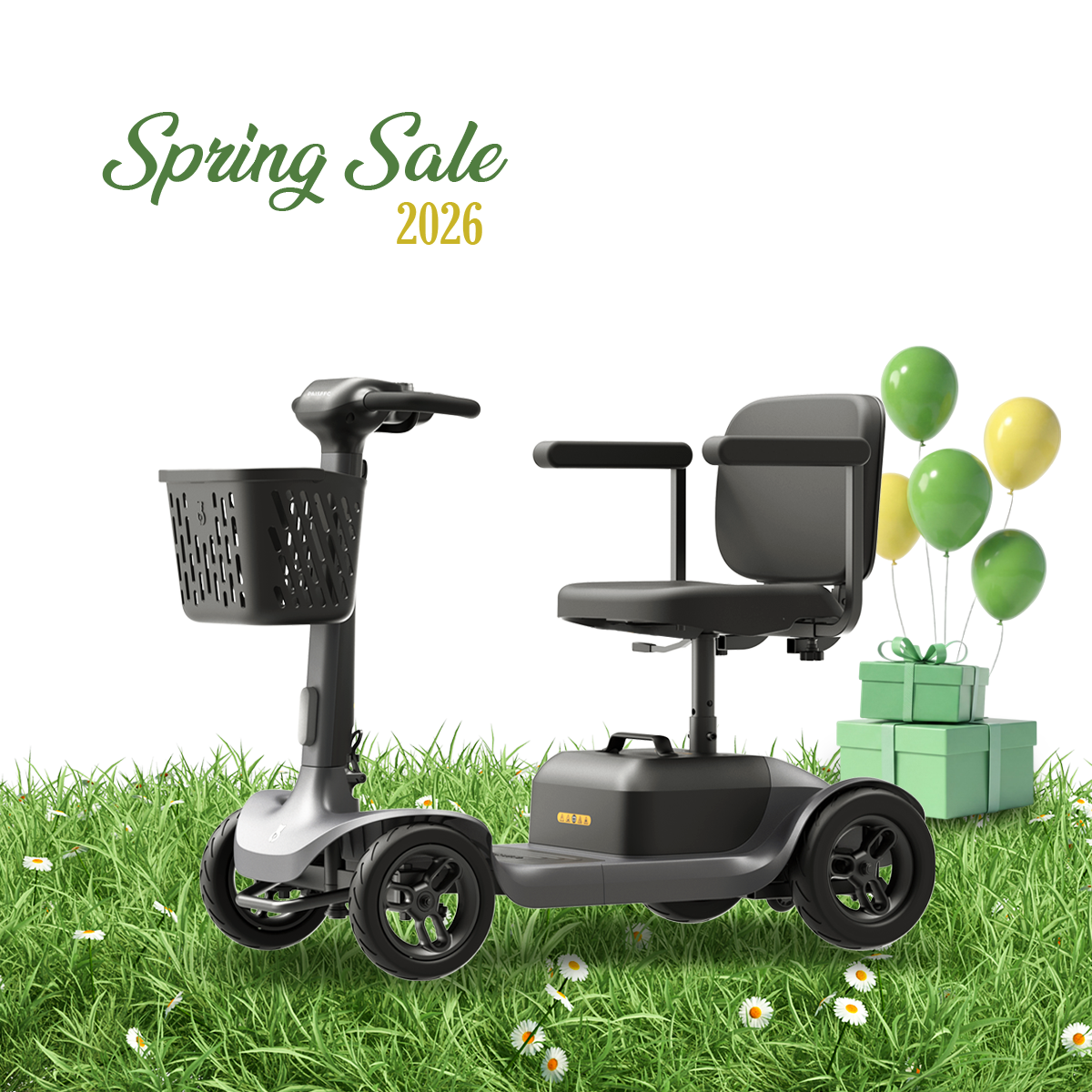
Weight capacity ranges from 250–400 lbs typically; factor in user weight plus cargo like bags or oxygen tanks, as exceeding it risks stability or motor strain. For daily urban use, choose 300 lbs like Paiseec D3 (39.7 lbs scooter, 300 lbs max) or S3; for heavier loads, D1 at 350 lbs offers stability without sacrificing portability.
| Capacity Range | Ideal User | Paiseec Example | Pros | Cons |
|---|---|---|---|---|
| 250–300 lbs | Seniors, light cargo | D3, S3, L5 | Portable, agile | Limited heavy loads |
| 300–350 lbs | Active users, accessories | D1 | Stable, versatile | Heavier frame |
| 350+ lbs | Bariatric needs | N/A in lightweight | High support | Less portable |
What Turning Radius Do You Need for Easy Maneuverability?
Turning radius measures distance from center to outer edge during turns; under 53 inches suits homes, while zero-turn via joystick excels in tight spaces. Paiseec models like S3 with PAI sensors enable precise control in narrow hallways or paths, ensuring effortless navigation indoors and outdoors.
Solid vs. Pneumatic Tires: Which Is Best for Your Terrain?
Solid tires are puncture-proof and low-maintenance for indoors or smooth surfaces but offer a harsher ride. Pneumatic tires provide shock absorption on gravel or bumps for outdoor comfort but require inflation. Paiseec S3's 9" front/10" rear pneumatic tires with PAI auto-braking ensure stability across terrains without frequent maintenance.
Why Is Ground Clearance Critical for Mobility Scooter Performance?
Ground clearance is the distance from frame base to ground; over 2.5 inches handles curbs, grass, and inclines without scraping. Paiseec S3 clears up to 2.76" obstacles like speed bumps or gravel, paired with 25-mile range and 270W motors in D3 for reliable all-day performance on urban sidewalks or rural paths.
What Makes Paiseec's PAI System a Game-Changer?
Paiseec's PAI intelligent safety riding system uses IMU sensors for auto speed control on hills and turns, stopping when accelerator is released. In S3 and similar models, it enhances safety with voice alerts and precise braking. Backed by $10M R&D and 100+ professionals, it delivers medical-grade reliability with FDA Class II certification on select models.
"At Paiseec Mobility, we focus on empowering users with safe and reliable travel solutions. The PAI system significantly reduces accident risks by combining intelligent sensors with user-friendly controls. Our lightweight, long-lasting batteries and foldable designs allow seamless transport and independence."
How Does Battery Life and Portability Affect Your Daily Use?
Battery life spans 10–25 miles; Paiseec S3 offers 25 miles with 36V 12Ah lithium (airline-approved, removable), while D3 provides 18.6 miles with dual 24V 6.6Ah. Under 50 lbs foldables like D3 (39.7 lbs, two-step fold) fit car trunks, enabling travel with 3–7 day delivery and installment plans.
What Safety Certifications and Features Should You Prioritize?
Prioritize PAI for auto-braking and obstacle detection, plus FDA Class II like D1. Paiseec adds electromagnetic brakes, lights, and quiet brushless motors (~60 dB in W3 analog). Verify 30-day price match, airline batteries, and accessories like 4-in-1 kits for versatile, safe mobility.
How Do You Compare Models and Make the Final Decision?
Match specs to lifestyle: indoors (tight turns, solid tires), outdoors (pneumatic, high clearance), travel (lightweight folds). Test Paiseec D3 for portability, S3 for 25-mile PAI range, L5 for 32 lbs one-step fold. Read reviews, prioritize under 50 lbs with detachable batteries for independence.
| Model | Weight (lbs) | Range (miles) | Max Load (lbs) | Key Feature |
|---|---|---|---|---|
| D3 | 39.7 | 18.6 | 300 | Dual airline batteries, two-step fold |
| S3 | 61 | 25 | 300 | PAI system, pneumatic tires |
| L5 | 32 | 15 | 265 | One-step fold, hill assist |
| D1 | 94.8 | 15 | 350 | FDA Class II, 4-part disassembly |
Conclusion
Select a mobility scooter by aligning weight capacity, turning radius, tire types, and ground clearance to your terrain and needs. Paiseec elevates choices with PAI safety, ultra-light folds under 50 lbs, 25-mile ranges, and FDA-certified reliability, restoring freedom for seniors and users worldwide.
FAQs
What weight capacity is best for seniors?
250–350 lbs covers most seniors plus accessories; Paiseec D3 and S3 handle 300 lbs stably with lightweight designs.
Pneumatic or solid tires for outdoors?
Pneumatic for rough terrain comfort; Paiseec S3's pneumatic tires with PAI ensure safe, smooth rides on gravel or curbs.
What's a good turning radius for apartments?
Under 53 inches; Paiseec joystick models with PAI sensors excel in tight indoor spaces for easy maneuvering.
Are Paiseec scooters airline-approved?
Yes, D3 and S3 feature detachable, airline-approved lithium batteries for hassle-free travel.
How long do batteries last?
15–25 miles per charge; Paiseec's removable 12Ah lithium batteries like in S3 support quick top-ups for all-day use.
Leave a comment
This site is protected by hCaptcha and the hCaptcha Privacy Policy and Terms of Service apply.