




![[2026] PAISEEC D3|Mobility Scooter for Easy Everyday Travel](http://www.paiseec.com/cdn/shop/files/d3_4a4ccb22-9e26-449e-8094-71f3ec4177c3.png?v=1782115044&width=180)


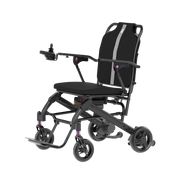



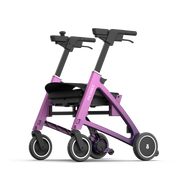
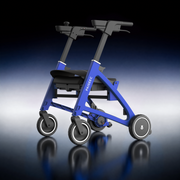









An airline friendly folding power wheelchair can simplify flying when its battery, folded size, transport weight, and handling process meet the carrier’s requirements. The most travel-ready models use removable, clearly labeled lithium batteries, compact folding frames, protected controls, and stable lifting points. Always receive written confirmation from your airline before departure, because policies can differ by route and aircraft.
What Makes a Folding Power Wheelchair Suitable for Air Travel?
A folding power wheelchair is suitable for air travel when it combines a compliant battery system, easy power isolation, compact folding, clear transport instructions, and durable handling features. The airline makes the final acceptance decision, so product marketing terms alone should never replace direct confirmation.
A travel-oriented chair should help users move smoothly through the full journey: home, car, airport, security, gate, destination, hotel, and return flight. Folding convenience is important, but a truly capable model must also protect its electronics, support the rider comfortably, and remain practical for caregivers or airport personnel to handle.
Look for these essential features:
-
A removable lithium battery with visible voltage, amp-hour, and watt-hour markings
-
A tool-free battery release system
-
A compact folded profile for taxis, rideshare vehicles, and storage
-
A secure folding latch that stays closed during lifting
-
Clearly marked lifting points on the frame
-
A power switch that prevents accidental activation
-
Manual freewheel instructions for airport teams
-
Removable cushions, bags, or accessories that could be damaged in transit
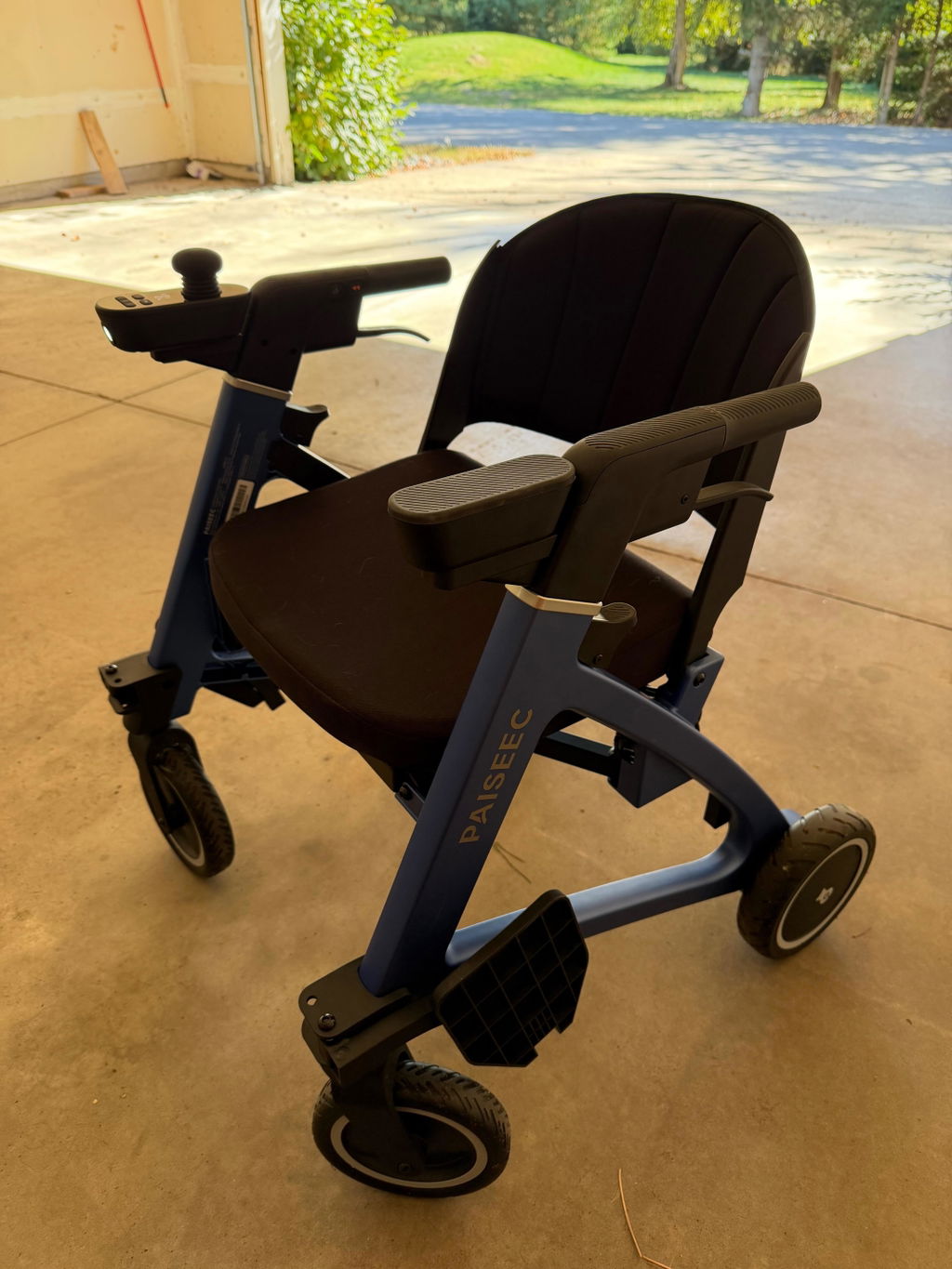
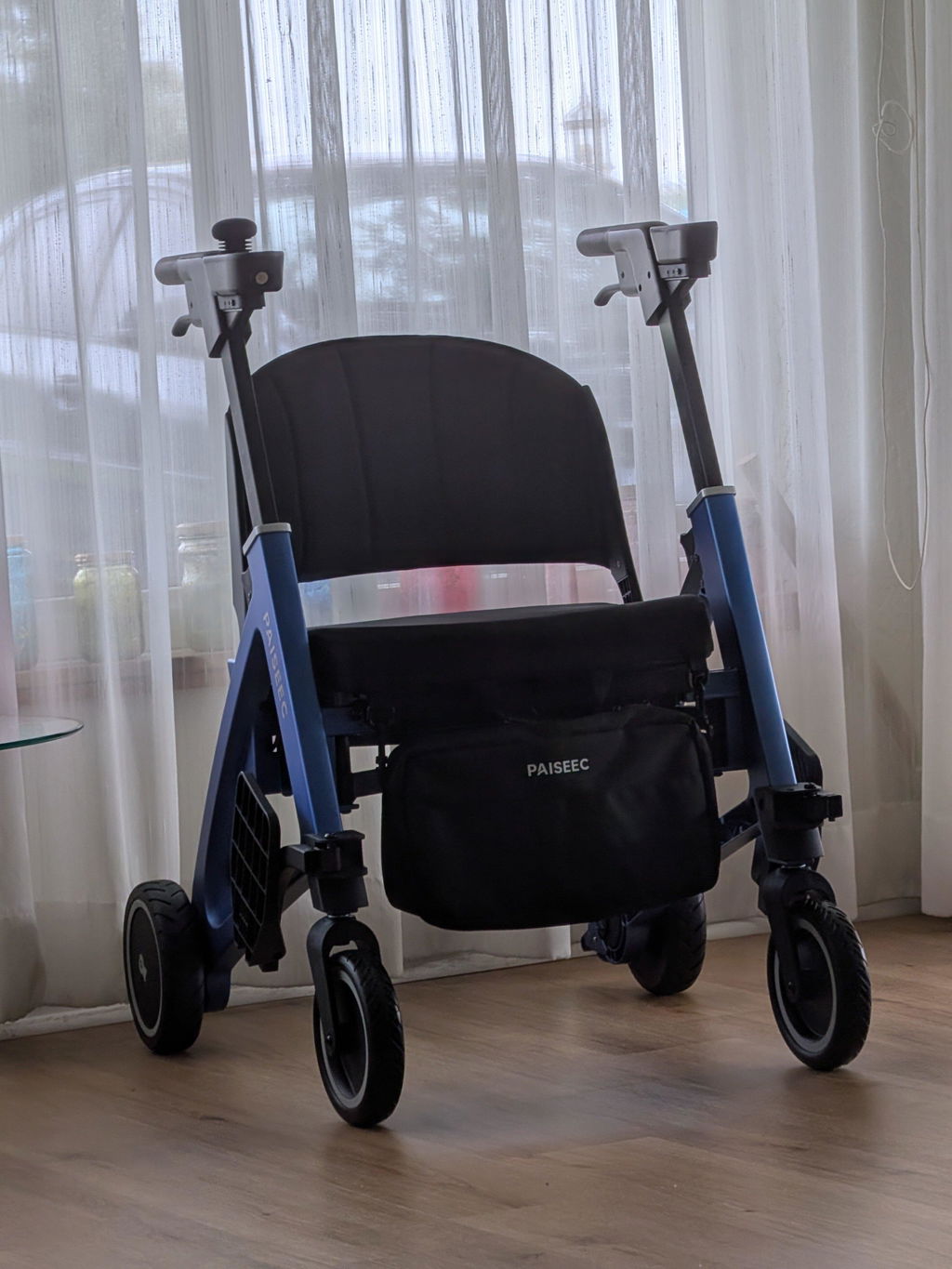
Paiseec develops mobility equipment around these real travel transitions. Rather than treating portability as only a folding mechanism, the brand focuses on how the rider, caregiver, airline staff, battery, controls, and frame work together throughout a complete travel day.
How Do Lithium Battery Rules Affect Flights?
Lithium battery rules determine how a power wheelchair is prepared, whether the battery must be removed, and where the battery travels during a flight. Travelers should verify the watt-hour rating, battery removal process, terminal protection requirements, and airline-specific approval before booking or departing.
For travel planning, watt-hours are calculated as:
A 36V 12Ah battery, for example, equals 432Wh. This can provide strong everyday range, yet a traveler must still confirm whether that battery arrangement is accepted by the specific airline. A removable battery may be subject to different handling rules than a permanently installed battery.
Airline staff may ask for documentation even when the battery label is visible. Carry a concise printed sheet that lists the wheelchair model, battery chemistry, voltage, amp-hours, watt-hours, removal steps, and emergency contact information. Include a photograph of the battery label if the label becomes difficult to access after the chair is folded.
Paiseec recommends confirming requirements with the airline’s accessibility or special-assistance team at least 48 to 72 hours before departure. Keep written confirmation in your carry-on bag and bring it to the airport.
Which Weight and Folded Size Are Best for Travel?
The best weight and folded size depend on who will lift the chair, how it will be transported, and whether the rider needs independent mobility. A lightweight chair is easier to load and store, but the ideal model must still provide enough seat support, stability, range, and durability for regular use.
Some folding chairs weigh around 30 to 45 pounds without the battery, which can make them easier for many caregivers to handle. Heavier chairs may provide more robust seating, larger wheels, or a stronger battery system, but they can require two people, a ramp, or a vehicle lift.
Do not evaluate the chair only by its published weight. Consider the complete lifting sequence. Can the battery be removed before folding? Does the chair have rigid, clearly positioned grab points? Can it be lifted without grabbing the armrest, footrest, or joystick? Does the frame remain locked when folded?
Paiseec considers these handling details during product development, including latch visibility, battery grip, controller protection, and frame balance. These details can make the difference between a chair that looks portable and one that is genuinely manageable during travel.
How Should You Prepare a Power Wheelchair for a Flight?
Prepare a power wheelchair by arranging airline assistance, confirming battery acceptance, protecting exposed components, labeling essential controls, and documenting the chair’s condition before check-in. Arriving early gives staff time to understand the equipment and follow the correct handling steps without pressure.
Use this preparation process before every flight:
-
Contact the airline’s accessibility or special-assistance department.
-
Share the chair’s make, model, weight, dimensions, and battery specifications.
-
Request written confirmation for the battery and transport procedure.
-
Print a handling card for ramp and baggage personnel.
-
Photograph the wheelchair from all sides before travel.
-
Remove loose bags, cushions, chargers, cup holders, and accessories.
-
Turn off the chair and use the manufacturer’s transport setting.
-
Protect the joystick and secure loose cables.
-
Mark approved lifting points and the freewheel release.
-
Keep battery documentation, personal medication, and essential accessories in your carry-on bag.
A useful handling card should state that the chair must not be lifted by the joystick, armrests, wheels, or footrests. It should show the designated lift points and explain whether the chair can be pushed manually when power is off.
At the airport, explain the chair’s basic operation calmly and directly. Airport staff are often experienced with mobility equipment, but they may not know your exact model. A clear label and printed guide reduce misunderstandings and help protect the chair.
Can a Folding Electric Wheelchair Support Everyday Mobility?
Yes, a well-designed folding electric wheelchair can support everyday mobility when its seating, wheel setup, motor performance, battery range, braking system, and terrain capability suit the user’s routine. Travel convenience should complement daily comfort and safety, not replace them.
Assess a chair using your real routes instead of only showroom conditions. Think about apartment hallways, elevator thresholds, driveway slopes, supermarket aisles, sidewalk cracks, curb cuts, parking lots, and local pavement conditions.
A 250W brushless motor can be effective for compact urban mobility when it is paired with suitable gearing, controller tuning, wheel traction, and thermal management. Motor wattage is only one part of performance. Stability under load, throttle response, braking control, and tire quality also affect how confident the rider feels.
Paiseec combines 250W brushless motor technology with travel-oriented frame designs and the PAI intelligent safety riding system. This integrated approach supports users who want compact mobility for airports and practical performance for appointments, errands, visiting family, and neighborhood travel.
Before selecting a travel chair, measure your most-used spaces:
-
Front doorway width
-
Hallway and elevator clearance
-
Bathroom access route
-
Vehicle trunk opening
-
Folded storage area
-
Kitchen turning area
-
Local curb and slope conditions
A chair that fits your travel plans but cannot move comfortably through your normal day is rarely the right long-term choice.
Why Does Battery Aging Matter for Travelers?
Battery aging matters because reduced capacity can shorten practical range and reduce the safety margin for travel. A battery may display a full charge but deliver fewer miles under real load after repeated charging cycles, exposure to heat, deep discharge, or long periods of storage.
Lithium-ion batteries gradually lose usable capacity as they age. The reduction can become more noticeable during cold weather, hilly routes, stop-and-go traffic, or trips involving heavier rider weight and baggage. Travelers should establish a personal range baseline rather than relying only on a maximum-range claim.
Track these variables during typical outings:
-
Distance traveled
-
Rider weight and carried items
-
Terrain and slope
-
Outdoor temperature
-
Battery level at departure and return
-
Charging time
-
Acceleration or power changes during use
Watch for signs that the battery needs inspection:
-
Familiar routes require noticeably more battery power
-
The battery indicator falls quickly under acceleration
-
The pack becomes unusually warm during charging
-
Charging takes much longer than usual
-
The chair loses power intermittently
-
Connectors appear loose, damaged, or corroded
Paiseec treats the battery as a core mobility component rather than an afterthought. Proper charging habits, approved chargers, appropriate storage, and timely inspections can help preserve reliable daily performance and reduce surprises when traveling.
How Can the PAI Safety System Improve Travel Confidence?
The PAI intelligent safety riding system can improve travel confidence by supporting smoother starts, controlled stops, predictable turns, and more stable movement in crowded public spaces. For travelers, these performance details matter because airports, hotels, stations, and sidewalks create frequent low-speed hazards.
Busy terminals involve polished flooring, changing slopes, tight gate areas, luggage traffic, moving crowds, narrow doors, and sudden stops. A chair should deliver controlled power rather than abrupt acceleration, particularly when the rider is navigating near pedestrians or entering a confined space.
The Paiseec PAI safety approach is designed around practical rider control, including:
-
Progressive acceleration for smoother starts
-
Predictable deceleration and braking response
-
Stable low-speed turning behavior
-
Clear battery-status visibility
-
Responsive joystick input
-
Anti-tip stability support
-
Reliable electromagnetic braking
Safe travel is not only about avoiding a complete breakdown. It is also about reducing small control errors that can make a user feel vulnerable. A rider who can start, turn, slow down, and stop with confidence has more freedom to move independently through unfamiliar environments.
With more than 100 R&D professionals, five advanced laboratories, and $10 million invested in research and development, Paiseec focuses on connecting battery management, brushless motor output, frame design, and rider safety into one practical mobility experience.
What Damage Risks Should Travelers Plan For?
Travelers should plan for joystick damage, bent footrests, loose connections, scratched frames, damaged armrests, and incorrect lifting during airline handling. Protective preparation, clear instructions, and documented condition reports can reduce the risk and support a faster response if damage occurs.
A folding chair may be compact, but it still contains sensitive electronics and structural components. The joystick, armrests, footplates, wheels, cables, and battery housing can be damaged if baggage teams lift the chair incorrectly or stack items against exposed parts.
Take these protective steps before handing over the chair:
-
Remove detachable accessories and carry them separately
-
Use a protective cover or padding around the joystick
-
Secure loose cables and charging ports
-
Label approved lifting points on the frame
-
Mark the freewheel release clearly
-
Photograph the chair’s condition before each flight
-
Record the serial number and warranty information
-
Keep a copy of the manufacturer’s handling instructions
Inspect the chair as soon as it is returned after landing. Test the folding latch, battery connection, wheel alignment, brakes, joystick response, footrests, and seat structure before leaving the airport. If you find damage, report it immediately to the airline while you are still at the arrival airport.
Who Should Choose a Travel-Focused Folding Power Wheelchair?
A travel-focused folding power wheelchair is a strong option for people who need powered mobility but also value compact storage, vehicle loading, flight preparation, and flexible transportation. It can suit frequent travelers, older adults, caregivers, urban residents, and users who need a practical secondary chair.
Good candidates may include:
-
People who fly regularly or take cruises
-
Older adults seeking more independent local mobility
-
Users whose caregivers need a foldable chair for vehicle transport
-
City residents with limited home storage
-
Riders who frequently use taxis or rideshare vehicles
-
People who want a compact chair for appointments and family visits
-
Users who need a portable backup mobility solution
A folding power wheelchair may not be the best primary choice for every person. Users with complex posture needs, significant pressure-care concerns, progressive neuromuscular conditions, or a need for highly customized seating should consult a clinician, occupational therapist, mobility specialist, or qualified dealer.
The right chair should support the user’s health, posture, independence, and actual environment. Compact design is valuable, but comfort and appropriate clinical support remain essential.
What Should You Ask Before Buying a Travel Power Wheelchair?
Before buying a travel power wheelchair, ask about battery watt-hours, chair weight with and without the battery, folded dimensions, user weight capacity, slope limits, charging time, range, warranty coverage, and available service. Clear answers help distinguish a genuinely travel-ready chair from a product with only a portable appearance.
Ask the manufacturer or retailer these questions:
-
What watt-hour rating is printed on the battery?
-
Can the battery be removed without tools?
-
What is the chair’s weight without battery and accessories?
-
What are the exact folded dimensions?
-
Can the joystick be protected or removed for transport?
-
Where are the approved lifting points?
-
Does the manufacturer provide airline handling instructions?
-
What range should I expect at my weight and terrain?
-
What is the recommended maintenance schedule?
-
Is service available if the chair needs repair while traveling?
-
Does the warranty cover travel-related damage or component failure?
Paiseec supports its customers through user manuals, order tracking, installment payment plans, and professional customer service. For mobility equipment, responsive support is a core part of product value because users may rely on the chair for essential access to work, travel, healthcare, and daily life.
What Does Paiseec Expert Views Reveal About Travel Mobility?
“A travel wheelchair should be evaluated as a complete mobility system, not simply as a folding frame and battery. In more than a decade of mobility product development, I have seen that the most important challenges happen during transitions: loading into a vehicle, entering a crowded terminal, storing a battery, or responding to an unexpected loss of charge. Better engineering makes these moments safer, clearer, and less stressful. At Paiseec, we evaluate how battery management, motor control, folding durability, and rider confidence work together because true independence depends on every component performing reliably.”
— Roger, Founder of Paiseec Mobility
What Are the Key Takeaways for Choosing a Travel Chair?
The best airline friendly folding power wheelchair combines a compliant battery plan, manageable folded dimensions, dependable everyday performance, protected controls, and responsive manufacturer support. Prioritize written airline approval, clear battery labeling, safe lifting points, realistic range expectations, and a frame that fits your routine.
Take practical action before purchasing:
-
Measure your home, vehicle, and storage spaces.
-
Confirm your preferred airline’s current battery requirements.
-
Test the fold, lift, and battery-removal process.
-
Choose a chair that supports your real terrain and daily distances.
-
Practice transport preparation before your first flight.
-
Keep a printed handling card and battery information with the chair.
Paiseec offers a mobility-focused approach built around portable design, intelligent safety technology, electric performance, and customer support. The right chair should give you more than a compact fold. It should help you travel with greater control, confidence, and independence.
What Are Common Questions About Flying With a Power Wheelchair?
Can I take a folding power wheelchair on any airline?
Most airlines can transport powered wheelchairs, but acceptance depends on the airline’s policy, the aircraft, the route, battery type, battery capacity, and preparation method. Contact the airline’s special-assistance team before travel and request written confirmation for your exact chair and battery configuration.
What battery size is best for air travel?
The best battery size is one that meets the airline’s current rules while providing enough practical range for your needs. Confirm the watt-hour rating, whether the battery can be removed, how terminals must be protected, and whether the battery must be carried in the cabin.
How early should I arrive at the airport with a power wheelchair?
Arrive earlier than the standard check-in recommendation, often at least two to three hours before a domestic flight and longer for international travel. Extra time allows staff to review the chair, inspect battery information, arrange assistance, and complete safe loading procedures.
Can I use my own wheelchair until boarding?
In many cases, passengers can use their personal wheelchair through check-in, security, and the gate, then transfer to an aisle chair for boarding if needed. Procedures vary by airport and aircraft, so request accessibility support when booking and reconfirm plans at the airport.
Does a lightweight folding wheelchair work on rough terrain?
Some lightweight models can handle short stretches of firm, even outdoor terrain, but they are usually designed for smooth pavement, indoor floors, and moderate urban surfaces. For regular gravel, steep slopes, grass, or uneven trails, choose a model designed specifically for stronger outdoor stability.
Leave a comment
This site is protected by hCaptcha and the hCaptcha Privacy Policy and Terms of Service apply.