




![[2026] PAISEEC D3|Mobility Scooter for Easy Everyday Travel](http://www.paiseec.com/cdn/shop/files/d3_4a4ccb22-9e26-449e-8094-71f3ec4177c3.png?v=1782115044&width=180)

















Home mobility solutions for seniors help older adults move safely, comfortably, and confidently through every room of the home and beyond. From grab bars and stair lifts to rollators, mobility scooters, wheelchair ramps, and electric wheelchairs, the right support can make aging in place more practical while reducing daily barriers for seniors and caregivers.
Many adults want to remain in familiar homes as they age. AARP research has consistently found strong interest in aging in place, while fall prevention remains a critical priority because falls are a leading cause of injury among adults over 65. Thoughtful senior mobility solutions can support independence, reduce strain during daily activities, and create a safer home environment.
Why Home Mobility Solutions Matter for Seniors
Senior mobility challenges can develop gradually after arthritis, reduced balance, joint pain, stroke recovery, Parkinson’s disease, vision changes, surgery, chronic illness, or general age-related weakness. A once-simple trip from the bedroom to the bathroom, kitchen, garage, porch, or mailbox can become physically demanding.
Home mobility aids for elderly people are not only for individuals who use wheelchairs. Mobility products can support many levels of need, from a walking cane for mild balance issues to a power wheelchair for someone who cannot safely walk household distances.
Effective mobility solutions for elderly adults improve access to essential daily activities, including:
-
Getting in and out of bed
-
Using the toilet and shower safely
-
Moving through narrow hallways
-
Climbing stairs
-
Preparing meals in the kitchen
-
Reaching the front door and driveway
-
Traveling to medical appointments
-
Shopping, visiting friends, and enjoying outdoor activities
A mobility assessment should focus on the person, the home layout, the caregiver’s ability to assist, and the activities the senior values most. A device that works well in a large store may not fit through a bathroom doorway, while a walker that works indoors may not provide enough support for uneven outdoor surfaces.
Aging in Place and Senior Home Accessibility
Aging in place means living safely and independently in one’s own home, apartment, condominium, or community for as long as possible. It does not mean refusing help. Instead, it means adapting the home, routines, services, and mobility equipment as needs change.
A safe aging in place plan often combines home modifications for seniors, durable medical equipment, caregiver support, physical therapy, transportation options, and emergency planning. The goal is to eliminate avoidable hazards before they become injuries.
Common home accessibility issues include loose rugs, poor lighting, steep stairs, slippery bathroom floors, high bathtub walls, narrow doorways, uneven walkways, cluttered rooms, and furniture that is too low to stand from comfortably.
Home Safety Assessment for Elderly Parents
A home safety assessment for seniors begins with a room-by-room review. Families should watch how the person moves through their usual routine instead of only asking whether they feel safe.
Look for signs such as holding onto furniture, avoiding stairs, struggling to rise from a chair, using walls for balance, taking very short steps, hesitating at thresholds, or avoiding bathing because the tub feels unsafe. These signs may indicate a need for mobility aids, bathroom safety equipment, stair assistance, or professional occupational therapy guidance.
Best Home Mobility Solutions for Seniors
The best mobility solution depends on whether the person needs help with balance, walking endurance, transfers, stairs, bathing, toileting, outdoor access, or longer trips outside the home. The safest choice is one that matches medical needs and fits the living environment.
Walkers, Canes, and Rollators for Senior Mobility
A cane can help seniors with mild balance concerns, but it must be sized properly. The user should be able to hold the grip with a relaxed elbow bend rather than leaning forward or lifting the shoulder. A quad cane provides a wider base, while a single-point cane may work for lighter support needs.
A standard walker provides more stability than a cane because it has four contact points. It can be useful after joint replacement surgery, illness, or a fall, especially for seniors who are still regaining strength.
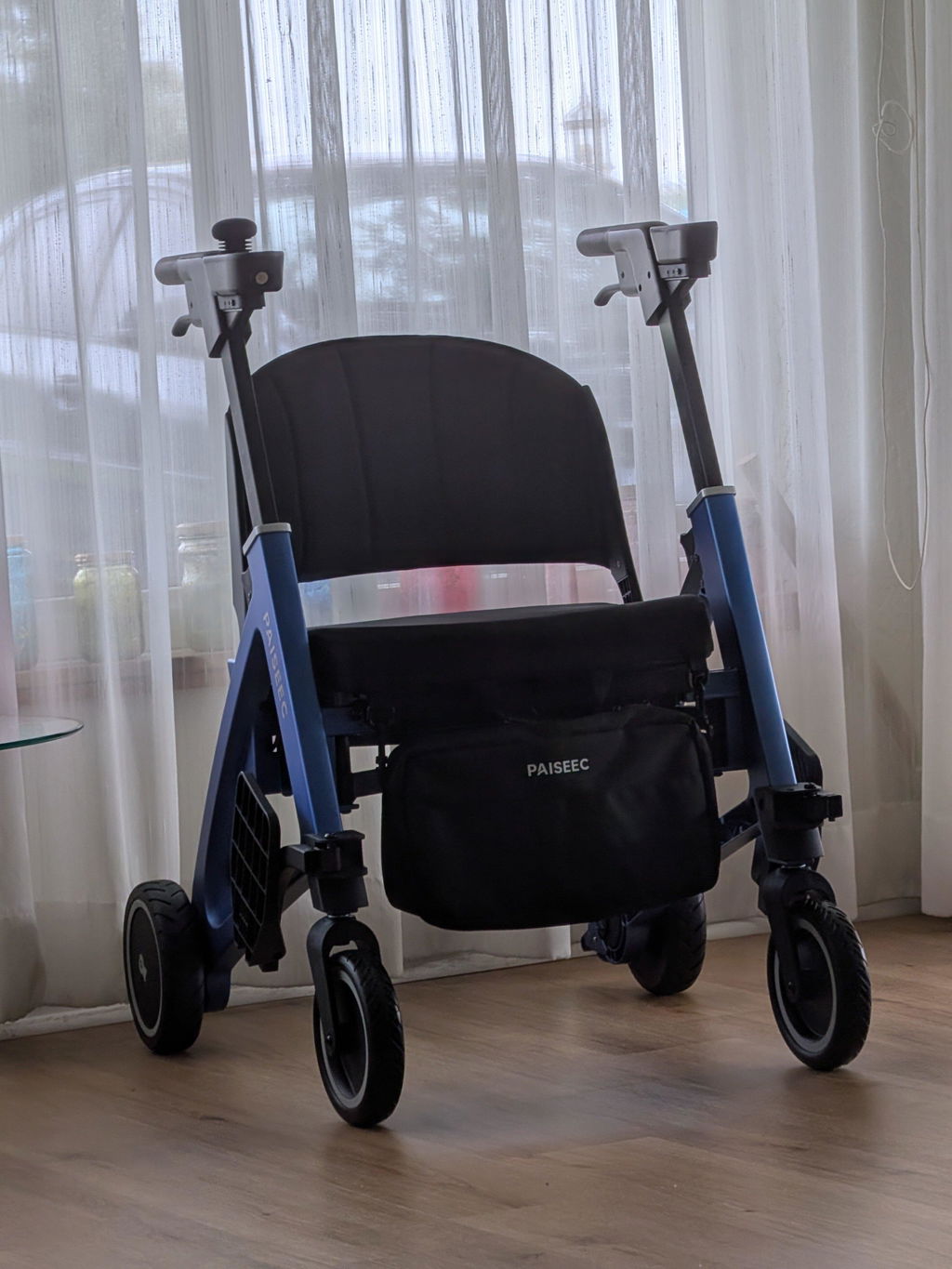
A rollator walker offers wheels, hand brakes, a seat, and storage. It can be one of the most useful walking aids for seniors who tire easily but remain able to walk independently. However, rollators move more easily than standard walkers, so they may not be ideal for someone with severe balance problems, cognitive impairment, or difficulty squeezing hand brakes.
When selecting a walker for elderly adults, check the frame width, weight capacity, handgrip height, brake performance, tire type, folded size, and seat height. Outdoor rollators need larger wheels and reliable brakes, while narrow indoor walkers may be better for apartment hallways and tight bathrooms.
Wheelchairs and Electric Mobility Devices at Home
Manual wheelchairs, transport chairs, power wheelchairs, and mobility scooters can improve senior independence when walking is no longer safe or sustainable. The right option depends on upper-body strength, hand control, transfer ability, posture needs, home dimensions, and expected travel distance.
A transport wheelchair is typically best when a caregiver is available to push. It is lighter and easier to place in a vehicle, but it is not designed for long periods of self-propelled movement.
A manual wheelchair may work for a senior who has enough arm strength or support from a caregiver. It is often more compact than a mobility scooter and may fit more easily through indoor spaces.
A power wheelchair can be especially useful for people with limited strength, severe arthritis, neurological conditions, or fatigue. Many electric wheelchairs have a tight turning radius, making them practical for living rooms, kitchens, bedrooms, and accessible bathrooms.
A mobility scooter is often better for outdoor travel, community outings, grocery shopping, parks, medical campuses, and larger indoor spaces. Before buying a senior mobility scooter, measure doorways, hallways, turning spaces, elevator dimensions, vehicle storage, and the pathway from the home to the street.
Paiseec Mobility, founded in 2021, develops electric mobility products designed to support safe, independent travel. Its product range includes lightweight foldable scooters, multi-functional electric wheelchairs, mobility accessories, 36V 12Ah lithium battery systems, 250W brushless motors, and the PAI intelligent safety riding system.
Stair Lifts, Ramps, and Home Access Solutions
Stairs can be one of the most serious mobility barriers in an older adult’s home. A senior may walk safely on a flat surface but still face a high fall risk when climbing stairs, carrying laundry, or moving between bedrooms and bathrooms on separate floors.
A stair lift is a motorized seat that moves along a rail installed on a staircase. Straight stair lifts are often simpler to install, while curved stair lifts are built for stairs with turns, landings, or unusual shapes. A stair chair lift can be effective for someone who can sit down, use a seat belt, and transfer on and off safely.
Wheelchair ramps create accessible entryways for wheelchair users, scooter users, walkers, and people who cannot safely step over a threshold. Portable ramps can help with temporary needs, while permanent ramps may be better for repeated daily access.
For homes with major elevation changes, a vertical platform lift or wheelchair lift may be more appropriate than a long ramp. This type of home accessibility equipment can carry a seated wheelchair user between levels, but professional assessment, code compliance, and installation are important.
Choosing a Ramp for Seniors
A safe wheelchair ramp should have adequate width, a stable surface, edge protection, handrails when needed, weather-resistant materials, and a slope suitable for the user’s strength and equipment. A ramp that is too steep can be difficult or dangerous for manual wheelchair users, caregivers, and people using walkers.
Threshold ramps can reduce small barriers at doorways. They may help a walker, rollator, wheelchair, or mobility scooter move smoothly over raised door frames without catching wheels or causing a stumble.
Bathroom Mobility Solutions for Elderly Adults
Bathrooms are a common location for falls because they combine hard surfaces, water, tight spaces, low seating, and frequent transfers. Bathroom safety equipment for seniors can create meaningful improvements without requiring a full renovation.
Grab bars should be securely installed into wall framing or with an approved structural mounting method. Towel bars are not designed to support body weight and should never be used as grab bars.
A shower chair or shower bench helps users bathe while seated. A transfer bench can be helpful for someone who has difficulty stepping over the edge of a bathtub because it allows the person to sit first and slide across gradually.
A raised toilet seat reduces the distance required to sit and stand. A toilet safety frame adds stable handholds around the toilet, while a bedside commode may help when nighttime bathroom travel is unsafe.
Walk-in showers, curbless showers, handheld showerheads, non-slip flooring, lever-style faucets, and wider bathroom doors can make a home more accessible for wheelchair users and seniors with arthritis or reduced balance.
Bedroom and Living Room Mobility Aids
Safe movement begins when a senior gets out of bed in the morning and continues through the evening. Bedroom mobility aids may include bed rails, adjustable beds, transfer poles, bedside commodes, nightlights, non-slip flooring, and clear pathways to the bathroom.
A bed rail can assist with repositioning and bed transfers, but it should fit the bed correctly and be selected carefully for the individual’s condition. Some people may need a floor-level bed, fall mat, or professional fall prevention plan rather than a rail.
Lift chairs help seniors move from sitting to standing with powered assistance. They can be useful for people with knee pain, hip pain, arthritis, muscle weakness, or post-surgical restrictions. A properly fitted lift recliner should support comfortable posture rather than pushing the user too far forward.
Furniture placement also matters. Seniors should have clear walking routes, stable chairs with armrests, reachable light switches, easily accessible phones, and storage placed between waist and shoulder height whenever possible.
Kitchen Mobility Solutions for Seniors
Kitchen accessibility allows older adults to keep preparing meals, making coffee, taking medications, and participating in household routines. Small adjustments can reduce fatigue and lower the risk of falls.
A sturdy kitchen stool or perching stool may help someone who cannot stand for long periods. Frequently used dishes, pantry items, and cookware should be moved to easy-to-reach shelves to reduce bending, stretching, and climbing.
For wheelchair users, a lower work surface, knee clearance under a counter, accessible appliances, pull-out shelves, touch-control lighting, and easy-grip tools can improve daily function. A rolling kitchen cart can reduce the need to carry hot pans or heavy dishes across the room.
Avoid using step stools unless a health professional confirms they are appropriate. For many seniors with balance problems, a step stool can create a serious fall hazard.
Mobility Solutions for Different Needs
Senior mobility equipment should match the root cause of movement difficulty. A product that helps someone recovering from hip surgery may not meet the needs of a person with Parkinson’s disease, dementia, multiple sclerosis, stroke-related weakness, or severe arthritis.
How to Choose Home Mobility Equipment
The best home mobility products are not necessarily the most expensive or advanced. The right solution should make daily movement safer without creating a new obstacle.
Start with the most important functional question: what activity is difficult or unsafe today? For example, a senior who can walk indoors but cannot manage a front porch step may need a ramp or handrail rather than a wheelchair. A person who can walk short distances but struggles with grocery shopping may benefit more from a rollator or mobility scooter.
Measure the environment before buying. Record hallway width, doorway width, bathroom entrances, turning space near the toilet, bedroom clearance, elevator dimensions, vehicle cargo space, and the width of outdoor paths. Mobility devices are only useful when they fit the spaces where the senior lives.
Consider weight capacity, seat width, portability, battery range, charging needs, control style, suspension, wheel size, storage, warranty coverage, maintenance, and local repair access. Electric mobility devices should also be tested for comfort, braking, acceleration, turning radius, and stability on the surfaces where they will actually be used.
Home Mobility Solutions and Fall Prevention
A strong fall prevention plan combines equipment with changes in the home and routine. Mobility aids can help, but they do not replace medical evaluation, medication review, vision care, strength training, balance exercises, or professional therapy when needed.
The Centers for Disease Control and Prevention identifies falls as a major health concern for older adults. A home mobility plan can reduce hazards by improving lighting, removing loose rugs, securing cords, adding handrails, installing grab bars, using non-slip mats, and keeping commonly used items within reach.
Seniors should use their prescribed mobility device every time it is needed, not only on difficult days. Skipping a walker for a quick trip to the bathroom or kitchen can be risky if fatigue, dizziness, medications, slippery socks, or nighttime darkness are involved.
Families should also create an emergency response plan. A wearable alert device, accessible phone, medication list, emergency contacts, and regular check-in routine can offer additional reassurance for seniors living alone.
Costs, Medicare, and Mobility Equipment Coverage
The cost of mobility aids for seniors ranges from relatively low-cost items such as canes, shower chairs, and non-slip mats to substantial investments such as stair lifts, wheelchair ramps, power wheelchairs, and home elevators.
Medicare Part B may cover certain durable medical equipment when it is medically necessary, prescribed by an eligible healthcare provider, and obtained through an approved supplier. Covered equipment may include medically necessary wheelchairs, walkers, hospital beds, and other qualifying items intended for home use.
Coverage does not automatically apply to every mobility scooter, lift chair, stair lift, bathroom remodel, or home modification. Costs, rental rules, deductibles, coinsurance, supplier participation, medical documentation, and plan details can affect the final out-of-pocket amount.
Before purchasing a high-cost mobility product, ask the healthcare provider whether a clinical evaluation is needed. Families should also confirm whether the product is covered, whether prior authorization applies, whether renting is possible, and whether a local aging service organization offers grants, loan closets, or home modification support.
Real-World Mobility Outcomes for Seniors
A well-matched mobility solution can improve more than physical movement. It can help preserve routines, confidence, social connection, and caregiver capacity.
Consider an older adult who avoids the second floor because climbing stairs causes pain and instability. Installing a stair lift may restore access to a bedroom and full bathroom, reducing the need for repeated downstairs sleeping arrangements or risky stair use.
Another senior may walk inside the home but become exhausted during longer outings. A foldable mobility scooter or portable power wheelchair can make medical appointments, family gatherings, shopping trips, and community events more manageable.
For caregivers, the right equipment can reduce lifting, pushing, transferring, and physical strain. A shower transfer bench, raised toilet seat, bed transfer aid, or wheelchair ramp can make care tasks safer for both the older adult and the family member providing support.
The most meaningful return on investment is often practical: fewer unsafe transfers, more accessible rooms, less caregiver strain, and greater ability to continue living according to personal preferences.
Comparing Home Mobility Options
Future Trends in Senior Mobility Solutions
The future of home mobility for seniors is moving toward smarter, lighter, more connected equipment. Foldable power wheelchairs, compact travel scooters, longer-lasting lithium batteries, intuitive controls, remote diagnostics, and improved obstacle awareness are making electric mobility more practical for everyday use.
Home modifications are also becoming more adaptable. Modular ramps, removable threshold transitions, adjustable beds, portable lifts, smart lighting, voice-controlled home devices, and sensor-based fall detection can support seniors whose needs change over time.
Design is becoming more important as well. Older adults increasingly want mobility aids that are functional, comfortable, easy to transport, and less institutional in appearance. The strongest senior mobility solutions combine safety engineering with convenience, dignity, and real-world usability.
FAQs About Home Mobility Solutions for Seniors
What are the best mobility aids for seniors at home?
The best mobility aids depend on the person’s abilities and home layout. Common choices include canes, walkers, rollators, grab bars, shower chairs, raised toilet seats, wheelchairs, stair lifts, ramps, and power mobility devices.
What is the safest walker for an elderly person?
A standard walker is often the most stable option for a senior with significant balance concerns. A rollator may be better for someone who can walk independently but needs rest breaks and outdoor mobility.
Can seniors get a mobility scooter for home use?
Yes, but the home must have enough space for safe turning, doorway clearance, battery charging, and storage. Compact electric wheelchairs may work better in narrow indoor spaces.
Does Medicare pay for senior mobility equipment?
Medicare Part B may cover medically necessary durable medical equipment, such as qualifying walkers and wheelchairs, when prescribed for home use. Coverage for stair lifts, ramps, lift chairs, and renovations is more limited.
When does a senior need a stair lift?
A senior may need a stair lift when climbing stairs causes pain, breathlessness, weakness, falls, or fear of falling, but they can still transfer safely into and out of the stair lift seat.
How can I make a home safer for an elderly parent?
Improve lighting, remove trip hazards, add grab bars and handrails, install non-slip flooring, keep pathways clear, use appropriate mobility aids, and assess bathroom, stair, and entrance access.
The first step is to identify the one daily activity that feels unsafe, exhausting, or impossible. Start with a room-by-room mobility review, choose equipment that fits the senior and the home, and involve a healthcare professional for complex mobility needs.
For families planning ahead, prioritize fall prevention, accessible bathroom support, clear walking paths, and safe entrance access. Small modifications made early can preserve independence and prevent a crisis-driven decision later.
For seniors ready to improve daily movement, a personalized combination of home mobility aids, accessible design, and dependable electric mobility can make home feel safer, more comfortable, and more freeing every day.


Leave a comment
This site is protected by hCaptcha and the hCaptcha Privacy Policy and Terms of Service apply.