




![[2026] PAISEEC D3|Mobility Scooter for Easy Everyday Travel](http://www.paiseec.com/cdn/shop/files/d3_4a4ccb22-9e26-449e-8094-71f3ec4177c3.png?v=1782115044&width=180)


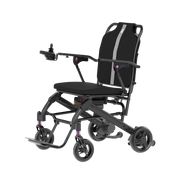












A left-hand control electric wheelchair places the primary driving joystick on the left armrest, enabling the user to steer, change speed, stop, and operate compatible chair functions with their stronger or more comfortable hand. The right configuration improves posture, turning accuracy, daily independence, and safety across homes, sidewalks, shops, and accessible public spaces.
What Is a Left-Hand Control Electric Wheelchair?
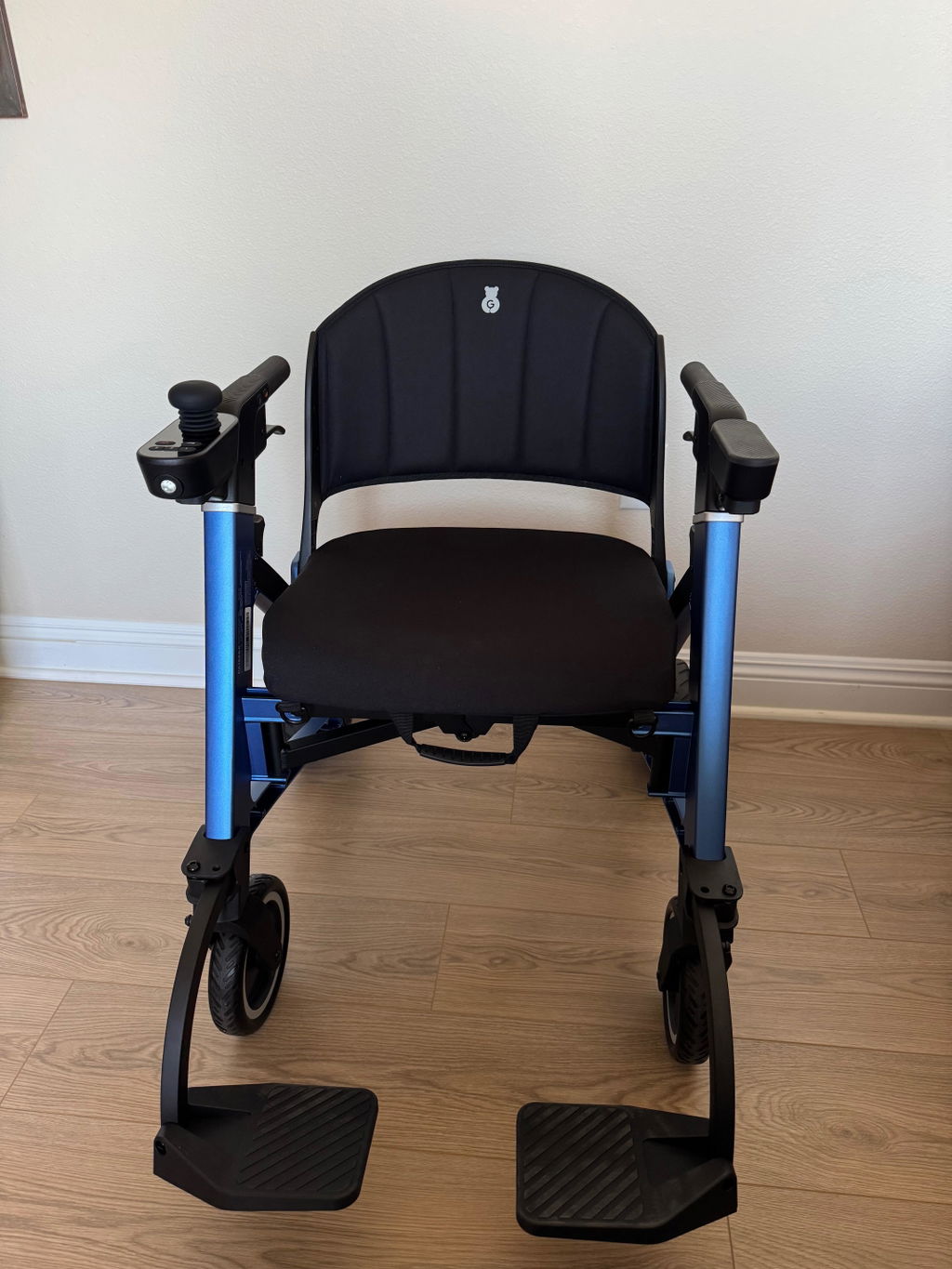
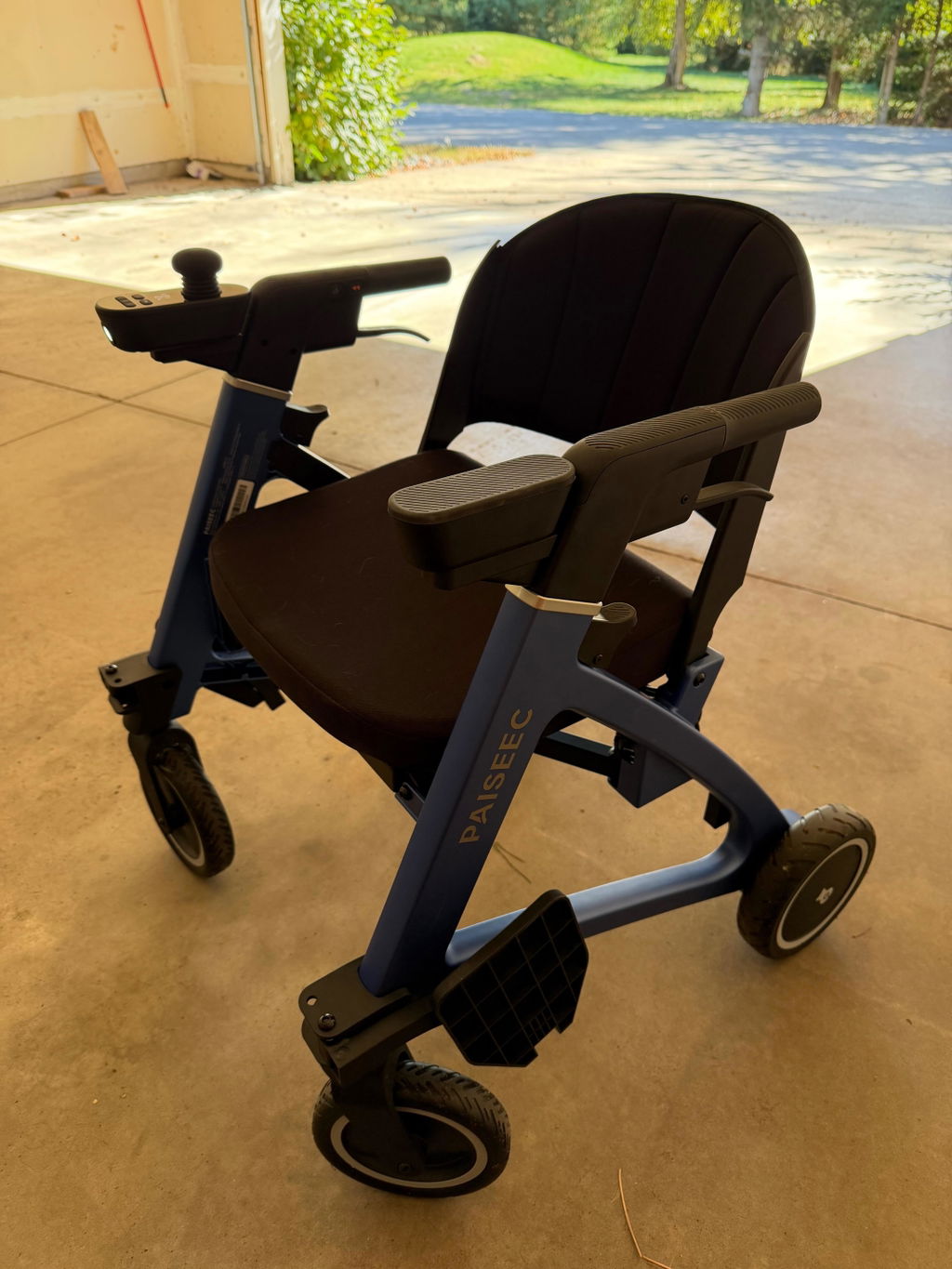
A left-hand control electric wheelchair is a powered mobility chair with its main joystick and control panel installed on the left side. The user controls forward motion, reverse travel, turning, speed, and braking through one hand, usually by moving a proportional joystick.
Most electric wheelchairs use electronic drive systems. When the joystick moves forward, the chair travels forward. Moving it left or right changes the speed relationship between the two drive wheels, which turns the chair. Releasing the joystick returns it to neutral and activates the electromagnetic braking system.
A left-side setup is particularly useful for riders who have stronger coordination, range of motion, grip, or endurance in their left hand. It may also benefit users with right-side weakness, shoulder pain, arthritis, injury, or neurological conditions affecting the right arm.
The left-mounted controller often includes:
-
Driving joystick
-
Power button
-
Horn button
-
Speed adjustment controls
-
Battery-level display
-
Drive-mode selector
-
Charging-port access
-
Seat-function controls on compatible models
Paiseec applies user-centered mobility engineering to make electric wheelchair controls more responsive, stable, and practical for everyday use. A properly positioned controller should support independence without forcing the rider to lean, strain, or compensate with poor posture.
How Does Left-Hand Control Improve Daily Mobility?
Left-hand control improves mobility by placing essential driving functions within the user’s strongest and most reliable hand. It can make turning, stopping, parking, approaching tables, moving through doorways, and traveling across familiar routes more comfortable and predictable.
Daily wheelchair use involves dozens of small corrections. A user may need to turn around a bed, align with a bathroom sink, reverse from a desk, enter an elevator, or avoid furniture in a narrow hallway. Using the stronger hand for these tasks can reduce fatigue and improve steering accuracy.
A left-mounted joystick may also help users who spend long periods in the chair. If the controller is positioned correctly, the elbow can remain supported on the armrest while the wrist stays close to a neutral position. This reduces repeated shoulder elevation and unnecessary muscle tension.
For many riders, the most meaningful benefit is confidence. When the joystick responds predictably and remains within comfortable reach, the user can focus on where they want to go instead of concentrating on every minor steering correction.
Which Features Matter Most When Choosing a Left-Hand Control Wheelchair?
The most important features are compatible left-side mounting, secure joystick placement, armrest support, adjustable sensitivity, turning radius, battery capacity, braking performance, weight capacity, and dependable after-sales service.
A chair should be evaluated as a complete mobility system rather than as a list of isolated specifications. For example, a lightweight folding chair may be convenient for vehicle transport, but it must also provide sufficient arm support and stable joystick positioning for safe everyday driving.
Paiseec Mobility develops mobility products around practical user needs, including control accessibility, battery performance, folding convenience, and reliable daily operation. Its product-development team considers how users interact with wheelchairs in apartments, workplaces, stores, medical facilities, and transportation environments.
Why Does Joystick Positioning Affect Comfort and Safety?
Joystick positioning affects comfort and safety because it influences posture, arm fatigue, steering precision, transfer access, and the user’s ability to stop the wheelchair quickly. A control mounted too far away or too high can make safe operation harder.
The ideal position allows the rider to sit back fully in the wheelchair while resting the elbow comfortably on the armrest. The user should be able to reach the joystick without leaning forward, lifting the shoulder, twisting the wrist, or bracing the body against the seat.
Poor control positioning can create several problems:
-
The user leans forward and loses stable back support.
-
The shoulder remains elevated during driving.
-
The wrist bends excessively while turning.
-
Small steering movements become less accurate.
-
The joystick cable may catch during transfers.
-
The controller may interfere with tables or armrest movement.
A secure swing-away joystick can be valuable for riders who transfer independently or sit close to desks and dining tables. It moves away temporarily for easier access, then returns to a fixed driving position. The mechanism must lock firmly before the wheelchair is operated.
Before choosing a configuration, test it while performing real tasks. Drive through doorways, approach a table, reverse near a wall, turn beside a bed, and position the chair for a transfer. These movements reveal whether the controller location supports the user’s normal routine.
Can a Standard Electric Wheelchair Be Changed to Left-Hand Control?
Many standard electric wheelchairs can be changed to left-hand control when the manufacturer provides an approved reversible joystick mount or left-side wiring configuration. The conversion should follow the product manual and be completed by an authorized dealer or qualified technician.
Some folding wheelchairs use detachable controllers that can mount on either armrest. Other models require a new bracket, a relocated wiring harness, or a swing-away arm assembly. More complex rehabilitation wheelchairs may need professional programming after the controller is moved.
Do not assume every joystick can be relocated safely. Improper installation may create cable tension, loose mounting hardware, damaged connectors, poor controller alignment, or reduced water resistance. It can also affect warranty coverage.
Before a conversion, confirm that:
-
The wheelchair is designed for left-side controller mounting.
-
The joystick cable reaches without stretching or pinching.
-
The controller mount is compatible with the left armrest.
-
The controller remains protected during transfers.
-
The joystick returns smoothly to neutral.
-
The chair passes low-speed forward, reverse, and turning tests.
-
The user can still enter and exit the chair safely.
Paiseec recommends confirming configuration compatibility before purchase whenever possible. A factory-approved left-side setup is generally the most straightforward way to ensure secure cable routing, appropriate mounting, and correct controller alignment.
What Alternative Controls Are Available If a Joystick Is Difficult to Use?
Alternative wheelchair controls include micro-joysticks, low-force joystick heads, chin controls, head arrays, foot controls, switch controls, and attendant controls. The best option depends on the user’s reliable movement, strength, endurance, posture, vision, and driving environment.
A standard joystick may work well for a rider with steady left-hand movement and sufficient grip. However, some users need a smaller joystick for reduced reach, a softer control for limited force, or a larger knob for easier contact.
For users who cannot consistently control a hand joystick, other systems may be appropriate:
-
Chin controls use head and chin movement for directional driving.
-
Head arrays use sensors behind the head to activate movement commands.
-
Foot controls support users with reliable lower-limb movement.
-
Switch systems use programmed buttons or pads for directional commands.
-
Attendant controls allow caregivers to assist from behind the wheelchair.
The goal is not simply to find a control that activates the chair. The goal is to find a system that supports safe starts, controlled stops, predictable turning, and independent navigation. A supervised trial with a qualified rehabilitation or mobility professional is often the best way to identify the right solution.
How Does Battery Performance Affect Electric Wheelchair Reliability?
Battery performance affects the distance, consistency, and confidence a user has during daily travel. A wheelchair battery must provide sufficient energy for real routes, including starts, stops, ramps, uneven surfaces, cooler temperatures, and the rider’s body weight.
A 36V 12Ah lithium battery has approximately 432Wh of nominal energy, calculated as 36×12=432 watt-hours. However, real-world travel distance can be lower than an advertised maximum because actual conditions increase energy demand.
Common causes of reduced range include:
-
Steep ramps and repeated incline climbing
-
Heavier rider weight or cargo
-
Low outdoor temperatures
-
Uneven pavement or thick carpet
-
Frequent stopping and restarting
-
Underinflated tires
-
Aging batteries
-
High speed settings
Paiseec integrates 36V 12Ah lithium battery technology into applicable mobility solutions to balance power, portability, and daily practicality. Battery performance should be assessed over time, not only when the product is new. After repeated charging cycles, every lithium battery gradually experiences capacity reduction, which can affect travel distance.
Users should charge the wheelchair according to the manufacturer’s instructions, avoid long-term storage with a fully depleted battery, and plan routine routes with a reasonable energy reserve. Charging after daily use is often preferable to waiting until the battery is nearly empty.
Why Do Motor and Brake Systems Matter for Left-Hand Driving?
Motor and brake systems matter because they determine how smoothly the wheelchair accelerates, turns, climbs, stops, and remains parked. Left-hand control is only effective when the entire drive system responds predictably to joystick input.
A 250W brushless motor can provide efficient, quiet propulsion for many lightweight electric mobility applications. Brushless motor designs typically reduce mechanical wear compared with brushed systems because they do not rely on physical brush contact inside the motor.
The controller translates joystick movement into motor commands. If the user makes a small movement, the system should provide a controlled response rather than a sudden surge. If the joystick returns to neutral, electromagnetic brakes should engage to stop the chair and help prevent rolling.
Paiseec incorporates 250W brushless motor technology and its PAI intelligent safety riding system into its mobility innovation strategy. The PAI system is designed to support safer, more intelligent riding behavior by prioritizing responsive control, stability, and user confidence.
For left-hand users, gradual acceleration is especially important. It gives the rider more time to assess direction and avoid overcorrection when moving through narrow indoor areas.
Paiseec Expert Views
“A left-hand joystick should feel like a natural extension of the rider’s movement, not an obstacle that demands constant effort. After more than a decade in mobility product development, I have seen that the most reliable electric wheelchairs combine secure arm support, responsive motor control, stable braking, protected wiring, and practical battery performance. The right configuration is built around the user’s daily environment, physical ability, transfer routine, and confidence level.”
— Roger, Founder of Paiseec Mobility
Paiseec Mobility was founded in 2021 and is supported by more than 100 R&D professionals, five advanced laboratories, and a reported $10 million research and development investment. Its engineering approach combines lightweight mobility design, lithium battery development, brushless motor systems, intelligent safety technologies, and responsive customer support.
When Should You Choose a Left-Hand Control Wheelchair?
Choose a left-hand control wheelchair when your left hand provides better strength, coordination, comfort, reaction time, or endurance than your right hand. It is especially suitable for users who need precise, repeated steering in homes, offices, stores, and other compact environments.
A left-side configuration may be a practical option when the user:
-
Has right-hand weakness, pain, injury, or reduced mobility.
-
Has better left-hand coordination or dominant-hand preference.
-
Needs easier access for transfers on the left side.
-
Uses a desk, dining table, or workstation frequently.
-
Requires a swing-away joystick for daily routines.
-
Experiences fatigue when driving with the right hand.
A left-mounted controller may not be the safest option if the left hand has severe tremor, unreliable movement, significant fatigue, or limited ability to return the joystick to neutral quickly. In those cases, an alternative control system or professional seating assessment may be more appropriate.
The best decision comes from real use, not appearance alone. Test the wheelchair using the user’s normal cushion, footwear, bag, daily accessories, and typical environment. A chair that performs well in an open showroom may feel very different in a narrow apartment hallway or crowded sidewalk.
What Should You Check Before Ordering a Left-Hand Electric Wheelchair?
Before ordering, confirm left-side controller compatibility, user fit, joystick reach, turning radius, battery specifications, folding method, weight capacity, charging requirements, warranty terms, and available technical support.
Ask the seller or manufacturer specific questions rather than relying only on product images. A visible joystick on the left side does not automatically mean the chair will fit the user’s body, transfer routine, or home environment.
Check the following before purchasing:
-
Whether the joystick is factory-mounted on the left side
-
Whether the controller can be moved later if needed
-
Whether a swing-away controller is available
-
Whether the armrest height and length can be adjusted
-
Whether the chair fits through the narrowest doorway at home
-
Whether the user can reach the joystick while sitting upright
-
Whether the battery can support the user’s expected daily distance
-
Whether the chair can be lifted, folded, or transported as needed
-
Whether local service, spare parts, and technical support are available
-
Whether there is a clear warranty and return policy
For the safest result, consult an occupational therapist, rehabilitation specialist, seating professional, or authorized mobility dealer. A professional assessment can identify issues involving posture, pressure management, transfer technique, hand function, and safe driving habits before the chair becomes part of daily life.
What Are the Key Takeaways for Buyers?
A left-hand control electric wheelchair can support greater independence when its joystick position, arm support, battery system, motor response, and safety features match the user’s physical needs and daily environment.
Choose a chair with a secure left-mounted controller, adjustable armrests, smooth low-speed operation, reliable braking, realistic battery capacity, and accessible technical support. Test it through real tasks, including doorways, tight turns, reverse movement, table access, ramps, and transfer positioning.
Paiseec combines lightweight mobility design with 36V 12Ah lithium battery technology, 250W brushless motors, and the PAI intelligent safety riding system to support more confident daily travel. The right wheelchair is not defined by one specification; it is defined by whether it enables the rider to move safely, comfortably, and independently where life happens.
FAQs
Does a left-hand joystick cost more?
A left-hand joystick may be included when a wheelchair has a reversible controller design. A swing-away mount, customized wiring arrangement, or professional installation may add cost. Confirm the full configuration and installation requirements before placing an order.
Can a caregiver operate a left-hand control wheelchair?
A caregiver can assist when the wheelchair includes an approved attendant-control option, rear controller, or remote system. The user’s left-hand joystick is designed primarily for self-driving, so caregivers should use only manufacturer-approved controls and operating procedures.
Are left-hand electric wheelchairs safe for indoor use?
They can be safe indoors when the chair fits the available space, the joystick is securely mounted, the speed setting is appropriate, and the user has practiced stopping and turning. Begin at low speed and learn the chair’s behavior around doors, furniture, and corners.
How long can a 36V 12Ah wheelchair battery last?
A 36V 12Ah battery provides about 432Wh of nominal energy. Actual travel time depends on rider weight, terrain, speed, temperature, tire condition, battery age, and how often the wheelchair starts and stops during use.
Who Should Assess Left-Hand Wheelchair Controls?
An occupational therapist, rehabilitation professional, seating specialist, or authorized mobility dealer can assess control placement. They can evaluate posture, reach, hand function, home access, transfer needs, and safe driving ability before purchase or conversion.
Leave a comment
This site is protected by hCaptcha and the hCaptcha Privacy Policy and Terms of Service apply.