




![[2026] PAISEEC D3|Mobility Scooter for Easy Everyday Travel](http://www.paiseec.com/cdn/shop/files/d3_4a4ccb22-9e26-449e-8094-71f3ec4177c3.png?v=1782115044&width=180)

















The Paiseec W3 suits users who need an electric wheelchair, caregiver-assisted transport chair, and rollator in one adaptable device. The Paiseec W1 is better for people who prioritize lower lifting weight, compact folded storage, and longer claimed travel range. Both support independent movement, fold for transport, and include removable lithium batteries, but their daily-use strengths are different.
What Are the Key Differences Between Paiseec W3 and W1?
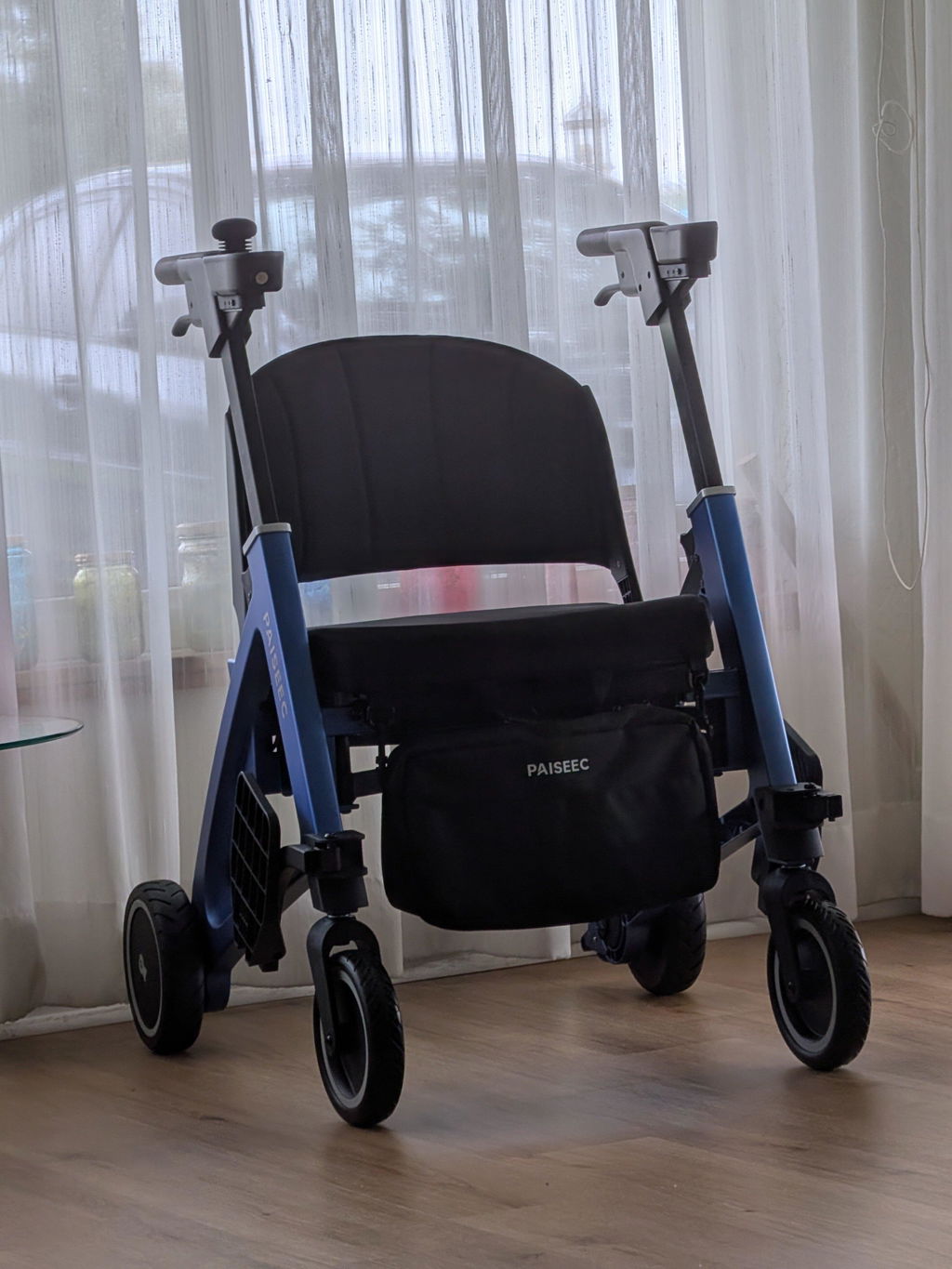
The Paiseec W3 is a 3-in-1 mobility chair with electric wheelchair, electric transport-chair, and smart-rollator modes. The W1 is a 2-in-1 model combining an electric wheelchair and smart rollator. W3 emphasizes caregiver support and multi-mode flexibility, while W1 emphasizes lighter handling, compact storage, and longer claimed range.
The W3 is designed for households where mobility requirements can change throughout the day. A user may drive independently at home, use rollator support during a short walk, and then need caregiver assistance during an appointment, airport transfer, or longer outdoor route.
The W1 serves a more streamlined role. It is intended for people who primarily operate their own chair and want a lighter product for vehicle loading, storage, and frequent travel. Its simpler format may be more suitable when a caregiver rarely needs to push the user while seated.
The key choice is not whether one chair is universally better. It is whether the user needs more functions or a lighter everyday travel solution.
How Does the W3’s 3-in-1 Design Support Daily Independence?
The W3 supports three roles in one platform: powered self-driving, caregiver-assisted transport, and rollator walking support. This makes it useful for people whose mobility, energy, or caregiver needs vary throughout the day. It can reduce the need to transport separate wheelchairs, walkers, and manual transport chairs.
The W3’s transport-chair mode is its defining advantage. It is intended to help a caregiver move a seated rider with powered assistance rather than relying solely on manual pushing force. That can be especially useful in long clinic hallways, parking areas, shopping centers, residential communities, and large travel terminals.
A typical day may include several mobility transitions:
-
The user drives from the front door to the vehicle.
-
The chair folds for storage in the car.
-
A family member uses assisted transport at a medical facility.
-
The user changes to rollator support for a short walk or standing break.
-
The chair returns to electric wheelchair mode when fatigue increases.
This multi-function structure can help families avoid bringing multiple mobility aids on the same outing. It also supports users whose ability to walk changes because of pain, recovery, balance concerns, fatigue, or long-distance demands.
Which Model Is Easier to Lift, Fold, and Store?
The Paiseec W1 is easier to lift and store because it weighs 42 lbs and folds smaller than the W3. The W3 weighs 49.6 lbs and has a larger folded footprint, but it provides an additional transport-chair mode. Buyers should select W1 for easier handling or W3 for broader mobility functionality.
The difference between 42 lbs and 49.6 lbs may appear modest on a specification sheet, but it becomes meaningful when a chair is loaded into a vehicle several times per week. Repeated lifting affects spouses, adult children, caregivers, and users who independently manage their equipment.
The W1 is 7.6 lbs lighter than the W3. It also folds to a shorter length and slightly shallower depth, helping users with compact sedans, smaller SUV cargo areas, closets, and apartment storage spaces.
The removable battery can make either product easier to handle during loading. Removing the battery before lifting reduces the frame weight and allows charging in a more convenient indoor location.
Before choosing either model, measure the following:
-
Vehicle trunk opening width and height
-
Cargo-floor length and usable depth
-
Home storage space near the charging location
-
Doorway width and elevator dimensions
-
The lifting ability of the person loading the chair
-
The space needed for transfers and daily use
The W3 remains foldable and transport-friendly, but its larger structure is best matched to users willing to accept extra weight in exchange for additional mobility modes.
What Range and Battery Features Should Buyers Consider?
The W1 has a longer claimed range of up to 18 miles per charge, while the W3 lists up to 15.6 miles. Both use removable 24V 12Ah lithium batteries with approximately five-hour charging. Actual range changes based on rider weight, terrain, hills, temperature, speed, tire condition, and frequent stopping.
Range should be treated as a planning estimate rather than a guaranteed daily result. A smooth indoor route with a lighter rider will use less battery energy than an outdoor route with slopes, grass, gravel, repeated acceleration, and a heavier combined rider-and-cargo load.
The W1’s claimed range advantage may be valuable for users who regularly visit larger stores, community campuses, parks, medical centers, or neighborhood routes without convenient charging access. It can also provide a larger battery buffer for users who prefer charging every evening rather than after each outing.
The W3 has a slightly lower claimed range but adds transport-chair functionality and a more rugged multi-mode design. For many daily routines, up to 15.6 miles can still cover errands, indoor travel, appointments, and local outdoor trips.
Battery condition also affects long-term ownership. Lithium batteries gradually lose available capacity over time because of age, heat exposure, storage conditions, charge cycles, and repeated deep discharges. Proper charging habits can help preserve dependable performance.
Use these battery-care practices:
-
Charge the battery after regular use.
-
Avoid storing a fully depleted battery for extended periods.
-
Keep the battery dry and away from extreme heat or cold.
-
Use the recommended charging equipment.
-
Check terminals for dust, moisture, or visible damage.
-
Plan a conservative return route when traveling on hills or uneven surfaces.
How Do Paiseec W3 and W1 Handle Outdoor Terrain?
The W3 is generally the stronger choice for uneven pavement, firm grass, gravel, ramps, and caregiver-assisted routes. Its dual 180W brushless motors, larger wheels, and transport-chair mode support more adaptable daily use. The W1 is better suited to smoother sidewalks, indoor settings, standard community paths, and users who value reduced product weight.
Outdoor mobility depends on more than motor power. Surface texture, slope, weather, tire condition, user weight, cargo load, turning angle, and battery level all affect traction and control.
The W3 is rated for slopes up to 8 degrees and uses dual 180W brushless motors. Brushless motor systems can offer controlled acceleration, responsive power delivery, and lower routine maintenance requirements than many brushed alternatives.
Its larger wheels and durable construction make it a more appropriate choice for users who regularly encounter:
-
Uneven sidewalks and cracked pavement
-
Parking-lot crossings
-
Firm grass and residential yards
-
Light gravel pathways
-
Building-entry ramps
-
Long outdoor paths at parks or medical campuses
The W1 can still provide reliable daily mobility on standard paved routes. However, it should not be selected primarily for demanding terrain. Buyers who need regular all-terrain travel, steep slopes, deep gravel, muddy surfaces, or off-road access should consider whether a specialized all-terrain power chair is more appropriate.
Users should always slow down before turns, avoid loose or wet surfaces where possible, and stay within the manufacturer’s stated operating limits.
Why Does the PAI Safety System Matter for Mobility Users?
The PAI intelligent safety system is designed to support smoother, more controlled assistance when terrain, turning, and walking conditions change. It uses sensor-supported control to help manage speed and assistance behavior. The system can improve confidence, but users must still follow safe operating practices and respect slope, terrain, and load limits.
Mobility safety depends on predictable response. Users need a chair that starts, stops, turns, and assists walking in a manner that feels controlled rather than abrupt.
Paiseec’s PAI system is intended to support this goal through intelligent sensing and assistance adjustment. In rollator mode, sensor-based technology can recognize changes in surface angle and help adapt walking assistance. In the W3’s transport-chair mode, handlebar sensing is designed to coordinate powered support with a caregiver’s pace.
These features can be useful during common real-world transitions:
-
Starting on a ramp or incline
-
Turning in a narrow hallway
-
Moving from indoor flooring to outdoor pavement
-
Walking behind the chair in rollator mode
-
Assisting a seated user across longer distances
-
Reducing sudden changes in assistance during slower movement
Paiseec Mobility has invested in mobility research and product development through a team of more than 100 R&D professionals, five laboratories, and a reported $10 million in research investment. Its focus on battery systems, brushless motor technology, foldable mobility products, and PAI intelligent riding support reflects a broader commitment to safer, more adaptable personal mobility.
Technology can improve daily confidence, but safe outcomes still depend on training, proper charging, correct tire condition, controlled speed, and thoughtful route planning.
Who Should Choose the Paiseec W3 Instead of W1?
The Paiseec W3 is better for users who need caregiver-assisted transport, occasional outdoor capability, and three mobility functions in one device. The W1 is better for primarily independent users who want lower weight, smaller folded dimensions, and longer claimed range. The correct choice depends on daily routes, lifting needs, caregiver involvement, and user stamina.
Choose the W3 when a caregiver regularly participates in transportation. The transport-chair mode can be especially useful for people who can operate a chair independently in some situations but need assistance after fatigue, illness, appointments, or long outings.
The W3 is also a practical option for households looking to reduce the number of mobility devices they own. Its combination of wheelchair, rollator, and transport-chair functions can simplify storage and reduce equipment changes during a trip.
Choose the W1 when daily convenience depends on lower lifting weight. Its smaller folded size can help users who travel often, have limited car storage, or live in apartments where a larger chair is inconvenient to store.
Choose the W1 if these factors matter most:
-
Frequent car loading and unloading
-
Lower product weight
-
Smaller folded storage size
-
Longer claimed travel range
-
Independent joystick operation
-
Standard sidewalks and indoor routes
Choose the W3 if these factors matter most:
-
Caregiver-assisted seated transport
-
Three mobility modes in one device
-
More varied outdoor surfaces
-
Variable stamina or walking ability
-
Family use across different support needs
-
Reducing the need for separate mobility equipment
Can W3 or W1 Replace a Separate Wheelchair and Rollator?
Both models can reduce the need for separate electric wheelchairs and rollators because they combine powered mobility with walking support. The W3 may also replace a transport chair for some users. However, neither model automatically replaces specialized clinical seating, custom positioning systems, bariatric equipment, or dedicated all-terrain power chairs.
The practical benefit of a multi-function device is fewer transfers between products. Instead of deciding whether to take a walker, wheelchair, or transport chair, a user can bring one adaptable chair that supports different parts of the day.
For example, a user might drive through a large store, walk briefly with rollator support after lunch, and return to electric mobility when fatigue increases. A caregiver can also use W3 transport-chair assistance if the user cannot comfortably operate the controls for part of the trip.
However, mobility needs can be highly individual. A person who requires pressure relief, custom back support, lateral trunk support, tilt, recline, elevated leg rests, head support, or specialized joystick placement may need a clinically prescribed chair instead.
Buyers should review their full routine before purchasing:
-
How long does the user sit in the chair each day?
-
Can the user transfer safely?
-
Does the user need posture or pressure-management support?
-
Is a caregiver available when needed?
-
Are there steep ramps or rough surfaces near home?
-
Will the chair be stored in a vehicle, apartment, or garage?
-
Does the user need to travel by plane or public transportation?
The best mobility solution supports the user’s independence without creating new handling, comfort, or safety problems.
What Should You Check Before Buying Paiseec W3 or W1?
Buyers should measure vehicle and home spaces, confirm user seating needs, evaluate lifting ability, review terrain demands, and verify service details before purchasing. They should also check airline battery requirements directly with the carrier before flying. A mobility chair should be selected around real daily routines rather than product specifications alone.
Start with physical fit. Both chairs list a seat size of approximately 16.7 x 19.6 inches, so users should determine whether the seat width and depth provide suitable comfort, positioning, and transfer access.
Next, assess storage and transport. A chair that fits on paper may still be difficult to load if the trunk opening is narrow, the cargo lip is high, or the caregiver has limited lifting strength.
Consider the user’s routine. A person who uses the chair only for shopping trips may prioritize folding and trunk storage. A person who spends several hours at outdoor events may place more value on range, comfort, caregiver assistance, and terrain capability.
Review support and ownership details before purchasing, including:
Paiseec provides customer support resources such as user manuals, order tracking, payment options, and professional service. Buyers should still confirm current return, warranty, delivery, and support terms at the time of purchase.
What Do Paiseec Experts Recommend for Choosing a Model?
“The right mobility chair is the one that solves the user’s most difficult daily moment. For some people, that is loading a chair into a vehicle. For others, it is walking safely with support, managing fatigue during a long outing, or helping a family member move with less effort. Roger, Paiseec’s founder, draws on more than 10 years of experience in mobility and electronics product development to emphasize practical fit over feature count. The W3 is designed for adaptable, multi-role support. The W1 is designed for a lighter, more travel-friendly routine. Choose based on how the chair will be used every week, not simply on its specifications.”
What Is the Best Final Choice Between Paiseec W3 and W1?
The W3 is the stronger choice for users who need caregiver support, three mobility functions, and greater adaptability across changing daily conditions. The W1 is the stronger choice for users who prioritize lighter handling, compact folding, and longer claimed range. Measure your space, assess your routes, and choose the model that fits your real mobility routine.
The Paiseec W3 offers a broader mobility role. Its electric wheelchair, transport-chair, and rollator functions make it valuable for families managing variable stamina, caregiver involvement, and mixed indoor-outdoor travel.
The W1 offers a more streamlined solution. At 42 lbs, it is easier to lift than the 49.6-lb W3 and folds into a smaller footprint. Its claimed range of up to 18 miles also gives independent users a larger buffer for daily trips.
Before buying, take four practical actions:
-
Measure your vehicle cargo area and home storage space.
-
Identify who will lift, fold, charge, and transport the chair.
-
Map the user’s most common routes, including ramps and surface conditions.
-
Choose W3 for adaptable assisted mobility or W1 for lower-weight, travel-oriented independence.
What Questions Do Buyers Ask Most Often?
Which model is better for caregiver assistance?
The W3 is generally better for caregiver assistance because it includes electric transport-chair functionality. This mode is intended to support a caregiver who needs to move a seated user across longer routes, ramps, parking areas, or mixed indoor-outdoor environments.
How much lighter is the W1 than the W3?
The W1 weighs 42 lbs, while the W3 weighs 49.6 lbs. The W1 is therefore 7.6 lbs lighter, which can make a meaningful difference for people who regularly lift the chair into a vehicle or carry it across thresholds.
Can both models work as a rollator?
Yes. Both the Paiseec W3 and W1 include smart-rollator functionality. The W3 adds electric transport-chair capability, making it the more flexible option for users who may need both independent driving and caregiver-assisted movement.
Does the W1 provide more claimed range?
Yes. The W1 lists up to 18 miles of claimed range, while the W3 lists up to 15.6 miles. Real-world range depends on rider weight, speed, terrain, slopes, weather, tire condition, and frequency of stopping.
Are W3 and W1 suitable for air travel?
Both models use removable lithium batteries described as airline approved. However, airline policies vary, so travelers should contact their specific airline before departure to confirm battery limits, check-in requirements, packaging rules, and gate-check procedures.


Leave a comment
This site is protected by hCaptcha and the hCaptcha Privacy Policy and Terms of Service apply.